


Prefer the print book? Buy on Amazon
As an Amazon Associate, Sumizeit earns from qualifying purchases.
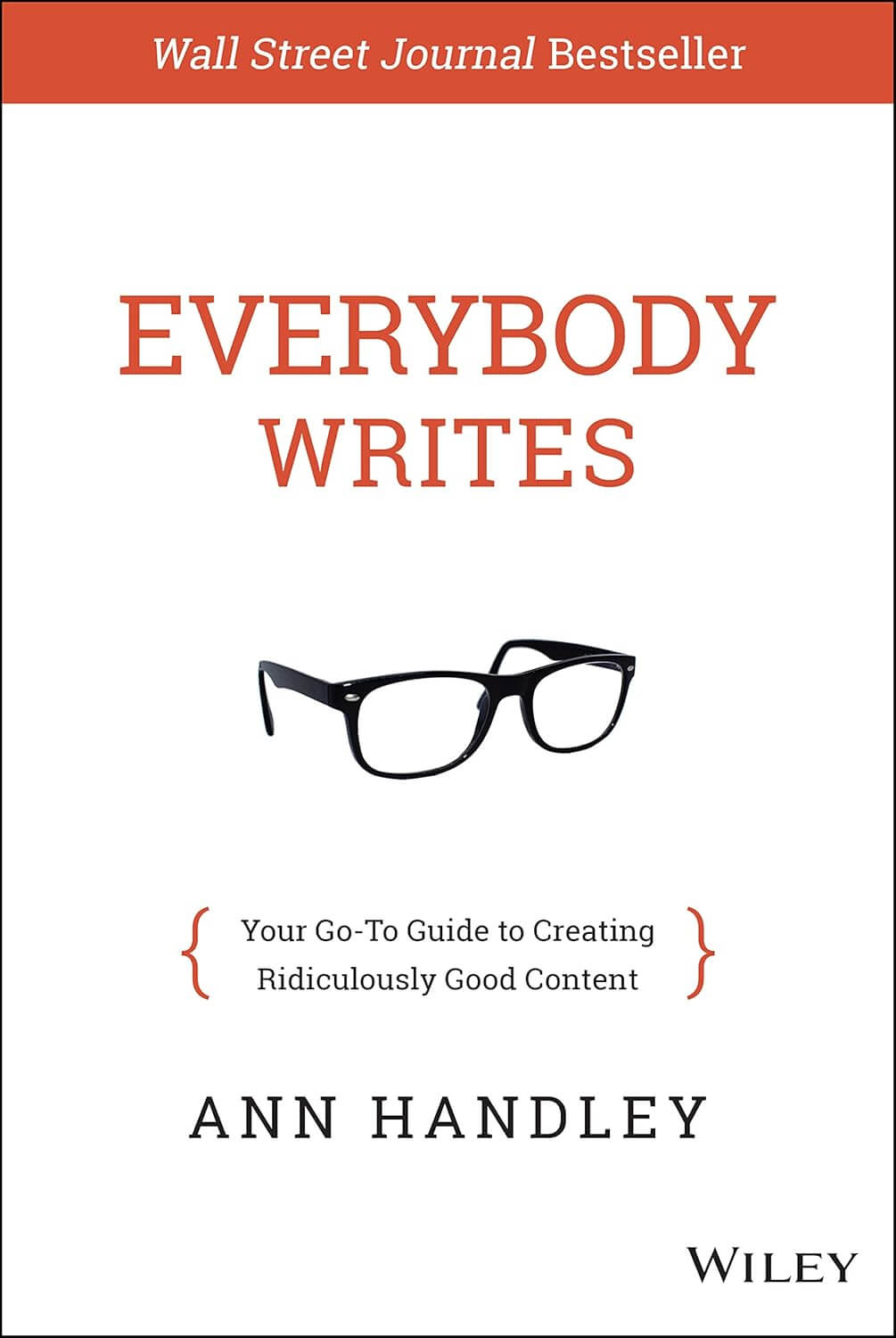
Everybody Writes Book Summary
This Everybody Writes Book Summary covers the key ideas, lessons, and takeaways in about 20 minutes.
Short Description:
Everybody Writes teaches writing as a learnable skill for connection.
Handley’s process—drafting freely, editing ruthlessly, revising empathetically, and polishing intentionally—provides a blueprint that writers of all skill levels can use. Whether you’re shaping brand messaging, crafting a social media post, producing a video script, or sending an email, your words have the potential to influence how people think, feel, and act.
The message is empowering: writing is not an exclusive art—it’s a learnable, repeatable skill accessible to anyone willing to engage with it consistently and purposefully. In a world driven by words, becoming a better writer means becoming a better communicator, leader, and creator.
Helps with these goals
Preview the Everybody Writes book summary
Below is a preview of Sumizeit’s comprehensive human-written summary of Everybody Writes by Ann Handley. The full summary is 15-20 minutes long and covers the book’s key ideas in text, audio, visual, and video formats. Unlock the full 20 Minute Summary
Ann Handley’s Everybody Writes begins with a simple but transformative premise: in an age where nearly every interaction—from business marketing to customer service to personal communication—flows through the written word, writing is no longer a niche talent but a foundational skill. Anyone who participates in a digital environment, which is essentially all of us, becomes a writer by default. The question is no longer if we write, but how well we do it.
Handley stresses that strong writing isn’t reserved for prodigies or literary geniuses. Instead, it’s a craft shaped by thoughtful techniques, purposeful habits, and a commitment to clarity. Whether you’re drafting website copy, an email to your team, a social media caption, or a long-form report, the quality of your writing influences how people perceive your brand, your competence, and your intentions.
Her book, updated in 2022 with expanded examples and tools for a fast-changing digital world, serves as both a handbook and an inspirational text. It outlines the principles of effective writing, the psychological reasons they work, and the practical steps to apply them in everyday communication. While the book focuses primarily on marketing writing, the lessons apply broadly to any situation where words shape relationships.
Three Core Qualities of Effective Writing
Handley identifies three fundamental traits that elevate writing from ordinary to exceptional: usefulness, creative grounding, and emotional resonance. These form the backbone of persuasive communication and determine whether your message lands with impact or fades into noise.
Writing That Serves the Reader
The first hallmark of effective content is its usefulness. Writing must solve a problem, answer a question, or illuminate something the reader cares about. Every piece should begin with three guiding questions:
What am I trying to accomplish?
What is the main idea?
Why does it matter to the reader?
This last point—why it matters—ensures the work remains reader-centric rather than self-indulgent. The audience should feel that the writer has anticipated their needs and crafted something specifically for them. Without this grounding, even beautifully written content risks irrelevance.
Handley encourages writers to be specific, purposeful, and aware of the problem they are helping the reader understand or address. Clarity about purpose shapes all the decisions that follow: tone, structure, examples, and calls to action.
Creativity and Accuracy as Dual Anchors
Handley argues that while writing must be useful, it also needs to have a spark—something imaginative or emotionally engaging that gives the content life. Creative elements such as storytelling, sensory detail, and metaphor help readers connect more deeply and remember what they read.
Stories, especially, connect with readers on an emotional plane. They humanize information, illustrate solutions, and help readers picture themselves inside the narrative. Handley emphasizes crafting stories about the audience’s experiences and aspirations, not the writer’s.
But creativity alone isn’t enough. Every compelling narrative must be balanced by accuracy and truth. In an era of misinformation and brand skepticism, factual integrity is indispensable. Credibility builds trust, and trust drives loyalty.
Want the complete 20-minute summary?
- Full structured summary
- Video Summary
- Podcast Summary
- Audio summary
- Key takeaways
- Exercises
- Quiz
- Highlights and notes
- Ask the book with AI
Who should read Everybody Writes?
Everybody Writes is essential for anyone who communicates digitally—marketers, business leaders, entrepreneurs, content creators, and professionals in any field. Whether you're crafting emails, social media posts, website copy, or reports, this book teaches you to write with clarity and impact. If you've ever struggled to find the right words or wondered why your writing doesn't resonate, Ann Handley's practical approach will transform how you communicate.
Why does Everybody Writes matter?
In today's digital-first world, writing has become a foundational skill for everyone, not just professionals. Your words shape how people perceive your brand, your competence, and your trustworthiness—making writing quality directly tied to your success. Everybody Writes provides a proven framework to help you cut through the noise, connect authentically with your audience, and communicate with purpose and confidence.
What are the key themes in Everybody Writes?
- Writing as a learnable skill, not an innate talent
- Reader-centered writing that solves problems and serves the audience
- Balancing creativity with accuracy and truth
- Building authentic brand voice and consistency
- Adapting writing to different digital formats
- The deliberate drafting, editing, and revision process
- Using storytelling and emotion to create human connection
How can you apply ideas from Everybody Writes?
- Create a brand style guide with voice descriptors, vocabulary preferences, and tone examples to maintain consistency across all team communications
- Apply the three guiding questions (What am I accomplishing? What's my main idea? Why does it matter to the reader?) before starting any piece of writing
- Adopt a daily writing practice through journaling, freewriting, or hand-writing to build discipline and strengthen your natural writing voice
- Use the four-draft editing process: draft freely, edit for structure and clarity, revise for empathy and connection, and polish for style and visual appeal
- Adapt your writing approach based on format—use conversational tone for social media, natural dialogue for video scripts, and structured clarity for long-form content
- Test your writing by reading it aloud to catch awkward phrasing, rhythm issues, and areas where flow breaks down before publishing
- Balance creativity with accuracy by fact-checking claims, citing reputable sources, and maintaining journalistic integrity to build and protect brand credibility
What common mistakes do readers make with Everybody Writes?
- Focusing on what you want to say rather than what your reader needs to hear, making writing self-centered instead of audience-focused
- Assuming grammar perfection matters more than clarity and connection—strict rule-following at the expense of natural, engaging communication
- Attempting humor or tone that doesn't align with brand values or the audience, resulting in tone-deaf messaging that alienates readers
- Publishing without a final review process, missing mechanical errors, clarity issues, or unintended interpretations that damage credibility
- Trying to perfect writing on the first draft, letting self-critique block the flow of ideas and preventing the capture of raw, honest thoughts
Sumizeit Exercises Apply what you've learned
Turn ideas from Everybody Writes into action with a short guided reflection: identify the biggest takeaway, connect it to your life, and commit to one step you can take in the next 24 hours.
What is the expert analysis of Everybody Writes?
Overview
Everybody Writes is a seminal work by Ann Handley, a leading authority in digital marketing and content creation. As the Chief Content Officer of MarketingProfs and a bestselling author, Handley brings a wealth of practical experience and strategic insight to the craft of writing in the digital age. This book is significant because it reframes writing as an essential skill for anyone engaged in communication—whether personal, professional, or commercial—rather than a specialized talent reserved for a literary elite. Updated in 2022, the text addresses the evolving demands of digital communication, making it a vital resource for contemporary writers navigating the complexities of online and multimedia formats.
Core Thesis
Handley’s central argument is that writing is a foundational skill in today’s interconnected world, where nearly every interaction involves the written word. She asserts that effective writing is not an innate gift but a craft shaped by deliberate practice, clarity of purpose, and empathy for the reader. The book posits that exceptional writing hinges on three core qualities: usefulness, creativity balanced with accuracy, and emotional connection. These elements, combined with a distinctive and consistent brand voice, enable writers to engage audiences meaningfully and build trust. Ultimately, Handley advocates for writing as a learnable, repeatable skill that empowers individuals and organizations to communicate with impact across diverse digital formats.
Strengths
- Practical Framework: Handley offers a clear, actionable process for writing—from drafting to polishing—that demystifies the craft and makes it accessible to writers of all levels.
- Reader-Centric Approach: The emphasis on usefulness and empathy ensures that writing serves the audience’s needs, fostering genuine connection rather than self-indulgent expression.
- Balance of Creativity and Accuracy: By advocating for storytelling and emotional resonance alongside factual integrity, the book addresses the dual demands of engagement and credibility in modern communication.
- Adaptability to Formats: The nuanced guidance on tailoring writing for social media, video scripts, and other digital platforms reflects a sophisticated understanding of contemporary media consumption.
- Brand Voice Development: Handley’s detailed advice on cultivating and maintaining a distinctive brand voice provides valuable insight into how language shapes identity and audience relationships.
Critiques & Counterarguments
- Potential Oversimplification: While the book’s accessible style is a strength, some readers might find the principles somewhat generalized, lacking deeper exploration of complex linguistic or rhetorical theories that could enrich the craft.
- Limited Engagement with Diverse Writing Traditions: The focus is predominantly on marketing and digital communication, which may marginalize other valuable writing forms such as academic, literary, or technical writing that demand different conventions and skills.
- Risk of Formulaic Writing: The structured approach to voice and style, while helpful, might inadvertently encourage conformity, potentially stifling originality in favor of brand consistency.
- Competing Perspectives on Writing Skill Acquisition: Some cognitive psychologists argue that writing proficiency is influenced heavily by innate language aptitude and early education, suggesting that deliberate practice alone may not suffice for all individuals.
- Challenges in Addressing Social Issues: Handley’s cautionary advice on brand messaging around social issues is prudent, yet real-world examples show that even well-intentioned brands can face backlash due to unpredictable cultural dynamics, indicating that writing alone cannot fully mitigate reputational risks.
Who Should Read This
Everybody Writes is ideal for marketers, entrepreneurs, content creators, and professionals who engage regularly in digital communication and seek to elevate their writing from functional to compelling. It serves those who recognize writing as a strategic asset in building brand identity and audience trust. Additionally, emerging writers who want a structured yet empathetic approach to developing their craft will find Handley’s guidance empowering. While its primary focus is marketing and business communication, the book’s principles are broadly applicable to anyone aiming to improve clarity, creativity, and connection in their written interactions.
Frequently asked questions about the Everybody Writes book summary
What is Everybody Writes about?
Everybody Writes by Ann Handley is a practical guide to writing better in the digital age, covering everything from brand voice and storytelling to format-specific strategies for social media and video. The book teaches that writing is a learnable skill—not an innate talent—and provides a step-by-step process for drafting, editing, and refining your work to connect authentically with readers.
Who should read Everybody Writes?
Everybody Writes is ideal for anyone who communicates digitally, including marketers, business leaders, entrepreneurs, content creators, and professionals in any industry. Whether you're struggling with email clarity, social media engagement, website copy, or building brand voice, this book provides actionable strategies regardless of your starting skill level.
What are the main takeaways from Everybody Writes?
The core takeaways are: writing is a foundational skill for everyone in the digital world, effective writing centers on the reader's needs rather than the writer's agenda, and quality comes from deliberate practice and a proven process (drafting, editing, revising, polishing). Additionally, building a distinctive brand voice and adapting your approach to different formats significantly increases impact and connection with your audience.
How does Ann Handley define effective writing?
Handley identifies three core qualities of effective writing: usefulness (solving problems or answering questions that matter to readers), creative grounding (using storytelling and emotional elements to engage and connect), and accuracy (maintaining factual integrity and credibility). Together, these elements create writing that influences how people think, feel, and act.
What is the four-draft editing process described in Everybody Writes?
The process consists of: (1) drafting freely without worrying about grammar or polish, (2) big-picture editing for structure and purpose, (3) revising through the reader's perspective for emotional resonance and clarity, and (4) polishing for style, voice, and visual appeal. This systematic approach transforms rough ideas into compelling, professional writing.
How can I develop a consistent brand voice?
According to Everybody Writes, start by identifying 3-5 adjectives describing how you want your brand to sound (playful, authoritative, compassionate, etc.). Expand these into full sentences capturing your brand spirit, then create a style guide outlining tone, vocabulary, phrasing patterns, and humor thresholds. Consistency across all communication channels—from emails to social media to website copy—builds recognition and trust.
What does Everybody Writes say about writing for social media?
Everybody Writes emphasizes that social media writing requires brevity, personality, and a conversational tone that builds micro-connections with individual readers. However, because social media amplifies messages quickly, writers must balance authenticity with caution—anticipating how words could be misinterpreted or weaponized before posting.
Can I improve my writing skills if I'm not naturally talented?
Yes. Ann Handley's core message in Everybody Writes is that writing is a learnable skill improved through deliberate practice, not inspiration or innate talent. Establishing a daily writing routine, following a structured editing process, and staying focused on serving your reader will strengthen your writing faster than waiting for inspiration.
About Sumizeit
Sumizeit is a profitable Scomy LLC company based in Miami, Florida. Our founders, Clemens Raemy and Weina Scott, are successful entrepreneurs with several exits. Sumizeit is a popular book summary app / micro learning app used by busy professionals and entrepreneurs with over 2,500 non-fiction book summaries and 10,000 podcast summaries in text, audio, visual, podcast, and video format. We also have stellar retention tools to make ideas stick - such as flashcards with spaced repetition, quizzes, streaks, highlighting and notes, daily challenges, riddles, mini-courses, meditation, and more. You won't only learn the idea, but also remember it. Over 90% of our users change their habits with Sumizeit.
Upgrade Now
Here's why readers love Sumizeit
Join thousands of learners getting smarter every day
"Great experience. Detailed summaries. Loved the gamification feature. Makes learning fun. Good customer service. I recommend Sumizeit to anyone. You'll learn a lot."
"I always felt busy but still wanting to keep up with the book discussion in my friend group. This was a great supplement to help me keep reading the books I find fun while keeping up with important books."
"I love this website. Instead of scrolling social media, I find myself learning a lot. I use it everyday. I recommend this app for anyone who is too busy and wants to get up to speed with their favorite books."
Everybody Writes Book Summary PDF
Looking for a Everybody Writes Book Summary PDF you can save and revisit offline? Our Everybody Writes Book Summary PDF captures the book’s core ideas in a clean, printable format — the key frameworks, takeaways, and structure without the fluff. Download the Everybody Writes Book Summary PDF when you want a reference you can annotate, share with your team, or review on the go. Get your Everybody Writes Book Summary PDF from the download page below.
Download Everybody Writes Book Summary PDFPeople also liked these summaries
Readers who explored Everybody Writes often enjoyed these titles next.

Ready to read the whole thing?
- Full structured summary
- Video Summary
- Podcast Summary
- Audio summary
- Key takeaways
- Exercises
- Quiz
- Highlights and notes
- Ask the book with AI
Featured Book Titles
Popular Book Summaries at sumizeit, leading book summary app