


As an Amazon Associate, Sumizeit earns from qualifying purchases.
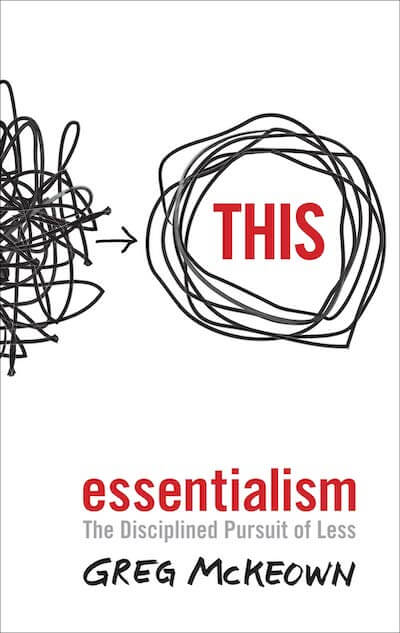
Essentialism Book Summary
This Essentialism Book Summary covers the key ideas, lessons, and takeaways in about 20 minutes.
Helps with these goals
Want the complete 20-minute summary?
- Full structured summary
- Video Summary
- Podcast Summary
- Audio summary
- Key takeaways
- Exercises
- Quiz
- Highlights and notes
- Ask the book with AI
What is in the Essentialism book summary?
Below is a preview of Sumizeit’s expert-written summary of Essentialism by Greg McKeown. The full summary covers the book’s key ideas in text, audio, and video.
Don’t you wish you could eliminate all the tasks, obligations, and duties in your life that aren’t moving you forward?
By reading “Essentialism” by. Greg McKeown, you will learn to do just that.
McKeown gives readers a “how-to” about focusing on the right goals and what’s truly valuable to your life while eliminating meaningless tasks.
You will learn how to ignore the meaningless, and refocus your life to make it successful, satisfying, and fulfilling.
“Essentialism is not about how to get more things done; it’s about how to get the right things done. It doesn’t mean just doing less for the sake of less either. It is about making the wisest possible investment of your time and energy in order to operate at our highest point of contribution by doing only what is essential.”- Greg McKeown
Leaders in business will also benefit from this method that will help to create a clear focus, communicate efficiently, and delegate tasks to their employees that best meet their strengths.
True Priorities Aren’t Getting the Attention They Need
Nonessentialists go through 4 steps:
These 4 steps can be summed up into one sentence: Nonessentialist people and organizations give energy in too many directions, leading to very little progress.
An essentialistic person or organization put all their energy in one direction to reap the most benefits.
Many businesses believe in the power of multitasking to get things done. However, this often results in emails and calls being dropped because the person was not fully focused. Humans are truly only capable of performing one task at a time.
The only way multitasking can work with a human is if one of the tasks is automatic, such as breathing.
It is important for companies to eliminate tasks on their to-do lists to focus their attention. But, this can be hard to do in big companies that have to focus on many different avenues such as revenues, shareholders, customers, operations, etc.
What Is Essentialism?
Essentialism is the method of limiting your goals, putting unnecessary tasks aside, and learning how to say ‘no’ to tasks that will not help you to move forward.
Essentialists have very small lists of tasks to do. That is because they know what tasks truly matter. They turn down tasks that do not propel them toward their goals.
Essentialists do not rush or neglect their prioritized tasks. It is not a race toward the finish line, rather a strategized and focused plan.
The focus of essentialists helps to increase their productivity. It is not the number of tasks they are accomplishing, but rather the quality of the ones that they are accomplishing.
An essentialist targets their focus on one task at a time, rather than spreading themselves thin. This ensures that the effort they are putting into something is quality.
Make Decisions About What To Take On For Yourself
If people wait too long to make a decision about what to prioritize, other people will end up making the decision for them.
When you…
Want the complete 20-minute summary?
- Full structured summary
- Video Summary
- Podcast Summary
- Audio summary
- Key takeaways
- Exercises
- Quiz
- Highlights and notes
- Ask the book with AI
Who should read Essentialism?
Essentialism is ideal for busy professionals, entrepreneurs, and leaders who feel overwhelmed by competing demands and want to reclaim control of their time. It's also valuable for anyone struggling to distinguish between what truly matters and what's merely urgent or expected by others. If you're constantly saying yes to obligations that don't align with your goals, this book offers a practical framework for change.
Why does Essentialism matter?
In today's hyperconnected world, we face unprecedented pressure to do more, achieve more, and be available constantly—yet this rarely leads to meaningful progress or fulfillment. Essentialism by Greg McKeown challenges the productivity myth that more is better, showing instead that strategic focus on what's truly essential is the path to both success and satisfaction. The principles are increasingly relevant as organizations and individuals compete for limited time and attention in an age of endless demands.
What are the key themes in Essentialism?
- The power of saying no to protect your priorities
- Trade-offs as essential decisions, not losses
- Eliminating the nonessential to amplify impact
- Building routines and boundaries around what matters most
- Clarity in defining success before taking action
- Deliberate focus as a competitive advantage
What are the key lessons from the Essentialism book summary?
Success Creates a Trap
Early success leads to more opportunities, but saying yes to all of them dilutes your energy and pulls you away from your original mission. The nonessentialist cycle shows how initial achievement can paradoxically lead to mediocrity across many areas.
Humans Cannot Truly Multitask
Despite cultural myths, the brain can only focus on one task at a time (except automatic functions like breathing). Attempting to multitask reduces the quality of work and causes important details to slip through the cracks.
If You Don't Prioritize Your Life, Someone Else Will
Passive decision-making means others—advertisers, family, colleagues—will shape your priorities through external pressure. Taking active control of your choices is essential to living intentionally.
If It Isn't a Clear Yes, It's a Clear No
Ambiguous priorities waste time and energy. Apply a high standard when evaluating new commitments: only accept what clearly advances your essential goals.
Trade-Offs Are Inherent, Not Negative
Rather than viewing choices as losses, essentialists reframe them as intentional decisions about where to invest their effort. Choosing one priority over another is a sign of clarity, not sacrifice.
Less Can Achieve More
A shorter, more focused list of priorities produces better results than a long list spread thin. Quality of execution matters far more than quantity of tasks completed.
Define Goals with Measurable Clarity
Vague goals like 'spend more time with family' are impossible to evaluate. Break them into specific, measurable outcomes so you know when you've succeeded.
Remove Distractions to Enhance Creativity
Isolation from phones, emails, and media creates space for deep work and breakthrough thinking. Strategic disconnection boosts productivity and reduces stress.
Sleep and Rest Are Essential Investments
Recovery time enhances cognitive function and allows your mind to make connections. Prioritizing sleep is not laziness but a tool for doing better work.
Boundaries Protect Your Priorities
Setting clear limits—like turning off your work phone during family time—reinforces your commitment to what matters most and prevents erosion of your essential goals.
Saying No Respectfully Is a Skill
Learning to decline opportunities tactfully (by suggesting alternatives or deferring to later) is more honest than overcommitting and underdelivering.
Don't Chase Sunk Costs
Past investments of time or money should not trap you in continuing ineffective projects. Let go of what isn't working and redirect energy to what will.
Essentialism Requires Consistency
You cannot toggle essentialism on and off based on convenience. It must become a habit embedded in every decision and routine to be effective.
Build Buffers into Plans
Anticipate unexpected delays and resource demands by planning for more capacity than you expect to need. Buffers reduce stress and ensure quality delivery.
Choose Your Team for Essential Skills, Not Likability
Essentialist leaders assemble teams around clearly defined goals, selecting people whose strengths directly serve that mission rather than duplicating skills or hiring for personality.
Trust Your Team and Communicate Only When Necessary
Essentialist leaders are hands-off, empowering team members to self-manage and check in only when they need resources or have completed work.
Presence Enables Better Priority Assessment
Being mentally present in your work allows you to distinguish what's truly valuable from what merely feels urgent, improving decision-making.
Eliminate Unnecessary Process Steps
Just as you cut nonessential priorities, streamline work processes by removing steps that don't directly contribute to the end goal.
Clarity Precedes Effective Delegation
Only when you've clearly defined your goal can you identify which tasks to delegate and to whom, ensuring the right work reaches the right people.
Essentialism Applies to Every Life Area
The framework works for personal goals, family time, business leadership, and creative pursuits—it's a universal approach to decision-making and time allocation.
Want the complete 20-minute summary?
- Full structured summary
- Video Summary
- Podcast Summary
- Audio summary
- Key takeaways
- Exercises
- Quiz
- Highlights and notes
- Ask the book with AI
How can you apply ideas from Essentialism?
- Audit your current to-do list and eliminate tasks that don't directly advance your top 3 goals; commit to declining new requests that don't meet your clear yes threshold
- Define one major goal with specific, measurable outcomes (e.g., 'spend 10 hours per week with family' rather than 'be more present') and build your schedule around protecting that time
- Create a rejection script or framework for politely saying no to requests, offering alternatives when possible to maintain relationships while protecting your priorities
- Establish technology-free zones and times (e.g., no work email after 6 PM, no phones during meals) to create physical boundaries around your essential commitments
- Build a 20-30% buffer into project timelines and resource estimates to absorb unexpected demands without compromising quality or other priorities
- Map out your team's skills against your organization's core mission and identify redundant roles or people who don't serve essential functions; reassign or restructure accordingly
- Design a weekly reflection ritual to assess which activities moved you forward and which were time-wasters, using insights to adjust your schedule the following week
What common mistakes do readers make with Essentialism?
- Assuming essentialism means doing less work overall, rather than doing fewer things with greater focus and quality
- Attempting to adopt essentialism sporadically instead of committing to it as a consistent decision-making framework across all areas of life
- Defining goals so vaguely that you can never truly know if you've succeeded, making it impossible to evaluate whether your priorities are on track
- Feeling guilty about saying no or abandoning projects, rather than viewing trade-offs as necessary and healthy choices that reflect your true values
Sumizeit Exercises Apply what you've learned
Turn ideas from Essentialism into action with a short guided reflection: identify the biggest takeaway, connect it to your life, and commit to one step you can take in the next 24 hours.
What is the expert analysis of Essentialism?
Overview
Essentialism is a seminal work by Greg McKeown, a distinguished author, leadership strategist, and New York Times bestselling writer. McKeown’s background, including an MBA from Stanford and extensive experience in leadership consulting, lends considerable authority to his exploration of focus and productivity. The book addresses a pervasive modern dilemma: the overwhelming abundance of tasks and obligations that dilute effectiveness and personal fulfillment. By advocating a disciplined approach to prioritization, McKeown provides a framework that resonates across business leadership, personal development, and organizational strategy.
Core Thesis
At its core, Essentialism argues that true success and satisfaction arise not from doing more, but from doing less—more deliberately and with greater focus. McKeown posits that by rigorously discerning what is essential and eliminating the nonessential, individuals and organizations can concentrate their energy on what truly advances their goals. This disciplined trade-off enables higher quality contributions, reduces distraction, and fosters clarity in decision-making. Essentialism is thus framed not as minimalism for its own sake, but as a strategic investment of time and effort to maximize impact.
Strengths
- Practical Framework: McKeown’s methodical approach to prioritization—learning to say no, creating buffers, and defining clear goals—offers actionable guidance that readers can immediately apply.
- Integration of Leadership and Personal Growth: The book successfully bridges individual productivity with organizational leadership, emphasizing how essentialism benefits both personal fulfillment and team effectiveness.
- Clarity and Accessibility: The prose is clear and engaging, making complex ideas about focus and decision-making accessible without oversimplification.
- Timely Cultural Critique: The critique of multitasking and the overload of modern obligations taps into widespread contemporary frustrations, making the book culturally resonant.
- Emphasis on Trade-offs: By reframing trade-offs as positive choices rather than losses, McKeown shifts the mindset around decision-making in a refreshing and empowering way.
Critiques & Counterarguments
- Potential Oversimplification: While advocating for focus, the book sometimes underestimates the complexity of modern roles where multitasking and balancing competing priorities are unavoidable realities, especially in dynamic environments.
- Evidence Base: The book relies heavily on anecdotal examples and McKeown’s personal experience; it lacks rigorous empirical studies or engagement with countervailing research from cognitive psychology or organizational behavior that nuance the multitasking debate.
- Contextual Limitations: Essentialism’s principles may be less applicable in certain cultural or economic contexts where saying ‘no’ is not socially or economically feasible, limiting its universality.
- Competing Perspectives: Research in creativity and innovation often highlights the value of diverse inputs and cross-task engagement, suggesting that strict focus might sometimes hinder serendipitous discovery or adaptability.
- Leadership Nuances: The recommendation for leaders to be mostly hands-off and minimize communication might conflict with contemporary leadership theories emphasizing emotional intelligence, active engagement, and collaborative culture.
Who Should Read This
Essentialism is ideal for professionals, leaders, and individuals overwhelmed by the demands of modern life who seek a principled approach to reclaiming focus and intentionality. Business executives and team managers will find valuable strategies to streamline operations and empower their teams. Additionally, readers interested in self-improvement, productivity, and philosophy of work will appreciate McKeown’s synthesis of practical advice with a broader ethos of meaningful living. However, those in highly fluid or creative roles may need to adapt the principles thoughtfully to their contexts.
Frequently asked questions about the Essentialism book summary
What is Essentialism about?
Essentialism by Greg McKeown is about identifying and focusing exclusively on what truly matters in your work and life, while eliminating or delegating everything else. The book presents a systematic approach to discerning your essential priorities and making strategic choices to invest your time and energy where they'll have the greatest impact, rather than spreading yourself thin across numerous obligations.
Who should read Essentialism?
Essentialism is essential for busy professionals, entrepreneurs, leaders, and anyone feeling overwhelmed by conflicting demands and struggling to make meaningful progress. It's particularly valuable for those who struggle with saying no, have difficulty distinguishing between urgent and important tasks, or want to align their daily activities with their deepest values and long-term goals.
What are the main takeaways from Essentialism?
The core takeaways are: success often creates a trap of saying yes to too many opportunities; you must actively prioritize your life or others will do it for you; trade-offs are unavoidable and should be viewed as intentional choices rather than losses; if it isn't a clear yes, it's a clear no; and essentialism must become a consistent habit, not an occasional practice. Focus and clarity on fewer priorities consistently outperform scattered effort across many commitments.
How do I learn to say no effectively?
Greg McKeown recommends developing respectful rejection scripts that make it clear you're prioritizing other commitments rather than rejecting the person. You can offer to help in the future when you have capacity, suggest an alternative person who might be better suited, or propose a different way to accomplish the request. Being honest about your constraints is more respectful than overcommitting and underdelivering.
How can I apply essentialism to my work as a leader?
Essentialist leaders first clearly define their organization's core mission, then build teams with complementary essential skills rather than redundant ones. They communicate sparingly and only when necessary, trust team members to self-manage, and delegate decisions down the hierarchy. This approach increases clarity and accountability while freeing the leader to focus on strategic priorities.
What is the difference between essentialism and just being busy?
Essentialism is the intentional elimination of the nonessential to create space and focus for what truly matters, while busyness often means saying yes to many things without strategic evaluation. An essentialist might accomplish fewer tasks but with higher quality and greater alignment with their goals; a busy person may complete many tasks but feel unfulfilled and disconnected from their true priorities.
Does essentialism mean I should work less?
Not necessarily. Essentialism is about redirecting your effort toward high-impact work rather than reducing the total amount of work. You may work just as many hours, but on fewer, more meaningful projects that generate better results and greater fulfillment than spreading yourself across many lower-priority commitments.
About Sumizeit
Sumizeit is a profitable Scomy LLC company based in Miami, Florida. It has been helping readers learn from nonfiction books for 7 years with expert-written summaries in text, audio, podcast, and video.
Want the complete 20-minute summary?
- Full structured summary
- Video Summary
- Podcast Summary
- Audio summary
- Key takeaways
- Exercises
- Quiz
- Highlights and notes
- Ask the book with AI
Here's why readers love Sumizeit
Join thousands of learners getting smarter every day
"Great experience. Detailed summaries. Loved the gamification feature. Makes learning fun. Good customer service. I recommend Sumizeit to anyone. You'll learn a lot."
"I always felt busy but still wanting to keep up with the book discussion in my friend group. This was a great supplement to help me keep reading the books I find fun while keeping up with important books."
"I love this website. Instead of scrolling social media, I find myself learning a lot. I use it everyday. I recommend this app for anyone who is too busy and wants to get up to speed with their favorite books."
Essentialism Book Summary PDF
Looking for a Essentialism Book Summary PDF you can save and revisit offline? Our Essentialism Book Summary PDF captures the book’s core ideas in a clean, printable format — the key frameworks, takeaways, and structure without the fluff. Download the Essentialism Book Summary PDF when you want a reference you can annotate, share with your team, or review on the go. Get your Essentialism Book Summary PDF from the download page below.
Download Essentialism Book Summary PDFPeople also liked these summaries
Readers who explored Essentialism often enjoyed these titles next.

Want the complete 20-minute summary?
- Full structured summary
- Video Summary
- Podcast Summary
- Audio summary
- Key takeaways
- Exercises
- Quiz
- Highlights and notes
- Ask the book with AI
Featured Book Titles
Popular Book Summaries at sumizeit, leading book summary app