


As an Amazon Associate, Sumizeit earns from qualifying purchases.
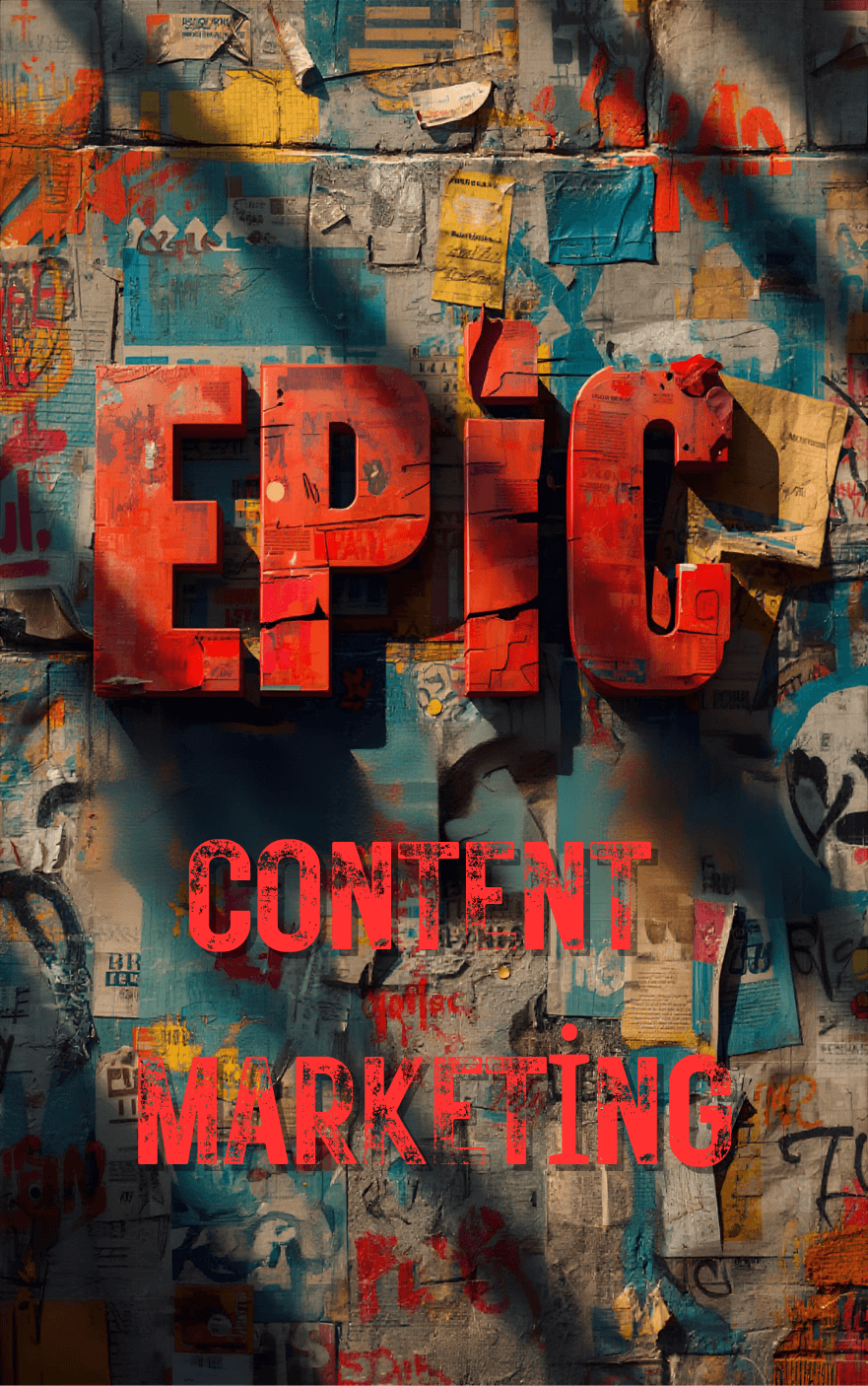
Epic Content Marketing Book Summary
This Epic Content Marketing Book Summary covers the key ideas, lessons, and takeaways in about 20 minutes.
Successful content marketing requires a mission-driven approach, audience empathy, ownership of your platform, thoughtful distribution, measurement tied to real business outcomes, and a willingness to evolve continuously. When these elements come together, content becomes more than marketing; it becomes a long-term strategic asset that builds loyalty, deepens relationships, and fuels sustainable growth.
Helps with these goals
Want the complete 20-minute summary?
- Full structured summary
- Video Summary
- Podcast Summary
- Audio summary
- Key takeaways
- Exercises
- Quiz
- Highlights and notes
- Ask the book with AI
What is in the Epic Content Marketing book summary?
Below is a preview of Sumizeit’s expert-written summary of Epic Content Marketing by Joe Pulizzi. The full summary covers the book’s key ideas in text, audio, and video.
Epic Content Marketing proposes a fundamental shift in how organizations attract and retain customers. Rather than relying on traditional advertising, which interrupts people with sales-focused messages, Joe Pulizzi argues that the future belongs to brands that function like publishers. These organizations share purposeful, helpful stories that become part of the audience’s daily information diet. Pulizzi’s approach emphasizes empathy, service, and long-term trust-building over short bursts of promotional noise. The book offers a blueprint for developing a content operation that informs, inspires, and ultimately influences profitable action — not through hard selling, but through consistent value.
At its core, Pulizzi’s message is simple: customers care about their own goals, not your product. When brands understand this, they begin creating materials that respond to real problems, real questions, and real aspirations. The brands that succeed are those that offer clarity rather than clutter, education rather than interruption, and meaning rather than marketing jargon. The entire book is an instruction manual for making this shift happen.
Understanding the Purpose of Content Marketing
Pulizzi defines content marketing as a long-term strategy built on delivering materials that enrich the audience’s life. Instead of creating assets that draw attention to the brand, the aim is to craft information that becomes useful, memorable, or entertaining on its own terms. This type of content positions the company as a credible guide — and when customers eventually need a solution, they gravitate toward the brands they trust.
This philosophy requires stepping away from traditional promotional thinking. Instead of asking, “How do we talk about our product?” the more effective question is, “What does our audience struggle with, and how can we help?” This flips the script: the audience becomes the hero of the story, and the brand becomes the mentor who empowers that hero.
Content marketing also works because it mirrors natural human behavior. When people want answers, they search for them. They subscribe to channels that provide insight. They follow experts they trust. If your company consistently produces the most comprehensive, relatable, and reliable information on a topic, the audience will choose you without being pushed.
Shifting from Selling to Serving
The book repeatedly emphasizes that people do not care about advertising pitches. They care about their own goals and frustrations. Because of this, successful content marketing must be grounded in service, not self-promotion.
Pulizzi highlights several key mindset changes required for success:
Customers want solutions — not slogans.
People aren’t looking for your product features; they are seeking relief, understanding, or progress. The job of content is to address what keeps them up at night, not to highlight what you want to sell.
Content must fill a real informational gap.
If the material doesn’t answer a genuine question or help the audience achieve clarity, it will be ignored. Content must feel like a resource the audience would seek out even if the brand’s name were removed.
Consistency builds credibility. Publishing sporadically weakens trust. Audiences rely on dependable rhythms, much like readers of a magazine or viewers of…
Want the complete 20-minute summary?
- Full structured summary
- Video Summary
- Podcast Summary
- Audio summary
- Key takeaways
- Exercises
- Quiz
- Highlights and notes
- Ask the book with AI
Who should read Epic Content Marketing?
Epic Content Marketing is essential for marketing leaders, entrepreneurs, and business strategists who want to move beyond traditional advertising. Whether you run a startup, manage a corporate marketing department, or oversee brand communication, this book provides a practical framework for building audience loyalty through valuable, purposeful content rather than interruptive sales pitches.
Why does Epic Content Marketing matter?
As customers increasingly ignore traditional advertising, Epic Content Marketing by Joe Pulizzi offers a proven alternative: positioning your brand as a trusted information source. In today's attention economy, companies that consistently deliver genuine value—not promotional noise—build lasting relationships, earn customer loyalty, and drive sustainable business growth without relying on expensive paid ads.
What are the key themes in Epic Content Marketing?
- Shift from selling to serving through audience-centric content
- Building owned media platforms as strategic foundations
- Content as a long-term trust and credibility builder
- Measuring meaningful outcomes over vanity metrics
- Consistency and editorial discipline in content production
- Repurposing and atomizing content across multiple channels
What are the key lessons from the Epic Content Marketing book summary?
Customers care about their own goals, not your product
Effective content marketing flips the traditional script by making the audience the hero and your brand the mentor. Focus on solving real audience problems rather than promoting features.
Create a mission-driven content strategy
A clear mission statement defining your audience, content type, and their desired outcome serves as an anchor for all content decisions and prevents drift into irrelevant topics.
Build on owned platforms, not borrowed spaces
While social media amplifies reach, your core content should live on owned properties like websites or newsletters where you control the experience and own the audience relationship.
Service and helpfulness are the currency of loyalty
Audiences gravitate toward brands that consistently provide clear, educational, and meaningful information without disguised sales pitches or promotional language.
Consistency builds credibility faster than sporadic campaigns
Publishing on a reliable schedule—much like a trusted magazine or show—trains audiences to depend on your content and deepens their trust over time.
Use the hub-and-spoke model for distribution
Anchor your substantial content on an owned hub, then use social media, podcasts, and partnerships as spokes that extend reach and drive audiences back to your core platform.
Repurposing content multiplies your return on investment
Break down large content pieces into smaller formats and reimagine them across channels—one research report can become articles, videos, infographics, and social snippets.
Measure outcomes tied to real business objectives
Move beyond vanity metrics like likes and impressions to track primary indicators (revenue, leads, retention) and secondary indicators (engagement quality, downloads) that reflect genuine value.
Understand your audience's pain points deeply
Develop detailed audience personas that capture not just demographics but fears, motivations, knowledge gaps, and aspirations to ensure content is purposeful and relevant.
Map content to buyer journey stages
Tailor content to awareness, consideration, and decision stages so audiences receive the right information when they need it, preventing materials that are either too advanced or too sales-driven.
Optimize for discoverability without tricking search engines
Conduct keyword research, use relevant terms naturally, and structure content for both users and algorithms to ensure valuable work actually reaches the people searching for it.
Social media requires participation, not just broadcasting
Treat social platforms as conversation spaces where you engage with audiences, tailor content to platform norms, and use strategic paid promotion to amplify high-value pieces.
Influencer partnerships are collaborative, not transactional
Build genuine relationships with industry figures, offer them value, and co-create content that benefits both parties and reaches aligned audiences through authentic storytelling.
Establish clear team roles and workflows
Without structure, content creation becomes chaotic and quality suffers; define roles like Chief Content Officer and Managing Editor, and create reliable systems whether using internal staff or outsourced talent.
Treat content marketing as an evolving system, not a finished plan
Continuously gather feedback, test hypotheses, analyze performance patterns, and adapt your strategy as audience expectations and industry landscapes change.
Content fills an informational gap that audiences genuinely need
Only create content that answers real questions or delivers clarity the audience actively seeks—material that would be valued even if your brand name were removed.
Brand becomes trusted guide through consistent, reliable information
When your company produces the most comprehensive, relatable, and reliable information on a topic, audiences choose you naturally without being pushed or persuaded.
Hybrid teams blend in-house strategy with outsourced expertise
Keep strategic planning and final approval internal while leveraging freelancers, agencies, and content platforms for specialized production that fills skill gaps cost-effectively.
Experimentation and A/B testing drive continuous improvement
Test headlines, formats, calls to action, and new channels without fear of failure; let data and audience feedback guide your refinement process.
Content becomes a strategic asset that fuels long-term growth
When done well, content marketing transcends marketing itself—it builds loyalty, deepens relationships, improves customer lifetime value, and creates sustainable competitive advantage.
Want the complete 20-minute summary?
- Full structured summary
- Video Summary
- Podcast Summary
- Audio summary
- Key takeaways
- Exercises
- Quiz
- Highlights and notes
- Ask the book with AI
How can you apply ideas from Epic Content Marketing?
- Develop a content mission statement that defines your audience, content types, and audience outcomes—then use it as a filter for all new content ideas
- Audit your current distribution strategy and identify where you lack owned platforms; prioritize launching a blog or newsletter as your core hub
- Create detailed audience personas that capture demographics, pain points, goals, and aspirations, then map content ideas to each stage of the buyer's journey
- Conduct keyword research on questions your audience actually searches for, then create comprehensive content that answers those queries with SEO-optimized structure
- Establish a content repurposing workflow: identify one large piece you've created, then break it into 5–10 smaller formats for distribution across different channels
- Set up a measurement dashboard tracking primary indicators (revenue, leads, retention), secondary indicators (engagement quality, downloads), and user indicators (time on page, shares)
- Build or audit your editorial calendar to ensure consistent publishing cadence; assign clear team roles and accountability to maintain production discipline
- Test social media engagement by increasing participation in relevant conversations and tailoring content format to platform norms, then measure interaction quality and traffic back to your owned hub
What common mistakes do readers make with Epic Content Marketing?
- Relying exclusively on borrowed social media platforms instead of building an owned content hub, leaving your audience vulnerable to algorithm changes and platform shutdowns
- Creating content based on company assumptions rather than real audience research, resulting in materials that don't address actual pain points or information gaps
- Using promotional language and disguised sales pitches instead of genuinely helpful information, which erodes trust and causes audiences to disengage
- Focusing on vanity metrics like impressions and likes rather than measuring outcomes tied to real business objectives like lead quality, retention, and revenue impact
- Publishing sporadically or inconsistently, which weakens credibility and trains audiences to expect unreliable content rather than building dependable loyalty
Sumizeit Exercises Apply what you've learned
Turn ideas from Epic Content Marketing into action with a short guided reflection: identify the biggest takeaway, connect it to your life, and commit to one step you can take in the next 24 hours.
What is the expert analysis of Epic Content Marketing?
Overview
Epic Content Marketing by Joe Pulizzi stands as a seminal work in the evolving discipline of content marketing, authored by one of the field’s foremost pioneers. Pulizzi, founder of the Content Marketing Institute, offers a comprehensive framework that redefines the relationship between brands and their audiences. This book is significant because it shifts the marketing paradigm from interruption-based advertising to a model rooted in storytelling, empathy, and sustained value creation. Pulizzi’s influence extends beyond theory into practical application, making this text a foundational reference for marketers seeking to build trust and loyalty in an increasingly fragmented media landscape.
Core Thesis
At its core, Pulizzi argues that brands must transform themselves into publishers who deliver consistently valuable, audience-centric content rather than traditional product-focused promotions. The central insight is that customers prioritize their own goals and challenges over brand messaging. Therefore, successful content marketing requires a mission-driven approach that serves the audience’s informational and emotional needs, fostering trust and long-term engagement. Pulizzi advocates for owned content platforms as strategic hubs, supported by social amplification and rigorous measurement tied to meaningful business outcomes. This philosophy positions content not merely as marketing collateral but as a strategic asset that builds sustainable competitive advantage.
Strengths
- Strategic Clarity: The book excels in articulating a clear, actionable framework that guides organizations from concept to execution, including mission statements, content workflows, and team structures.
- Audience-Centric Focus: Pulizzi’s insistence on deeply understanding customer pain points and creating content that addresses real problems is both empathetic and pragmatic, aligning marketing efforts with genuine audience needs.
- Integration of Owned and Social Channels: The hub-and-spoke model for content distribution is a nuanced approach that balances control with reach, mitigating risks associated with platform dependency.
- Emphasis on Measurement: By distinguishing vanity metrics from meaningful indicators, Pulizzi encourages marketers to tie content performance directly to business objectives, promoting accountability and continuous improvement.
- Practical Repurposing Strategies: The concept of content atomization is a valuable insight for maximizing resource efficiency and extending content lifespan across diverse formats and channels.
Critiques & Counterarguments
- Overemphasis on Content as a Panacea: While content marketing is powerful, Pulizzi’s thesis may understate the continuing relevance of integrated marketing approaches that include targeted advertising, especially in highly competitive or commoditized markets.
- Potential Oversimplification of Audience Behavior: The assumption that audiences will consistently seek out and trust brand-generated content may not hold in sectors where skepticism toward corporate messaging is high or where audiences have limited time and attention.
- Limited Discussion of Content Saturation: The book could engage more critically with the challenges posed by content overload and the difficulty of standing out in crowded digital ecosystems, where even high-quality content struggles to gain traction.
- Rapidly Evolving Digital Landscape: Some examples and platform-specific advice may become dated quickly, given the fast pace of change in social media algorithms, consumer preferences, and emerging technologies like AI-driven content personalization.
- Competing Research on Marketing Effectiveness: Studies in behavioral economics and neuromarketing suggest that emotional and subconscious triggers often drive purchasing decisions more than rational, informational content alone, indicating that content marketing should be integrated with other psychological levers.
Who Should Read This
Epic Content Marketing is essential reading for marketing professionals, brand strategists, and business leaders who seek to deepen their understanding of modern customer engagement. It is particularly valuable for those responsible for digital strategy, content creation, and brand development within B2B and B2C contexts. Entrepreneurs and startups aiming to build authentic connections without large advertising budgets will find Pulizzi’s approach both inspiring and practical. Additionally, communications scholars and students interested in the intersection of media, marketing, and consumer psychology will appreciate the book’s comprehensive synthesis of theory and actionable insight.
Frequently asked questions about the Epic Content Marketing book summary
What is Epic Content Marketing about?
Epic Content Marketing by Joe Pulizzi proposes a fundamental shift from traditional advertising to content-driven brand communication. The book argues that companies succeed by functioning like publishers—delivering purposeful, helpful stories and information that audiences actually want to consume—rather than interrupting people with sales pitches. It provides a strategic framework for building audience loyalty through consistent value, clear messaging, and audience-centric storytelling.
Who should read Epic Content Marketing?
This book is essential for marketing leaders, entrepreneurs, brand strategists, and anyone responsible for communicating with customers or building audience loyalty. It's valuable for startups looking to compete without large ad budgets, corporate marketers wanting to modernize their approach, content creators seeking strategic direction, and business leaders interested in understanding how content drives sustainable growth.
What are the main takeaways from Epic Content Marketing?
The core takeaways include: (1) shift from selling to serving by making content audience-centric rather than product-focused, (2) build owned media platforms as strategic foundations rather than relying solely on social media, (3) establish a clear content mission statement to guide all decisions, (4) measure outcomes tied to real business objectives rather than vanity metrics, and (5) treat content marketing as an evolving system requiring continuous testing and adaptation based on audience feedback and performance data.
How do I create a content mission statement?
A strong mission statement includes three elements: a clearly defined audience with specific characteristics, the content types or formats you'll consistently produce, and a desired outcome describing how your audience's life improves from consuming your content. The statement must be audience-focused rather than brand-focused, emphasizing knowledge and empowerment over sales. Once created, it becomes a practical filter for evaluating whether new content ideas align with your strategy.
What is the hub-and-spoke content distribution model?
The hub is your owned platform—a website, blog, newsletter, or app where your core strategic content lives and where you control the user experience. The spokes are external channels like social media, podcasts, and partnerships that extend your reach and drive audiences back to the hub. This structure ensures consistency while maximizing exposure and prevents over-reliance on platforms you don't control.
How should I measure content marketing success?
Pulizzi recommends tracking three categories of metrics: primary indicators tied to ultimate business outcomes (revenue, leads, customer retention, lifetime value), secondary indicators that support those outcomes (lead quality, email engagement, content downloads), and user indicators reflecting everyday interactions (time on page, comments, social shares). This approach moves away from vanity metrics and toward meaningful measurement that shows how content contributes to real business objectives.
How can I repurpose content effectively?
Content repurposing—or atomization—involves breaking down one large piece into multiple smaller formats. For example, a research report can become a series of articles, a keynote presentation can become short videos, and a long interview can become quote cards, blog posts, and social snippets. This approach maximizes return on investment, brings your message to audiences who prefer different formats, reinforces key themes through repetition, and creates multiple entry points into your content ecosystem.
Why is consistency important in content marketing?
Consistency builds credibility and trains audiences to depend on your content, much like subscribers to a trusted magazine or viewers of a favorite show. Publishing on a reliable schedule strengthens audience loyalty, improves discoverability through search engines and algorithms, and demonstrates professionalism and commitment. Sporadic publishing weakens trust and signals that your content is not a dependable resource.
About Sumizeit
Sumizeit is a profitable Scomy LLC company based in Miami, Florida. It has been helping readers learn from nonfiction books for 7 years with expert-written summaries in text, audio, podcast, and video.
Want the complete 20-minute summary?
- Full structured summary
- Video Summary
- Podcast Summary
- Audio summary
- Key takeaways
- Exercises
- Quiz
- Highlights and notes
- Ask the book with AI
Here's why readers love Sumizeit
Join thousands of learners getting smarter every day
"Great experience. Detailed summaries. Loved the gamification feature. Makes learning fun. Good customer service. I recommend Sumizeit to anyone. You'll learn a lot."
"I always felt busy but still wanting to keep up with the book discussion in my friend group. This was a great supplement to help me keep reading the books I find fun while keeping up with important books."
"I love this website. Instead of scrolling social media, I find myself learning a lot. I use it everyday. I recommend this app for anyone who is too busy and wants to get up to speed with their favorite books."
Epic Content Marketing Book Summary PDF
Looking for a Epic Content Marketing Book Summary PDF you can save and revisit offline? Our Epic Content Marketing Book Summary PDF captures the book’s core ideas in a clean, printable format — the key frameworks, takeaways, and structure without the fluff. Download the Epic Content Marketing Book Summary PDF when you want a reference you can annotate, share with your team, or review on the go. Get your Epic Content Marketing Book Summary PDF from the download page below.
Download Epic Content Marketing Book Summary PDFPeople also liked these summaries
Readers who explored Epic Content Marketing often enjoyed these titles next.




Want the complete 20-minute summary?
- Full structured summary
- Video Summary
- Podcast Summary
- Audio summary
- Key takeaways
- Exercises
- Quiz
- Highlights and notes
- Ask the book with AI
Featured Book Titles
Popular Book Summaries at sumizeit, leading book summary app
