


Prefer the print book? Buy on Amazon
As an Amazon Associate, Sumizeit earns from qualifying purchases.
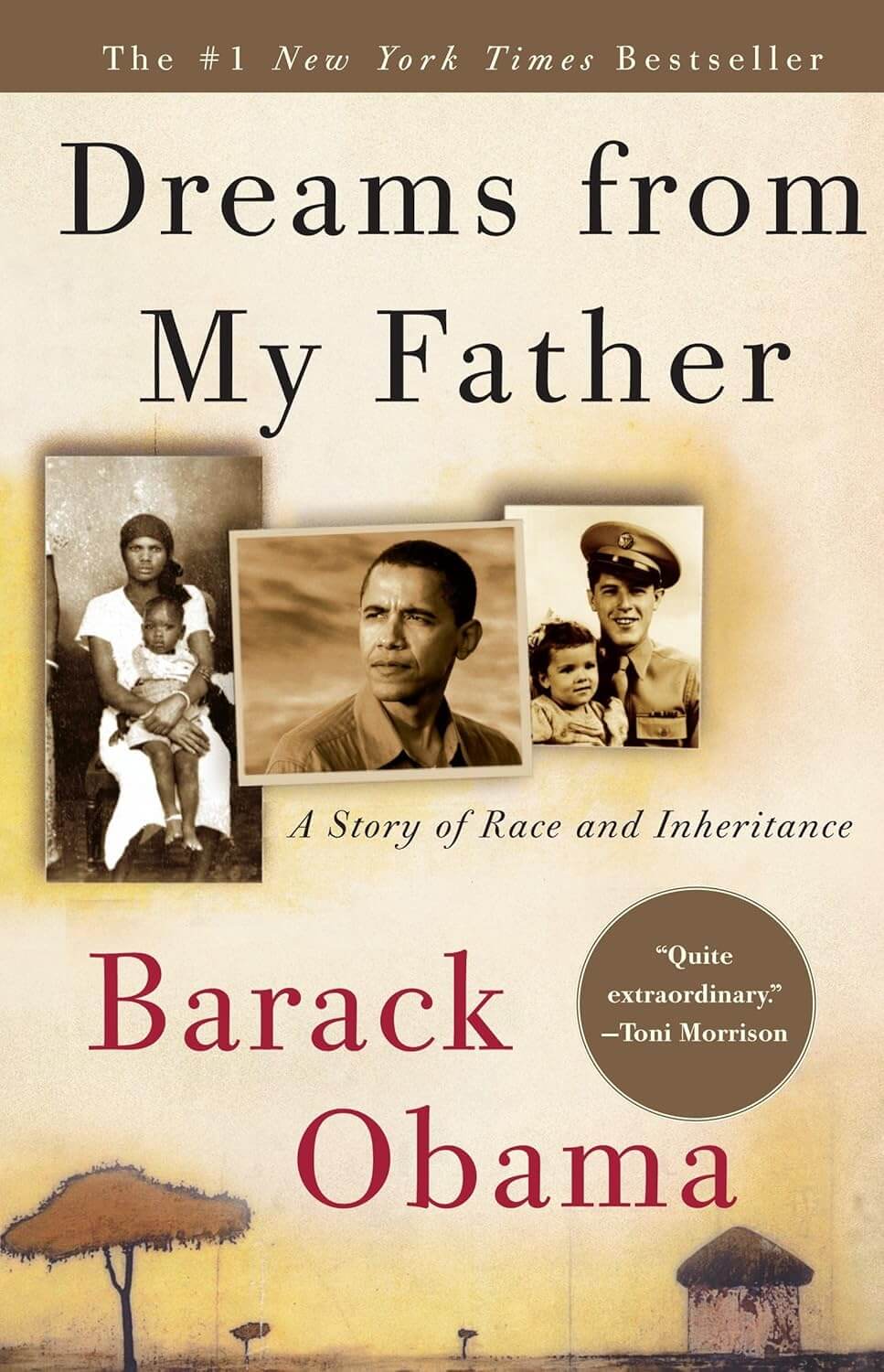
Dreams from My Father Book Summary
This Dreams from My Father Book Summary covers the key ideas, lessons, and takeaways in about 20 minutes.
Short Description:
Dreams from My Father explores identity through culture, struggle, and empathy.
Helps with these goals
Preview the Dreams from My Father book summary
Below is a preview of Sumizeit’s comprehensive human-written summary of Dreams from My Father by Barack Obama. The full summary is 15-20 minutes long and covers the book’s key ideas in text, audio, visual, and video formats. Unlock the full 20 Minute Summary
Barack Obama’s Dreams from My Father is a deeply personal account of a young man attempting to understand who he is, where he comes from, and what his identity means in a world shaped by race, history, and personal legacy. The memoir traces Obama’s life from childhood through early adulthood, bringing the reader into scenes of Hawaii’s multicultural neighborhoods, the poverty and promise of Indonesia, the political tensions of Chicago, and the emotionally charged landscape of Kenya. Every chapter pulls the reader further into his internal struggle with belonging, his yearning to connect with a father he barely knew, and his desire to contribute meaningfully to the communities he encounters.
The book is not simply a recounting of memories; it is a slow excavation of identity. Obama reflects on what it means to grow up between racial categories, how absence molds a life just as powerfully as presence, and how history lives not only in books but in the bodies, relationships, and expectations carried by families across continents. His story becomes a mirror for the American story—messy, hopeful, painful, contradictory, and still dreaming.
Early Childhood: A Life Formed in Fragments
Obama’s childhood is shaped by a mixture of cultures and environments. Born in Hawaii to a white American mother from Kansas and a Kenyan father studying on scholarship, his earliest years were lived without a full understanding of racial meaning. Hawaii, a place where cultures blend fluidly, initially sheltered him from the intense black-white divide present in mainland America. Yet even there, subtle differences surfaced: classmates commenting on his hair, strangers searching his features for hints of ancestry, and his own reflection reminding him that he did not fully resemble either side of his lineage. Childhood for Obama was a mosaic of place, voices, and impressions, none of which formed a complete picture of belonging.
His father left when Obama was still a toddler, returning to Kenya and leaving behind only stories—stories of brilliance, confidence, political promise, and the weight of expectation. These stories worked like a mythology, crafting an image of a father-hero whose absence made him larger rather than smaller. The young Obama clung to the tales told by his mother and grandparents, imagining a man who walked confidently through any room, whose intellect commanded respect, whose legacy Obama felt pressure to inherit even while not understanding exactly what it meant.
Later, when Obama’s mother remarried and the family moved to Indonesia, he was plunged into another social world entirely. The bustling streets, open-air markets, schoolyard fights, religious lessons, and moments of poverty broadened his understanding of life beyond the United States. In Jakarta, he witnessed inequality firsthand—children begging for coins, women carrying water for miles, political tension simmering beneath conversation. His stepfather, Lolo, taught him a different way of seeing strength—practical endurance rather than idealistic heroism. Obama learned survival and adaptation, absorbing lessons about power, vulnerability, and the compromises adults make in order to live.
Return to Hawaii and the Awakening of Race
Returning to Hawaii for…
Want the complete 20-minute summary?
- Full structured summary
- Video Summary
- Podcast Summary
- Audio summary
- Key takeaways
- Exercises
- Quiz
- Highlights and notes
- Ask the book with AI
Who should read Dreams from My Father?
Dreams from My Father speaks to anyone grappling with questions of identity, belonging, or cultural heritage. This memoir is essential for readers interested in understanding how personal history shapes perspective, for those navigating multiracial or multicultural backgrounds, and for anyone seeking insight into the formative experiences that shaped one of the most influential leaders of the 21st century.
Why does Dreams from My Father matter?
In an era marked by polarization and identity politics, Barack Obama's Dreams from My Father offers a model for how to hold complexity without requiring false resolution. The memoir demonstrates that understanding ourselves requires understanding history, geography, and family—and that personal struggles with identity reflect larger American tensions. Obama's exploration of race, absence, belonging, and purpose remains profoundly relevant to contemporary conversations about who we are and how we build meaningful lives.
What are the key themes in Dreams from My Father?
- Identity as a process rather than a fixed destination
- The impact of paternal absence on personal development
- Navigating biracial and multicultural experience in America
- The relationship between personal history and social history
- The search for belonging across different communities and geographies
How can you apply ideas from Dreams from My Father?
- Examine your own family mythology—what stories have shaped your self-concept and which require reality-testing to become more grounded and authentic?
- Create a personal timeline mapping how different geographic locations or communities have influenced your values, beliefs, and sense of identity.
- Practice deep listening in your own communities before proposing solutions to problems, following Obama's model of community organizing.
- Identify aspects of your heritage—whether cultural, familial, or geographic—that you've consciously or unconsciously rejected, and explore what integration might look like.
- Pursue education and skill-building not as escape from community responsibility but as tools to serve more effectively where you're called.
- Document stories from older generations in your family before they're lost, recognizing that family history is a form of personal and collective knowledge.
- Examine how you've internalized racial, cultural, or social categories and consider where those categories come from and whether they serve you.
What common mistakes do readers make with Dreams from My Father?
- Assuming that visiting ancestral homelands will provide complete identity closure—Obama's Kenya trip was transformative but not simplifying.
- Trying to choose a single identity when multiple belonging is your actual lived experience; integration requires holding complexity rather than eliminating it.
- Underestimating how absence shapes us—the missing father loomed as large as any present figure could have.
- Disconnecting personal growth from community responsibility, as if skill-building and education are selfish pursuits rather than tools for broader impact.
Sumizeit Exercises Apply what you've learned
Turn ideas from Dreams from My Father into action with a short guided reflection: identify the biggest takeaway, connect it to your life, and commit to one step you can take in the next 24 hours.
What is the expert analysis of Dreams from My Father?
Overview
Dreams from My Father stands as a seminal memoir by Barack Obama, the 44th President of the United States, whose unique biracial and transnational upbringing informs the narrative’s profound exploration of identity, race, and belonging. Published before his political ascent, the book offers an intimate, nuanced portrait of a young man navigating complex cultural landscapes—from the multicultural milieu of Hawaii and the socio-political realities of Indonesia, to the urban struggles of Chicago and the ancestral roots in Kenya. Obama’s eloquent prose and reflective storytelling elevate the memoir beyond autobiography, positioning it as a significant contribution to contemporary American literature and political thought.
Core Thesis
The central insight of Dreams from My Father is that identity is not a static inheritance but a dynamic, often fraught construction shaped by memory, culture, history, and personal experience. Obama argues that understanding oneself requires embracing the multiplicity of one’s heritage and the social forces that inform it, rather than simplifying or choosing between them. The memoir reveals how personal and collective histories intertwine, illustrating that healing identity’s fractures demands empathy, introspection, and a commitment to social justice. Through his journey, Obama posits that true belonging emerges from integrating diverse facets of self and community, rather than conforming to singular racial or cultural categories.
Strengths
- Literary Craftsmanship: Obama’s narrative voice is both lyrical and candid, balancing intimate vulnerability with intellectual rigor, which invites readers into the emotional and psychological depths of his identity formation.
- Complex Portrayal of Race: The memoir deftly captures the nuanced realities of biracial identity in America, avoiding simplistic binaries and instead presenting race as a lived, negotiated experience shaped by societal expectations and internal conflicts.
- Intersection of Personal and Political: By situating his personal story within broader historical and social contexts—from postcolonial Kenya to urban Chicago—the book illuminates how individual lives are embedded in systemic structures and collective struggles.
- Emphasis on Community and Leadership: Obama’s reflections on community organizing and leadership reveal a pragmatic yet hopeful approach to social change, emphasizing incremental progress, coalition-building, and the moral dimensions of public service.
- Global Perspective: The memoir’s transnational scope enriches its exploration of identity, illustrating how diasporic experiences complicate notions of home, belonging, and heritage in a globalized world.
Critiques & Counterarguments
- Selective Narrative and Mythologizing: While the memoir is deeply personal, some critics argue that Obama’s portrayal of his father and his Kenyan relatives occasionally veers toward idealization or myth, potentially glossing over more critical or contentious aspects of family history.
- Limited Engagement with Structural Racism: Although race is a central theme, the memoir tends to emphasize personal reconciliation and identity over a sustained critique of systemic racism and institutional power, which some scholars might find insufficient given the political stakes.
- Overemphasis on Individual Agency: The narrative foregrounds Obama’s personal journey and choices, which could be critiqued for underplaying the structural constraints and collective movements that shape opportunities and social change.
- Contrasting Schools of Thought on Identity: Postmodern and critical race theorists might challenge Obama’s somewhat integrative approach to identity, arguing that it risks diluting the political potency of racial solidarity by emphasizing hybridity and personal negotiation over collective resistance.
- Real-World Political Trajectories: Some commentators note a tension between the memoir’s idealistic vision of leadership and the compromises inherent in Obama’s later political career, suggesting that the book’s themes of empathy and justice are tested by pragmatic governance.
Who Should Read This
Dreams from My Father is essential reading for those interested in the intersections of race, identity, and politics in contemporary America. It appeals to readers seeking a nuanced understanding of biracial and diasporic experiences, as well as those drawn to memoirs that blend personal narrative with social critique. Scholars and students of African American studies, political science, and cultural history will find valuable insights into the formation of political consciousness and leadership. Additionally, individuals engaged in community organizing, social justice work, or intercultural dialogue will appreciate Obama’s reflections on the challenges and possibilities of building inclusive communities. Ultimately, this memoir speaks to anyone grappling with questions of belonging, heritage, and the search for purpose in a complex, divided world.
Frequently asked questions about the Dreams from My Father book summary
What is Dreams from My Father about?
Dreams from My Father by Barack Obama is a memoir that traces his journey from childhood in Hawaii and Indonesia through college and early adulthood, culminating in a transformative trip to Kenya to meet his extended family. The book explores Obama's struggle to understand his identity as a biracial, multicultural individual navigating questions of belonging, his search for connection to the father he barely knew, and how personal history intersects with larger historical forces like colonialism, racism, and American identity.
Who should read Dreams from My Father?
Anyone grappling with questions of identity, belonging, or cultural heritage will find resonance in this memoir. It's particularly valuable for those navigating biracial or multicultural backgrounds, for readers interested in understanding formative experiences that shape worldview and leadership, and for anyone seeking insight into how personal struggles with identity reflect larger American tensions around race and belonging.
What are the main takeaways from Dreams from My Father?
The core insight of Dreams from My Father is that identity is assembled through experience and reflection rather than inherited fully formed. Obama demonstrates that wholeness comes from integrating contradictions—multiple heritages, absent and present relationships, idealism and pragmatism—rather than choosing between them. The memoir also reveals how personal history is inseparable from social history, and that understanding ourselves requires engaging with family, geography, and the systems that shape our communities.
How does Obama address his biracial identity in the memoir?
Obama explores biracial identity not as something to resolve by choosing one side over the other, but as an ongoing process of integration. He describes the adolescent realization that society categorized him as Black regardless of his white mother, his search for cultural anchors among Black peers, and ultimately his understanding that authenticity requires embracing all aspects of his heritage simultaneously without false simplification.
What role does community organizing play in Dreams from My Father?
Obama's experience as a community organizer in Chicago serves as the emotional core of the memoir. This work taught him that change is incremental and requires both compassion and strategy, revealed how historical forces live in present struggles, and demonstrated that personal growth and skill-building are tools for more effective service rather than selfish pursuits—insights that eventually led him to pursue law school.
What does Obama discover during his trip to Kenya?
In Kenya, Obama experiences the collision between his mythologized father and the real, flawed human being he discovers through family stories. The trip provides physical grounding in his heritage—the absence of racial otherness in a majority-Black environment—while also revealing post-colonial hardship and complexity. Though Kenya offers no perfect homecoming or complete answers, it provides healing through acceptance and transforms abstraction into concrete, painful reality.
How does Dreams from My Father address the impact of absent fathers?
Absence shapes Obama as powerfully as presence might have. The missing father becomes a mythology—a figure of brilliance, confidence, and expectation—that influences Obama's choices and aspirations throughout his life. The memoir demonstrates that understanding how absence has shaped you is crucial to moving beyond its grip and that healing requires confronting both the myth and the reality.
About Sumizeit
Sumizeit is a profitable Scomy LLC company based in Miami, Florida. Our founders, Clemens Raemy and Weina Scott, are successful entrepreneurs with several exits. Sumizeit is a popular book summary app / micro learning app used by busy professionals and entrepreneurs with over 2,500 non-fiction book summaries and 10,000 podcast summaries in text, audio, visual, podcast, and video format. We also have stellar retention tools to make ideas stick - such as flashcards with spaced repetition, quizzes, streaks, highlighting and notes, daily challenges, riddles, mini-courses, meditation, and more. You won't only learn the idea, but also remember it. Over 90% of our users change their habits with Sumizeit.
Upgrade Now
Here's why readers love Sumizeit
Join thousands of learners getting smarter every day
"Great experience. Detailed summaries. Loved the gamification feature. Makes learning fun. Good customer service. I recommend Sumizeit to anyone. You'll learn a lot."
"I always felt busy but still wanting to keep up with the book discussion in my friend group. This was a great supplement to help me keep reading the books I find fun while keeping up with important books."
"I love this website. Instead of scrolling social media, I find myself learning a lot. I use it everyday. I recommend this app for anyone who is too busy and wants to get up to speed with their favorite books."
Dreams from My Father Book Summary PDF
Looking for a Dreams from My Father Book Summary PDF you can save and revisit offline? Our Dreams from My Father Book Summary PDF captures the book’s core ideas in a clean, printable format — the key frameworks, takeaways, and structure without the fluff. Download the Dreams from My Father Book Summary PDF when you want a reference you can annotate, share with your team, or review on the go. Get your Dreams from My Father Book Summary PDF from the download page below.
Download Dreams from My Father Book Summary PDFPeople also liked these summaries
Readers who explored Dreams from My Father often enjoyed these titles next.



Ready to read the whole thing?
- Full structured summary
- Video Summary
- Podcast Summary
- Audio summary
- Key takeaways
- Exercises
- Quiz
- Highlights and notes
- Ask the book with AI
Featured Book Titles
Popular Book Summaries at sumizeit, leading book summary app