Question 1 of 5
What is the central story of Catch and Kill as described in the summary?
The summary states the core is that a reporter had a true story about Harvey Weinstein and powerful people in media and entertainment tried to bury it.


Prefer the print book? Buy on Amazon
As an Amazon Associate, Sumizeit earns from qualifying purchases.
This Catch and Kill Book Summary covers the key ideas, lessons, and takeaways in about 20 minutes.
Helps with these goals
Want a Free Weekly Read?
Get a free summary every week straight to your mailbox.
Below is a preview of Sumizeit’s comprehensive human-written summary of Catch and Kill by Ronan Farrow. The full summary is 15-20 minutes long and covers the book’s key ideas in text, audio, visual, and video formats. Unlock the full 20 Minute Summary
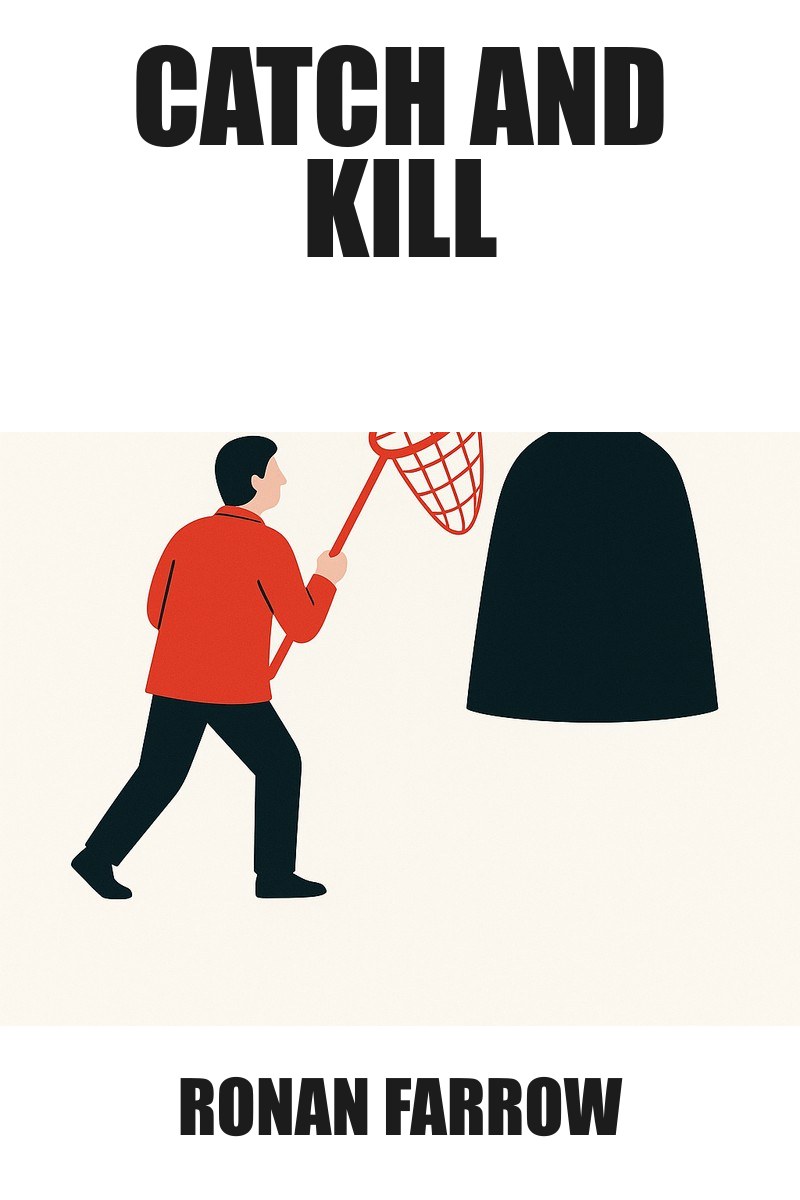
Catch and Kill is Ronan Farrow's own account of how he broke the Harvey Weinstein story. Parts of it read like a spy thriller and parts like a detective novel, but the core is simple. A reporter has a true story, and some of the most powerful people in media and entertainment try to bury it. Weinstein used money, lawyers, tabloids, private spies, and friends in high places to silence the women he assaulted. Farrow's own bosses at NBC helped him do it.
The book wanders into side stories, like Donald Trump's hush money deals and a pair of Eastern European spies. This summary sticks to the main thread. A heads up before you go on. The book describes rape and sexual assault, and so does this summary, though not in graphic detail.
On Sunday, October 9, 2016, Farrow and his producer, Rich McHugh, were ready to air a strong piece on campus sexual assault for the Today show. NBC pulled it. A segment on Adderall addiction ran instead.
The reason had to do with Donald Trump. Two days earlier, the Washington Post had published a video of Trump bragging that stars can grab women and get away with it. Trump used to host The Apprentice on NBC. Worse, Billy Bush, an NBC host about to be promoted to Today, was caught laughing along on the tape. The network did not want a story about sexual assault on the air in the middle of that mess. Farrow would learn that burying this kind of story was standard practice at NBC.
The Trump tape also set off a national argument about sexual violence. Actress Rose McGowan jumped in with a tweet saying a Hollywood studio head had raped her and that the whole industry knew about it. Who was he, and why had nobody stopped him?
Weinstein and his brother Bob started Miramax, the studio behind Pulp Fiction, The English Patient, and later The King's Speech. He was one of the most thanked people in Oscar history, right behind God. He was also a monster to work for, throwing objects at employees and screaming at them daily. People put up with it because he could make a career or end one.
Rumors about his behavior had floated around for years. They never turned into a real exposé. A few small articles would appear and then vanish. Something was clearly protecting him.
Part of the answer was the National Enquirer and its parent company, American Media. The company had a trick called catch and kill. It bought the rights to a person's damaging story, usually from a woman accusing a powerful man, and made her sign a nondisclosure agreement, or NDA, in exchange for money. If she hesitated, the Enquirer threatened to trash her in print. Once she signed, the story sat in a vault and never ran.
AMI's CEO, David Pecker, did this for his friend Trump for years.…
Catch and Kill is essential for journalists, media professionals, and anyone interested in how powerful institutions protect wrongdoers. It's also vital reading for survivors of abuse and those seeking to understand systemic failures in accountability. If you care about media ethics, institutional corruption, or the MeToo movement, this book offers a front-row seat to how one story changed everything.
Catch and Kill reveals how sexual predators operate with impunity through coordinated networks of enablers—from lawyers and tabloids to corporate executives and law enforcement. In an era when institutional accountability is constantly questioned, Farrow's account demonstrates both the mechanisms that protect abusers and the power of determined reporting to expose them. The book exposes not just Weinstein, but the broader infrastructure of silence that exists across media, entertainment, and politics.
Turn ideas from Catch and Kill into action with a short guided reflection: identify the biggest takeaway, connect it to your life, and commit to one step you can take in the next 24 hours.
Catch and Kill is a seminal investigative work by Ronan Farrow, a journalist and lawyer known for his fearless reporting on sexual abuse and institutional corruption. The book chronicles Farrow’s relentless pursuit to expose Harvey Weinstein’s decades-long pattern of sexual assault and the powerful mechanisms used to suppress these stories. Farrow’s narrative is not only a detailed account of a landmark moment in journalism but also a broader indictment of systemic complicity across media, legal, and corporate spheres. His background, including his personal connection to abuse allegations within his own family, lends the work both urgency and a nuanced understanding of survivor trauma.
At its core, Catch and Kill argues that the ability of men like Harvey Weinstein, Donald Trump, and Matt Lauer to evade accountability was not due to individual cunning alone, but rather because of an extensive network of enablers. This network included lawyers, media executives, private intelligence operatives, and even law enforcement officials, all motivated by financial interests, personal alliances, or institutional preservation. The book contends that nondisclosure agreements (NDAs), hush money, and strategic silencing were weaponized to protect abusers and perpetuate cycles of abuse. Ultimately, Farrow highlights how courageous survivors and determined journalism can break through these entrenched systems of silence.
Catch and Kill is essential reading for those interested in investigative journalism, media ethics, and the dynamics of power and abuse. It appeals to readers who seek a deep understanding of how institutional complicity operates in silencing victims and how courageous individuals can challenge entrenched systems. Scholars of gender studies, legal professionals, and advocates for survivors will find Farrow’s detailed account invaluable. Additionally, anyone engaged in contemporary discussions about the #MeToo movement and cultural accountability will benefit from the book’s incisive analysis and firsthand reportage.
Try a few questions from the Catch and Kill quiz. Unlock the full summary for the full quiz and answers that will help the ideas stick.
Question 1 of 5
The summary states the core is that a reporter had a true story about Harvey Weinstein and powerful people in media and entertainment tried to bury it.
Question 2 of 5
The summary explains NBC pulled the piece because the Trump tape controversy (published by the Washington Post) made the network reluctant to air a sexual-assault story at that time.
Question 3 of 5
The summary describes 'catch and kill' as buying rights to damaging stories, making the person sign a nondisclosure agreement in exchange for money, and then not running the story.
Question 4 of 5
The summary names David Pecker as AMI’s CEO who used 'catch and kill' and had ties to Donald Trump.
Question 5 of 5
The summary explains Gutierrez secretly kept a copy, played it on a laptop for Farrow, and he recorded the playback on his phone, creating a recording of a recording.
Question 1 of 10
Catch and Kill by Ronan Farrow is an investigative account of how he broke the Harvey Weinstein sexual assault story for The New Yorker, despite intense pressure from NBC and coordinated efforts by Weinstein's team to suppress it. The book details the mechanisms of institutional silence—NDAs, private spies, tabloid manipulation, and corporate complicity—that allowed a predator to assault women for decades. It's part thriller, part detective story, and ultimately a testament to how one story changed the conversation about sexual abuse across industries.
Catch and Kill is essential for journalists, media professionals, lawyers, and anyone interested in how institutions enable and cover up abuse. It's crucial reading for survivors of sexual assault, advocates for accountability, and those seeking to understand the infrastructure of silence surrounding powerful predators. If you care about media ethics, institutional corruption, or the MeToo movement, this book provides a detailed, firsthand account of both the problem and a rare moment when it was exposed.
The key insight is that predators don't operate alone—they're protected by networks of lawyers, tabloids, executives, prosecutors, and media figures who benefit from silence. The catch-and-kill tactic (buying stories and burying them via NDAs) transforms individual pain into private secrets, enabling serial abuse. Institutional self-protection often overrides moral obligation, as Farrow discovered when his own employer buried the story. Finally, the book shows that accountability requires both determined journalism and institutional backing willing to withstand legal threats—and that breaking one silence breaks many others.
NBC had multiple interconnected reasons to kill the story. Executives who oversaw news coverage had personal relationships with Weinstein and quietly promised his lawyers the story was dead. The network was also protecting its own predator, Matt Lauer, creating institutional incentive for silence on harassment and assault. Finally, NBC prioritized legal risk and corporate reputation over accountability journalism. Only when Farrow moved to The New Yorker, which had lawyers willing to absorb legal threats, did the story finally run.
Catch and kill is a suppression strategy where tabloids (particularly the National Enquirer) buy the rights to damaging stories from accusers, have them sign nondisclosure agreements, and then bury the story in a vault. The accused pays for this, gaining both the silence of his accuser and leverage over the tabloid itself. The strategy is devastatingly effective because it transforms allegations into private secrets protected by law, preventing pattern recognition and allowing predatory behavior to continue unchecked.
Ambra Battilana Gutierrez, an Italian model, wore a wire for the NYPD after Weinstein groped her, capturing him admitting to his pattern of unwanted touching. Despite this evidence, prosecutors declined to pursue charges after receiving campaign contributions from one of Weinstein's lawyers. Gutierrez was intimidated into signing an NDA for $1 million, but she secretly kept a copy of the recording by emailing it to a throwaway account. Farrow later obtained this recording, which became crucial evidence for The New Yorker's story.
Black Cube is an Israeli private intelligence firm run by former Mossad agents that Weinstein hired to stop the reporting. They surveilled Farrow, tracked his phone, searched for dirt on him, and sent undercover operatives to befriend his sources and learn reporting details. One operative used the false identity Diana Filip to gain the trust of Rose McGowan. Though their efforts failed to stop publication, Black Cube's work exemplifies the sophisticated intimidation tactics deployed to protect powerful predators.
Farrow's October 2017 New Yorker article on Weinstein became the catalyst for the MeToo movement—within hours of publication, strangers sent him hundreds of stories of abuse by powerful men across government, media, business, and law. The story demonstrated that serial abuse was systemic rather than isolated and gave survivors permission and cover to break their own silence. The book argues that one exposure breaks many others, and Weinstein's downfall opened a reckoning that transformed how institutions handle accountability.
Sumizeit is a profitable Scomy LLC company based in Miami, Florida. It has been helping readers learn from nonfiction books for 7 years with expert-written summaries in text, audio, podcast, and video.
Join thousands of learners getting smarter every day
"Great experience. Detailed summaries. Loved the gamification feature. Makes learning fun. Good customer service. I recommend Sumizeit to anyone. You'll learn a lot."
"I always felt busy but still wanting to keep up with the book discussion in my friend group. This was a great supplement to help me keep reading the books I find fun while keeping up with important books."
"I love this website. Instead of scrolling social media, I find myself learning a lot. I use it everyday. I recommend this app for anyone who is too busy and wants to get up to speed with their favorite books."
Looking for a Catch and Kill Book Summary PDF you can save and revisit offline? Our Catch and Kill Book Summary PDF captures the book’s core ideas in a clean, printable format — the key frameworks, takeaways, and structure without the fluff. Download the Catch and Kill Book Summary PDF when you want a reference you can annotate, share with your team, or review on the go. Get your Catch and Kill Book Summary PDF from the download page below.
Download Catch and Kill Book Summary PDFReaders who explored Catch and Kill often enjoyed these titles next.
Popular Book Summaries at sumizeit, leading book summary app