


Prefer the print book? Buy on Amazon
As an Amazon Associate, Sumizeit earns from qualifying purchases.
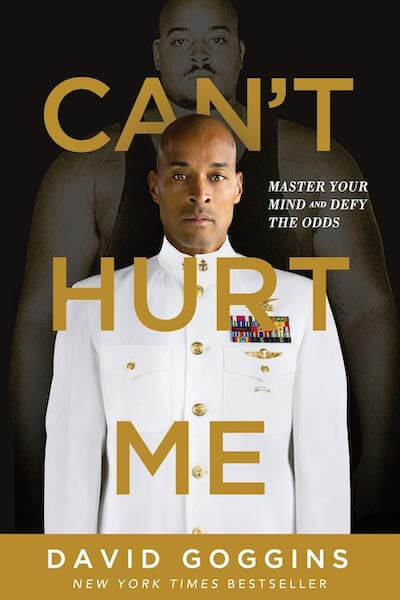
Can't Hurt Me Book Summary
This Can't Hurt Me Book Summary covers the key ideas, lessons, and takeaways in about 20 minutes.
Short Description:
Can't Hurt Me chronicles David Goggins' journey to mental and physical toughness.
Helps with these goals
Preview the Can't Hurt Me book summary
Below is a preview of Sumizeit’s comprehensive human-written summary of Can't Hurt Me by David Goggins. The full summary is 15-20 minutes long and covers the book’s key ideas in text, audio, visual, and video formats. Unlock the full 20 Minute Summary
Most people don’t recognize their full potential. That’s because most of us are seeking stability and comfort in our lives rather than pushing ourselves forward and taking risks.
In life, it’s easy to adopt a victim’s mindset, making excuses for the reasons you are unhappy and unsatisfied in your current situation.
“It won’t always go your way, so you can’t get trapped in this idea that just because you’ve imagined a possibility for yourself that you somehow deserve it. Your entitled mind is dead weight. Cut it loose. Don’t focus on what you think you deserve. Take aim on what you are willing to earn!”- David Goggins
In, “Can’t Hurt Me: Master Your Mind and Defy the Odds” by David Goggins, you will begin to understand why breaking free from this mentality is necessary for reaching your highest potential.
However, it requires mental toughness to really break this mindset and see things from a new perspective.
Take Note of Your Limitations
David Goggins grew up in Williamsville, New York. The town was a small suburb full of lawyers, doctors, and other wealthy people.
Goggins lived in a large house with a beautiful lawn. His dad wore suits and his mom was a housewife. Their life was picture-perfect on the outside.
But on the inside, their house was full of abuse.
In the ‘70s, David’s father, Trunnis, ran a roller rink called Skateland. Every night Goggin’s father put him and his brother and mother to work. When Goggins was only six-years-old he was in charge of running the rental counter.
The rink closed around 10 pm and afterward the boys were in charge of cleaning the bathrooms and wiping the counters. After that, the boys would try to get some sleep in the office while their parents worked at the bar above the rink. Then, at 6 am, the family would all return home.
Goggins would then attend school and inevitably fall asleep in class.
Trunnis not only deprived his children of a healthy lifestyle, but he was also violent. Trunnis would beat both Jackie, Goggin’s mother, and his sons.
Jackie eventually left, but she had no money of her own and her and Trunnis were not married so she could not claim any of his assets. She left with both boys and only a credit card to her name.
Because of Goggin’s hard upbringing, he could’ve made any excuse in the book not to follow his dreams and reach for the stars. But he decided to overcome those obstacles.
One of the first things he did was to identify his obstacles. When you identify your obstacles, it is much easier to overcome them.
Look At the Facts
Jackie Goggins moved to Indiana to try to start over. She had very little money but she worked hard, attending school, and working a full-time job while taking care of her two sons.
Because of Goggin’s struggle to stay awake in school at a young age, he missed a lot of the basics…
Want the complete 20-minute summary?
- Full structured summary
- Video Summary
- Podcast Summary
- Audio summary
- Infographic
- Key takeaways
- Exercises
- Quiz
- Highlights and notes
- Ask the book with AI
Who should read Can't Hurt Me?
Can't Hurt Me is for anyone feeling stuck in comfort, making excuses, or settling for less than their potential. Whether you're an athlete, professional, student, or someone at a crossroads, this book speaks to those ready to challenge their mental limits and pursue ambitious goals despite obstacles or self-doubt.
Why does Can't Hurt Me matter?
In a world that encourages quick fixes and comfort-seeking, David Goggins' memoir offers a counterculture message: real transformation requires mental toughness, discipline, and embracing discomfort. His story proves that your circumstances don't define your future, making this book essential for anyone struggling with limiting beliefs or seeking to unlock their true potential.
What are the key themes in Can't Hurt Me?
- Mental toughness and emotional resilience
- Breaking free from victim mentality and excuses
- Intentional discomfort as a path to growth
- Accountability and personal responsibility
- The power of visualization and mental control
- Discipline and structured daily routines
- Overcoming fear by facing it directly
How can you apply ideas from Can't Hurt Me?
- Write down your specific limitations and weaknesses to make them visible and impossible to ignore, then create targeted action plans to address each one
- Practice separating your emotions from your actions by continuing tasks even when you feel like quitting, building evidence that you can override negative feelings
- Deliberately schedule discomfort into your daily routine—cold showers, difficult workouts, hard conversations—to develop immunity to avoidance
- Visualize your goals in detail, imagining not just the outcome but how it will feel and what steps you'll need to take to get there
- Design a structured daily schedule that blocks time for single focused tasks, eliminating multitasking and maximizing output
- Reframe criticism and setbacks as information rather than judgments, asking what each failure teaches you about your next attempt
- Create accountability measures like mirror affirmations or progress tracking that force you to see reality rather than hide from it
What common mistakes do readers make with Can't Hurt Me?
- Believing discomfort is a sign you're doing something wrong instead of recognizing it as evidence you're growing beyond your limits
- Making excuses based on circumstances or past experiences rather than taking ownership of your choices and results
- Seeking quick fixes and efficiency hacks instead of committing to sustained hard work as the actual path to mastery
- Avoiding your fears or weaknesses instead of facing them directly, which only amplifies their power over you
Sumizeit Exercises Apply what you've learned
Turn ideas from Can't Hurt Me into action with a short guided reflection: identify the biggest takeaway, connect it to your life, and commit to one step you can take in the next 24 hours.
What is the expert analysis of Can't Hurt Me?
Overview
Can’t Hurt Me: Master Your Mind and Defy the Odds is a compelling memoir and self-improvement manifesto authored by David Goggins, a retired Navy SEAL, ultramarathon runner, and motivational speaker. Published in 2018, the book chronicles Goggins’s harrowing journey from a traumatic childhood marked by abuse and poverty to becoming one of the most physically and mentally resilient individuals in the world. Beyond a mere autobiography, the work serves as a clarion call to readers to transcend their perceived limitations through mental toughness, discipline, and relentless effort. Goggins’s unique blend of military rigor, athletic endurance, and raw personal vulnerability makes this book significant within the crowded genre of motivational literature.
Core Thesis
At its core, Can’t Hurt Me advances the thesis that most individuals fail to realize their full potential because they seek comfort and stability rather than embracing hardship and challenge. Goggins argues that mental resilience—the “calloused mind”—is cultivated through deliberate suffering, accountability, and the rejection of a victim mentality. He insists that true growth emerges from pushing beyond self-imposed limits, confronting fears directly, and maintaining an unwavering work ethic. The book posits that success is not a matter of entitlement or talent alone but is earned through persistent self-discipline, visualization, and embracing discomfort as a necessary path to mastery.
Strengths
- Authentic and Raw Narrative: Goggins’s candid recounting of his abusive childhood and personal struggles lends the book a visceral authenticity that resonates deeply with readers seeking genuine inspiration.
- Integration of Physical and Mental Discipline: The book effectively intertwines extreme physical challenges with psychological insights, illustrating how endurance sports and military training serve as metaphors and mechanisms for mental fortitude.
- Practical Tools and Mindset Shifts: Goggins offers concrete strategies such as “accountability mirrors,” visualization, and strict scheduling that readers can adopt to cultivate resilience and overcome inertia.
- Rejection of Comfort Culture: The critique of contemporary society’s obsession with quick fixes and comfort is timely and thought-provoking, encouraging readers to reconsider their relationship with discomfort and effort.
- Motivational Impact: The book’s unrelenting tone and vivid examples of perseverance serve as a powerful motivational tool for those seeking to break free from complacency.
Critiques & Counterarguments
- Potential Oversimplification of Psychological Complexity: While Goggins emphasizes mental toughness, the narrative can underplay the nuanced psychological and systemic factors—such as trauma, socioeconomic conditions, and mental health disorders—that complicate the journey toward self-mastery.
- Survivorship Bias: The book’s focus on Goggins’s extraordinary success risks implying that similar levels of suffering and effort will yield comparable results for all, neglecting individual differences and external circumstances.
- Limited Engagement with Alternative Perspectives: The valorization of relentless self-discipline contrasts with psychological research advocating for balance, self-compassion, and the importance of rest to prevent burnout.
- Risk of Toxic Positivity and Overexertion: The insistence on pushing beyond all limits may inadvertently encourage unhealthy behaviors, ignoring warnings from sports science and psychology about the dangers of overtraining and mental exhaustion.
- Examples and Anecdotes May Feel Dated or Idiosyncratic: Some readers might find the military and extreme athletic contexts less relatable or applicable to broader audiences, limiting the universality of the lessons.
Who Should Read This
Can’t Hurt Me is ideally suited for readers who are drawn to stories of extraordinary resilience and who seek a no-nonsense, tough-love approach to personal development. It will resonate with athletes, military personnel, entrepreneurs, and anyone confronting significant adversity who desires practical strategies to cultivate mental toughness. However, those looking for a nuanced psychological exploration or a balanced approach to self-improvement might find the book’s intensity and singular focus on grit somewhat limiting. Ultimately, it is a powerful read for those ready to challenge their comfort zones and embrace disciplined suffering as a path to transformation.
Frequently asked questions about the Can't Hurt Me book summary
What is Can't Hurt Me about?
Can't Hurt Me is David Goggins' memoir about transforming his life from a traumatic childhood marked by abuse and poverty into one of extraordinary athletic and personal achievement. The book explores how Goggins developed mental toughness, overcame limiting beliefs, and pushed beyond comfort to become a Navy SEAL, ultramarathon runner, and Guinness World Record holder, offering readers lessons on building resilience and reaching their potential.
Who should read Can't Hurt Me?
This book is ideal for anyone feeling stuck in their current situation, making excuses, or settling for comfort over growth. It appeals to athletes, professionals, students, and anyone pursuing ambitious goals who wants to develop mental toughness and break through self-imposed limitations.
What are the main takeaways from Can't Hurt Me?
The main takeaways include: embrace discomfort as necessary for growth, separate your emotions from your actions, take accountability for your circumstances rather than making excuses, develop a calloused mind through visualization and discipline, and commit to relentless work ethic without seeking shortcuts. David Goggins emphasizes that your past doesn't define your future and that real mastery requires consistent effort, not quick fixes.
How did David Goggins overcome his difficult childhood?
Rather than using his abusive upbringing as an excuse, Goggins identified his limitations, took responsibility for his own success, and systematically worked to overcome them. He decided to face challenges head-on, eventually joining the Navy SEALs and proving to himself that his circumstances didn't determine his destiny.
What does David Goggins mean by a 'calloused mind'?
A calloused mind means developing the ability to control your thoughts, emotions, and moods so they don't sabotage your goals. It's about separating how you feel from what you do—continuing forward even when exhausted, afraid, or discouraged.
Why does David Goggins emphasize leaving your comfort zone?
Goggins argues that comfort prevents you from discovering your true potential. He believes that intentionally embracing discomfort through challenges and difficult training builds the mental and physical resilience needed to achieve extraordinary things and break free from self-imposed limitations.
About Sumizeit
Sumizeit is a profitable Scomy LLC company based in Miami, Florida. Our founders, Clemens Raemy and Weina Scott, are successful entrepreneurs with several exits. Sumizeit is a popular book summary app / micro learning app used by busy professionals and entrepreneurs with over 2,500 non-fiction book summaries and 10,000 podcast summaries in text, audio, visual, podcast, and video format. We also have stellar retention tools to make ideas stick - such as flashcards with spaced repetition, quizzes, streaks, highlighting and notes, daily challenges, riddles, mini-courses, meditation, and more. You won't only learn the idea, but also remember it. Over 90% of our users change their habits with Sumizeit.
Upgrade Now
Here's why readers love Sumizeit
Join thousands of learners getting smarter every day
"Great experience. Detailed summaries. Loved the gamification feature. Makes learning fun. Good customer service. I recommend Sumizeit to anyone. You'll learn a lot."
"I always felt busy but still wanting to keep up with the book discussion in my friend group. This was a great supplement to help me keep reading the books I find fun while keeping up with important books."
"I love this website. Instead of scrolling social media, I find myself learning a lot. I use it everyday. I recommend this app for anyone who is too busy and wants to get up to speed with their favorite books."
Can't Hurt Me Book Summary PDF
Looking for a Can't Hurt Me Book Summary PDF you can save and revisit offline? Our Can't Hurt Me Book Summary PDF captures the book’s core ideas in a clean, printable format — the key frameworks, takeaways, and structure without the fluff. Download the Can't Hurt Me Book Summary PDF when you want a reference you can annotate, share with your team, or review on the go. Get your Can't Hurt Me Book Summary PDF from the download page below.
Download Can't Hurt Me Book Summary PDFPeople also liked these summaries
Readers who explored Can't Hurt Me often enjoyed these titles next.
Ready to read the whole thing?
- Full structured summary
- Video Summary
- Podcast Summary
- Audio summary
- Infographic
- Key takeaways
- Exercises
- Quiz
- Highlights and notes
- Ask the book with AI
Featured Book Titles
Popular Book Summaries at sumizeit, leading book summary app