


As an Amazon Associate, Sumizeit earns from qualifying purchases.
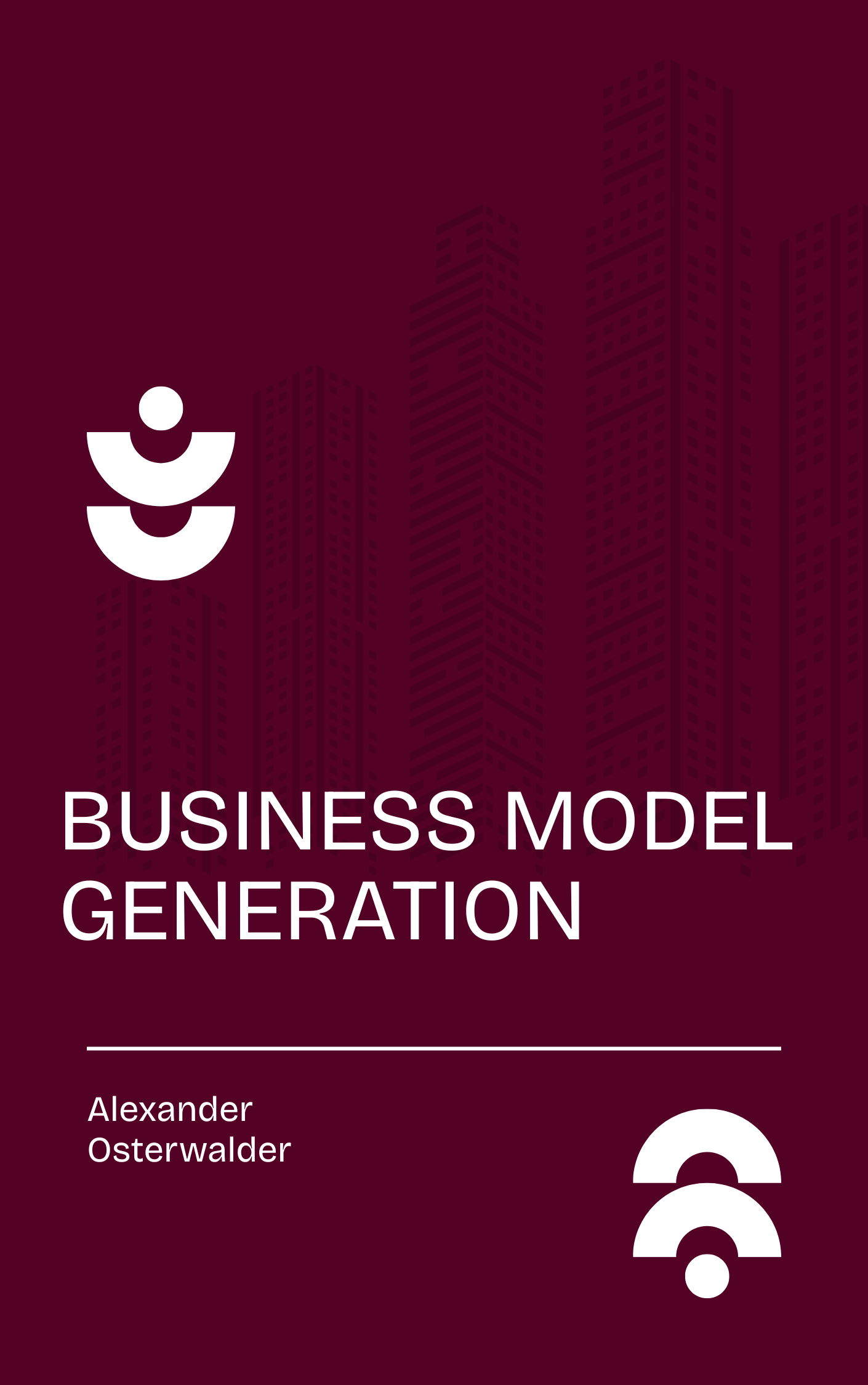
Business Model Generation Book Summary
This Business Model Generation Book Summary covers the key ideas, lessons, and takeaways in about 20 minutes.
The central insight is that no business model is permanent. Markets shift, technologies advance, and customer expectations evolve. Those who continuously redesign and adapt their models—like Apple, Amazon, or Netflix—will outlast those who cling to outdated systems. The Canvas doesn’t just describe businesses; it cultivates a design mindset—one that combines creativity, collaboration, and strategic foresight to thrive in constant change.
Helps with these goals
Want the complete 20-minute summary?
- Full structured summary
- Video Summary
- Podcast Summary
- Audio summary
- Key takeaways
- Exercises
- Quiz
- Highlights and notes
- Ask the book with AI
What is in the Business Model Generation book summary?
Below is a preview of Sumizeit’s expert-written summary of Business Model Generation by Alexander Osterwalder,Yves Pigneur. The full summary covers the book’s key ideas in text, audio, and video.
Business Model Generation by Alexander Osterwalder and Yves Pigneur revolutionized the way businesses visualize and construct strategies. Instead of relying on dense, text-heavy plans, the book introduces the Business Model Canvas, a one-page, visual framework that provides a shared language to describe, assess, and redesign how a company creates, delivers, and captures value. The Canvas divides a business into nine interdependent components that cover everything from the customer to operations and finances. It’s simple yet powerful—used by startups, corporate teams, and even nonprofits to align vision and execution.
The book highlights how the Canvas transforms abstract strategy into something concrete and collaborative. Rather than one person drafting ideas in isolation, entire teams can gather around a printed Canvas and brainstorm with sticky notes, diagrams, and markers. This design-thinking approach makes strategy creation engaging and iterative. For example, when Apple launched the iPod and iTunes ecosystem, it didn’t just sell hardware—it built a seamless digital experience that connected artists, consumers, and technology through an integrated business model that redefined the music industry.
The Nine Building Blocks: Foundations of a Business Model
The Canvas identifies nine core building blocks essential to every business model:
Customer Segments – Who are the people or organizations the company serves? Netflix, for example, caters to casual viewers, binge-watchers, and film enthusiasts, each with tailored recommendations.
Value Propositions – What problems are solved or needs fulfilled? Tesla provides not only electric vehicles but also an emotional connection to sustainability and innovation.
Channels – How the product or service reaches customers. For instance, Nike combines retail stores, e-commerce, and mobile apps to ensure omnichannel access.
Customer Relationships – How the company interacts with customers, whether through automation, personal assistance, or communities.
Revenue Streams – How money flows in. Spotify’s freemium model—offering free access supported by ads and premium subscriptions—is a clear example.
Key Resources – The assets required to deliver value, from intellectual property to logistics systems.
Key Activities – The critical actions that make the business function, such as Amazon’s emphasis on fulfillment operations and technology development.
Key Partnerships – The network of allies, suppliers, and collaborators that enable efficiency and reach.
Cost Structure – The major costs that underpin the model, like R&D, marketing, and infrastructure.
The interplay among these blocks is crucial. Adjusting one, like introducing a new customer channel, often ripples through the others, requiring balance and alignment.
Business Model Patterns: Recognizing and Adapting Proven Structures
Osterwalder introduces five recurring patterns that many successful companies use to create value:
Unbundling Models – Separating different business functions to avoid conflicts, such as how telecom companies divide infrastructure management from customer relationships.
The Long Tail – Selling many niche products, each in low volume, exemplified by Amazon and Etsy.
Multi-Sided Platforms – Connecting different user groups, like Uber linking riders with drivers or YouTube connecting viewers with creators.
FREE as a Business Model – Offering free access to one group subsidized by another, as seen in Google’s ad-supported search engine.
Open Business Models – Collaborating…
Want the complete 20-minute summary?
- Full structured summary
- Video Summary
- Podcast Summary
- Audio summary
- Key takeaways
- Exercises
- Quiz
- Highlights and notes
- Ask the book with AI
Who should read Business Model Generation?
Business Model Generation is essential for entrepreneurs launching startups, corporate leaders seeking to innovate within established organizations, and product managers designing new offerings. Anyone tasked with clarifying how their business creates, delivers, and captures value will find this framework immediately applicable and transformative.
Why does Business Model Generation matter?
In today's rapidly changing business environment, static five-year plans are obsolete—companies must innovate continuously or risk disruption. Alexander Osterwalder and Yves Pigneur's Business Model Canvas provides a shared language and visual tool that enables teams to align strategy, test assumptions quickly, and adapt before markets shift. From startups to Fortune 500 companies, this methodology has become the gold standard for strategic thinking in the digital age.
What are the key themes in Business Model Generation?
- Visual strategy simplifies complexity and enables collaborative decision-making
- Business models are dynamic systems where all nine components must align
- Deep customer understanding drives breakthrough innovation
- Prototyping and iteration are essential to testing business viability
- Recurring patterns unlock proven paths to value creation
- Storytelling communicates business purpose beyond spreadsheets
What are the key lessons from the Business Model Generation book summary?
The Business Model Canvas unifies nine interdependent components
Customer segments, value propositions, channels, relationships, revenue streams, key resources, key activities, partnerships, and cost structure form an integrated whole where changes in one block ripple across all others.
Customer segments are not one-size-fits-all
Successful companies recognize distinct customer groups with different needs and tailor offerings accordingly, as Netflix does with casual viewers versus binge-watchers.
Value propositions must solve real problems or fulfill genuine desires
Tesla's proposition isn't simply vehicles but an emotional connection to sustainability; understanding what truly matters to customers is the foundation of compelling offerings.
Omnichannel distribution increases customer accessibility
Companies must consider how customers prefer to engage—retail, digital, mobile—and ensure seamless integration across all touchpoints, as Nike demonstrates with stores, e-commerce, and apps.
Revenue models determine financial viability
From freemium to subscription to advertising-supported, the choice of how money flows in fundamentally shapes the entire business model and customer experience.
Key resources and activities are the engine behind value delivery
Amazon's fulfillment operations and technology development exemplify how critical actions and assets must be precisely identified and continuously optimized.
Strategic partnerships amplify capability and reach
No company succeeds in isolation; identifying allies, suppliers, and collaborators multiplies efficiency and enables access to markets that would otherwise remain distant.
Cost structure must align with revenue model
Understanding major cost drivers—R&D, marketing, infrastructure—prevents misalignment between how you spend and how you earn.
Five recurring patterns provide blueprints for innovation
Unbundling, the long tail, multi-sided platforms, free models, and open business models are proven approaches that entrepreneurs can adapt and combine for their specific context.
Multi-sided platforms create value by connecting different users
Uber, YouTube, and similar businesses derive power by bringing together previously disconnected groups whose interactions generate network effects and exponential growth.
Empathy mapping reveals customer motivations beyond data
Understanding what customers think, feel, say, and do—through deep observation—uncovers insights that quantitative data alone cannot reveal.
Challenge assumptions through bold 'What if?' questions
Spotify emerged from asking 'What if people could access unlimited music for a monthly fee?' Breakthrough innovations begin by questioning the status quo.
Four epicenters of innovation offer different starting points
Whether driven by resources, offers, customers, or finances, each epicenter provides a distinct lens for generating and testing new business model possibilities.
Visualization transforms abstract strategy into tangible, shared understanding
Sketches, diagrams, and sticky notes on a canvas make strategy malleable and collaborative, removing hierarchical barriers and accelerating alignment.
Prototyping should begin early and iterate continuously
Simple prototypes—mock websites, dashboards, or financial simulations—validate assumptions with minimal investment before scaling, as Airbnb and Dropbox demonstrated.
Storytelling gives emotional resonance to business models
A compelling narrative around purpose and mission—like Tesla's acceleration toward sustainable energy—makes abstract strategies relatable and motivates alignment across the organization.
Environmental scanning prevents strategic blindness
Regularly monitoring market trends, competitor moves, and macroeconomic shifts enables proactive adaptation rather than reactive scrambling when disruption arrives.
Organizational ambidexterity sustains innovation in established firms
Large companies like Amazon balance maintaining current profitable operations while simultaneously exploring and incubating entirely new business models and ventures.
No business model is permanent in dynamic markets
Netflix's evolution from DVD rentals to streaming to content production illustrates that continuous reinvention is not optional but essential for long-term survival.
The five-phase design process moves ideas from conception to execution
Mobilize, Understand, Design, Implement, and Manage create a disciplined yet flexible pathway for translating innovative concepts into operational reality.
Want the complete 20-minute summary?
- Full structured summary
- Video Summary
- Podcast Summary
- Audio summary
- Key takeaways
- Exercises
- Quiz
- Highlights and notes
- Ask the book with AI
How can you apply ideas from Business Model Generation?
- Use the Business Model Canvas in team workshops to visualize and align your current business model or redesign it using sticky notes and collaborative brainstorming
- Create empathy maps for each major customer segment to uncover unarticulated needs and pain points that drive innovation opportunities
- Develop multiple business model prototypes before committing resources, testing assumptions through simple mockups or simulations
- Map your nine building blocks and identify which single block change could unlock new growth or competitive advantage
- Conduct regular environmental scans using SWOT analysis alongside the Canvas to anticipate disruption and seize emerging opportunities
- Apply the five recurring patterns (unbundling, long tail, platforms, free models, open models) to your industry to spot unexploited possibilities
- Craft a compelling narrative around your business model's purpose and mission to align employees and attract customers who share your values
What common mistakes do readers make with Business Model Generation?
- Treating the Business Model Canvas as a static document rather than a living, evolving tool that requires continuous iteration and testing
- Focusing on a single customer segment without recognizing distinct groups with different needs, preferences, and price sensitivities
- Falling in love with an idea too early and resisting feedback, instead of embracing prototyping and customer validation as the path to viability
- Ignoring the interdependence of the nine blocks and making isolated changes without considering ripple effects across the entire model
Sumizeit Exercises Apply what you've learned
Turn ideas from Business Model Generation into action with a short guided reflection: identify the biggest takeaway, connect it to your life, and commit to one step you can take in the next 24 hours.
What is the expert analysis of Business Model Generation?
Overview
Business Model Generation, authored by Alexander Osterwalder and Yves Pigneur, stands as a seminal work in the field of business strategy and innovation. Its significance lies in introducing the Business Model Canvas—a revolutionary, visual framework that distills complex business models into nine interrelated components. This approach democratizes strategy development by fostering collaboration, clarity, and creativity, making it accessible not only to entrepreneurs but also to corporate innovators and nonprofit leaders. Osterwalder and Pigneur, both esteemed scholars and practitioners, blend academic rigor with practical insight, positioning the book as a cornerstone in contemporary strategic thinking.
Core Thesis
The central argument of Business Model Generation is that successful business innovation depends on a structured yet flexible design process that visualizes and iterates on how value is created, delivered, and captured. The authors contend that traditional, text-heavy business plans are inadequate for today’s dynamic markets. Instead, by employing a shared visual language—the Business Model Canvas—teams can collaboratively explore, prototype, and adapt their models in response to shifting customer needs and competitive landscapes. This design-centric mindset, coupled with tools like empathy maps and storytelling, transforms strategy from a static document into a living, evolving practice.
Strengths
- Innovative Framework: The Business Model Canvas simplifies complex strategic elements into an intuitive, one-page tool that facilitates holistic thinking and alignment across diverse stakeholders.
- Practical Application: The book excels in bridging theory and practice, offering actionable processes such as ideation epicenters, prototyping methods, and a five-phase design process that guide readers from concept to execution.
- Collaborative Emphasis: By promoting visual thinking and participatory workshops, the authors foster a culture of co-creation that counters hierarchical, siloed decision-making.
- Rich, Contemporary Examples: The use of real-world cases—from Apple’s ecosystem to Airbnb’s platform—grounds abstract concepts in tangible successes, enhancing reader comprehension and inspiration.
- Holistic Perspective: The integration of customer insights, storytelling, and strategic adaptation underscores the multidimensional nature of innovation beyond mere financial metrics.
Critiques & Counterarguments
- Oversimplification Risk: While the Canvas offers clarity, it may underrepresent the complexity and messiness of real-world business dynamics, such as regulatory constraints or cultural factors, which require deeper analysis beyond nine blocks.
- Limited Empirical Validation: The framework’s broad applicability is compelling but lacks extensive longitudinal studies proving its superiority over traditional strategic planning in diverse industries and contexts.
- Potential Bias Toward Innovation-Centric Models: The emphasis on disruptive innovation and design thinking might marginalize businesses that succeed through incremental improvements or operational excellence, as championed by other schools like Lean Management.
- Competing Theories: Approaches such as the Resource-Based View (RBV) or Blue Ocean Strategy offer alternative lenses focusing respectively on internal capabilities and uncontested market spaces, which sometimes conflict with the Canvas’s external, customer-centric orientation.
- Challenges in Execution: The book advocates iterative prototyping and adaptation, yet many organizations struggle to embed such agility culturally and structurally, limiting the framework’s practical impact without complementary change management efforts.
Who Should Read This
Business Model Generation is essential reading for entrepreneurs, innovation managers, and strategic leaders who seek a fresh, actionable approach to business design. It is particularly valuable for those operating in fast-paced, technology-driven sectors where agility and customer-centricity are paramount. Additionally, educators and consultants will find its visual tools and collaborative methods effective for teaching and facilitating strategy development. However, readers grounded in traditional corporate hierarchies or heavily regulated industries should approach it as a complementary perspective rather than a prescriptive blueprint.
Frequently asked questions about the Business Model Generation book summary
What is Business Model Generation about?
Business Model Generation by Alexander Osterwalder and Yves Pigneur introduces the Business Model Canvas, a one-page visual framework that helps organizations describe, assess, and redesign how they create, deliver, and capture value. The book combines nine interdependent building blocks with practical tools like empathy maps, prototyping, and storytelling to enable teams to innovate collaboratively and adapt quickly to market changes.
Who should read Business Model Generation?
This book is essential for entrepreneurs launching startups, corporate leaders and managers seeking to innovate, product managers designing new offerings, and anyone responsible for strategic planning. It's equally valuable for nonprofit leaders, government agencies, and established companies that need to reinvent themselves in response to disruption.
What are the main takeaways from Business Model Generation?
The core takeaways are: (1) The Business Model Canvas provides a shared language for discussing strategy visually rather than through dense documents; (2) business models consist of nine interdependent components that must align; (3) deep customer understanding is the cornerstone of innovation; (4) prototyping and iteration enable faster learning than lengthy planning; (5) five recurring patterns (unbundling, long tail, platforms, free models, open models) offer proven blueprints; and (6) no business model is permanent—continuous adaptation is essential for survival.
What are the nine building blocks of the Business Model Canvas?
The nine blocks are: customer segments (who you serve), value propositions (problems you solve), channels (how you reach customers), customer relationships (how you interact), revenue streams (how you earn money), key resources (assets you need), key activities (critical actions), key partnerships (allies and suppliers), and cost structure (major expenses). Together they describe how a business operates end-to-end.
How does the Business Model Canvas differ from a traditional business plan?
The Canvas is visual, collaborative, and concise—fitting on a single page—whereas traditional business plans are text-heavy documents often drafted in isolation. The Canvas encourages iterative design thinking and rapid prototyping rather than static planning, making it better suited to today's dynamic, uncertain business environment where assumptions must be tested before scaling.
What are the five business model patterns Osterwalder identifies?
The five patterns are: Unbundling (separating different business functions to avoid conflicts), the Long Tail (selling many niche products in low volume), Multi-Sided Platforms (connecting different user groups), FREE as a Business Model (offering free access subsidized by another group), and Open Business Models (collaborating externally to co-create value). These patterns are proven approaches that can be adapted to different industries and contexts.
How can I use Business Model Generation to launch a startup?
Start by completing a Business Model Canvas to visualize your concept across all nine blocks, then use the Empathy Map to deeply understand your target customers' needs and pain points. Develop low-cost prototypes to test your key assumptions, gather feedback, and iterate rapidly. Follow the five-phase design process—Mobilize, Understand, Design, Implement, Manage—to move from concept to execution while remaining flexible and customer-focused.
Can established companies use Business Model Generation to innovate?
Absolutely. Established companies benefit enormously by using the Canvas to visualize their current model, identify which blocks could create new growth, and develop alternative models for emerging opportunities. The concept of organizational ambidexterity—maintaining current operations while exploring new ventures—is especially relevant. Companies like Amazon and Netflix demonstrate how the Canvas framework enables continuous reinvention alongside profitable core business.
About Sumizeit
Sumizeit is a profitable Scomy LLC company based in Miami, Florida. It has been helping readers learn from nonfiction books for 7 years with expert-written summaries in text, audio, podcast, and video.
Want the complete 20-minute summary?
- Full structured summary
- Video Summary
- Podcast Summary
- Audio summary
- Key takeaways
- Exercises
- Quiz
- Highlights and notes
- Ask the book with AI
Here's why readers love Sumizeit
Join thousands of learners getting smarter every day
"Great experience. Detailed summaries. Loved the gamification feature. Makes learning fun. Good customer service. I recommend Sumizeit to anyone. You'll learn a lot."
"I always felt busy but still wanting to keep up with the book discussion in my friend group. This was a great supplement to help me keep reading the books I find fun while keeping up with important books."
"I love this website. Instead of scrolling social media, I find myself learning a lot. I use it everyday. I recommend this app for anyone who is too busy and wants to get up to speed with their favorite books."
Business Model Generation Book Summary PDF
Looking for a Business Model Generation Book Summary PDF you can save and revisit offline? Our Business Model Generation Book Summary PDF captures the book’s core ideas in a clean, printable format — the key frameworks, takeaways, and structure without the fluff. Download the Business Model Generation Book Summary PDF when you want a reference you can annotate, share with your team, or review on the go. Get your Business Model Generation Book Summary PDF from the download page below.
Download Business Model Generation Book Summary PDFPeople also liked these summaries
Readers who explored Business Model Generation often enjoyed these titles next.



Want the complete 20-minute summary?
- Full structured summary
- Video Summary
- Podcast Summary
- Audio summary
- Key takeaways
- Exercises
- Quiz
- Highlights and notes
- Ask the book with AI
Featured Book Titles
Popular Book Summaries at sumizeit, leading book summary app