
Question 1 of 10


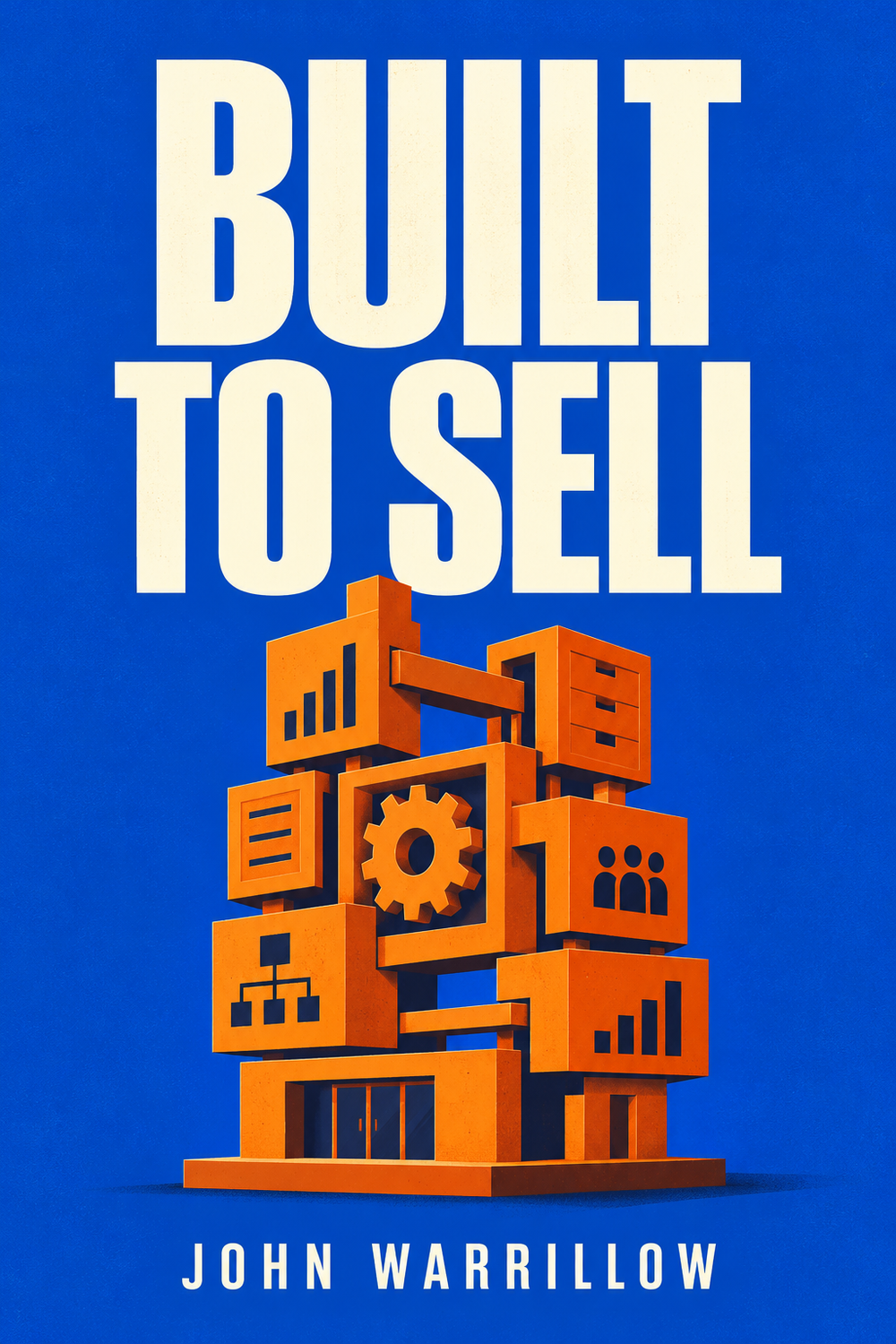
Prefer the print book? Buy on Amazon
As an Amazon Associate, Sumizeit earns from qualifying purchases.
Book Summary
Built to Sell Book Summary
This Built to Sell Book Summary covers the key ideas, lessons, and takeaways in about 20 minutes.
Short Description:
Practical guide to building a small business a buyer would want
Build a business that can run without you, and you end up with something valuable whether you sell it or not. That means picking one scalable specialty that customers can buy again and again, collecting cash early, hiring salespeople and managers who don't need you in the room, and keeping those managers around with rewards that pay out over time. When the day comes to sell, choose an adviser who fits your size and industry, tell your managers before a buyer surprises them, and know your number before the offers start. Do all that and you get a company that makes money, gives you freedom, and gives you a way out when you want one.
Helps with these goals
Preview the Built to Sell book summary
Below is a preview of Sumizeit’s comprehensive human-written summary of Built to Sell by John Warrillow. The full summary is 15-20 minutes long and covers the book’s key ideas in text, audio, visual, and video formats. Unlock the full 20 Minute Summary
John Warrillow's big claim in Built to Sell is simple. Build your small business so another person could buy it, even if you never plan to sell. He tells the book as a made up story about an owner getting his company ready for sale, but the advice boils down to a set of steps, and that's how this summary walks through it.
His first reason is that a sellable business is just a better business. Buyers look for strong profit margins, low risk, and room to grow. Those same qualities make your life easier whether or not anyone ever writes you a check.
His second reason is options. Things change fast. You might need cash on short notice, lose your appetite for the work, or get an offer you didn't see coming. If your company is already in sellable shape, you can say yes. If it isn't, you're stuck.
Warrillow isn't telling you to start a company just to flip it. He's telling you to run the company you have in a way that keeps the exit door open.
What makes a business sellable
One trait matters more than any other. The business has to work without you. A company that depends on its owner, or on one star employee, looks risky to a buyer, and most buyers will walk away from it.
Plenty of owners miss this because they slowly turn into the business. Customers only want to talk to them. Employees wait for their approval. Taking a week off feels dangerous, so leaving for good feels impossible. A buyer who sees that will ask a fair question. If the owner leaves, what exactly am I buying?
Warrillow's answer is a process. You pick the right product or service, build steady cash flow, hire people who can sell and manage without you, and then handle the sale itself with care.
The personal cost of doing everything yourself
There's a second reason to build a company that can stand on its own, and it has nothing to do with buyers. Carrying the whole thing on your back wears you down. Many new owners try to handle every job themselves, get exhausted, and lose the excitement that made them start. Some businesses die at exactly that point because the owner runs out of energy.
The fix is to think like a strategist instead of a worker. Be honest about what you can handle, and bring in help when you need it. Your job is to grow the business, and that rarely happens when you insist on doing everything yourself just because it's yours.
Step 1, find your scalable specialty
Warrillow starts by telling you to narrow your focus. Lots of small companies sell a little of everything. That keeps money coming in today, but it spreads your time and attention across too many fronts, and growth stalls. Pick one product or service you do well and can grow. He says a good one has three traits.
First, it offers unique…
Want the complete 20-minute summary?
- Full structured summary
- Video Summary
- Podcast Summary
- Audio summary
- Key takeaways
- Exercises
- Quiz
- Highlights and notes
- Ask the book with AI
Who should read Built to Sell?
Built to Sell is for entrepreneurs and small business owners who want to build valuable, sustainable companies. Whether you plan to sell or not, this book teaches you how to create a business that runs independently and gives you the freedom to step away. If you're tired of being the linchpin holding everything together, or you want options for your future, this book applies to you.
Why does Built to Sell matter?
Most small business owners accidentally build themselves into their companies, becoming irreplaceable and trapped. John Warrillow's approach flips this by showing how to build a sellable business—which is simply a better business that generates stronger profits, operates with less risk, and gives you genuine freedom and optionality. In today's fast-moving economy, knowing how to make your company independent of you is crucial insurance and a path to real wealth creation.
What are the key themes in Built to Sell?
- Building a business that works without you
- Specialization and focus as drivers of value
- The relationship between cash flow and growth
- Delegation and team building as multipliers
- Creating a repeatable, scalable service or product
- Retaining key talent before a sale
- Choosing the right adviser for your exit
- Personal freedom through operational excellence
How can you apply ideas from Built to Sell?
- Audit your current business model: What would happen if you took a month off? Are customers and employees dependent on your personal involvement? Use this as a reality check.
- Define your one core specialty and commit to it in writing. Write down why customers choose you over alternatives and what makes your offering learnable for others.
- Map out your revenue model and shift it toward repeat business. If you sell one-time services, design a maintenance or subscription tier that keeps customers coming back.
- Build a training program or playbook for your core service so new hires can deliver it consistently within 12 weeks, reducing dependency on you or a star employee.
- Hire your first salesperson from the product-sales background and give them a fixed offer to pitch. Measure their success and reinforce consistency before hiring a second.
- Create a three-year bonus account for your top two managers, vesting 25% per year. Make it conditional on staying through a transition or sale to lock in stability.
- Document all key business processes and customer relationships so a buyer (or a temporary manager) can step in without losing continuity.
- Contact a business broker or M&A advisor aligned with your revenue size and industry, and ask them what your company would be worth today and what would increase that valuation.
What common mistakes do readers make with Built to Sell?
- Trying to do everything yourself because you think no one else can do it as well, which exhausts you and proves to buyers that the business depends entirely on you.
- Selling a mix of products and services to many customer types, which spreads your attention and prevents you from becoming exceptional in any one area.
- Hiring service salespeople who customize offers for each deal, which breaks your repeatable model and ties future sales to your involvement in closing.
- Giving managers equity stakes without clear buyout terms, which introduces co-owners who may block a sale or demand a premium that eats into your proceeds.
- Waiting to tell managers about a sale until a buyer shows up for due diligence, which feels like a betrayal and destabilizes the team at a critical moment.
Sumizeit Exercises Apply what you've learned
Turn ideas from Built to Sell into action with a short guided reflection: identify the biggest takeaway, connect it to your life, and commit to one step you can take in the next 24 hours.
What is the expert analysis of Built to Sell?
Overview
Built to Sell by John Warrillow stands as a significant contribution to the literature on entrepreneurship and small business management. Warrillow, an experienced entrepreneur and small business expert, distills his practical knowledge into a compelling narrative that doubles as a strategic guide. The book’s significance lies in its clear, actionable framework for transforming a small business into an entity that is not only profitable but also attractive to potential buyers. By framing the advice within a fictional story, Warrillow makes complex business concepts accessible without sacrificing depth, appealing to both seasoned entrepreneurs and those new to business ownership.
Core Thesis
The central argument of Built to Sell is deceptively simple yet profound: entrepreneurs should build their businesses as if they intend to sell them, even if they never plan to do so. This mindset fosters the creation of a company that operates independently of its owner, characterized by scalable specialties, repeatable revenue streams, and strong management teams. Warrillow contends that such a business is inherently better—more profitable, less risky, and more adaptable—providing the owner with freedom, resilience, and strategic options regardless of whether a sale ever occurs.
Strengths
- Practical Framework: Warrillow’s step-by-step process—from identifying a scalable specialty to hiring the right salespeople and managers—offers actionable guidance grounded in real-world experience.
- Focus on Independence: The insistence that a business must function without its owner addresses a common entrepreneurial pitfall and aligns with best practices in sustainable business growth.
- Balanced Advice on Incentives: The nuanced discussion on management incentives, favoring deferred bonuses over equity or profit sharing, reflects a sophisticated understanding of ownership dynamics and buyer concerns.
- Strategic Mindset Shift: Encouraging owners to think like strategists rather than workers helps reframe the entrepreneurial role, emphasizing growth and delegation over hands-on involvement.
- Industry-Specific Selling Advice: The guidance on selecting an adviser based on company size and industry knowledge demonstrates an appreciation for the complexities of business sales.
Critiques & Counterarguments
- Overemphasis on Saleability: While building a business to sell can improve operations, some argue this focus risks prioritizing short-term marketability over long-term innovation and customer relationships. The book may underplay the value of entrepreneurial passion and vision that do not align neatly with saleability metrics.
- Limited Consideration of Diverse Business Models: Warrillow’s model favors businesses with repeatable, scalable products or services, potentially marginalizing companies in creative, bespoke, or highly specialized sectors where customization and owner involvement are intrinsic to value.
- Potential Oversimplification of Management Dynamics: The recommended incentive structures, while pragmatic, may not fully capture the complexities of motivating and retaining top talent, especially in competitive labor markets or industries with high turnover.
- Contrasting Schools of Thought: Opposing perspectives from organizational psychology emphasize intrinsic motivation and empowerment over financial incentives alone, suggesting that Warrillow’s approach might benefit from integrating these insights.
- Real-World Variability: Empirical evidence shows that many successful businesses remain owner-dependent yet thrive and sometimes sell at high multiples due to brand strength or niche dominance, challenging the universality of the “business without you” principle.
Who Should Read This
Built to Sell is ideal for small business owners and entrepreneurs who seek to professionalize and scale their operations with an eye toward eventual liquidity or simply greater operational freedom. It is particularly valuable for those who feel overwhelmed by day-to-day demands and wish to build a sustainable enterprise that can thrive independently. Additionally, aspiring entrepreneurs who want to avoid common pitfalls of owner-dependence will find Warrillow’s insights instructive. However, readers involved in highly customized or creative businesses should approach the book’s prescriptions with a critical eye, adapting its principles to their unique contexts.
Discussion questions for Built to Sell Short questions you can actually use in a conversation
Frequently asked questions about the Built to Sell book summary
What is Built to Sell about?
Built to Sell by John Warrillow is a guide to building a small business that can run without you, making it valuable and sellable—whether or not you ever plan to sell. Through a narrative story and practical steps, Warrillow teaches how to focus on a repeatable specialty, establish cash flow, hire and retain strong teams, and structure an exit that maximizes your payout and minimizes your ongoing involvement.
Who should read Built to Sell?
Built to Sell is essential for any entrepreneur or small business owner who feels trapped by their company, serving as the go-to person for every major decision. It's also valuable for anyone who wants options in the future, whether that's a sale, a step-back role, or the freedom to pursue other interests. If you're tired of working in your business instead of on it, this book provides a roadmap.
What are the main takeaways from Built to Sell?
The core message is that a sellable business is simply a better business—one with steady cash flow, repeatable revenue, and independent operations. The main steps are: pick one scalable specialty customers want repeatedly, collect cash early, hire salespeople and managers who don't need you in the room, retain key staff with structured incentives, work with the right adviser when ready to sell, and know your price in advance. Follow this roadmap and you gain both freedom and valuable options.
Why should I build a sellable business if I never plan to sell?
A sellable business is also a better business to own and operate. It generates stronger profit margins, runs more smoothly without your constant involvement, scales faster, and gives you flexibility and options if circumstances change—whether you need cash quickly, lose interest in the work, or receive an unexpected offer. Building with these principles protects you and creates genuine freedom.
How do I know what my specialty should be?
Your specialty should meet three criteria: it offers unique value (customers struggle to find it elsewhere), it's learnable (others can deliver it consistently through training), and it's repurchasable (customers buy again and again, ideally through subscriptions). Start by writing down what you do better than competitors, what you could teach a new hire to do reliably within 12 weeks, and which offerings generate repeat revenue.
What kind of sales team should I hire to scale my business?
Hire salespeople with a background selling products rather than services. Product salespeople pitch one fixed offer consistently, which reinforces your repeatable model. Service salespeople customize deals for each client, which breaks scalability and keeps them asking you for approvals. Hire at least two salespeople so sales success proves your offer is strong, not just that one person is charismatic.
How do I retain my best managers before and through a sale?
Structure a bonus account for each key manager: contribute money each year that they can't access immediately. After three years, they vest 25% per year, so leaving early costs them real money. This is better than equity (which creates co-owners with conflicting interests) or profit sharing (which creates incentives to resist moves that boost buyer value). The deferred vesting keeps managers committed through a transition.
When should I tell my team about a potential sale?
Tell your managers once you have a real buyer interested, not before. Learning about a sale in a due diligence meeting from a stranger feels like betrayal and destabilizes the team. Giving them a heads-up privately, and explaining how a sale could mean more growth opportunities and potential bonuses, softens the shock and protects trust and morale.
About Sumizeit
Sumizeit is a profitable Scomy LLC company based in Miami, Florida. Our founders, Clemens Raemy and Weina Scott, are successful entrepreneurs with several exits. Sumizeit is a popular book summary app / micro learning app used by busy professionals and entrepreneurs with over 2,500 non-fiction book summaries and 10,000 podcast summaries in text, audio, visual, podcast, and video format. We also have stellar retention tools to make ideas stick - such as flashcards with spaced repetition, quizzes, streaks, highlighting and notes, daily challenges, riddles, mini-courses, meditation, and more. You won't only learn the idea, but also remember it. Over 90% of our users change their habits with Sumizeit.
Upgrade Now
Here's why readers love Sumizeit
Join thousands of learners getting smarter every day
"Great experience. Detailed summaries. Loved the gamification feature. Makes learning fun. Good customer service. I recommend Sumizeit to anyone. You'll learn a lot."
"I always felt busy but still wanting to keep up with the book discussion in my friend group. This was a great supplement to help me keep reading the books I find fun while keeping up with important books."
"I love this website. Instead of scrolling social media, I find myself learning a lot. I use it everyday. I recommend this app for anyone who is too busy and wants to get up to speed with their favorite books."
Built to Sell Book Summary PDF
Looking for a Built to Sell Book Summary PDF you can save and revisit offline? Our Built to Sell Book Summary PDF captures the book’s core ideas in a clean, printable format — the key frameworks, takeaways, and structure without the fluff. Download the Built to Sell Book Summary PDF when you want a reference you can annotate, share with your team, or review on the go. Get your Built to Sell Book Summary PDF from the download page below.
Download Built to Sell Book Summary PDFPeople also liked these summaries
Readers who explored Built to Sell often enjoyed these titles next.

Ready to read the whole thing?
- Full structured summary
- Video Summary
- Podcast Summary
- Audio summary
- Key takeaways
- Exercises
- Quiz
- Highlights and notes
- Ask the book with AI
Featured Book Titles
Popular Book Summaries at sumizeit, leading book summary app
Atomic Habits Book Summary Rich Dad Poor Dad Book Summary The Four Agreements Book Summary The 48 Laws of Power Book Summary When Breath Becomes Air Book Summary Think and Grow Rich Book Summary