


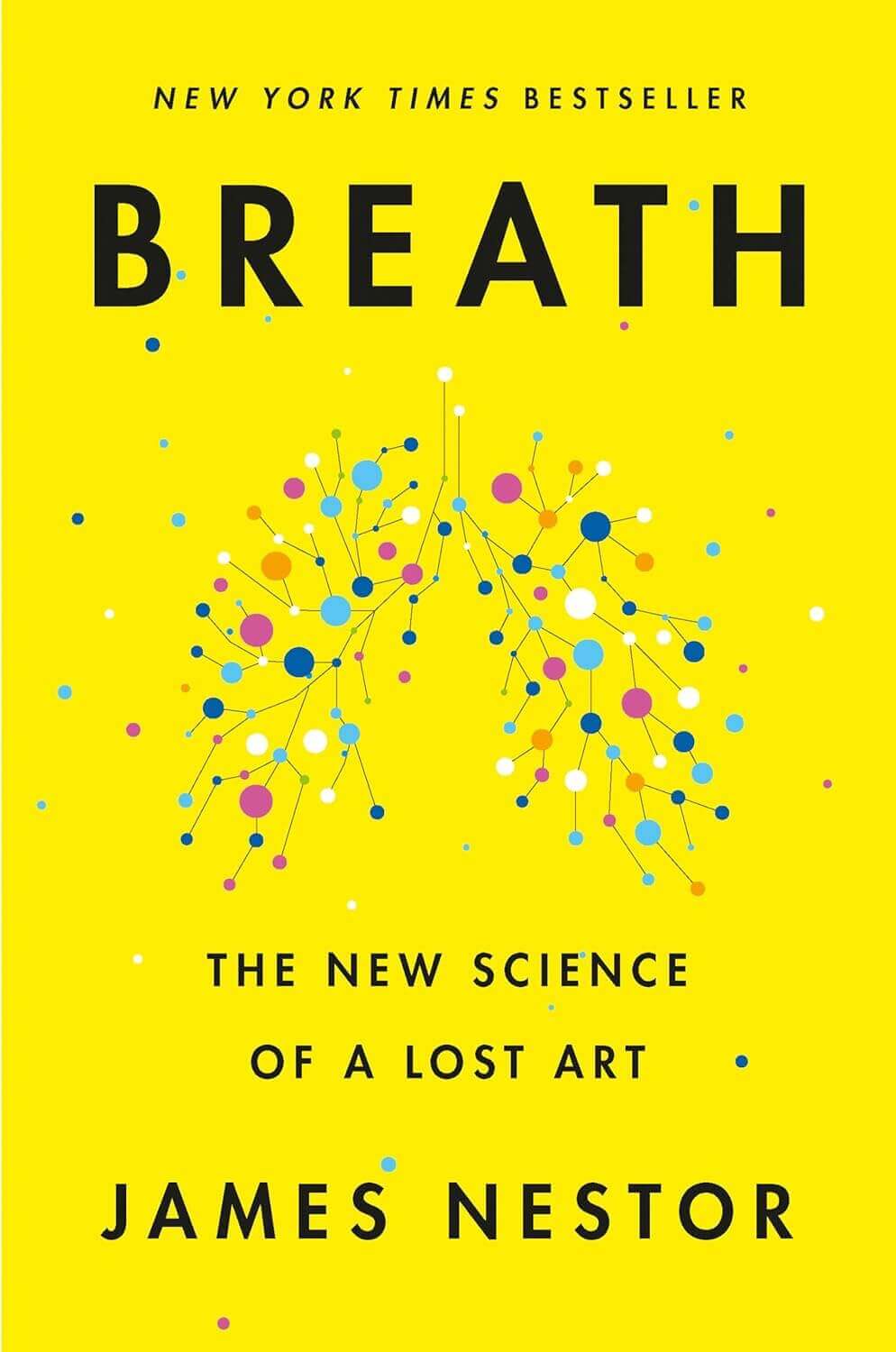
Prefer the print book? Buy on Amazon
As an Amazon Associate, Sumizeit earns from qualifying purchases.
Breath Book Summary
This Breath Book Summary covers the key ideas, lessons, and takeaways in about 20 minutes.
Breath shows breathing techniques improve health, mood, and resilience.
Helps with these goals
Want the complete 20-minute summary?
- Full structured summary
- Video Summary
- Podcast Summary
- Audio summary
- Key takeaways
- Exercises
- Quiz
- Highlights and notes
- Ask the book with AI
Want a Free Weekly Read?
Get a free summary every week straight to your mailbox.
Preview the Breath book summary
Below is a preview of Sumizeit’s comprehensive human-written summary of Breath by James Nestor. The full summary is 15-20 minutes long and covers the book’s key ideas in text, audio, visual, and video formats. Unlock the full 20 Minute Summary
James Nestor’s Breath: The New Science of a Lost Art reveals that modern humans have forgotten how to breathe correctly, and this widespread dysfunction is silently fueling many chronic health issues. He argues that improper breathing patterns—especially mouth breathing, rapid shallow breaths, and chronic overbreathing—contribute to anxiety, sleep disorders, fatigue, asthma, high blood pressure, cognitive decline, inflammation, and even structural changes to the face and airway. Through scientific research, historical wisdom, medical case studies, and personal experimentation, Nestor uncovers that breathing is not an automatic reflex beyond our control, but a trainable skill that can dramatically improve physical and mental well-being.
How Human Evolution Compromised Our Airways
Humans are anatomically disadvantaged breathers compared to other mammals. As our brains evolved and skulls reshaped to support speech, the airway narrowed and became more prone to obstruction. For thousands of years, this wasn’t a major problem because humans chewed tough, fibrous natural foods, which strengthened the jaw and widened facial bones. But with the rise of agriculture and especially the industrial food revolution, diets became soft and easy to chew, depriving facial structures of necessary mechanical stress. As a result, modern faces have weakened jawlines, crowded teeth, smaller mouths, and reduced nasal cavities, leaving less room for air. Anthropological comparisons show that ancient skulls almost universally had straight teeth and wide jaws, while modern skulls reveal narrow palates and collapsed midfaces. Indigenous cultures still eating traditional diets rarely experience crooked teeth, snoring, or sleep apnea, whereas today over 90% of American children develop orthodontic problems and many become habitual mouth breathers early in life.
Mouth Breathing and Its Damaging Effects
The mouth is designed as an emergency breathing passage, not the primary one. Chronic mouth breathing exposes the lungs to cold, unfiltered, dry air, which irritates tissues, increases inflammation, and forces the heart and lungs to work harder. It raises cortisol and adrenaline levels, activates the sympathetic “fight or flight” system, and contributes to fatigue, anxiety, and metabolic instability. Mouth breathing is a major contributor to snoring and sleep apnea, because the jaw and tongue collapse backward during sleep and obstruct airflow. To demonstrate this, Nestor participates in a Stanford experiment where his nose is blocked for 10 days. His snoring increases 4,000%, his blood pressure rises into hypertension, his heart rate climbs, his oxygen saturation falls, and he becomes exhausted, irritable, and mentally foggy. These rapid changes mirror years of damage many people unknowingly accumulate. When he returns to nasal breathing, his physiology normalizes within days, proving how quickly breathing can affect health.
Overbreathing and the Role of Carbon Dioxide
Many people believe that deeper or faster breathing increases oxygen uptake, but Nestor explains that most people actually breathe too much. Overbreathing flushes out carbon dioxide, which is essential for releasing oxygen from hemoglobin so tissues can absorb it (known as the Bohr effect). If CO₂ levels drop too low, oxygen remains trapped in the bloodstream, and organs and muscles suffocate at the cellular level.
Want the complete 20-minute summary?
- Full structured summary
- Video Summary
- Podcast Summary
- Audio summary
- Key takeaways
- Exercises
- Quiz
- Highlights and notes
- Ask the book with AI
Who should read Breath?
Breath is for anyone experiencing chronic health issues like sleep apnea, anxiety, asthma, or fatigue—or anyone simply wanting to optimize their physical and mental performance. If you've ever felt overwhelmed, exhausted, or struggled with focus, this book reveals how your breathing patterns may be the hidden culprit and how to fix them.
Why does Breath matter?
Modern humans have fundamentally broken their breathing, yet most people don't realize it's the problem. James Nestor's Breath shows that conditions we treat with medications—from panic disorders to hypertension—often stem from dysfunctional breathing rooted in evolutionary changes and modern lifestyle. Understanding and retraining your breath offers a science-backed path to reclaim health without drugs.
What are the key themes in Breath?
- Mouth breathing as a root cause of modern health problems
- The critical role of carbon dioxide in oxygen delivery
- Nasal breathing and nitric oxide production
- Facial structure decline and its impact on airways
- The power of slow, resonant breathing rhythms
- The diaphragm's central role in whole-body health
- Breath as a trainable skill, not just an automatic reflex
- Ancient wisdom validated by modern science
Want the complete 20-minute summary?
- Full structured summary
- Video Summary
- Podcast Summary
- Audio summary
- Key takeaways
- Exercises
- Quiz
- Highlights and notes
- Ask the book with AI
How can you apply ideas from Breath?
- Breathe exclusively through your nose during daily activities and exercise to improve oxygen efficiency and reduce stress activation
- Practice resonant breathing for 10 minutes daily at a pace of 5.5 breaths per minute to lower blood pressure and stabilize mood
- Use mouth-taping at night to prevent mouth breathing during sleep and improve oxygen saturation and sleep quality
- Incorporate harder, more fibrous foods like raw vegetables, nuts, and chewy meats to strengthen jaw and widen airways naturally
- Practice gentle breath holds (5-10 seconds) several times daily to increase CO₂ tolerance and reduce anxiety sensitivity
- Use extended exhalation breathing (exhale longer than inhale) when anxious to activate the calming parasympathetic nervous system
- Maintain proper tongue posture—resting on the palate with lips closed—to support healthy jaw growth and airway openness
- Apply box breathing (4-4-4-4 count) under stress or before high-pressure situations to maintain mental clarity and composure
What common mistakes do readers make with Breath?
- Believing deeper or faster breathing increases oxygen uptake when overbreathing actually depletes critical CO₂ and reduces oxygen delivery
- Relying solely on medications for asthma, anxiety, or sleep apnea without addressing underlying breathing dysfunction
- Continuing mouth breathing during exercise, which inefficiently delivers oxygen and causes premature fatigue
- Ignoring tongue posture and allowing it to rest low in the mouth, which restricts airway development and growth
- Attempting advanced breathwork techniques like extended apnea without proper training, which can be dangerous
- Assuming poor breathing patterns are just bad habits rather than symptoms of underlying facial structure changes that may need intervention
Sumizeit Exercises Apply what you've learned
Turn ideas from Breath into action with a short guided reflection: identify the biggest takeaway, connect it to your life, and commit to one step you can take in the next 24 hours.
What is the expert analysis of Breath?
Overview
Breath: The New Science of a Lost Art by James Nestor is a groundbreaking exploration into the overlooked yet vital function of human respiration. Nestor, an accomplished science journalist with a background in investigative reporting for prestigious outlets such as The New York Times and Scientific American, synthesizes cutting-edge scientific research, historical insights, and personal experimentation to challenge prevailing assumptions about breathing. The book’s significance lies in its interdisciplinary approach, bridging anthropology, physiology, psychology, and even spirituality to reveal how modern lifestyles have disrupted an essential biological process, with profound health consequences.
Core Thesis
Nestor’s central argument is that modern humans have largely forgotten how to breathe properly, leading to widespread chronic health issues. He posits that dysfunctional breathing patterns—especially mouth breathing, overbreathing, and rapid shallow breaths—are at the root of ailments ranging from anxiety and sleep disorders to hypertension and structural facial changes. Contrary to the common belief that breathing is an automatic, uncontrollable reflex, Nestor asserts that breathing is a trainable skill. By restoring nasal breathing, optimizing breath rhythm, and strengthening the diaphragm, individuals can radically improve physical health, mental clarity, and emotional stability.
Strengths
- Interdisciplinary Synthesis: Nestor adeptly weaves together diverse fields—anthropology, respiratory physiology, clinical medicine, and traditional practices—offering a holistic view rarely seen in popular health literature.
- Engaging Personal Narrative: His willingness to undergo extreme breathing experiments, including the Stanford nasal blockage study, lends credibility and immediacy to the scientific claims.
- Practical Application: The book provides accessible, evidence-based techniques such as nasal breathing, resonant breathing rhythms, and oral posture adjustments, empowering readers to enact tangible health improvements.
- Historical and Evolutionary Context: By tracing the anatomical and dietary shifts that have compromised human airways, Nestor situates breathing dysfunction within a broader evolutionary narrative.
- Integration of Ancient Wisdom and Modern Science: The alignment of yogic pranayama, indigenous practices, and cutting-edge clinical studies enriches the book’s authority and appeal.
Critiques & Counterarguments
- Evidence Scope and Generalizability: While compelling, some of the clinical claims rely heavily on small studies, anecdotal reports, or emerging research that has yet to achieve broad consensus in the medical community.
- Oversimplification of Complex Conditions: At times, the book risks reducing multifactorial diseases such as anxiety, hypertension, and sleep apnea to breathing dysfunction alone, potentially underestimating genetic, environmental, and psychological contributors.
- Potential Confirmation Bias: Nestor’s personal experimentation and selective presentation of studies may skew the narrative toward breathwork’s benefits, with less attention to null or negative findings.
- Contrasting Respiratory Models: Some respiratory physiologists emphasize the role of cardiovascular fitness, neural control, and metabolic factors beyond breathing patterns, suggesting a more integrated approach than breath retraining alone.
- Practical Limitations: Techniques like mouth taping or palatal expansion may not be feasible or safe for all populations, and the book could better address contraindications or individual variability.
Who Should Read This
Breath is ideal for readers interested in the intersection of health, physiology, and self-improvement who appreciate a rigorous yet accessible synthesis of science and tradition. It appeals to medical professionals seeking fresh perspectives on respiratory health, athletes and performers aiming to optimize endurance and focus, and individuals grappling with chronic conditions such as anxiety, asthma, or sleep apnea. Moreover, those fascinated by evolutionary biology and the subtle ways modern lifestyles impact human biology will find Nestor’s insights provocative and enlightening. Ultimately, Breath serves as both a call to awareness and a practical guide for harnessing one of the body’s most fundamental yet underutilized capacities.
Frequently asked questions about the Breath book summary
What is Breath about?
Breath: The New Science of a Lost Art by James Nestor reveals that modern humans have forgotten how to breathe correctly, and this widespread dysfunction silently fuels chronic health issues like anxiety, sleep apnea, asthma, and fatigue. Through scientific research, case studies, and personal experimentation, Nestor shows that breathing is a trainable skill—not just an automatic reflex—and that returning to nasal breathing, slowing respiration, and improving CO₂ tolerance can dramatically transform physical and mental health.
Who should read Breath?
Breath is essential for anyone experiencing chronic health issues like sleep apnea, anxiety disorders, asthma, fatigue, or high blood pressure, as well as athletes, performers, and anyone seeking to optimize their physical and mental performance. Even if you don't have diagnosed conditions, the book offers practical techniques to boost energy, sleep quality, focus, and emotional resilience.
What are the main takeaways from Breath?
The core takeaways include: modern humans have anatomically compromised airways due to soft diets and evolutionary changes; mouth breathing triggers stress responses and reduces oxygen delivery; slow nasal breathing optimizes the nervous system and health; the optimal breathing rhythm across cultures is about 5.5 breaths per minute; and simple practices like nasal breathing, proper exhalation, breath holds, and chewing tough foods can rewire your health at the most fundamental level.
How does mouth breathing affect your health?
Chronic mouth breathing exposes lungs to cold, unfiltered, dry air, triggering inflammation and forcing the heart and lungs to work harder. It raises cortisol and adrenaline, activates the stress response, contributes to snoring and sleep apnea, and causes anxiety, fatigue, and cognitive decline. Nestor's Stanford experiment showed that just ten days of forced mouth breathing caused blood pressure to spike into hypertension and snoring to increase 4,000%.
What is the Bohr effect and why does it matter for breathing?
The Bohr effect describes how carbon dioxide is essential for hemoglobin to release oxygen so tissues can absorb it. When people overbreathe, they flush out CO₂, which paradoxically causes oxygen to remain trapped in the bloodstream while tissues starve for oxygen. This explains why hyperventilation causes panic and dizziness despite ample oxygen—improving breathing means maintaining optimal CO₂ levels, not just inhaling more.
Can breathing techniques really reduce asthma and anxiety?
Yes, clinical evidence shows that breathing retraining methods like the Buteyko Method can significantly reduce asthma attacks and inhaler dependency by normalizing breathing volume and increasing CO₂ tolerance. Similarly, people with anxiety and panic disorders often show dramatic improvements when they retrain breathing patterns, since slow nasal breathing activates the calming vagus nerve and reduces hypersensitive fear responses.
What is resonant breathing and how do I practice it?
Resonant breathing is a slow, optimal rhythm of approximately 5.5 breaths per minute—around 5.5 seconds inhaling and 5.5 seconds exhaling—that appears repeatedly across yogic, religious, and cultural traditions worldwide. Modern research shows that just 10 minutes daily of resonant breathing improves heart rate variability, lowers blood pressure, reduces stress hormones, and enhances emotional stability. You can practice it by counting your inhales and exhales to reach this gentle pace.
Is it too late to improve my facial structure and airway?
No—facial bones remain responsive throughout life via stem cells in cranial sutures that adapt to pressure. Incorporating tougher, more fibrous foods like raw carrots and nuts can stimulate bone growth that widens the airway. Additionally, modern orthodontic devices like the Homeoblock can widen the palate, and maintaining proper tongue posture (tongue on palate, lips closed) can help reopen airway space even in adults.
About Sumizeit
Sumizeit is a profitable Scomy LLC company based in Miami, Florida. Our founders, Clemens Raemy and Weina Scott, are successful entrepreneurs with several exits. Sumizeit is a popular book summary app / micro learning app used by busy professionals and entrepreneurs with over 2,500 non-fiction book summaries and 10,000 podcast summaries in text, audio, visual, podcast, and video format. We also have stellar retention tools to make ideas stick - such as flashcards with spaced repetition, quizzes, streaks, highlighting and notes, daily challenges, riddles, mini-courses, meditation, and more. You won't only learn the idea, but also remember it. Over 90% of our users change their habits with Sumizeit.
Upgrade Now
Want the complete 20-minute summary?
- Full structured summary
- Video Summary
- Podcast Summary
- Audio summary
- Key takeaways
- Exercises
- Quiz
- Highlights and notes
- Ask the book with AI
Here's why readers love Sumizeit
Join thousands of learners getting smarter every day
"Great experience. Detailed summaries. Loved the gamification feature. Makes learning fun. Good customer service. I recommend Sumizeit to anyone. You'll learn a lot."
"I always felt busy but still wanting to keep up with the book discussion in my friend group. This was a great supplement to help me keep reading the books I find fun while keeping up with important books."
"I love this website. Instead of scrolling social media, I find myself learning a lot. I use it everyday. I recommend this app for anyone who is too busy and wants to get up to speed with their favorite books."
Breath Book Summary PDF
Looking for a Breath Book Summary PDF you can save and revisit offline? Our Breath Book Summary PDF captures the book’s core ideas in a clean, printable format — the key frameworks, takeaways, and structure without the fluff. Download the Breath Book Summary PDF when you want a reference you can annotate, share with your team, or review on the go. Get your Breath Book Summary PDF from the download page below.
Download Breath Book Summary PDFPeople also liked these summaries
Readers who explored Breath often enjoyed these titles next.

Want the complete 20-minute summary?
- Full structured summary
- Video Summary
- Podcast Summary
- Audio summary
- Key takeaways
- Exercises
- Quiz
- Highlights and notes
- Ask the book with AI
Featured Book Titles
Popular Book Summaries at sumizeit, leading book summary app