


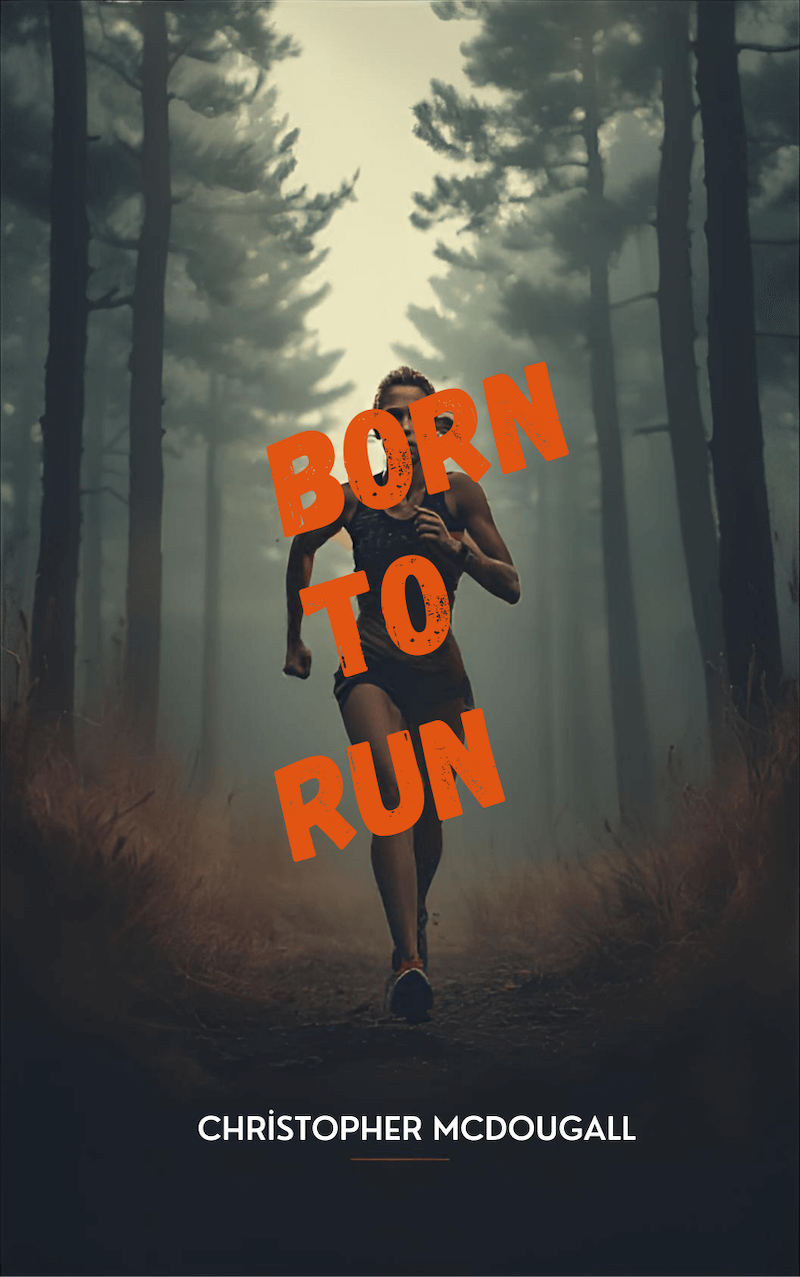
Prefer the print book? Buy on Amazon
As an Amazon Associate, Sumizeit earns from qualifying purchases.
Born To Run Book Summary
This Born To Run Book Summary covers the key ideas, lessons, and takeaways in about 20 minutes.
Short Description:
Born to Run reveals running as a birthright linked to biology and joy.
The book shows that many struggles runners face—injuries, burnout, frustration—stem from deviation from natural running patterns and the commercialization of athletics. By shifting perspective from competition and consumption to joy and sustainability, running becomes transformative. It reconnects us to our bodies, our communities, and the world.
Helps with these goals
Want a Free Weekly Read?
Get a free summary every week straight to your mailbox.
Preview the Born To Run book summary
Below is a preview of Sumizeit’s comprehensive human-written summary of Born To Run by Christopher McDougall. The full summary is 15-20 minutes long and covers the book’s key ideas in text, audio, visual, and video formats. Unlock the full 20 Minute Summary
Christopher McDougall begins his journey with a burning question that haunts many runners: Why does running hurt so much? After struggling with persistent injuries, he seeks medical explanations, only to be told repeatedly that his body simply isn’t built for long distances. Despite the discouragement, McDougall refuses to accept that humans—supposedly the most adaptable endurance creatures—should be so fragile when performing an activity presumably hardwired into our biology.
This personal frustration propels him into a deeper exploration of the true nature of running. He embarks on a quest to uncover why some runners can go extraordinary distances pain-free while many modern athletes suffer from chronic injuries. His investigation eventually leads him to the remote Copper Canyons of northern Mexico, where he encounters a mysterious runner known as Caballo Blanco and learns about the Tarahumara—an isolated Indigenous people who have mastered long-distance running and show little evidence of the ailments plaguing contemporary runners.
Through this journey, McDougall discovers that the key to sustained, joyful running lies not in cutting-edge technology or complex training systems, but in rediscovering the natural running instincts humans evolved millions of years ago.
The Tarahumara: A Community Rooted in Movement and Unity
Deep within the Mexican Sierra Madre mountains lives the Tarahumara, also known as the Rarámuri, meaning “the running people.” They are famous for traveling extraordinary distances, routinely covering 50-100 miles in a single effort, sometimes running continuously for multiple days. Running is not a sport to them—it is essential to survival, culture, and communal harmony.
Their lifestyle stands in stark contrast to Western society. Instead of competition fueled by ego and material reward, the Tarahumara view running as a celebration and an expression of togetherness. Their races, often taking place after nights of festivities and drinking corn-fermented beer, are cooperative community events rather than battles for dominance. Children learn to run through play, adults run as part of work and recreation, and elders continue running well into advanced age, reflecting the belief that movement is key to health and happiness.
Remarkably, the Tarahumara exhibit extremely low rates of chronic disease, mental disorders, and violent behavior. Their physical resilience appears inseparable from their social cohesion, sense of purpose, and minimal exposure to modern stressors. Through their example, McDougall observes that running can be transformative not only physically but also emotionally and spiritually, helping individuals feel more connected to each other and the world.
Evolutionary Evidence That Humans Are Natural Endurance Athletes
One of the core ideas explored in the book is the scientific reasoning behind why humans are uniquely suited to distance running. McDougall consults evolutionary biologists, anthropologists, and sports scientists who explain that numerous anatomical adaptations developed specifically to support persistence running—chasing prey until the animal collapses from heat exhaustion.
Features such as the Achilles tendon act like a built-in energy spring, the nuchal ligament stabilizes the skull during forward motion, and the gluteal muscles support upright running posture.
Want the complete 20-minute summary?
- Full structured summary
- Video Summary
- Podcast Summary
- Audio summary
- Key takeaways
- Exercises
- Quiz
- Highlights and notes
- Ask the book with AI
Who should read Born To Run?
Born to Run appeals to runners seeking to overcome chronic injuries and anyone curious about human potential and evolutionary biology. It's ideal for those disillusioned with commercialized fitness culture, ultra-endurance athletes, and readers interested in Indigenous wisdom and sustainable living practices. Whether you're a casual jogger or serious athlete, this book challenges conventional running advice and offers a refreshing perspective on movement.
Why does Born To Run matter?
In an era of rising injury rates among runners and the dominance of expensive athletic gear, Born to Run by Christopher McDougall offers evidence-based insights that question modern assumptions about footwear, training, and performance. The book bridges scientific research with real-world examples from the Tarahumara people, showing that sustainable endurance comes from understanding our evolutionary heritage rather than relying on commercial solutions. It fundamentally reframes running from a competitive sport into a path toward physical health, mental clarity, and community connection.
What are the key themes in Born To Run?
- Humans are naturally equipped for long-distance endurance running
- Modern running shoes may contribute to injuries rather than prevent them
- Community and joy are essential to sustainable athletic practice
- The mind plays a crucial role in determining physical limits
- Simplicity and minimalism outperform technological complexity
- Connection to nature and cultural wisdom holds practical value
How can you apply ideas from Born To Run?
- Transition gradually to minimalist shoes or barefoot running to strengthen intrinsic foot muscles and improve natural biomechanics
- Join a local running club or organize group runs to build community support and increase motivation for consistent practice
- Adopt a simple whole-foods diet centered on complex carbohydrates, legumes, and plant proteins rather than commercial sports supplements
- Practice high-cadence running with short strides and light foot landing under your body to reduce impact and improve efficiency
- Reframe running as play and exploration rather than workout achievement to cultivate joy and sustainable long-term practice
- Incorporate running into daily life as functional movement rather than isolating it as a specialized sport separate from other activities
- Study and adopt proper running form through observation and body awareness rather than expensive coaching or technology-dependent training apps
What common mistakes do readers make with Born To Run?
- Investing in expensive, heavily cushioned shoes assuming more padding prevents injuries when evidence suggests the opposite effect
- Treating running as purely competitive and achievement-focused, which creates burnout and disconnection from the joy of movement
- Relying on commercial sports supplements and gels instead of simple, whole foods that provide sustained energy
- Isolating running as a solitary activity rather than building community and social connection into practice
- Forcing rigid training systems that ignore individual body signals and natural running patterns, leading to chronic injury
Sumizeit Exercises Apply what you've learned
Turn ideas from Born To Run into action with a short guided reflection: identify the biggest takeaway, connect it to your life, and commit to one step you can take in the next 24 hours.
What is the expert analysis of Born To Run?
Overview
Born to Run by Christopher McDougall is a seminal work that transcends typical sports literature, weaving together anthropology, evolutionary biology, psychology, and cultural narrative to challenge prevailing assumptions about human endurance and running. McDougall, an accomplished journalist with a background in investigative reporting, uses his personal quest and vivid storytelling to explore why running, an activity seemingly innate to humans, has become so injurious and painful in modern times. The book’s significance lies in its synthesis of scientific research and indigenous wisdom, particularly through the lens of the Tarahumara people, whose extraordinary running capabilities and lifestyle offer a counterpoint to contemporary athletic practices.
Core Thesis
At its core, Born to Run argues that humans are evolutionarily designed for endurance running, and that the widespread injuries and discomfort experienced by modern runners stem largely from a departure from natural running mechanics and lifestyles. McDougall posits that running is not merely a sport or exercise but a fundamental survival mechanism embedded in our biology. The book asserts that reconnecting with innate movement patterns—exemplified by the Tarahumara’s minimalist footwear, communal running culture, and joyful approach—can restore running as a sustainable, pain-free, and even transformative activity.
Strengths
- Interdisciplinary Approach: McDougall skillfully integrates evolutionary biology, anthropology, physiology, and psychology, providing a holistic understanding of running that appeals to both scientific and general audiences.
- Compelling Narrative: The engaging storytelling, including McDougall’s personal struggles and the vivid portrayal of the Tarahumara and ultra-running culture, makes complex concepts accessible and emotionally resonant.
- Challenging Conventional Wisdom: The critique of modern running shoes and training methods sparked a paradigm shift in running communities, contributing to the rise of barefoot and minimalist running movements.
- Cultural Insight: The respectful and nuanced depiction of the Tarahumara offers a rare glimpse into a culture where running is integrally tied to social cohesion, spirituality, and longevity, enriching the book’s anthropological value.
- Psychological Depth: The exploration of mental endurance, joy, and the meditative aspects of running adds a profound dimension often overlooked in athletic literature.
Critiques & Counterarguments
- Romanticization of the Tarahumara: While the Tarahumara’s running culture is inspiring, some critics argue that McDougall idealizes their lifestyle, glossing over socioeconomic hardships and health challenges they face, which complicates the narrative of effortless endurance.
- Limited Scientific Rigor: The book relies heavily on anecdotal evidence and selective scientific studies, occasionally oversimplifying complex biomechanical and physiological debates about running form and injury causation.
- Contested Footwear Claims: The assertion that modern cushioned shoes cause injuries remains debated within sports medicine. Some research supports the benefits of cushioning and orthotics, especially for individuals with specific biomechanical needs, suggesting a one-size-fits-all barefoot prescription may be premature.
- Evolutionary Interpretation Challenges: The evolutionary argument for persistence hunting and endurance running, while compelling, is not universally accepted. Alternative theories emphasize tool use, social cooperation, and diverse locomotion strategies as equally critical to human survival.
- Modern Ultra-Running Complexity: The book’s portrayal of ultra-running as a pure, almost spiritual endeavor may overlook the commercialization, doping controversies, and health risks associated with extreme endurance sports in contemporary contexts.
Who Should Read This
Born to Run is essential reading for runners, athletes, coaches, and sports scientists interested in the biomechanics and psychology of endurance. Beyond the athletic community, it appeals to readers fascinated by human evolution, anthropology, and the interplay between culture and biology. Those seeking inspiration to reconnect with their bodies, challenge modern sedentary lifestyles, or explore the transformative potential of movement will find McDougall’s work both enlightening and motivating. Additionally, anyone curious about how ancient wisdom can inform modern health practices will appreciate the book’s rich, interdisciplinary insights.
Frequently asked questions about the Born To Run book summary
What is Born to Run about?
Born to Run by Christopher McDougall is a narrative investigation into why humans suffer running injuries and whether we are truly built for endurance. The book follows McDougall's journey to the Copper Canyons of Mexico where he discovers the Tarahumara, an Indigenous people renowned for running 50-100 miles without injury, and uncovers scientific evidence that humans evolved as natural distance runners. Through blending evolutionary biology, Indigenous wisdom, and modern ultra-running stories, McDougall argues that most running injuries and limitations stem from deviation from natural movement patterns and commercialized athletic culture rather than biological inadequacy.
Who should read Born to Run?
Born to Run appeals to runners of all levels who struggle with chronic injuries, anyone curious about human evolutionary capability, and those interested in challenging commercial culture and conventional wisdom. The book is ideal for ultra-endurance athletes, health-conscious readers seeking sustainable movement practices, and people interested in Indigenous knowledge and minimalist lifestyles. Whether you're a casual jogger questioning whether running is right for your body or a competitive athlete seeking performance insights, this book offers evidence-based and inspiring perspectives.
What are the main takeaways from Born to Run?
The main takeaways from Born to Run include: humans possess unique evolutionary adaptations that make us naturally suited for long-distance endurance, modern cushioned shoes may contribute to rather than prevent injuries, proper running form emphasizes efficiency and lightness over force, and community and joy are essential to sustainable athletic practice. Additionally, the book demonstrates that simple nutrition outperforms expensive supplements, running serves as meditation and healing practice, and many perceived physical limits are actually mental barriers. Finally, the Tarahumara exemplify that integrating running into daily life with cultural meaning produces resilience and vitality that modern isolated training cannot match.
Do I need expensive running shoes to prevent injury?
No, according to Born to Run, expensive cushioned shoes may actually contribute to higher injury rates by weakening intrinsic foot muscles and disrupting natural biomechanics. The Tarahumara successfully run extreme distances in simple huarache sandals, and research discussed in the book shows that minimal or barefoot running strengthens feet, improves proprioception, and encourages natural movement patterns. Rather than relying on external padding to mask inefficient form, McDougall recommends developing proper running technique and gradually transitioning to minimal footwear to build foot strength and natural shock absorption.
What is the significance of the Tarahumara in Born to Run?
The Tarahumara, an Indigenous people living in Mexico's Copper Canyons, serve as the central example in Born to Run demonstrating that humans can run extraordinary distances without injury or modern athletic equipment. The Tarahumara routinely cover 50-100 miles and show remarkably low rates of chronic disease, mental disorders, and violence despite living in harsh terrain. Their integration of running into daily life, emphasis on community over competition, simple diet, and use of minimal footwear prove that McDougall's arguments about natural human endurance capability are not theoretical but practically demonstrated by a living culture.
How does Born to Run explain human endurance abilities?
Born to Run explains human endurance through evolutionary biology, showing that humans developed unique anatomical features specifically adapted for persistence running including efficient sweat glands for temperature regulation, specialized tendons that act as energy springs, and gluteal muscles supporting upright posture. Unlike sprint-focused animals, humans excel at maintaining moderate pace for extended periods without overheating, suggesting our ancestors succeeded in hunting through endurance rather than speed. McDougall demonstrates that this evolutionary heritage remains embedded in modern human physiology, making long-distance running a birthright rather than a specialized skill.
Does Born to Run promote barefoot running?
Born to Run presents a nuanced argument about footwear rather than promoting purely barefoot running. The book presents evidence that minimalist footwear or barefoot running better supports natural biomechanics and foot strength than heavily cushioned shoes, using the Tarahumara's success in simple sandals as proof. However, McDougall emphasizes the principle of learning proper form and listening to your body rather than prescriptively requiring barefoot running. The key message is transitioning thoughtfully to minimal footwear to strengthen feet and develop efficient technique rather than adopting any extreme or dogmatic approach.
What role does mental toughness play in Born to Run?
Mental toughness is central to Born to Run's exploration of endurance, with McDougall arguing that many perceived physical limits are actually mental barriers created by fear, self-doubt, and cultural programming. Ultra-runners in the book describe transcendent mental states during extreme distances where physical suffering transforms into clarity and peace, suggesting the mind determines how far the body can go. The Tarahumara exemplify a different mental approach, viewing running as celebration and joy rather than suffering and strain, which paradoxically enables greater endurance. The book reveals that reclaiming childlike playfulness and presence fundamentally changes running from a chore into a sustainable, joyful practice.
About Sumizeit
Sumizeit is a profitable Scomy LLC company based in Miami, Florida. Our founders, Clemens Raemy and Weina Scott, are successful entrepreneurs with several exits. Sumizeit is a popular book summary app / micro learning app used by busy professionals and entrepreneurs with over 2,500 non-fiction book summaries and 10,000 podcast summaries in text, audio, visual, podcast, and video format. We also have stellar retention tools to make ideas stick - such as flashcards with spaced repetition, quizzes, streaks, highlighting and notes, daily challenges, riddles, mini-courses, meditation, and more. You won't only learn the idea, but also remember it. Over 90% of our users change their habits with Sumizeit.
Upgrade Now
Here's why readers love Sumizeit
Join thousands of learners getting smarter every day
"Great experience. Detailed summaries. Loved the gamification feature. Makes learning fun. Good customer service. I recommend Sumizeit to anyone. You'll learn a lot."
"I always felt busy but still wanting to keep up with the book discussion in my friend group. This was a great supplement to help me keep reading the books I find fun while keeping up with important books."
"I love this website. Instead of scrolling social media, I find myself learning a lot. I use it everyday. I recommend this app for anyone who is too busy and wants to get up to speed with their favorite books."
Born To Run Book Summary PDF
Looking for a Born To Run Book Summary PDF you can save and revisit offline? Our Born To Run Book Summary PDF captures the book’s core ideas in a clean, printable format — the key frameworks, takeaways, and structure without the fluff. Download the Born To Run Book Summary PDF when you want a reference you can annotate, share with your team, or review on the go. Get your Born To Run Book Summary PDF from the download page below.
Download Born To Run Book Summary PDFPeople also liked these summaries
Readers who explored Born To Run often enjoyed these titles next.
Ready to read the whole thing?
- Full structured summary
- Video Summary
- Podcast Summary
- Audio summary
- Key takeaways
- Exercises
- Quiz
- Highlights and notes
- Ask the book with AI
Featured Book Titles
Popular Book Summaries at sumizeit, leading book summary app