


Prefer the print book? Buy on Amazon
As an Amazon Associate, Sumizeit earns from qualifying purchases.
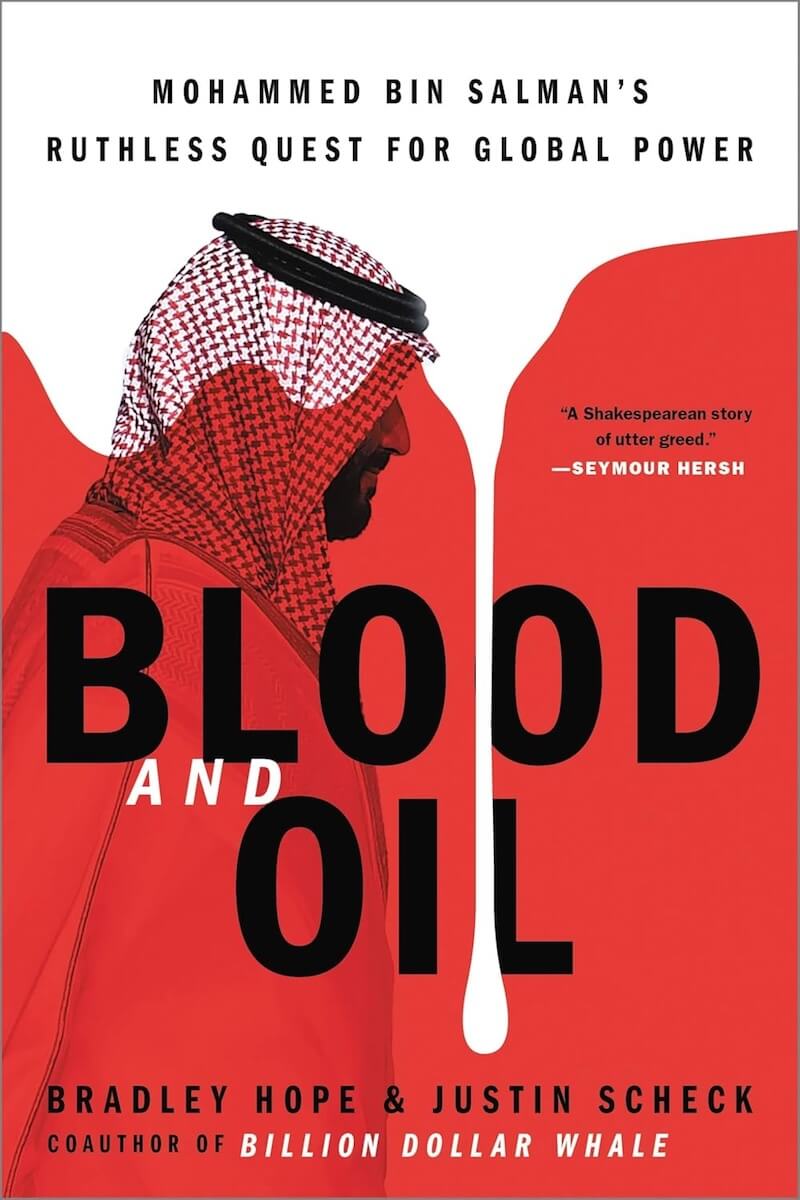
Blood and Oil Book Summary
This Blood and Oil Book Summary covers the key ideas, lessons, and takeaways in about 20 minutes.
Short Description:
Blood and Oil exposes Saudi Arabia’s modernization amid repression and risk.
Helps with these goals
Preview the Blood and Oil book summary
Below is a preview of Sumizeit’s comprehensive human-written summary of Blood and Oil by Bradley Hope. The full summary is 15-20 minutes long and covers the book’s key ideas in text, audio, visual, and video formats. Unlock the full 20 Minute Summary
Blood and Oil by Bradley Hope offers an in-depth look at the dramatic rise of Mohammed bin Salman (MBS), the Saudi crown prince who has reshaped the kingdom with speed, aggression, and sweeping ambition. The book reveals how his leadership blends modernization and repression, how he centralized power across the Saudi government, and why his decisions have global implications for energy, geopolitics, and human rights. Rather than portraying him as a simple villain or hero, the work presents a complex figure driven by ambition, insecurity, and a vision of national transformation.
Origins of a Future Ruler
Mohammed bin Salman was not born the obvious successor to the Saudi throne. As one of many sons of King Salman, his future initially seemed ordinary by royal standards — wealth, privilege, education, but not necessarily power. Yet unlike many princes, he developed a deep fascination with power structures and stories of dominance. While other royals enjoyed leisure, MBS devoured accounts of conquering leaders and business magnates, internalizing the idea that true power is earned, not inherited passively.
A major turning point came when he recognized the vulnerability of his family branch. Wealth in Saudi Arabia flows through proximity to the throne, and without a strong political path, his future influence could fade. This realization sparked his drive to create a base of power early — forming loyal networks among military units, advisors, and technocrats. He watched his father navigate conservative clerics and tribal alliances, learning that Saudi politics rewards those bold enough to seize control and punish disloyalty.
Rapid Ascent Through the Royal Hierarchy
The defining moment for MBS came when King Salman ascended to the throne in 2015. Overnight, Mohammed moved from a prince with influence to one controlling the Ministry of Defense, the Royal Court, and a growing share of economic decision-making. In a system where consensus once dictated policy, MBS operated differently — speed over consultation, action over tradition.
He removed experienced rivals like Mohammed bin Nayef, the widely respected counterterrorism figure once considered heir apparent. He bypassed princes who expected traditional succession protocols. Each move concentrated authority around him, cutting threads that tied power to multiple factions. Within two years, he became crown prince — something almost unimaginable just a decade before.
The Ritz-Carlton Crackdown — Power Becomes Absolute
One of the most defining events in MBS’s consolidation of power was the 2017 anti-corruption purge. Dozens of elite businessmen, media owners, billionaires, military officers, and princes were summoned under vague accusations of financial misconduct. Instead of trials, they were detained at the Ritz-Carlton hotel, which was converted into a gilded detention center. Interrogations took place behind closed doors. Fortunes were reclaimed into state control — estimated in the tens of billions — through negotiations that resembled coerced settlements.
Supporters called it necessary reform to dismantle decades of corruption and waste. Critics called it a strategic power grab that neutralized rivals and gave MBS direct financial control.
Want the complete 20-minute summary?
- Full structured summary
- Video Summary
- Podcast Summary
- Audio summary
- Key takeaways
- Exercises
- Quiz
- Highlights and notes
- Ask the book with AI
Who should read Blood and Oil?
Blood and Oil is essential reading for anyone interested in Middle Eastern politics, global energy markets, or understanding how modern authoritarian leaders consolidate power. It appeals to business professionals tracking geopolitical risk, policymakers analyzing U.S.-Saudi relations, and general readers seeking insight into one of the world's most influential yet opaque figures.
Why does Blood and Oil matter?
Mohammed bin Salman's decisions shape global energy prices, Middle Eastern stability, and the relationship between modernization and authoritarianism in the 21st century. Blood and Oil by Bradley Hope exposes how rapid economic transformation can mask political repression, a pattern with implications far beyond Saudi Arabia as other nations navigate similar contradictions between development and human rights.
What are the key themes in Blood and Oil?
- The concentration of power in a single leader within a royal system
- Modernization as a tool for maintaining authoritarian control
- The tension between economic diversification and political freedom
- Strategic use of surveillance and intimidation to suppress dissent
- Saudi Arabia's shift from quiet diplomacy to assertive foreign policy
- The role of global capital and foreign investment in legitimizing authoritarian regimes
- Vision 2030 as both genuine reform and propaganda tool
How can you apply ideas from Blood and Oil?
- Investors should scrutinize how authoritarian leaders use megaprojects and economic reform to consolidate political power before committing capital to their regimes
- Policymakers can use MBS's playbook to recognize warning signs that modernization rhetoric masks authoritarianism in other contexts
- Journalists and human rights organizations can document how surveillance technology sold by Western firms enables repression in countries with poor human rights records
- Business leaders should establish clear ethical boundaries for engagement with regimes that grant social reforms while suppressing political dissent
- Students of geopolitics can analyze how a single leader's personality, ambition, and ruthlessness can reshape a nation's foreign policy and regional relationships
- Analysts can track the outcomes of Vision 2030 to understand whether oil-dependent economies can successfully diversify or whether fundamental vulnerabilities persist
- Citizens in democratic nations can recognize and resist parallels to authoritarian tactics adapted to their own political contexts
What common mistakes do readers make with Blood and Oil?
- Assuming that economic modernization automatically leads to political liberalization or that a leader cannot be both reformer and autocrat
- Taking a leader's public statements about reform at face value without examining whether rights-focused policies are coupled with selective arrests of activists
- Believing that international reputation damage from human rights violations will necessarily constrain a leader's ability to consolidate further power
- Underestimating how effectively surveillance technology and information control can suppress dissent while maintaining a veneer of transparency to foreign investors
Sumizeit Exercises Apply what you've learned
Turn ideas from Blood and Oil into action with a short guided reflection: identify the biggest takeaway, connect it to your life, and commit to one step you can take in the next 24 hours.
What is the expert analysis of Blood and Oil?
Overview
Blood and Oil is a meticulously researched biography and political analysis authored by Bradley Hope, a seasoned investigative journalist known for his incisive coverage of Middle Eastern affairs. The book stands out for its granular exploration of Mohammed bin Salman (MBS), the Saudi crown prince whose meteoric rise and consolidation of power have profoundly reshaped the kingdom’s political, economic, and social landscape. Hope’s work is significant because it transcends simplistic portrayals of MBS as either a reformist hero or ruthless autocrat, instead presenting a nuanced portrait of a leader whose ambitions and methods embody the contradictions of contemporary Saudi Arabia. Through detailed narrative and critical insight, the book situates MBS’s trajectory within broader themes of modernization, authoritarianism, and global geopolitics, making it essential reading for those seeking to understand the evolving Middle East and its global ramifications.
Core Thesis
The central argument of Blood and Oil is that Mohammed bin Salman represents a paradoxical figure whose leadership encapsulates both transformative modernization and intensified authoritarian control. Bradley Hope contends that MBS’s vision—exemplified by initiatives like Vision 2030 and the NEOM project—aims to pivot Saudi Arabia away from oil dependency and toward a diversified, innovation-driven economy. However, this economic and social liberalization occurs within a tightly controlled political environment where dissent is systematically suppressed. The book asserts that MBS’s consolidation of power, from the Ritz-Carlton purge to the silencing of critics, reveals a regime that prioritizes centralized authority over pluralistic governance. Ultimately, Hope suggests that the future of Saudi Arabia hinges on whether this tension between rapid progress and political repression can be reconciled or if it will precipitate instability.
Strengths
- Comprehensive Research and Access: Hope’s investigative rigor is evident in the depth of detail, including insider accounts, leaked documents, and interviews that illuminate the opaque corridors of Saudi power.
- Balanced Characterization: The book avoids reductive binaries by portraying MBS as a complex individual—ambitious yet insecure, visionary yet ruthless—thereby enriching readers’ understanding of autocratic leadership in the 21st century.
- Contextualizing Modernization: By linking social reforms and economic initiatives to broader political strategies, the book adeptly shows how modernization in Saudi Arabia is inseparable from authoritarian control.
- Global Implications: The analysis extends beyond Saudi borders, connecting MBS’s policies to shifts in global energy markets, international diplomacy, and human rights discourse, which underscores the kingdom’s pivotal role on the world stage.
- Engaging Narrative Style: Despite the complexity of the subject, Hope’s prose remains accessible and compelling, making intricate political maneuvers and historical developments understandable without oversimplification.
Critiques & Counterarguments
- Potential Overemphasis on Personality: While MBS’s role is undeniably central, the book occasionally risks attributing systemic changes too heavily to individual agency, underplaying institutional dynamics and broader socio-economic forces within Saudi Arabia.
- Limited Exploration of Opposition Perspectives: The narrative could benefit from deeper engagement with internal dissenting voices and grassroots movements to provide a fuller picture of Saudi society’s response to MBS’s reforms and repression.
- Reliance on Western Sources and Interpretations: The portrayal of events such as the Ritz-Carlton crackdown and the Khashoggi murder leans heavily on Western intelligence assessments and media reports, which may carry inherent biases and geopolitical agendas.
- Competing Views on Economic Diversification: Some economists argue that Vision 2030’s ambitious targets underestimate structural challenges, such as entrenched bureaucratic inertia and regional instability, which the book acknowledges but does not fully integrate into its prognosis.
- Alternative Theoretical Frameworks: From a political science perspective, theories of authoritarian resilience and hybrid regimes suggest that MBS’s model may be more sustainable than the book implies, as it combines repression with selective liberalization to maintain legitimacy.
Who Should Read This
Blood and Oil is indispensable for readers interested in contemporary Middle Eastern politics, international relations, and the interplay between authoritarianism and modernization. Scholars and students of political science, global energy economics, and human rights will find Hope’s analysis both informative and thought-provoking. Additionally, policymakers, journalists, and business leaders engaged with the Gulf region will benefit from the book’s detailed exposition of Saudi Arabia’s internal dynamics and external ambitions. Finally, readers seeking a sophisticated, nuanced biography of one of the most consequential figures in recent geopolitical history will appreciate the book’s balanced approach and rich contextualization.
Frequently asked questions about the Blood and Oil book summary
What is Blood and Oil about?
Blood and Oil by Bradley Hope is a biography and political analysis of Mohammed bin Salman, Saudi Arabia's crown prince, examining his rapid rise to power, consolidation of authority, ambitious Vision 2030 economic transformation plan, and the contradictions between his modernizing reforms and authoritarian repression. The book reveals how MBS reshaped the kingdom through speed, centralized control, and strategic use of both economic incentives and political intimidation.
Who should read Blood and Oil?
Blood and Oil is essential for anyone interested in Middle Eastern politics, global energy markets, geopolitics, or understanding modern authoritarianism. It appeals to business professionals assessing investment risk in Saudi Arabia, policymakers analyzing U.S.-Saudi relations, and general readers seeking to understand how one of the world's most influential yet opaque leaders operates.
What are the main takeaways from Blood and Oil?
The primary takeaway is that Mohammed bin Salman exemplifies how authoritarian leaders can implement genuine economic modernization while simultaneously suppressing political freedom through surveillance, repression, and selective violence. Blood and Oil demonstrates that progress and authoritarianism can coexist, that global investors often overlook human rights abuses to benefit from economic opportunities, and that MBS's long-term legacy depends on whether rapid transformation can generate lasting legitimacy or whether concentrated power will eventually trigger internal backlash.
What was the significance of the Ritz-Carlton purge?
The 2017 Ritz-Carlton crackdown was MBS's pivotal power consolidation moment, in which he detained dozens of princes, billionaires, military officers, and business leaders under vague corruption accusations. Rather than formal trials, detainees negotiated settlements that transferred billions in assets to state control, effectively eliminating rivals while centralizing financial and political authority entirely around MBS.
How does Vision 2030 relate to MBS's consolidation of power?
Vision 2030 is both a genuine economic diversification strategy and a political tool that allowed MBS to justify rapid decision-making and centralized control as national necessity. By framing the transformation as essential to Saudi Arabia's survival amid declining oil demand, MBS positioned himself as indispensable and used megaprojects and the expanded Public Investment Fund to consolidate authority over military, economic, and sovereign wealth functions.
What does Blood and Oil reveal about the Khashoggi assassination?
The assassination of journalist Jamal Khashoggi in 2018 marked a turning point in how the world perceived MBS, shifting him from a benign modernizer to a ruthless autocrat. The incident demonstrated that MBS was willing to use state violence against critics both inside and outside the kingdom, though it also showed that his control of oil wealth and investment capital allowed him to contain the reputational damage domestically.
How does Blood and Oil explain the contradiction between social reform and political repression?
Blood and Oil shows that MBS granted social reforms—such as allowing women to drive and opening cinemas—selectively and from above, while simultaneously arresting women's rights activists and suppressing dissent. This allowed him to appear progressive to international audiences and younger Saudis while maintaining strict control over the pace and scope of change, demonstrating that modernization can serve as a tool for sustaining authoritarianism rather than undermining it.
About Sumizeit
Sumizeit is a profitable Scomy LLC company based in Miami, Florida. Our founders, Clemens Raemy and Weina Scott, are successful entrepreneurs with several exits. Sumizeit is a popular book summary app / micro learning app used by busy professionals and entrepreneurs with over 2,500 non-fiction book summaries and 10,000 podcast summaries in text, audio, visual, podcast, and video format. We also have stellar retention tools to make ideas stick - such as flashcards with spaced repetition, quizzes, streaks, highlighting and notes, daily challenges, riddles, mini-courses, meditation, and more. You won't only learn the idea, but also remember it. Over 90% of our users change their habits with Sumizeit.
Upgrade Now
Here's why readers love Sumizeit
Join thousands of learners getting smarter every day
"Great experience. Detailed summaries. Loved the gamification feature. Makes learning fun. Good customer service. I recommend Sumizeit to anyone. You'll learn a lot."
"I always felt busy but still wanting to keep up with the book discussion in my friend group. This was a great supplement to help me keep reading the books I find fun while keeping up with important books."
"I love this website. Instead of scrolling social media, I find myself learning a lot. I use it everyday. I recommend this app for anyone who is too busy and wants to get up to speed with their favorite books."
Blood and Oil Book Summary PDF
Looking for a Blood and Oil Book Summary PDF you can save and revisit offline? Our Blood and Oil Book Summary PDF captures the book’s core ideas in a clean, printable format — the key frameworks, takeaways, and structure without the fluff. Download the Blood and Oil Book Summary PDF when you want a reference you can annotate, share with your team, or review on the go. Get your Blood and Oil Book Summary PDF from the download page below.
Download Blood and Oil Book Summary PDFPeople also liked these summaries
Readers who explored Blood and Oil often enjoyed these titles next.





Ready to read the whole thing?
- Full structured summary
- Video Summary
- Podcast Summary
- Audio summary
- Key takeaways
- Exercises
- Quiz
- Highlights and notes
- Ask the book with AI
Featured Book Titles
Popular Book Summaries at sumizeit, leading book summary app