


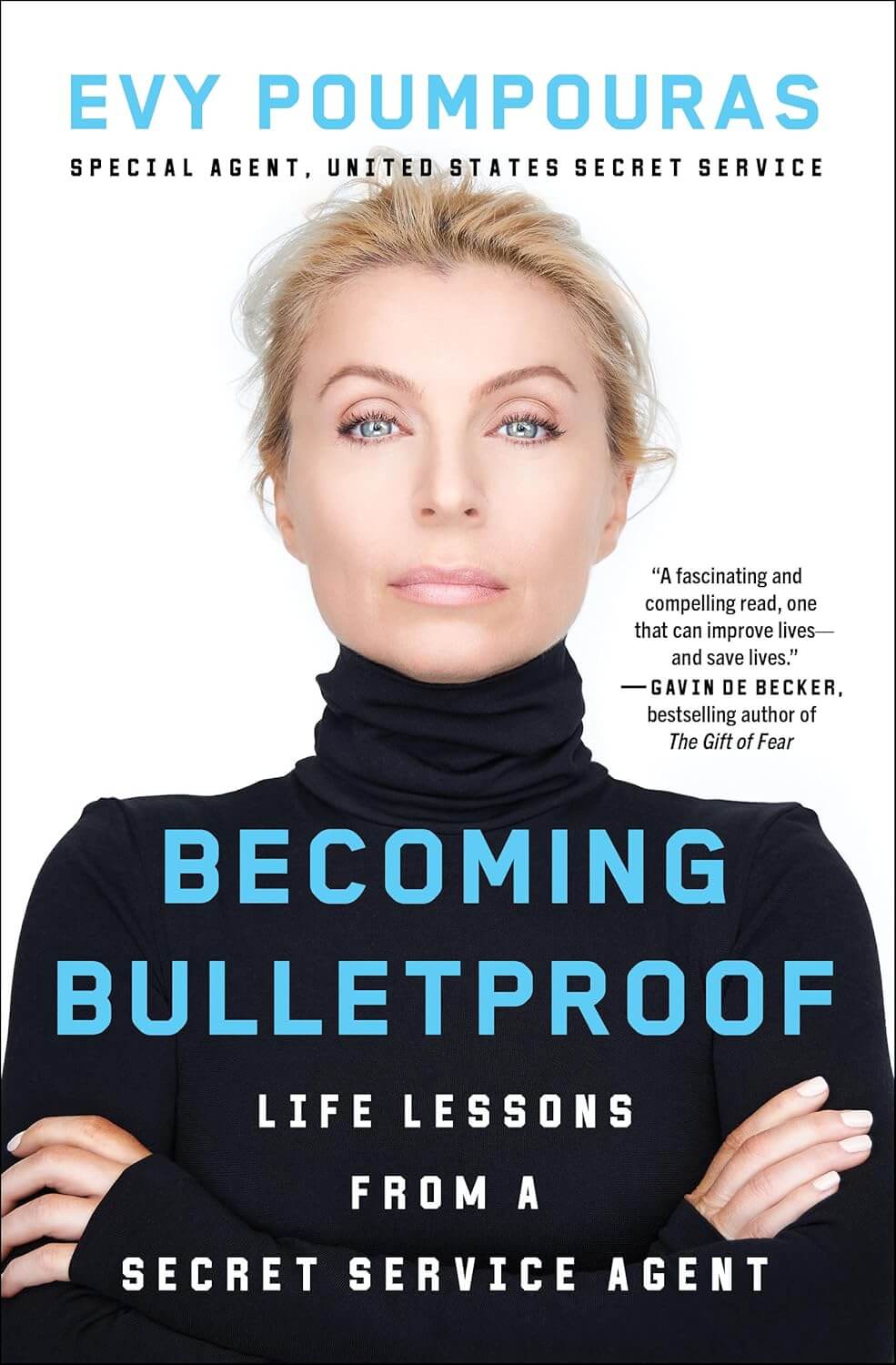
Prefer the print book? Buy on Amazon
As an Amazon Associate, Sumizeit earns from qualifying purchases.
Becoming Bulletproof Book Summary
This Becoming Bulletproof Book Summary covers the key ideas, lessons, and takeaways in about 20 minutes.
Short Description:
Becoming Bulletproof builds strength through self-command and empathy.
Helps with these goals
Preview the Becoming Bulletproof book summary
Below is a preview of Sumizeit’s comprehensive human-written summary of Becoming Bulletproof by Evy Poumpouras. The full summary is 15-20 minutes long and covers the book’s key ideas in text, audio, visual, and video formats. Unlock the full 20 Minute Summary
Becoming Bulletproof is not about physical toughness or learning how to dominate others. Instead, Evy Poumpouras presents a framework for psychological strength—one that allows you to move through the world with clarity, confidence, and control. Drawing on her experience as a former U.S. Secret Service special agent and interrogator, Poumpouras explains that true resilience comes from mastering fear, understanding human behavior, and influencing situations without aggression or manipulation.
At its core, the book argues that fear is not the enemy. Fear is a signal—one that can either protect you or imprison you, depending on how well you understand it. Many people unknowingly allow fear to dictate their choices, limit their ambitions, and distort their perception of reality. Poumpouras’s goal is to teach readers how to recognize fear, evaluate it rationally, and respond deliberately rather than reflexively.
The concept of being “bulletproof” is therefore metaphorical. It means developing emotional insulation against panic, intimidation, stress, and manipulation. It means becoming someone who can remain steady in chaos, read others accurately, and act with intention even when stakes are high.
Understanding Fear as a Tool Rather Than a Threat
Fear plays a fundamental role in human survival, but Poumpouras emphasizes that most people misunderstand how fear works. When fear is left unchecked, it becomes exaggerated, irrational, and debilitating. When understood properly, it becomes a guide rather than an obstacle.
She distinguishes between fears we are born with and fears we acquire over time. The fears that exist at birth are extremely limited, primarily tied to physical safety and immediate danger. Everything else—fear of failure, rejection, embarrassment, flying, public speaking, or confrontation—is learned. These learned fears are shaped by personal experiences, cultural messaging, and constant exposure to alarming narratives from media and society.
One of the most damaging sources of fear, according to Poumpouras, is modern information overload. News cycles thrive on catastrophe, violence, and rare but dramatic events. Over time, repeated exposure to these stories convinces people that danger is omnipresent, even when statistical reality suggests otherwise. This distortion leads individuals to overestimate unlikely threats while ignoring far more common risks that are less sensational.
Fear becomes especially harmful when it causes avoidance. When people allow fear to shrink their world—refusing opportunities, experiences, or growth—they reinforce the idea that fear deserves control. Poumpouras encourages readers to question fear instead of obeying it. By examining evidence, probability, and personal impact, fear loses its emotional grip and becomes something manageable.
Learning How the Body Reacts Under Threat
A major component of resilience is understanding how the body reacts to stress and danger. Poumpouras explains that when people feel threatened, their nervous system activates automatic survival responses designed to keep them alive. These reactions occur before conscious thought and often override rational decision-making.
The three primary responses—confrontation, escape, and paralysis—each serve a purpose depending on the situation. The problem arises when individuals rely on the same response regardless of context. Someone who instinctively withdraws may miss opportunities to assert themselves.
Want the complete 20-minute summary?
- Full structured summary
- Video Summary
- Podcast Summary
- Audio summary
- Key takeaways
- Exercises
- Quiz
- Highlights and notes
- Ask the book with AI
Who should read Becoming Bulletproof?
Becoming Bulletproof is ideal for anyone seeking to build psychological resilience and emotional control in high-pressure situations. Whether you're a professional facing workplace stress, someone struggling with fear and anxiety, or a person looking to improve your influence and interpersonal effectiveness, this book offers practical tools grounded in real-world experience. Leaders, managers, and anyone interested in understanding human behavior will find actionable insights.
Why does Becoming Bulletproof matter?
In an age of constant information overload and heightened anxiety, psychological strength has become essential for well-being and success. Evy Poumpouras draws on her unique background as a Secret Service agent and interrogator to demystify fear, explain how our bodies respond under stress, and teach evidence-based techniques for maintaining clarity when stakes are high. The book addresses modern challenges—from managing anxiety to building authentic influence—with strategies that transform fear from a limitation into a useful signal.
What are the key themes in Becoming Bulletproof?
- Fear as a signal rather than an enemy
- Creating deliberate pause between stimulus and reaction
- Emotional resilience as a learnable skill
- Realistic perception without denial or pessimism
- Understanding human behavior through observation and empathy
- Personal responsibility as a source of power
- Ethical influence rooted in trust and listening
- Stress exposure as the path to psychological strength
How can you apply ideas from Becoming Bulletproof?
- Apply the pause technique during arguments or emotional triggers to interrupt automatic reactivity and choose a thoughtful response
- Track your default stress response (confrontation, escape, or paralysis) in daily situations to increase awareness and expand your behavioral options
- Practice gradual exposure to manageable discomfort—public speaking, networking, or difficult conversations—to build stress tolerance and reduce anxiety
- Use open-ended questions and active listening in difficult conversations to gather information, build trust, and shape outcomes without manipulation
- Establish behavioral baselines for people you work with by observing patterns over time, enabling you to detect inconsistencies that signal deception or concern
- Examine your own assumptions and biases before judging others, asking clarifying questions to avoid stereotyping and improve accuracy in reading situations
- Take conscious responsibility for one area where you've been blaming external factors, identifying what's within your control and taking action
What common mistakes do readers make with Becoming Bulletproof?
- Confusing fearlessness with resilience—true strength is managing fear deliberately, not eliminating it entirely
- Expecting immediate results from stress exposure—resilience builds gradually, and pushing too hard too fast can backfire and increase anxiety
- Over-relying on single behavioral cues to detect deception instead of looking for clusters of changes relative to someone's normal baseline
- Using active listening as a manipulation tactic rather than genuinely seeking to understand others—people sense insincerity and respond with defensiveness
Sumizeit Exercises Apply what you've learned
Turn ideas from Becoming Bulletproof into action with a short guided reflection: identify the biggest takeaway, connect it to your life, and commit to one step you can take in the next 24 hours.
What is the expert analysis of Becoming Bulletproof?
Overview
Becoming Bulletproof is a compelling exploration of psychological resilience authored by Evy Poumpouras, a former U.S. Secret Service special agent and interrogator. Poumpouras leverages her unique professional background to offer readers a nuanced framework for mastering fear, understanding human behavior, and cultivating self-command. Unlike conventional self-help books that emphasize external toughness or dominance, this work delves into internal fortitude—how one can maintain clarity, confidence, and control amid chaos and pressure. Its significance lies in bridging practical experience from high-stakes security environments with accessible psychological principles, making it a notable contribution to contemporary literature on resilience and emotional intelligence.
Core Thesis
At the heart of Becoming Bulletproof is the argument that fear is not an adversary to be eliminated but a vital signal to be understood and managed. Poumpouras posits that resilience emerges from transforming fear from a paralyzing force into a tool for informed, deliberate action. This transformation requires recognizing innate and learned fears, understanding automatic physiological responses to threat, and cultivating the capacity to pause and choose responses consciously. The metaphor of being “bulletproof” encapsulates emotional insulation against panic, manipulation, and stress, achieved through realism, responsibility, empathy, and gradual exposure to controlled stressors. Ultimately, the book advocates for self-command as the foundation of true strength and ethical influence.
Strengths
- Authoritative Perspective: Poumpouras’s firsthand experience in the Secret Service and interrogation lends authenticity and practical depth to her insights, distinguishing the book from more theoretical treatments of resilience.
- Holistic Approach to Fear: The nuanced differentiation between innate and learned fears, and the emphasis on fear as a signal rather than a threat, provides a sophisticated framework for readers to reframe their emotional experiences.
- Integration of Physiology and Psychology: Detailed explanations of the body’s automatic threat responses and their impact on cognition ground the book’s recommendations in biological reality, enhancing credibility.
- Practical Tools for Self-Mastery: Concepts such as the deliberate pause, controlled stress exposure, and active listening offer actionable strategies that readers can apply beyond crisis situations into everyday life.
- Ethical Influence Framework: By emphasizing empathy, trust, and authenticity over coercion, Poumpouras advances a model of influence that respects human dignity and fosters sustainable relationships.
Critiques & Counterarguments
- Potential Oversimplification of Fear’s Complexity: While the book adeptly categorizes fears as innate or learned, it may understate the complexity of neurobiological and sociocultural factors that shape fear responses, which contemporary affective neuroscience and cultural psychology explore in greater depth.
- Limited Engagement with Contrasting Resilience Models: The focus on self-command and individual responsibility might overlook systemic and structural factors influencing resilience, such as socioeconomic conditions or collective trauma, which scholars in social psychology and critical theory emphasize.
- Reliance on Anecdotal and Experiential Evidence: The book draws heavily on Poumpouras’s personal and professional experiences, which, while compelling, may lack the empirical rigor or broader population validation found in academic research on stress inoculation or cognitive-behavioral interventions.
- Risk of Underestimating Emotional Complexity: The advocacy for emotional neutrality and detachment from ego, though valuable, could be critiqued from humanistic psychological perspectives that stress the importance of emotional integration rather than suppression or distancing.
- Challenges in Applying Techniques Universally: The deliberate pause and controlled stress exposure techniques require a level of self-awareness and safety that may not be accessible to individuals in acute trauma or ongoing threat environments, limiting the book’s applicability in certain contexts.
Who Should Read This
Becoming Bulletproof is ideally suited for readers seeking to deepen their psychological resilience through practical, experience-informed guidance. It appeals to professionals operating in high-stress environments—such as first responders, leaders, and negotiators—as well as individuals interested in self-improvement grounded in real-world expertise. The book also benefits those curious about the interplay between fear, behavior, and influence, offering tools to navigate personal and interpersonal challenges with greater intentionality. However, readers looking for a purely academic or research-heavy treatment of resilience may find its approach more experiential than theoretical.
Frequently asked questions about the Becoming Bulletproof book summary
What is Becoming Bulletproof about?
Becoming Bulletproof by Evy Poumpouras is about developing psychological strength and emotional resilience through self-mastery. Drawing on her experience as a Secret Service agent and interrogator, Poumpouras teaches readers how to understand fear as a signal rather than an obstacle, manage automatic stress responses, build confidence through managed adversity, and influence others ethically through empathy and listening. The book is not about fearlessness or dominance, but about gaining control over your reactions so you can navigate high-pressure situations with clarity and confidence.
Who should read Becoming Bulletproof?
This book is ideal for professionals facing high-stress environments, leaders seeking to improve their influence, and anyone struggling with anxiety or fear. It's valuable for people interested in understanding human behavior, improving communication skills, or building psychological resilience. Whether you work in management, sales, healthcare, law enforcement, or simply want to manage stress better and live more deliberately, Poumpouras's practical, evidence-based approach offers actionable tools you can apply immediately.
What are the main takeaways from Becoming Bulletproof?
The core takeaways are: fear is learned and can be managed through understanding; resilience is built by creating space between stimulus and reaction through deliberate pause; psychological strength develops through gradual exposure to manageable stress; personal responsibility empowers you more than blame; and ethical influence flows from genuine empathy and listening rather than coercion. Ultimately, Poumpouras teaches that when you master your internal responses and understand human behavior, you gain freedom from fear and the ability to live confidently and deliberately.
How does Evy Poumpouras approach fear differently than other authors?
Rather than treating fear as something to eliminate, Poumpouras reframes it as a valuable signal that can either protect or imprison you, depending on how well you understand it. Drawing from her real-world experience in high-stakes security and interrogation, she explains the physiology of fear, distinguishes between innate and learned fears, and teaches practical techniques to pause and respond consciously. Her approach is grounded in behavioral science and practical experience rather than purely motivational philosophy.
Can the skills in Becoming Bulletproof be applied to everyday situations?
Yes, absolutely. While Poumpouras draws examples from security and interrogation, the principles apply directly to daily life—arguments, workplace stress, social anxiety, and emotional triggers all activate similar physiological responses. The techniques she teaches, such as creating a deliberate pause, observing behavior without bias, and building trust through active listening, are useful in relationships, negotiations, parenting, and professional settings. The book translates high-pressure expertise into accessible, practical skills.
What is the 'deliberate pause' and how do you practice it?
The deliberate pause is the mental space you create between a triggering event and your reaction, allowing your rational brain to regain control. When adrenaline floods your system, this pause—achieved through breathing, awareness, and mental discipline—prevents impulsive decisions. You practice it by identifying stressful situations, interrupting automatic responses through breathing or grounding techniques, and observing your thoughts before acting. Over time, this skill becomes natural, enabling you to respond strategically rather than reactively in any situation.
Does Becoming Bulletproof teach manipulation techniques?
No. Poumpouras explicitly rejects manipulation. She teaches ethical influence rooted in genuine empathy, authentic communication, and building real trust. While she explains how to recognize deception and read behavior, the framework emphasizes understanding others to improve genuine connection, not to exploit them. The book distinguishes between influence built on trust and manipulation based on coercion, warning that manipulation produces short-term compliance but long-term resentment.
About Sumizeit
Sumizeit is a profitable Scomy LLC company based in Miami, Florida. Our founders, Clemens Raemy and Weina Scott, are successful entrepreneurs with several exits. Sumizeit is a popular book summary app / micro learning app used by busy professionals and entrepreneurs with over 2,500 non-fiction book summaries and 10,000 podcast summaries in text, audio, visual, podcast, and video format. We also have stellar retention tools to make ideas stick - such as flashcards with spaced repetition, quizzes, streaks, highlighting and notes, daily challenges, riddles, mini-courses, meditation, and more. You won't only learn the idea, but also remember it. Over 90% of our users change their habits with Sumizeit.
Upgrade Now
Here's why readers love Sumizeit
Join thousands of learners getting smarter every day
"Great experience. Detailed summaries. Loved the gamification feature. Makes learning fun. Good customer service. I recommend Sumizeit to anyone. You'll learn a lot."
"I always felt busy but still wanting to keep up with the book discussion in my friend group. This was a great supplement to help me keep reading the books I find fun while keeping up with important books."
"I love this website. Instead of scrolling social media, I find myself learning a lot. I use it everyday. I recommend this app for anyone who is too busy and wants to get up to speed with their favorite books."
Becoming Bulletproof Book Summary PDF
Looking for a Becoming Bulletproof Book Summary PDF you can save and revisit offline? Our Becoming Bulletproof Book Summary PDF captures the book’s core ideas in a clean, printable format — the key frameworks, takeaways, and structure without the fluff. Download the Becoming Bulletproof Book Summary PDF when you want a reference you can annotate, share with your team, or review on the go. Get your Becoming Bulletproof Book Summary PDF from the download page below.
Download Becoming Bulletproof Book Summary PDFPeople also liked these summaries
Readers who explored Becoming Bulletproof often enjoyed these titles next.


Ready to read the whole thing?
- Full structured summary
- Video Summary
- Podcast Summary
- Audio summary
- Key takeaways
- Exercises
- Quiz
- Highlights and notes
- Ask the book with AI
Featured Book Titles
Popular Book Summaries at sumizeit, leading book summary app