


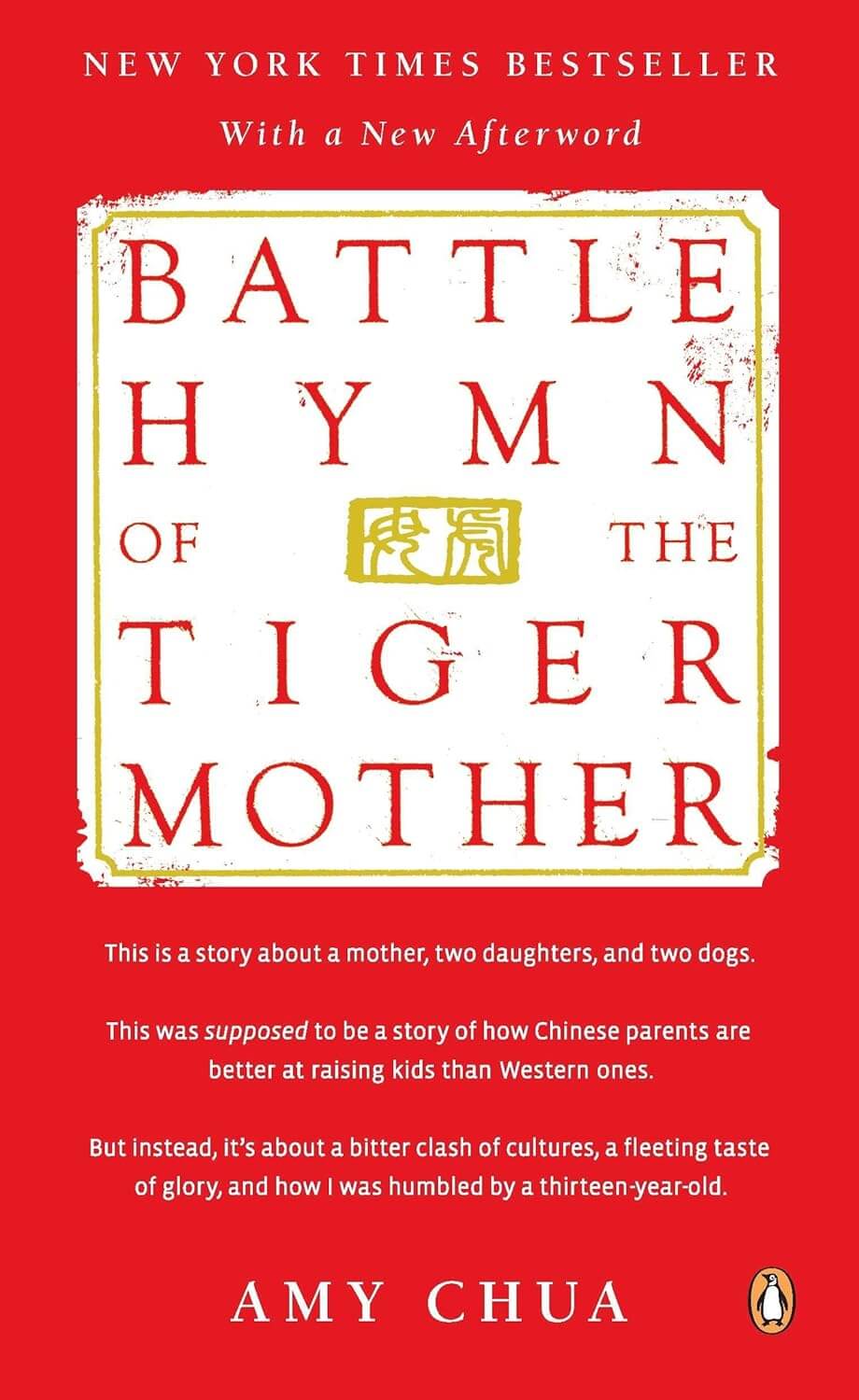
Prefer the print book? Buy on Amazon
As an Amazon Associate, Sumizeit earns from qualifying purchases.
Battle Hymn of the Tiger Mother Book Summary
This Battle Hymn of the Tiger Mother Book Summary covers the key ideas, lessons, and takeaways in about 20 minutes.
Short Description:
Battle Hymn of the Tiger Mother balances discipline with empathy in parenting.
Helps with these goals
Preview the Battle Hymn of the Tiger Mother book summary
Below is a preview of Sumizeit’s comprehensive human-written summary of Battle Hymn of the Tiger Mother by Amy Chua. The full summary is 15-20 minutes long and covers the book’s key ideas in text, audio, visual, and video formats. Unlock the full 20 Minute Summary
Battle Hymn of the Tiger Mother by Amy Chua is a memoir that follows one mother’s mission to raise her daughters through a demanding and uncompromising parenting philosophy rooted in traditional Chinese values. Instead of crafting a neutral analysis, Chua tells her story unapologetically, blending humor, intensity, and vulnerability as she reflects on what it meant to push her children toward excellence even when it strained their relationship. At its core, the book contrasts two cultural frameworks: the achievement-focused “Chinese” method and the freedom-oriented “Western” approach. Through her personal journey with her daughters Sophia and Lulu, Chua exposes both the triumphs and the painful consequences of extreme expectations.
The narrative is less an instruction manual and more a raw account of how cultural values and childhood psychology collide inside a real family. Readers witness extraordinary accomplishments forged through discipline and repetition—and the emotional fallout when a child refuses to bend any further. Over time, Amy Chua is forced to confront her assumptions, question her methods, and ultimately redefine what success and motherhood mean.
Two Different Worlds of Parenting
Early in the book, Chua sets up the contrast between how she was raised in an immigrant household shaped by discipline and how she perceived Western parents around her raising children through encouragement, praise, and emphasis on happiness. The pages are filled with examples of academic rigor, parental authority, and the expectation that children must excel—not simply try their best. In her home, B grades are failures, extracurriculars are chosen strategically, and childhood is preparation for adulthood rather than a time for exploration.
Meanwhile, she portrays Western parenting as a philosophy that values self-expression and emotional development. Many Western parents praise effort regardless of outcome, allowing children to experiment with interests and negotiate rules. Instead of demanding perfection, they often encourage balance and self-esteem. To Chua, this leniency seemed risky—what if freedom led to mediocrity? What if independence weakened resilience? She sees the early years as a critical time to build discipline so that children can thrive in competitive environments later.
This fundamental divide becomes the lens through which the entire memoir is told, influencing schoolwork, music practice, behavior expectations, and daily rituals inside the Chua household.
The Belief in Potential and the Pursuit of Mastery
Chua insists that strictness is not cruelty but an expression of faith—belief that children can push further than they think they can. She argues that Chinese parents demand more because they are confident in their child’s capacity to endure hardship and surpass limitations. Struggle, in her eyes, is the path to excellence. Perfection is not merely desired—it is the only acceptable outcome.
This belief drives her to shape her daughters into high achievers through total immersion in piano and violin. Hours of daily practice, weekends sacrificed, vacations rearranged around rehearsals—all become routine. She tracks mistakes, rewrites flawed passages, insists on retakes, and refuses to let frustration end a session. She withholds praise to avoid complacency and gives criticism to fuel improvement.
Want the complete 20-minute summary?
- Full structured summary
- Video Summary
- Podcast Summary
- Audio summary
- Key takeaways
- Exercises
- Quiz
- Highlights and notes
- Ask the book with AI
Who should read Battle Hymn of the Tiger Mother ?
Battle Hymn of the Tiger Mother is essential for parents questioning their approach to discipline and ambition, educators interested in cultural differences in child development, and anyone curious about the tension between achievement and happiness. It resonates with those raised under strict expectations and those wondering whether they're pushing their own children too hard.
Why does Battle Hymn of the Tiger Mother matter?
In an era of intense academic pressure and cultural anxiety about success, Amy Chua's memoir challenges readers to examine whether their parenting philosophy truly serves their children's wellbeing or merely their own fears. The book sparked a global conversation about what we value in raising the next generation and whether excellence achieved through suffering is worth the cost.
What are the key themes in Battle Hymn of the Tiger Mother ?
- The clash between Chinese and Western parenting philosophies
- The cost of pursuing excellence without joy
- Authority, respect, and the power dynamics between parent and child
- How different temperaments respond differently to the same parenting approach
- The evolution from rigidity to balance in parenting
- The role of cultural identity in shaping parental values
How can you apply ideas from Battle Hymn of the Tiger Mother ?
- Audit your parenting rules to identify which serve your child's growth versus which reflect your own cultural conditioning or fears
- Create space for your children to have input on at least one meaningful area of their lives, such as extracurricular activities or personal interests
- Practice specific praise for effort and improvement alongside honest feedback on where they can do better, avoiding blanket praise that prevents growth
- When a child resists strongly, pause to investigate what they're actually resisting—control, lack of choice, or the goal itself—rather than automatically intensifying expectations
- Share with your children why certain standards matter to you, connecting discipline to values they can eventually understand and adopt for themselves
- Reflect on your own childhood and identify which parenting approaches you want to keep versus release based on what actually served you, not what you were taught to believe
What common mistakes do readers make with Battle Hymn of the Tiger Mother ?
- Assuming that one parenting approach works for all children, when in reality temperament and personality require significant adjustments
- Doubling down on control and pressure when a child resists, which typically escalates conflict rather than producing the desired obedience
- Equating love with high expectations and discipline, forgetting that children need to feel respected and valued for their effort, not just their results
- Pursuing achievement as an end in itself without considering whether the child shares the goal, leading to resentment rather than lasting motivation
Sumizeit Exercises Apply what you've learned
Turn ideas from Battle Hymn of the Tiger Mother into action with a short guided reflection: identify the biggest takeaway, connect it to your life, and commit to one step you can take in the next 24 hours.
What is the expert analysis of Battle Hymn of the Tiger Mother ?
Overview
Battle Hymn of the Tiger Mother is a provocative memoir by Amy Chua, a Yale Law School professor whose background in economics and cultural studies informs her nuanced exploration of parenting. The book gained widespread attention for its candid portrayal of a strict, achievement-oriented Chinese-American parenting style contrasted sharply with more permissive Western approaches. Chua’s narrative is significant not only for its cultural critique but also for its raw, personal insight into the complexities of raising children under intense expectations. The memoir ignited global debate about discipline, cultural identity, and the costs and benefits of high-pressure parenting.
Core Thesis
At the heart of Chua’s memoir lies the argument that rigorous discipline and unyielding parental authority—rooted in traditional Chinese values—can unlock extraordinary potential in children. She contends that Western parenting’s emphasis on self-esteem and freedom risks fostering mediocrity, while her “Tiger Mother” approach, though emotionally demanding, cultivates resilience, mastery, and excellence. However, the book ultimately evolves beyond a binary cultural comparison, advocating for a balanced parenting philosophy that respects individuality and emotional needs alongside ambition and structure.
Strengths
- Unflinching Honesty: Chua’s willingness to expose her own contradictions and vulnerabilities lends the memoir a compelling authenticity, inviting readers into the emotional realities behind her strict methods.
- Cultural Insight: The book provides a rare, insider perspective on Chinese immigrant values and their impact on family dynamics, enriching cross-cultural understanding.
- Nuanced Evolution: Rather than rigidly defending one style, Chua’s gradual shift toward appreciating flexibility and emotional balance demonstrates intellectual growth and complexity.
- Engaging Narrative: The vivid depiction of her daughters’ differing responses—Sophia’s compliance and Lulu’s rebellion—creates a relatable, dramatic tension that humanizes abstract parenting theories.
- Provocative Challenge: By questioning Western parenting norms, the memoir stimulates important conversations about the nature of success, discipline, and childhood development.
Critiques & Counterarguments
- Emotional Cost Understated: While Chua acknowledges the strain on relationships, some critics argue the memoir downplays the long-term psychological impact of such intense pressure, including anxiety and diminished self-worth.
- Oversimplification of Cultures: The stark dichotomy between “Chinese” and “Western” parenting risks reinforcing stereotypes and neglects the diversity within each cultural group as well as hybrid approaches.
- Limited Generalizability: The success of Chua’s eldest daughter may reflect individual temperament rather than a universal outcome of strict parenting; other children might respond very differently.
- Competing Research: Developmental psychology increasingly emphasizes the importance of autonomy and emotional support for healthy growth, challenging the primacy of authoritarian discipline as a path to excellence.
- Real-World Evidence: Studies on creativity and innovation suggest that environments fostering exploration and intrinsic motivation often yield more adaptive and fulfilled individuals than those emphasizing rote mastery and external control.
Who Should Read This
This memoir is essential reading for parents, educators, and cultural scholars interested in the interplay between discipline, cultural identity, and child development. It appeals to those grappling with questions about how best to nurture talent without sacrificing emotional well-being. Readers seeking a candid, thought-provoking examination of parenting extremes will find Chua’s story both challenging and illuminating. Additionally, anyone curious about immigrant family dynamics and cross-cultural contrasts in values will gain valuable perspective from this work.
Frequently asked questions about the Battle Hymn of the Tiger Mother book summary
What is Battle Hymn of the Tiger Mother about?
Battle Hymn of the Tiger Mother by Amy Chua is a memoir that explores her journey raising her two daughters using a strict, achievement-focused parenting philosophy rooted in Chinese cultural values. The book chronicles her uncompromising pursuit of excellence through discipline and high standards, the emotional conflict this creates with her strong-willed younger daughter, and her eventual evolution toward a more balanced approach that values both ambition and individual autonomy.
Who should read Battle Hymn of the Tiger Mother?
Parents questioning their approach to discipline and achievement should read this book, as should educators, grandparents, and anyone raised under strict expectations. It's valuable for those wondering whether they're pushing their children too hard, those curious about cultural differences in parenting, and readers interested in honest reflection on the tension between excellence and happiness.
What are the main takeaways from Battle Hymn of the Tiger Mother?
The main takeaways include that discipline can unlock extraordinary potential but autonomy is essential for sustained motivation, that one parenting method doesn't work for all children, and that achievement without joy becomes hollow. Chua also reveals that allowing children meaningful choice builds respect and stronger relationships, that success means different things to different people, and that the best parenting emerges from listening as much as directing.
Is Battle Hymn of the Tiger Mother recommending strict parenting?
No—the book is not a prescription for strict parenting but rather a candid exploration of its costs and benefits. While Chua initially champions her demanding approach, her journey moves toward greater balance and understanding. She demonstrates that excellence and happiness don't have to be opposites, but reaching both requires empathy, respect for the child's individuality, and willingness to adapt rather than rigidly imposing a single method.
What happened with Lulu in Battle Hymn of the Tiger Mother?
Lulu, Chua's younger daughter, resisted her mother's strict expectations from an early age. Strong-willed and independent, she eventually refused to continue violin practice despite being talented. The escalating conflict between mother and daughter becomes central to the memoir, ultimately leading Chua to allow Lulu to quit violin and pursue tennis instead—a turning point that teaches Chua about respecting her child's autonomy and the difference between imposed achievement and chosen passion.
How does Amy Chua's view of parenting change throughout the book?
Chua begins with absolute certainty that strict parenting produces excellence and happiness. Over time, particularly through conflict with her daughter Lulu and facing her sister's serious illness, she recognizes that achievement without joy is hollow and that controlling children often backfires. By the book's end, she has evolved to value both discipline and autonomy, understanding that the best outcomes come from respecting children's individuality while maintaining high standards.
Does Battle Hymn of the Tiger Mother address cultural differences in parenting?
Yes, cultural differences are central to the book. Chua contrasts her Chinese-influenced parenting philosophy—emphasizing discipline, obedience, and achievement—with what she perceives as Western parenting that prioritizes happiness, self-expression, and individual choice. Over time, she recognizes that both approaches contain valuable wisdom and that blindly following either extreme can create problems. The book explores how cultural values shape parenting decisions in ways parents often don't consciously recognize.
What role does music play in Battle Hymn of the Tiger Mother?
The violin serves as both the central tool for teaching discipline and the primary battleground between Amy and her daughters. For Chua, music practice represents character-building through mastery, sacrifice, and relentless effort. However, the instrument also symbolizes the conflict between her vision and her daughter's autonomy—showing how excellence can be engineered but passion cannot be forced, and that skills learned through resentment eventually crumble.
About Sumizeit
Sumizeit is a profitable Scomy LLC company based in Miami, Florida. Our founders, Clemens Raemy and Weina Scott, are successful entrepreneurs with several exits. Sumizeit is a popular book summary app / micro learning app used by busy professionals and entrepreneurs with over 2,500 non-fiction book summaries and 10,000 podcast summaries in text, audio, visual, podcast, and video format. We also have stellar retention tools to make ideas stick - such as flashcards with spaced repetition, quizzes, streaks, highlighting and notes, daily challenges, riddles, mini-courses, meditation, and more. You won't only learn the idea, but also remember it. Over 90% of our users change their habits with Sumizeit.
Upgrade Now
Here's why readers love Sumizeit
Join thousands of learners getting smarter every day
"Great experience. Detailed summaries. Loved the gamification feature. Makes learning fun. Good customer service. I recommend Sumizeit to anyone. You'll learn a lot."
"I always felt busy but still wanting to keep up with the book discussion in my friend group. This was a great supplement to help me keep reading the books I find fun while keeping up with important books."
"I love this website. Instead of scrolling social media, I find myself learning a lot. I use it everyday. I recommend this app for anyone who is too busy and wants to get up to speed with their favorite books."
Battle Hymn of the Tiger Mother Book Summary PDF
Looking for a Battle Hymn of the Tiger Mother Book Summary PDF you can save and revisit offline? Our Battle Hymn of the Tiger Mother Book Summary PDF captures the book’s core ideas in a clean, printable format — the key frameworks, takeaways, and structure without the fluff. Download the Battle Hymn of the Tiger Mother Book Summary PDF when you want a reference you can annotate, share with your team, or review on the go. Get your Battle Hymn of the Tiger Mother Book Summary PDF from the download page below.
Download Battle Hymn of the Tiger Mother Book Summary PDFPeople also liked these summaries
Readers who explored Battle Hymn of the Tiger Mother often enjoyed these titles next.




Ready to read the whole thing?
- Full structured summary
- Video Summary
- Podcast Summary
- Audio summary
- Key takeaways
- Exercises
- Quiz
- Highlights and notes
- Ask the book with AI
Featured Book Titles
Popular Book Summaries at sumizeit, leading book summary app