


As an Amazon Associate, Sumizeit earns from qualifying purchases.
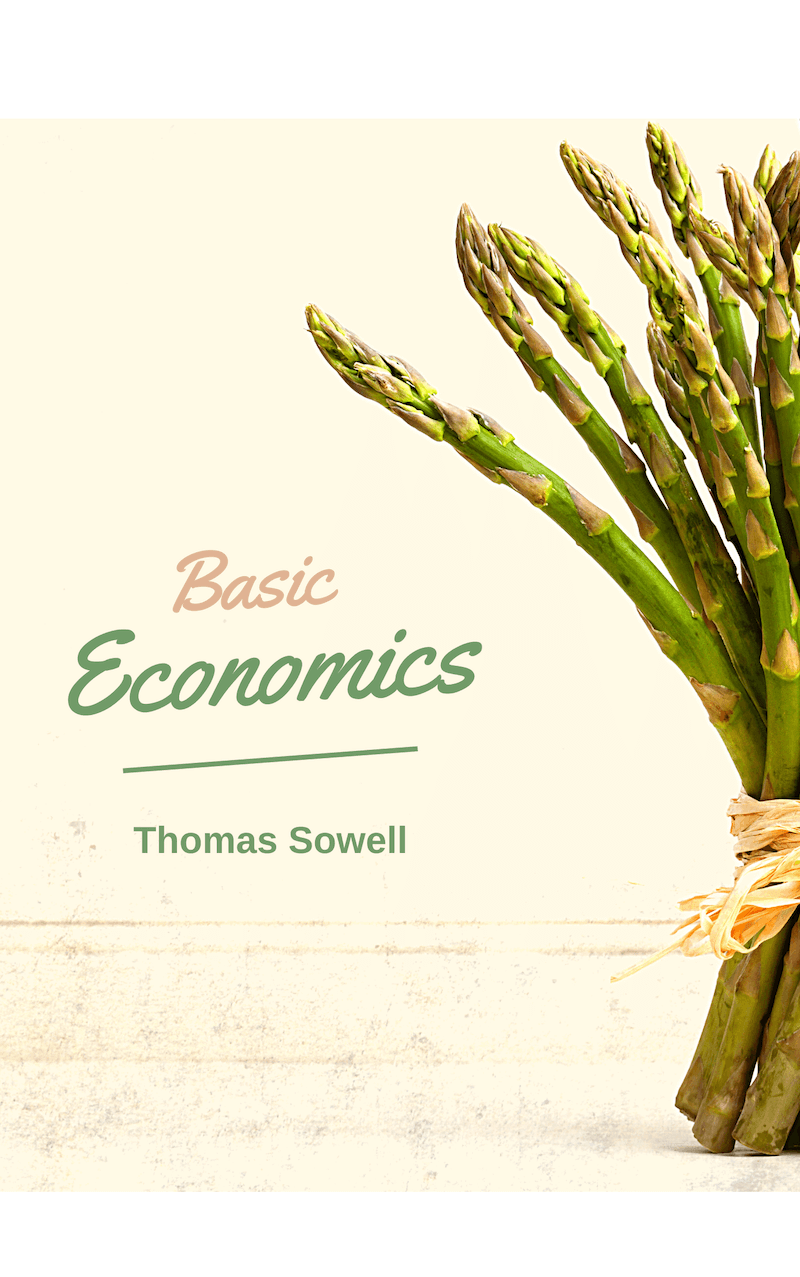
Basic Economics Book Summary
This Basic Economics Book Summary covers the key ideas, lessons, and takeaways in about 20 minutes.
Understanding economics, he argues, is a form of empowerment. It helps citizens see beyond political slogans, understand cause and effect, and make informed decisions as voters and consumers. In a world of scarce resources and unlimited wants, economics teaches us to think in terms of trade-offs, not fantasies. Sowell’s work urges a return to common sense—where incentives, accountability, and long-term thinking guide our collective choices.
Helps with these goals
Want the complete 20-minute summary?
- Full structured summary
- Video Summary
- Podcast Summary
- Audio summary
- Key takeaways
- Exercises
- Quiz
- Highlights and notes
- Ask the book with AI
What is in the Basic Economics book summary?
Below is a preview of Sumizeit’s expert-written summary of Basic Economics by Thomas Sowell. The full summary covers the book’s key ideas in text, audio, and video.
Who Should Read This Summary
Students and beginners seeking a clear introduction to economic principles.
Entrepreneurs and professionals wanting to understand markets, prices, and incentives.
Voters and policymakers who need insight into the real-world consequences of government decisions.
Curious readers who want to grasp how everyday choices—from buying coffee to voting on taxes—shape the economy.
Why You Should Read This Summary
Grasp Economics Without Jargon: Understand complex economic ideas like supply, demand, and scarcity explained in plain, practical language.
Save Time: Get all the key insights from Basic Economics without having to read the entire 700+ page book.
See How the World Works: Learn how everyday choices—like buying coffee, renting an apartment, or voting—are shaped by economic principles.
Understand Cause and Effect: Discover how well-intentioned policies (like rent control or minimum wage laws) often create unintended problems.
Gain Financial Awareness: See how prices, profits, and losses influence your job opportunities, investments, and cost of living.
Think Like an Economist: Learn to evaluate trade-offs, incentives, and long-term consequences rather than relying on emotional or political rhetoric.
Become a Smarter Voter: Recognize when politicians promote popular but economically harmful policies.
Boost Business and Career Decisions: Understand how markets allocate resources and what drives competition, innovation, and wages.
Strengthen Critical Thinking: Replace opinions with evidence-based reasoning about how economies grow, stagnate, or collapse.
Be Prepared for Real-World Challenges: From inflation and debt to unemployment and trade, gain the knowledge to navigate modern economic realities confidently.
At its heart, Thomas Sowell’s Basic Economics explores how societies manage scarcity—the universal condition that resources are limited while human desires are limitless. Economics is the study of how to use these scarce resources, which have alternative uses, to satisfy as many needs and wants as possible. Every decision—by individuals, businesses, or governments—has a trade-off.
For instance, if a farmer plants corn, that same land cannot grow wheat. If a government spends money on public parks, that money cannot be used to improve schools or healthcare. Sowell emphasizes that economics is not about moral judgments but about understanding the consequences of choices. Like physics describes how gravity works without asking whether it’s “good” or “bad,” economics explains how incentives and trade-offs shape behavior.
He stresses that misunderstanding scarcity often leads to disastrous policy. For example, when politicians promise “free” college or healthcare, the resources—teachers, hospitals, doctors—must still come from somewhere. Nothing is truly free; costs are simply shifted elsewhere, often to taxpayers or future generations. Economics, therefore, is the language of real-world choices and consequences.
How Prices Coordinate Human Action
Prices are the invisible threads weaving together billions of decisions across an economy. They communicate information about scarcity and demand without requiring any central planner. When the price of avocados rises, it tells consumers to buy fewer avocados and farmers to grow more. When prices fall, consumers buy more and producers shift elsewhere. This constant adjustment keeps markets balanced.
Sowell contrasts this decentralized coordination with central planning. In the Soviet Union, for example, bureaucrats decided how much steel,…
Want the complete 20-minute summary?
- Full structured summary
- Video Summary
- Podcast Summary
- Audio summary
- Key takeaways
- Exercises
- Quiz
- Highlights and notes
- Ask the book with AI
Who should read Basic Economics?
Basic Economics by Thomas Sowell is ideal for anyone seeking to understand how markets, prices, and incentives shape everyday life—from students and entrepreneurs to voters and policymakers. Whether you're making career decisions, evaluating political proposals, or simply curious about how the world works, this book provides the foundational knowledge to think clearly about economic trade-offs. You don't need a background in economics; Sowell explains complex ideas in plain, practical language accessible to all readers.
Why does Basic Economics matter?
In an age of political rhetoric and competing claims about wages, housing, trade, and inflation, understanding basic economic principles is essential for making informed decisions as a citizen and consumer. Thomas Sowell's book cuts through the noise by showing how well-intentioned policies often produce unintended consequences—rent control creates housing shortages, minimum wage laws reduce job opportunities, and tariffs harm the consumers they claim to help. By learning to think economically, you gain the power to recognize cause and effect, evaluate long-term consequences, and resist seductive but economically harmful ideas.
What are the key themes in Basic Economics?
- Scarcity and trade-offs shape all economic decisions
- Prices and profits efficiently coordinate human action without central planning
- Unintended consequences often follow from government intervention
- Productivity and human capital determine long-term prosperity
- Incentives drive behavior more powerfully than good intentions
- Time, patience, and long-term thinking build wealth
- Free trade creates mutual benefit and global prosperity
- Risk and reward are inseparable in a dynamic economy
What are the key lessons from the Basic Economics book summary?
Everything has a cost, even 'free' services
When politicians promise free college or healthcare, resources like teachers and doctors must come from somewhere—costs are shifted to taxpayers or future generations rather than eliminated. Understanding this fundamental truth prevents falling for appealing but economically naive policies.
Prices communicate vital information about scarcity
Rising prices signal that a good is scarce, encouraging consumers to use less and producers to make more, without requiring any central authority. This automatic coordination system is far more efficient than bureaucratic planning.
Rent control harms the people it aims to help
By keeping rents artificially low, rent control discourages landlords from maintaining or building new apartments, leading to chronic housing shortages and deteriorating conditions. Good intentions produce the opposite of intended results.
Minimum wage laws reduce employment for the vulnerable
When governments mandate higher wages, businesses respond by hiring fewer people, automating, or reducing hours. Countries with high minimum wages often experience youth unemployment exceeding 25%, harming those most in need of entry-level jobs.
Profits reward efficiency and innovation
Profits are not greed but signals guiding resources toward those who best satisfy consumer needs at lowest cost. Netflix's profits motivated competitors to innovate in streaming, while Blockbuster's losses reallocated resources away from outdated technology.
Losses eliminate waste and force improvement
Market losses punish inefficiency and stagnation, pushing businesses to adapt or exit. Kodak's decline after ignoring digital photography shows how markets enforce accountability without needing government intervention.
Productivity, not compassion, determines wages
A surgeon earns more than a cashier because their training and skills produce greater value, not because society suddenly became more generous. Artificial wage increases without productivity gains lead to job losses, not widespread prosperity.
Human capital is the foundation of higher earnings
Education, experience, and work habits that increase productivity determine long-term wage growth. Not all degrees are equal—skill-based training aligned with market demand yields better employment outcomes than degrees disconnected from economic needs.
Banks fuel growth by channeling savings into productive investments
Banks allow individuals to save money that businesses then borrow for long-term investments, enabling homeownership, business expansion, and technological innovation. Without functioning banks, most people could not afford major purchases.
Inflation erodes savings and punishes fixed-income earners
When governments print excessive money to fund deficits, inflation rises and the purchasing power of savings declines. Retirees and savers suffer most, while the benefits accrue unevenly to borrowers and the already wealthy.
Investment and speculation both serve vital economic functions
Venture capitalists funding startups and stock market investors providing liquidity both accept risk for reward, driving innovation and capital efficiency. Even failed investments contribute to discovery and progress.
Risk and reward are inseparable partners
Eliminating risk entirely would also eliminate progress and innovation. Half of new businesses fail, but the possibility of profit compensates entrepreneurs for this uncertainty and motivates them to take chances.
Government's proper role is enforcing rules, not managing outcomes
Governments excel at protecting property rights and contracts, which allow markets to function. When they try to control prices, wages, or production levels, they distort incentives and create shortages, surpluses, and waste.
Agricultural subsidies create lasting inefficiencies
When governments guarantee minimum prices for crops, farmers overproduce, leading to waste and perpetual surpluses that require storage or dumping. Subsidies persist long after initial problems are solved, becoming entrenched interests.
Political incentives favor short-term popularity over long-term health
Politicians motivated by re-election tend to expand spending and cut taxes without sustainable funding, leading to mounting debt. This behavior resembles a family constantly borrowing for vacations—eventually unsustainable.
Comparative advantage makes all nations wealthier through trade
When countries specialize in what they do most efficiently and trade for the rest, total global output increases and both parties gain. Trade is mutual benefit, not a win-lose competition.
Trade restrictions harm consumers even when they help specific producers
Tariffs protecting domestic steelworkers raise costs for car manufacturers and construction companies, ultimately making consumers poorer. The unseen costs far exceed visible gains to protected industries.
Present value explains why time is money
A dollar today can be invested to earn more tomorrow, making it worth more than a dollar in the future. This principle shows why early saving and investment compound into wealth, while delay leads to missed opportunity.
Long-term thinking determines national prosperity
Countries investing in education, infrastructure, and technology—even when results take decades—grow wealthy over generations. Prioritizing immediate consumption or populist spending leads to stagnation.
Moral hazard undermines accountability and increases total risk
When people are fully protected from consequences—like government flood insurance encouraging building in flood zones—they take greater risks, ultimately increasing the damage when disasters strike. True safety requires balancing protection with accountability.
Want the complete 20-minute summary?
- Full structured summary
- Video Summary
- Podcast Summary
- Audio summary
- Key takeaways
- Exercises
- Quiz
- Highlights and notes
- Ask the book with AI
How can you apply ideas from Basic Economics?
- Evaluate political proposals by asking: What are the unintended consequences? Who bears the true costs? What incentives does this policy create?
- Make career decisions by investing in skills the market values—focus on education that increases productivity rather than personal enrichment alone
- Understand price changes as signals about scarcity rather than mere greed—rising prices encourage conservation and increased supply automatically
- Recognize that minimum wage increases benefit some workers but cost others their jobs; weigh the trade-offs rather than assuming higher wages always help
- Support long-term investments in education and infrastructure even when results take years to appear, understanding compound growth and present value
- Evaluate rent control and housing policies by predicting their effects on housing supply, maintenance, and affordability over time
- Apply cost-benefit thinking to personal and business decisions, considering both visible immediate effects and hidden long-term ripple effects
- Support free trade policies and resist protectionist appeals, understanding that tariffs ultimately raise consumer prices and reduce choices
What common mistakes do readers make with Basic Economics?
- Confusing intentions with outcomes—assuming well-meaning policies produce beneficial results without examining economic incentives and unintended consequences
- Believing that eliminating poverty requires complex government programs rather than understanding that productivity, human capital, and functional markets have historically been the real wealth creators
- Treating prices as arbitrary numbers that can be controlled rather than recognizing them as vital communication systems conveying information about scarcity
- Assuming that helping one group through policy (like raising minimum wages or controlling rents) improves overall welfare, without recognizing the costs imposed on other groups
- Thinking that government can manage economy outcomes safely, ignoring evidence that central planning failed in the Soviet Union and that price signals outperform bureaucratic decisions
Sumizeit Exercises Apply what you've learned
Turn ideas from Basic Economics into action with a short guided reflection: identify the biggest takeaway, connect it to your life, and commit to one step you can take in the next 24 hours.
What is the expert analysis of Basic Economics?
Overview
Basic Economics by Thomas Sowell stands as a seminal work in the field of economic education, distinguished by its accessibility and breadth. Sowell, a renowned economist and social theorist, brings decades of academic rigor and real-world insight to a subject often cloaked in jargon and abstraction. His ability to distill complex economic principles into plain language without sacrificing nuance makes this book particularly significant for a wide audience—from students and policymakers to curious lay readers. Sowell’s background, shaped by both personal adversity and scholarly excellence, informs his pragmatic and consequence-focused approach to economics.
Core Thesis
At its core, Basic Economics argues that economics is fundamentally the study of scarcity and trade-offs, governed by incentives and the coordination of human action through prices. Sowell emphasizes that economic policies and decisions must be understood through their real-world consequences rather than intentions or moral judgments. He posits that prices serve as indispensable signals in a decentralized market system, efficiently allocating resources without central planning. Interventions that distort these signals—such as rent controls, minimum wage laws, or subsidies—tend to produce unintended and often detrimental outcomes. The book advocates for economic literacy as a critical tool for informed citizenship, decision-making, and long-term prosperity.
Strengths
- Clarity and Accessibility: Sowell excels at translating intricate economic concepts into clear, jargon-free prose, making the subject approachable without oversimplifying.
- Comprehensive Scope: The book covers a wide array of topics—from prices and profits to trade and government policy—providing readers with a holistic understanding of economic mechanisms.
- Emphasis on Consequences: By focusing on cause and effect rather than ideology or moralizing, Sowell encourages critical thinking and evidence-based evaluation of policies.
- Use of Real-World Examples: Contemporary and historical illustrations, such as rent control in major cities or the rise and fall of companies like Blockbuster and Kodak, ground abstract principles in tangible realities.
- Encouragement of Long-Term Thinking: The book highlights the importance of patience, investment, and human capital development as drivers of sustained economic growth.
Critiques & Counterarguments
- Potential Oversimplification of Complex Issues: While clarity is a strength, some critics argue Sowell’s framing underemphasizes the complexity of economic phenomena, particularly the social and institutional factors influencing markets.
- Limited Engagement with Alternative Economic Theories: The book largely reflects a classical and neoclassical economic viewpoint, with scant attention to Keynesian, behavioral, or heterodox critiques that emphasize market failures or inequality.
- Assumptions About Market Efficiency: Sowell’s confidence in price mechanisms may understate instances where markets fail to address externalities, public goods, or systemic risks without government intervention.
- Evidence on Minimum Wage Effects: Empirical research on minimum wage impacts is mixed; some studies find minimal job losses or even positive effects on worker welfare, challenging Sowell’s more deterministic claims about unemployment.
- Underestimation of Structural Inequality: The focus on individual productivity and incentives may overlook how structural barriers—such as discrimination or unequal access to education—affect economic outcomes beyond simple market dynamics.
Who Should Read This
Basic Economics is ideally suited for readers seeking a foundational understanding of economic principles without prior expertise. Students and beginners will find it an invaluable introduction, while entrepreneurs and professionals can gain practical insights into market forces and incentives. Policymakers and voters benefit from its clear exposition of how policies translate into economic realities, fostering more informed civic engagement. Additionally, curious readers interested in the everyday economic forces shaping society will appreciate Sowell’s lucid explanations and real-world examples. Ultimately, it is a compelling read for anyone eager to cultivate economic literacy as a tool for critical thinking and responsible decision-making.
Frequently asked questions about the Basic Economics book summary
What is Basic Economics about?
Basic Economics by Thomas Sowell is a comprehensive guide to understanding how markets, prices, incentives, and trade-offs shape economic life. The book explains fundamental principles—from how prices coordinate human action to why minimum wage laws reduce jobs—in plain language, emphasizing that economics is about understanding real-world consequences rather than pursuing noble intentions.
Who should read Basic Economics?
Anyone wanting to understand how the world works should read Basic Economics. It's ideal for students, entrepreneurs, voters, and policymakers seeking clarity on markets and incentives. You don't need an economics background; Sowell explains complex ideas accessibly and shows how economic thinking applies to everyday decisions from buying coffee to voting on taxes.
What are the main takeaways from Basic Economics?
The main takeaways are: everything has a cost (nothing is truly free), prices efficiently communicate scarcity without central planning, unintended consequences often follow government intervention, productivity determines long-term wages, and incentives shape behavior more powerfully than good intentions. Understanding these principles enables you to see through political rhetoric and recognize cause-and-effect in economic life.
Does Basic Economics argue against all government involvement in the economy?
No. Sowell argues that government plays an essential role in enforcing property rights, contracts, and the rule of law—foundations that allow markets to function. His critique targets government overreach when it tries to manage outcomes rather than enforce rules, as this creates distorted incentives that produce shortages, waste, and unintended harms.
How does Basic Economics explain why rent control fails?
Rent control keeps rents artificially low, which initially benefits some tenants but discourages landlords from maintaining or building new apartments. The result is chronic housing shortages and deteriorating conditions, seen in cities like New York and San Francisco. The policy harms the very people it aims to help by reducing housing supply and quality.
What does Basic Economics say about minimum wage laws?
Sowell explains that minimum wage laws make low-skilled labor too expensive for employers, leading to job losses, reduced hours, and automation. While some workers benefit from higher wages, others—particularly young and less-skilled workers—lose employment opportunities. Countries with high minimum wages often face youth unemployment exceeding 25%.
Does Basic Economics support free trade?
Yes. Sowell argues that international trade is one of humanity's greatest wealth creators. Through comparative advantage, countries specialize in what they produce most efficiently and trade for the rest, increasing total global output. Trade restrictions and tariffs, though appealing to national pride, ultimately raise consumer prices and reduce choices for everyone.
What is the central message of Basic Economics?
The central message is that economic reality cannot be overcome by good intentions. Understanding scarcity, incentives, and trade-offs is essential for making wise decisions as citizens and consumers. Economics teaches us to think beyond political slogans and recognize that every policy produces consequences—often unintended ones that harm the very people it aims to help.
About Sumizeit
Sumizeit is a profitable Scomy LLC company based in Miami, Florida. It has been helping readers learn from nonfiction books for 7 years with expert-written summaries in text, audio, podcast, and video.
Want the complete 20-minute summary?
- Full structured summary
- Video Summary
- Podcast Summary
- Audio summary
- Key takeaways
- Exercises
- Quiz
- Highlights and notes
- Ask the book with AI
Here's why readers love Sumizeit
Join thousands of learners getting smarter every day
"Great experience. Detailed summaries. Loved the gamification feature. Makes learning fun. Good customer service. I recommend Sumizeit to anyone. You'll learn a lot."
"I always felt busy but still wanting to keep up with the book discussion in my friend group. This was a great supplement to help me keep reading the books I find fun while keeping up with important books."
"I love this website. Instead of scrolling social media, I find myself learning a lot. I use it everyday. I recommend this app for anyone who is too busy and wants to get up to speed with their favorite books."
Basic Economics Book Summary PDF
Looking for a Basic Economics Book Summary PDF you can save and revisit offline? Our Basic Economics Book Summary PDF captures the book’s core ideas in a clean, printable format — the key frameworks, takeaways, and structure without the fluff. Download the Basic Economics Book Summary PDF when you want a reference you can annotate, share with your team, or review on the go. Get your Basic Economics Book Summary PDF from the download page below.
Download Basic Economics Book Summary PDFPeople also liked these summaries
Readers who explored Basic Economics often enjoyed these titles next.
The Science of Getting Rich
View summary →
The Art of Spending Money: Understanding the Human Side of Financial Choices
View summary →
The Almanack of Naval Ravikant
View summary →
Get Good with Money
View summary →
1929: Inside the Greatest Crash in Wall Street History--and How It Shattered a Nation
View summary →Want the complete 20-minute summary?
- Full structured summary
- Video Summary
- Podcast Summary
- Audio summary
- Key takeaways
- Exercises
- Quiz
- Highlights and notes
- Ask the book with AI
Featured Book Titles
Popular Book Summaries at sumizeit, leading book summary app