


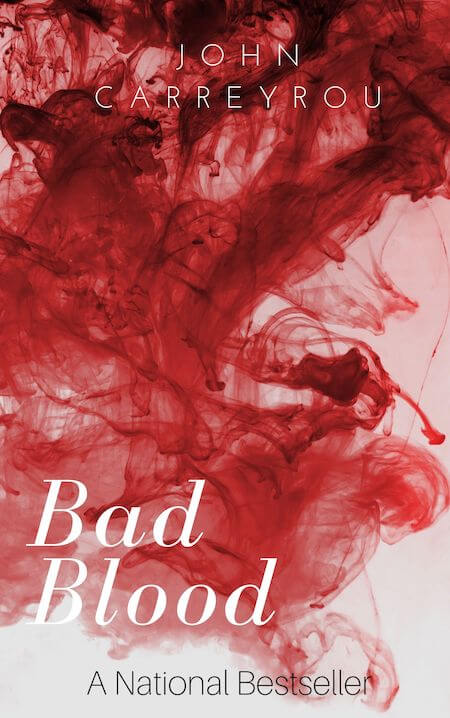
Prefer the print book? Buy on Amazon
As an Amazon Associate, Sumizeit earns from qualifying purchases.
Bad Blood Book Summary
This Bad Blood Book Summary covers the key ideas, lessons, and takeaways in about 20 minutes.
Short Description:
Theranos’ fraud exposed a biotech scandal of secrecy and mismanagement.
Helps with these goals
Preview the Bad Blood book summary
Below is a preview of Sumizeit’s comprehensive human-written summary of Bad Blood by John Carreyrou. The full summary is 15-20 minutes long and covers the book’s key ideas in text, audio, visual, and video formats. Unlock the full 20 Minute Summary
Elizabeth Holmes, the charismatic college dropout who patterned her life after Steve Jobs, founded the biotech company Theranos. At a $9 billion valuation, Theranos was set to revolutionize the blood diagnostics realm of medical technology with a machine capable of performing a battery of tests with only one drop of blood. The only problem: the technology was a fraud, leading to one of the most sensational corporate scandals of the century...rife with secrecy and coverups, threats, company mismanagement and the ultimate crash of a Silicon Valley giant.
In 2003, a 19-year old Stanford dropout named Elizabeth Holmes established the company Theranos, a blood testing company boasting of its ability to conduct hundreds of diagnostic tests using only droplets of blood. Holmes became a seemingly overnight sensation, labeled the youngest self-made billionaire.
The interest in Theranos was widespread beyond Silicon Valley. The company attracted heavy hitters like Henry Kissinger to its board. Theranos raked in more than $700 million in investments. The pharmaceutical mogul Walgreens put Theranos on its radar, seemingly ready to close a deal putting the Theranos technology in its centers.
Things looked great for Theranos on its face, but behind the scenes was a different story. Fake demos, running tests on competitor equipment in order to impress investors and threatening the employment and reputations of staff who questioned Elizabeth’s authority became the standard of practice keeping the company’s big lie afloat.
What was this big lie? The technology didn’t work.
Tyler Schultz, a grandson of Elizabeth’s mentor and backer George Shultz, became one of the few brave employees who stood up to the lawsuit and smear campaign threats made by Sunny Balwani and Holmes. Balwani was the behind-the-scenes lover of Holmes and operational face of Theranos.
John Carreyrou, a reporter at The Wall Street Journal, was tipped off to the fraud of Theranos and pursued the story. He investigated the company and its claims, obtained key information from inside sources like Tyler Schultz and ultimately broke the story to The Wall Street Journal.
How did Theranos get so big based on a lie? Deception created the image and the story. Investors bought into Elizabeth’s charisma, not the product. Psychological biases led even the most shrewd business leaders to buy into that story, and maintain it even when reality demonstrated otherwise.
The Carreyrou story led to the downfall of Theranos, but where is the company now? What came of Elizabeth, Sunny and the brand? The story continues playing out in the courts, with both of the company’s leaders facing fraud charges. Court cases are still pending so the fates of the largely-defunct Theranos and it’s embattled leadership have yet to be determined.
A journalist with the Wall Street Journal since the late 90s, Carreyrou was the investigator that broke the story of the Theranos fraud. Born in Paris, France to a French journalist, his interest in the field was inspired from a young age. Carreyrou earned a B.A.
Want the complete 20-minute summary?
- Full structured summary
- Video Summary
- Podcast Summary
- Audio summary
- Key takeaways
- Exercises
- Quiz
- Highlights and notes
- Ask the book with AI
Who should read Bad Blood?
Bad Blood is essential for entrepreneurs, investors, and business leaders who want to understand how sophisticated fraud can thrive in high-stakes industries. It's also valuable for anyone interested in corporate accountability, investigative journalism, and the psychology behind why intelligent people fall for compelling false narratives. Students of technology, ethics, and risk management will find compelling lessons about due diligence and skepticism.
Why does Bad Blood matter?
The Theranos scandal represents one of the most consequential corporate frauds of the 21st century, exposing critical gaps in investor vetting, regulatory oversight, and board accountability in Silicon Valley. John Carreyrou's investigation demonstrates the power of rigorous journalism to uncover deception at scale, while also revealing how charisma and narrative can override evidence. Understanding this case is crucial for anyone making investment decisions, working in healthcare, or evaluating extraordinary claims in any industry.
What are the key themes in Bad Blood?
- The danger of charisma without substance
- How secrecy and intimidation enable fraud
- The role of narrative and story-telling in business deception
- Systemic failures in investor due diligence
- Courage required to challenge authority and speak truth
- The power of investigative journalism
- Cognitive biases that lead intelligent people astray
How can you apply ideas from Bad Blood?
- When evaluating startup investments, demand independent technical verification rather than relying on founder presentations or testimonials from non-expert board members
- Implement mandatory whistleblower protections and create safe channels for employees to raise concerns without fear of retaliation or litigation
- Build investment review processes that explicitly check for red flags like excessive secrecy, aggressive litigation against critics, or claims that cannot be independently verified
- Ensure board composition includes deep expertise in the actual business domain, not just prestigious names, to enable meaningful technical and strategic oversight
- Develop organizational cultures that reward dissent and encourage employees to question whether claims align with observable reality
- Practice healthy skepticism toward narrative and charisma in founder evaluation; verify claims through technical experts and third-party validation rather than relying on personal magnetism
- For healthcare and regulated industries, work with compliance experts and regulators early to ensure claims meet validation standards before making business commitments
What common mistakes do readers make with Bad Blood?
- Assuming that prestigious board members or investors provide meaningful validation when they lack relevant industry expertise or have not conducted rigorous due diligence
- Accepting founder narratives and vision statements as substitutes for demonstrated product functionality and transparent operations
- Failing to investigate or verify extraordinary claims because the founder is charismatic or the business opportunity seems too compelling to question
- Allowing competitive advantage claims or IP protection concerns to prevent legitimate technical validation by qualified independent experts before making major commitments
Sumizeit Exercises Apply what you've learned
Turn ideas from Bad Blood into action with a short guided reflection: identify the biggest takeaway, connect it to your life, and commit to one step you can take in the next 24 hours.
What is the expert analysis of Bad Blood?
Overview
Bad Blood by John Carreyrou stands as a landmark investigative work that exposes one of the most extraordinary corporate frauds in recent history. Carreyrou, an acclaimed journalist with The Wall Street Journal and a Pulitzer Prize winner, leverages his investigative rigor to unravel the Theranos scandal—a cautionary tale of ambition, deception, and the dark underbelly of Silicon Valley’s startup culture. This book is significant not only for its meticulous reporting but also for its illumination of how charisma and hype can overshadow empirical truth in the high-stakes world of biotech innovation.
Core Thesis
At its core, Bad Blood argues that Theranos’s meteoric rise and subsequent collapse were less about technological innovation and more about the power of narrative, psychological manipulation, and systemic failures in due diligence. Carreyrou contends that Elizabeth Holmes’s charisma and the company’s carefully crafted mythos seduced investors, board members, and partners into willful blindness, allowing a fundamentally flawed technology to masquerade as revolutionary. The book underscores how cognitive biases, lack of transparency, and unchecked authority can conspire to sustain corporate fraud.
Strengths
- Investigative Depth: Carreyrou’s first-hand journalistic investigation provides an unparalleled inside look at Theranos, supported by credible sources and whistleblower testimonies.
- Narrative Clarity: The book balances complex scientific and corporate details with compelling storytelling, making the intricate scandal accessible without sacrificing nuance.
- Psychological Insight: It deftly explores the role of psychological biases—such as authority bias and confirmation bias—in enabling the deception to flourish.
- Broader Implications: Beyond the Theranos case, the book serves as a critical reflection on Silicon Valley’s culture of hype and the dangers of prioritizing image over substance.
- Ethical Examination: The ethical failures of leadership, governance, and media complicity are thoughtfully interrogated, offering lessons for multiple stakeholders.
Critiques & Counterarguments
- Potential Oversimplification: While the book convincingly exposes the fraud, it occasionally simplifies complex systemic issues within biotech regulation and venture capital dynamics, potentially underrepresenting the structural challenges that allowed Theranos’s rise.
- Focus on Individuals: The narrative centers heavily on Elizabeth Holmes and Sunny Balwani, which, while compelling, may obscure the roles of other actors and institutional failures that enabled the deception.
- Limited Technological Context: The book does not deeply engage with the scientific feasibility challenges inherent in miniaturized blood testing technology, which some experts argue is a notoriously difficult domain, thus potentially conflating ambition with fraud.
- Competing Perspectives: Some critics from the startup ecosystem argue that the intense scrutiny on Theranos may discourage legitimate innovation in high-risk fields, suggesting a tension between fostering innovation and enforcing accountability.
- Psychological Biases Nuance: While biases are highlighted, there is room for a more nuanced exploration of how systemic incentives and cultural factors in Silicon Valley amplify these biases beyond individual susceptibility.
Who Should Read This
Bad Blood is essential reading for investors, entrepreneurs, and professionals in biotech and technology sectors who seek to understand the pitfalls of unchecked hype and the importance of rigorous validation. It also appeals to scholars of business ethics, psychology, and corporate governance, illuminating how human factors intersect with organizational dynamics to produce catastrophic outcomes. Finally, this book is valuable for a general audience interested in contemporary scandals, investigative journalism, and the complex interplay between innovation and integrity in modern capitalism.
Frequently asked questions about the Bad Blood book summary
What is Bad Blood about?
Bad Blood by John Carreyrou tells the true story of Theranos, a Silicon Valley biotech company founded by Elizabeth Holmes that claimed to revolutionize blood testing with a machine requiring only a single drop of blood. The book exposes how the company's core technology was fraudulent, and follows the journalist's investigation that uncovered the deception, massive investor fraud, and the company's ultimate collapse. It's a gripping account of one of the most significant corporate scandals of the 21st century.
Who should read Bad Blood?
Bad Blood is essential for entrepreneurs, investors, business leaders, and anyone involved in decision-making around capital allocation or product evaluation. It's valuable for healthcare professionals, healthcare investors, and compliance officers who need to understand fraud risks in regulated industries. The book is also compelling for readers interested in investigative journalism, corporate accountability, and understanding how intelligent people can be deceived by charismatic leaders.
What are the main takeaways from Bad Blood?
Bad Blood teaches that charisma and narrative cannot substitute for actual product functionality, and that investors must demand rigorous independent technical verification rather than relying on founder presentations. The book demonstrates how secrecy, legal intimidation, and organizational silencing of dissent are red flags for fraud. It also shows the critical importance of whistleblowers and investigative journalism in holding corporations accountable when other institutional checks fail.
How did Theranos commit fraud for so long?
Theranos maintained its deception through multiple tactics: running fake demonstrations using competitor equipment, aggressively suing and threatening employees who questioned leadership, recruiting prestigious board members who lacked relevant expertise, and claiming extreme secrecy was necessary for competitive advantage. Over $700 million in investor funding allowed the company to sustain operations and silence critics through litigation, while the founder's charisma and compelling narrative convinced sophisticated investors to overlook red flags.
Who was Elizabeth Holmes and what was her role?
Elizabeth Holmes was a 19-year-old Stanford dropout who founded Theranos and served as its public face and CEO. She deliberately modeled herself after Steve Jobs and built a cult of personality around herself, becoming labeled the world's youngest self-made billionaire. However, she knowingly misrepresented the company's technology and capabilities, creating fake demonstrations and suppressing employee concerns to maintain the fraud.
What role did John Carreyrou play in exposing Theranos?
John Carreyrou, an investigative journalist at The Wall Street Journal, pursued leads about Theranos' fraudulent claims and obtained crucial information from inside sources, particularly employee Tyler Schultz. His rigorous investigation and reporting broke the story to the public, ultimately leading to the company's downfall and exposing the deception that regulators, investors, and board members had missed. Carreyrou's work demonstrates the power of investigative journalism to hold corporations accountable.
What happened to Theranos and its leadership?
Theranos ultimately collapsed following Carreyrou's investigative reporting. Both Elizabeth Holmes and Sunny Balwani (the company's operational president and Holmes' romantic partner) faced fraud charges. The company became largely defunct, and legal proceedings continued to determine the ultimate consequences for the company and its leadership. The scandal became a cautionary tale about corporate deception and the failures of Silicon Valley's investor and board oversight.
What red flags should investors have caught?
Investors should have been alerted by Theranos' extreme secrecy regarding its core technology, its reliance on non-expert board members for credibility, aggressive litigation against employees and critics, the inability to independently verify fundamental claims, and the founder's reliance on narrative and charisma rather than transparent demonstration of results. The company's culture of silencing dissent and the pace at which it made extraordinary claims should have triggered more rigorous due diligence before committing capital.
About Sumizeit
Sumizeit is a profitable Scomy LLC company based in Miami, Florida. Our founders, Clemens Raemy and Weina Scott, are successful entrepreneurs with several exits. Sumizeit is a popular book summary app / micro learning app used by busy professionals and entrepreneurs with over 2,500 non-fiction book summaries and 10,000 podcast summaries in text, audio, visual, podcast, and video format. We also have stellar retention tools to make ideas stick - such as flashcards with spaced repetition, quizzes, streaks, highlighting and notes, daily challenges, riddles, mini-courses, meditation, and more. You won't only learn the idea, but also remember it. Over 90% of our users change their habits with Sumizeit.
Upgrade Now
Here's why readers love Sumizeit
Join thousands of learners getting smarter every day
"Great experience. Detailed summaries. Loved the gamification feature. Makes learning fun. Good customer service. I recommend Sumizeit to anyone. You'll learn a lot."
"I always felt busy but still wanting to keep up with the book discussion in my friend group. This was a great supplement to help me keep reading the books I find fun while keeping up with important books."
"I love this website. Instead of scrolling social media, I find myself learning a lot. I use it everyday. I recommend this app for anyone who is too busy and wants to get up to speed with their favorite books."
Bad Blood Book Summary PDF
Looking for a Bad Blood Book Summary PDF you can save and revisit offline? Our Bad Blood Book Summary PDF captures the book’s core ideas in a clean, printable format — the key frameworks, takeaways, and structure without the fluff. Download the Bad Blood Book Summary PDF when you want a reference you can annotate, share with your team, or review on the go. Get your Bad Blood Book Summary PDF from the download page below.
Download Bad Blood Book Summary PDFPeople also liked these summaries
Readers who explored Bad Blood often enjoyed these titles next.


Ready to read the whole thing?
- Full structured summary
- Video Summary
- Podcast Summary
- Audio summary
- Key takeaways
- Exercises
- Quiz
- Highlights and notes
- Ask the book with AI
Featured Book Titles
Popular Book Summaries at sumizeit, leading book summary app