


As an Amazon Associate, Sumizeit earns from qualifying purchases.
Attached Book Summary
This Attached Book Summary covers the key ideas, lessons, and takeaways in about 20 minutes.
Helps with these goals
Want the complete 20-minute summary?
- Full structured summary
- Video Summary
- Podcast Summary
- Audio summary
- Key takeaways
- Exercises
- Quiz
- Highlights and notes
- Ask the book with AI
What is in the Attached book summary?
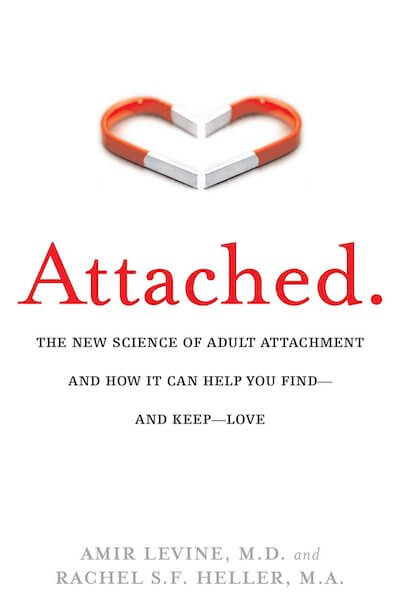
Below is a preview of Sumizeit’s expert-written summary of Attached by Amir Levine and Rachel Heller. The full summary covers the book’s key ideas in text, audio, and video.
Let's be real: Relationships can make you feel amazing. They can be a great source of comfort, security, and warmth. Conversely, they can also be stressful, painful, exhausting, and leave you full of anxiety. What gives? If you find that your relationships often reflect more of the latter, it's likely it has something to do with your attachment style. Attachment is the bond we form with other people and our style of attachment is the particular way we attach to others. Attachment style is pretty important and can influence everything from how we relate to others to what kind of partners we pick. Read on to learn about different attachment styles, the best antidote for relationship troubles (regardless of your style), and the number one thing you need in a relationship for it to last the long haul.
Everybody needs somebody!
We are reliant on other people to get our needs met. More than that, being close to other people can bring us great comfort. Researchers were able to confirm this when they had female participants engage with a stressful situation. Some women were allowed to hold their partner’s hand, others were not. When women held their partner's hand, the part of the brain associated with stress was significantly less activated. Just holding their partners hand lowered their stress. Sweet, right? It has also been shown that being in a negative relationship causes raised blood pressure whenever you’re around your partner, which could be detrimental to your health in the long run. So, relationships are important. One key aspect of relationships, attachment, is the bond we form with a significant person in our life. It withstands a certain amount of time and leads to a need for continued contact. Now that you understand how good positive attachments can be (Goodbye stress!!) and how negative attachments can be bad (hello health problems!), here’s where it comes from.
Why do we attach? Blame your genes and your parents.
You might wonder why people attach to each other at all. It's because it's embedded in our genes! Right when we are born, we begin to reach and yearn for the security of our mothers. This desire has a historical basis: our ancestors knew they needed to rely on each other for survival to gather food, stay safe from predators, and for protection. In present times, that ancient desire for attachment is molded by our earliest attachment: the one to our parents. When a child’s needs are consistently met, they will likely form a secure attachment that will carry them through until adulthood. Attachment styles can change, largely due to the impact of your environment. For instance, your attachment style can become unhealthy due to the impact of a negative relationship in adulthood.
What’s all the fuss about? Anxious attachment styles
Imagine this scenario: Your partner is normally home from work at 5:30 PM on weekdays. You look at the clock, and it's 6:00 PM, and they still aren’t home.
Want the complete 20-minute summary?
- Full structured summary
- Video Summary
- Podcast Summary
- Audio summary
- Key takeaways
- Exercises
- Quiz
- Highlights and notes
- Ask the book with AI
Who should read Attached?
Attached is for anyone who struggles with relationship anxiety, avoidance, or communication issues and wants to understand why. Whether you're single, dating, or in a long-term partnership, this book helps you identify your attachment style and learn how to build healthier, more fulfilling connections with others.
Why does Attached matter?
Understanding attachment styles backed by neuroscience can transform how you approach relationships and resolve conflict. In a world where relationship stress affects physical health and emotional wellbeing, Attached by Amir Levine and Rachel Heller offers practical science-based strategies to break unhealthy patterns and find genuine compatibility.
What are the key themes in Attached?
- Attachment styles shape relationship patterns and partner selection
- Early childhood experiences and genetics influence how we bond
- Secure attachment is achievable and learnable at any age
- Communication and vulnerability are essential for relationship health
- Compatibility matters: finding a partner who meets your needs
- Conflict, when handled well, deepens attachment and trust
What are the key lessons from the Attached book summary?
Attachment is biological, not just emotional
Our need to bond with others is hardwired into our genes and stems from ancestral survival mechanisms. This biological foundation explains why relationships profoundly affect our physical health and stress levels.
Your attachment style isn't permanent
While shaped by early childhood experiences with parents, attachment styles can evolve throughout adulthood based on experiences and relationships. Negative patterns can be unlearned with awareness and effort.
Anxious attachment creates a cycle of worry and validation-seeking
Anxiously attached people tend to catastrophize when partners are unavailable and may engage in excessive contact-seeking or emotional reactions. Pairing with a secure, communicative partner is essential for breaking this cycle.
Avoidant attachment masks fear of intimacy with independence
Avoidantly attached individuals prioritize autonomy above relationship commitment and often unconsciously sabotage partnerships by idealizing distant partners or finding fault in those available. Self-awareness about this pattern is crucial.
Secure attachment is the most common and desirable style
Securely attached people balance closeness with independence, handle conflict maturely, and don't take their partner's bad moods personally. Being with a secure partner significantly predicts relationship success.
Clear communication prevents misunderstandings and resentment
Ambiguity in relationships creates anxiety and assumptions. Expressing needs directly and honestly—without blame—allows partners to understand each other's expectations and align their actions accordingly.
Blame destroys connection; accountability builds it
Framing concerns as your own feelings rather than accusations allows partners to hear you without defensiveness. The difference between blaming and owning your experience determines whether conflict leads to resolution or escalation.
Fighting isn't the enemy; unhealthy conflict is
Disagreements are healthy and necessary for deepening attachment when they stay focused, avoid generalizations, and consider both partners' wellbeing. Avoiding conflict actually increases stress and emotional distance.
Physical closeness directly reduces stress and anxiety
Neuroscience confirms that simple gestures like hand-holding activate the brain's calming centers. Positive physical connection with a partner is a measurable stress reliever.
Mismatched attachment styles create predictable conflicts
Anxious-avoidant pairings are particularly destructive because one partner craves intimacy while the other fears it, creating a painful pursuit-withdrawal dynamic. Recognizing incompatibility early saves emotional damage.
Negative relationships damage physical health over time
Chronic stress from unhealthy relationships raises blood pressure and weakens immune function. The quality of your attachment relationships directly impacts your long-term health outcomes.
Partner selection is influenced by your attachment style
Your attachment history unconsciously guides who you're attracted to and how you behave in relationships. Understanding this influence allows you to make more conscious, compatible choices.
Your partner's autonomy isn't a threat to the relationship
Secure partners understand that their partner's independence and personal needs don't diminish the relationship. This balanced perspective prevents anxiety-driven clinginess or resentment.
Mixed messages and ambiguity fuel relationship anxiety
Uncertainty about relationship status, commitment level, or partner feelings creates anxious rumination. Clarity about expectations and intentions, though uncomfortable to discuss, relieves this uncertainty.
Staying in negative relationships carries real health costs
Toxic relationships aren't just emotionally draining—they produce measurable physiological stress responses. Recognizing when a relationship is harmful to your wellbeing is a form of self-care.
Finding someone who meets your needs is non-negotiable
The most important predictor of a lasting, fulfilling relationship is having a partner whose attachment style and needs are compatible with yours. Compromise on values, not on fundamental compatibility.
Self-awareness about your attachment style enables change
Recognizing whether you tend toward anxiety, avoidance, or security is the first step in addressing relationship patterns. This self-knowledge helps you communicate needs and choose better partners.
Blaming your partner prevents conflict resolution
When conflict focuses on the other person's flaws rather than the impact of their behavior, defensive walls go up. Taking accountability for your role in problems opens the door to real solutions.
Context matters in interpreting partner behavior
Secure partners recognize that their partner's irritability or distance may stem from stress, not relationship dissatisfaction. This empathetic interpretation prevents unnecessary escalation of conflict.
Healthy relationships require ongoing effort and communication
No attachment style is perfect, but consistent, honest communication combined with a compatible partner creates the foundation for a resilient, satisfying relationship.
Want the complete 20-minute summary?
- Full structured summary
- Video Summary
- Podcast Summary
- Audio summary
- Key takeaways
- Exercises
- Quiz
- Highlights and notes
- Ask the book with AI
How can you apply ideas from Attached?
- Identify your attachment style by reflecting on your relationship history and recognizing patterns in how you respond to partner unavailability or commitment discussions
- Practice non-blaming communication by describing your feelings and needs separately from accusations about your partner's character or intentions
- Assess compatibility early by observing whether a potential partner can meet your core attachment needs—closeness, reassurance, independence, or space
- Use conflict as an opportunity to deepen understanding by focusing on one issue at a time and seeking compromise rather than winning the argument
- Build stress resilience in your relationship by prioritizing physical affection and presence, especially during difficult periods
- Evaluate whether your current relationship supports your emotional and physical health, and recognize when incompatibility outweighs the benefits
- Develop secure attachment skills by practicing empathy, patience, and the ability to understand your partner's perspective without taking their behavior personally
What common mistakes do readers make with Attached?
- Assuming your partner's delayed response or unavailability means they don't love you, rather than considering external circumstances like work stress or traffic
- Choosing partners based on chemistry or excitement rather than evaluating whether their attachment style and needs align with yours
- Avoiding difficult conversations to prevent short-term discomfort, which accumulates resentment and emotional distance over time
- Blaming your partner for relationship problems without examining your own role in conflict patterns and communication breakdowns
- Trying to change a fundamentally incompatible partner rather than accepting that some mismatches can't be resolved through effort alone
Sumizeit Exercises Apply what you've learned
Turn ideas from Attached into action with a short guided reflection: identify the biggest takeaway, connect it to your life, and commit to one step you can take in the next 24 hours.
What is the expert analysis of Attached?
Overview
Attached: The New Science of Adult Attachment and How It Can Help You Find - and Keep - Love is a seminal work by psychiatrist and neuroscientist Amir Levine and social psychologist Rachel Heller. The book stands out for translating complex attachment theory—rooted in developmental psychology—into an accessible framework for understanding adult romantic relationships. By bridging rigorous scientific research with practical advice, Levine and Heller offer readers a lens through which to decode their relational patterns and navigate intimacy more effectively. Their combined expertise lends credibility and depth, positioning the book as a significant contribution to contemporary relationship literature.
Core Thesis
The central argument of Attached is that adult romantic relationships are profoundly shaped by early attachment styles—secure, anxious, and avoidant—which originate from childhood experiences with caregivers but continue to influence partner choice, behavior, and emotional regulation in adulthood. The authors assert that recognizing one’s own attachment style and that of one’s partner is crucial for fostering healthier, more fulfilling relationships. They emphasize that secure attachment fosters emotional resilience and intimacy, while anxious and avoidant styles often precipitate conflict and dissatisfaction. Ultimately, the book promotes the idea that compatibility in attachment styles, combined with clear communication, is the key to lasting love.
Strengths
- Clarity and Accessibility: The authors distill complex psychological concepts into straightforward language and relatable scenarios, making attachment theory approachable for a broad audience without sacrificing nuance.
- Practical Application: By providing concrete examples and actionable advice—such as how to communicate needs and recognize partner compatibility—the book serves as a useful guide for readers seeking to improve their romantic lives.
- Integration of Neuroscience and Psychology: Levine’s background in neuroscience enriches the narrative by grounding attachment behaviors in biological and evolutionary imperatives, adding scientific rigor to the psychological framework.
- Focus on Communication and Conflict Resolution: The emphasis on honest communication and constructive conflict reframes common relationship struggles as opportunities for growth rather than insurmountable obstacles.
Critiques & Counterarguments
- Oversimplification of Attachment Styles: While the tripartite model (secure, anxious, avoidant) is foundational, it risks reducing complex human behaviors to fixed categories. Contemporary research suggests attachment exists on a spectrum with more nuanced subtypes, which the book touches on only superficially.
- Limited Consideration of Sociocultural Factors: The book largely frames attachment through an individualistic, Western lens, with insufficient attention to how cultural norms, socioeconomic status, and gender roles shape relational dynamics and attachment expressions.
- Potential Determinism: By emphasizing early childhood experiences and attachment styles, the narrative may inadvertently suggest a deterministic view of adult relationships, underplaying the capacity for change through therapy, self-reflection, or life circumstances.
- Counterpoint from Alternative Theories: Other schools of thought, such as behavioral economics or evolutionary psychology, provide competing explanations for relationship behaviors that focus more on strategic mate selection or cost-benefit analyses rather than emotional attachment per se.
- Real-World Variability: Empirical evidence shows that many successful relationships involve partners with mismatched or insecure attachment styles who nonetheless cultivate satisfaction through mutual effort, challenging the book’s strong emphasis on matching attachment styles for success.
Who Should Read This
Attached is ideally suited for readers seeking a scientifically informed yet accessible framework to understand their romantic relationships. It is particularly valuable for individuals who find themselves caught in recurring patterns of anxiety or avoidance in intimacy and desire practical tools for change. Therapists, counselors, and relationship coaches may also find the book a useful resource for educating clients. However, readers interested in a more intersectional or culturally nuanced exploration of relationships might need to supplement this book with additional perspectives.
Frequently asked questions about the Attached book summary
What is Attached about?
Attached by Amir Levine and Rachel Heller explores how attachment theory—the science of bonding—shapes adult relationships and romantic compatibility. The book identifies three primary attachment styles (anxious, avoidant, and secure) and shows how understanding your style can help you build healthier relationships, communicate more effectively, and choose compatible partners.
Who should read Attached?
Attached is essential for anyone struggling with relationship anxiety, jealousy, avoidance of commitment, or recurring conflict patterns. It's valuable for singles trying to understand their dating patterns, couples seeking to improve communication, and anyone curious about why certain relationships feel effortless while others feel exhausting.
What are the main takeaways from Attached?
The key insights include: your attachment style shapes relationship dynamics and partner selection; secure attachment is most conducive to lasting relationships; clear, non-blaming communication is essential regardless of attachment style; finding a compatible partner is more important than trying to change an incompatible one; and conflict, when handled well, strengthens rather than weakens relationships.
What are the three attachment styles explained in Attached?
Anxious attachment involves worry about partner availability and a strong need for reassurance; avoidant attachment prioritizes independence and resists commitment and intimacy; and secure attachment balances closeness with autonomy. Secure is considered the healthiest style, and anxious-avoidant pairings tend to be particularly challenging.
Can attachment styles change over time?
Yes, attachment styles are not fixed. While shaped by early childhood experiences with parents, they can evolve throughout adulthood based on new relationships and experiences. Being in a secure, healthy relationship can gradually shift someone toward more secure attachment patterns.
How does physical closeness impact relationship health?
Research cited in Attached shows that physical touch like hand-holding activates the brain's stress-relief centers, reducing anxiety and promoting wellbeing. Conversely, negative relationships cause elevated blood pressure and chronic stress. Physical affection is a measurable, biological component of relationship health.
Why do anxious and avoidant attachment styles clash in relationships?
Anxiously attached people crave closeness, reassurance, and commitment, while avoidantly attached people fear confinement and prioritize independence. This creates a painful dynamic where one partner pursues connection while the other withdraws, and neither person's core needs can be met.
What is the most important thing you need in a partner according to Attached?
The single most important factor is finding a partner whose attachment style and needs are compatible with yours. A secure partner who can meet your emotional needs—whether that's consistency, independence, or intimacy—is the best predictor of a long-lasting, fulfilling relationship.
About Sumizeit
Sumizeit is a profitable Scomy LLC company based in Miami, Florida. It has been helping readers learn from nonfiction books for 7 years with expert-written summaries in text, audio, podcast, and video.
Want the complete 20-minute summary?
- Full structured summary
- Video Summary
- Podcast Summary
- Audio summary
- Key takeaways
- Exercises
- Quiz
- Highlights and notes
- Ask the book with AI
Here's why readers love Sumizeit
Join thousands of learners getting smarter every day
"Great experience. Detailed summaries. Loved the gamification feature. Makes learning fun. Good customer service. I recommend Sumizeit to anyone. You'll learn a lot."
"I always felt busy but still wanting to keep up with the book discussion in my friend group. This was a great supplement to help me keep reading the books I find fun while keeping up with important books."
"I love this website. Instead of scrolling social media, I find myself learning a lot. I use it everyday. I recommend this app for anyone who is too busy and wants to get up to speed with their favorite books."
Attached Book Summary PDF
Looking for a Attached Book Summary PDF you can save and revisit offline? Our Attached Book Summary PDF captures the book’s core ideas in a clean, printable format — the key frameworks, takeaways, and structure without the fluff. Download the Attached Book Summary PDF when you want a reference you can annotate, share with your team, or review on the go. Get your Attached Book Summary PDF from the download page below.
Download Attached Book Summary PDFPeople also liked these summaries
Readers who explored Attached often enjoyed these titles next.


Want the complete 20-minute summary?
- Full structured summary
- Video Summary
- Podcast Summary
- Audio summary
- Key takeaways
- Exercises
- Quiz
- Highlights and notes
- Ask the book with AI
Featured Book Titles
Popular Book Summaries at sumizeit, leading book summary app
