


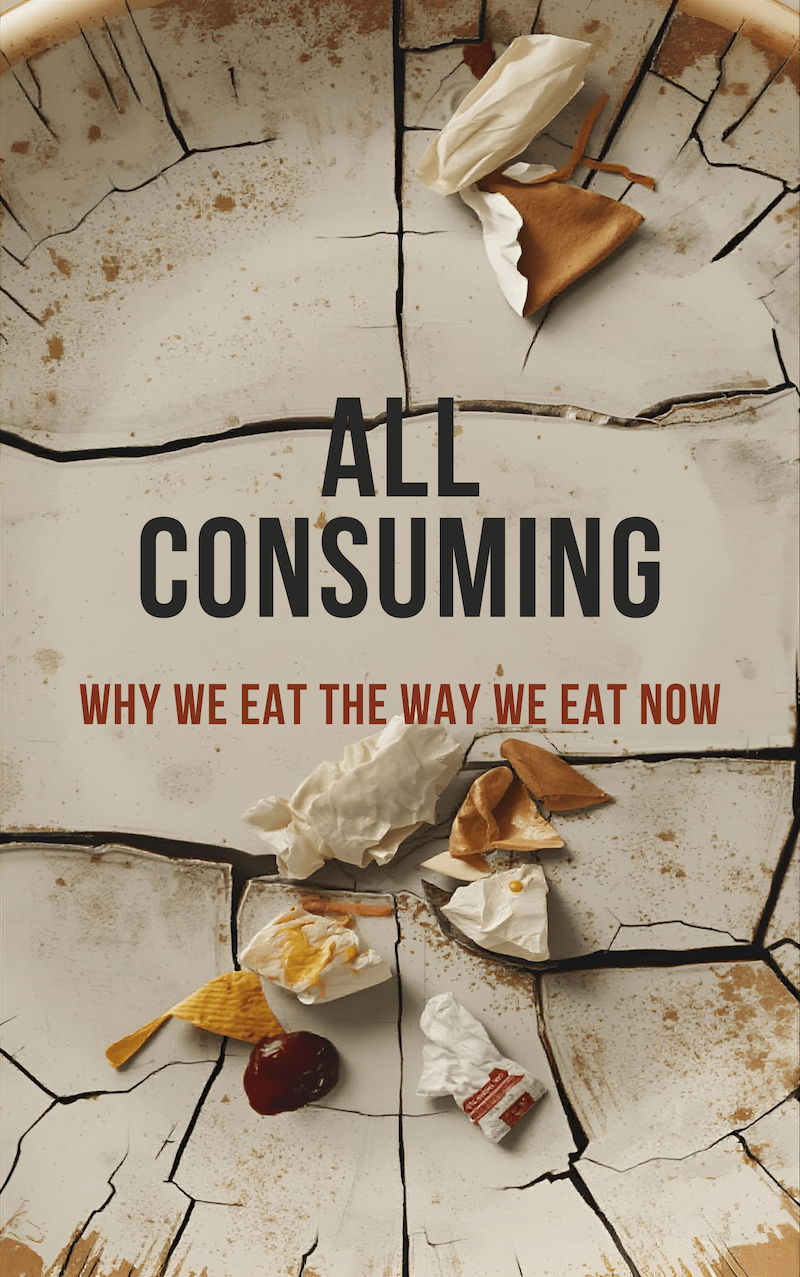
Prefer the print book? Buy on Amazon
As an Amazon Associate, Sumizeit earns from qualifying purchases.
All Consuming Book Summary
This All Consuming Book Summary covers the key ideas, lessons, and takeaways in about 20 minutes.
All Consuming reveals how food culture shapes desire and power.
The book does not call for purity or retreat. Instead, it asks readers to recognize how deeply embedded food culture is in structures of power, technology, and commerce. Awareness does not eliminate desire, but it can restore agency.
Eating is never just eating. It is participation in a network of stories, labor, and incentives. Understanding that network is the first step toward choosing differently—not perfectly, but consciously.
Helps with these goals
Want the complete 20-minute summary?
- Full structured summary
- Video Summary
- Podcast Summary
- Audio summary
- Key takeaways
- Exercises
- Quiz
- Highlights and notes
- Ask the book with AI
Want a Free Weekly Read?
Get a free summary every week straight to your mailbox.
Preview the All Consuming book summary
Below is a preview of Sumizeit’s comprehensive human-written summary of All Consuming by Ruby Tandoh. The full summary is 15-20 minutes long and covers the book’s key ideas in text, audio, visual, and video formats. Unlock the full 20 Minute Summary
All Consuming is not a book about recipes, dieting, or how to eat “better.” Instead, it is an excavation of how desire itself is produced in modern food culture. Ruby Tandoh approaches food not as fuel or personal preference, but as something continuously shaped, nudged, and remodeled by systems that surround us—technology, commerce, media, labor, migration, and power. What we think of as hunger or craving is rarely spontaneous. It is learned, rehearsed, encouraged, and monetized.
The book challenges the comforting idea that there exists a clean boundary between authentic appetite and artificial desire. Tandoh dismantles the notion that there is a “pure” way to want food that exists outside marketing, platforms, and cultural influence. From supermarkets to TikTok, from cookbooks to dinner parties, the modern eater is surrounded by prompts that suggest not just what to eat, but how to feel about eating it.
Rather than condemning pleasure, the book takes pleasure seriously. It treats joy, craving, and indulgence as legitimate human experiences while exposing the mechanisms that exaggerate, exploit, and distort them. The result is a cultural history of eating that feels both intimate and structural: deeply personal, yet unmistakably collective.
Appetite as a Social Construction, Not a Private Instinct
One of the book’s foundational arguments is that desire is not born in isolation. Taste is acquired through repetition, imitation, and shared context. From childhood onward, people learn what to crave through family routines, school lunches, office norms, advertising, and peer behavior. Preferences feel personal, but they are built from countless external cues absorbed over time.
This means that the distinction between “real” and “fake” appetite collapses under scrutiny. A craving for a branded snack, a viral dish, or a nostalgic flavor is no less sincere than hunger for a home-cooked meal. Both arise from exposure and reinforcement. The difference lies not in authenticity, but in who benefits from the craving once it exists.
Historically, food knowledge traveled through proximity—between neighbors, relatives, and communities. Recipes were transmitted through shared labor and local conditions. After the Second World War, this balance changed dramatically. Power over food shifted away from households and toward corporations with the ability to scale, standardize, and distribute taste at unprecedented levels.
Restaurant chains, supermarkets, industrial farming, frozen food, delivery apps, and global logistics did not merely respond to demand. They actively shaped it. The eater became less a participant in food culture and more a consumer navigating choices designed by others.
Modern food culture, as Tandoh presents it, is not fragmented but composite. It is a constantly updating blend of branding, tourism, nostalgia, aspiration, and algorithmic suggestion. Recipes no longer circulate quietly; they arrive relentlessly. The sheer volume of options creates a strange anxiety: abundance without clarity. Choice becomes overwhelming rather than liberating.
Digital Media and the Engineering of Craving
Different technologies do not simply carry food culture—they transform it. The shift from print to television, from blogs to smartphones, and finally to social media platforms has changed not just how food is shared, but…
Want the complete 20-minute summary?
- Full structured summary
- Video Summary
- Podcast Summary
- Audio summary
- Key takeaways
- Exercises
- Quiz
- Highlights and notes
- Ask the book with AI
Who should read All Consuming?
All Consuming is essential for anyone who uses social media, shops for food, or eats in the modern world. If you've ever wondered why you crave certain foods, felt pressured by food trends, or questioned the gap between how you actually eat and how food is presented online, this book speaks directly to you. It's particularly valuable for those interested in understanding how technology, marketing, and culture shape our desires rather than simply reflecting them.
Why does All Consuming matter?
In an era of algorithmic feeds, viral food trends, and wellness marketing, understanding how appetite is manufactured has become crucial cultural literacy. All Consuming by Ruby Tandoh reveals that what feels like personal preference is often the result of carefully engineered systems designed to maximize consumption and engagement. This awareness matters because recognizing how desire is constructed allows us to make more conscious choices about what we eat and why, rather than assuming our cravings are entirely our own.
What are the key themes in All Consuming?
- Appetite as social construction, not individual instinct
- How digital platforms engineer and amplify food desire
- The shift of food authority from gatekeepers to relatable influencers
- Desire, pleasure, and the systems that exploit both
- The disconnect between how food is presented and how it is actually consumed
- Labor, migration, and power hidden behind food choices
Want the complete 20-minute summary?
- Full structured summary
- Video Summary
- Podcast Summary
- Audio summary
- Key takeaways
- Exercises
- Quiz
- Highlights and notes
- Ask the book with AI
How can you apply ideas from All Consuming?
- Notice how social media algorithms shape your food cravings by tracking which foods appear repeatedly in your feed and how they're presented visually
- Question the labor and migration stories behind trending foods rather than accepting them as spontaneous discoveries
- Recognize when food marketing uses sensory language and close-up cinematography designed to trigger desire before you've deliberated
- Examine your own entertaining choices to identify where you're performing competence or taste versus genuinely enjoying hospitality
- Understand supermarket layouts and packaging design as intentional systems guiding your choices rather than neutral shelving of options
- Evaluate influencer recommendations by considering who benefits from the trend and what economic interests shape their credibility
- Acknowledge that wellness products promise solutions to manufactured anxieties while recognizing the genuine appeal of their messaging
What common mistakes do readers make with All Consuming?
- Assuming your food preferences and cravings are purely personal rather than socially constructed through exposure and reinforcement
- Believing that viral food trends reflect authentic discovery rather than carefully engineered algorithmic visibility and marketing
- Treating cookbooks and online food content as practical guides rather than cultural aspirational fantasies disconnected from reality
- Confusing convenience with neutrality, overlooking how automated systems reshape social relationships and erode connection
- Judging your own eating against impossible domestic fantasies without recognizing the invisible labor and privilege behind those images
Sumizeit Exercises Apply what you've learned
Turn ideas from All Consuming into action with a short guided reflection: identify the biggest takeaway, connect it to your life, and commit to one step you can take in the next 24 hours.
What is the expert analysis of All Consuming?
Overview
All Consuming by Ruby Tandoh is a profound cultural critique that transcends conventional food writing to interrogate the very nature of desire in contemporary food culture. Tandoh, a British writer and journalist known for her insightful explorations of food, culture, and politics, leverages her background and public profile to dissect how appetite is not merely a personal instinct but a social construct shaped by powerful systems including technology, commerce, media, and migration. This book stands out for its ambitious scope, blending intimate narratives with structural analysis to reveal the complex forces that mold what and how we want to eat in the 21st century.
Core Thesis
Tandoh’s central argument dismantles the myth of authentic appetite as a pure, spontaneous urge. Instead, she posits that desire for food is cultivated, rehearsed, and monetized through a constellation of external influences—ranging from supermarket layouts and advertising to social media algorithms and global migration patterns. Pleasure and craving are genuine human experiences, but they are deeply embedded within and shaped by systems of power and technology. The book calls for a recognition that appetite is collective and constructed, urging readers to develop awareness of these forces as a means to reclaim agency in their eating choices.
Strengths
- Interdisciplinary Approach: Tandoh seamlessly integrates insights from sociology, media studies, economics, and cultural history, offering a multifaceted understanding of food beyond nutrition or taste.
- Contemporary Relevance: By addressing phenomena such as TikTok food trends, viral hype, and the economics of FOMO, the book captures the zeitgeist of digital-era consumption with impressive acuity.
- Nuanced Treatment of Pleasure: Unlike many critiques that moralize food consumption, Tandoh embraces pleasure as legitimate, highlighting how joy and craving coexist with exploitation and manipulation.
- Rich Cultural Context: The exploration of global trends like bubble tea and the history of cookbooks as status symbols enriches the narrative, situating food within broader social and political frameworks.
- Accessible yet Rigorous Prose: The writing balances scholarly depth with engaging storytelling, making complex ideas approachable without sacrificing intellectual rigor.
Critiques & Counterarguments
- Potential Overemphasis on External Determinism: While the book convincingly argues that desire is socially constructed, it may underplay individual agency and the capacity for personal resistance or reinterpretation of food culture.
- Limited Engagement with Biological Factors: The analysis largely sidelines innate physiological aspects of hunger and taste, which some psychological and neuroscientific research suggests play a foundational role alongside cultural influences.
- Risk of Overgeneralization: The sweeping critique of modern food systems occasionally glosses over regional and cultural variations, potentially flattening diverse experiences into a single narrative of manipulation and excess.
- Counterpoint from Minimalist and Slow Food Movements: Opposing schools of thought emphasize intentionality, simplicity, and reconnecting with local foodways, challenging the book’s portrayal of modern eating as overwhelmingly commodified and superficial.
- Real-World Evidence of Consumer Pushback: The rise of ethical eating, food sovereignty movements, and increased demand for transparency suggests that consumers are not merely passive recipients but active participants shaping food culture.
Who Should Read This
All Consuming is essential reading for scholars and practitioners in food studies, cultural sociology, media and communication, and consumer psychology. It also appeals to thoughtful food enthusiasts, policy makers, and anyone interested in the intersections of technology, commerce, and culture. Readers seeking to deepen their understanding of how contemporary food desires are engineered—and who wish to navigate these forces with greater consciousness—will find Tandoh’s work both illuminating and empowering.
Frequently asked questions about the All Consuming book summary
What is All Consuming about?
All Consuming by Ruby Tandoh is a cultural analysis of how modern food desire is shaped by systems of technology, commerce, media, and labor rather than individual preference alone. The book argues that appetite is not a private instinct but a social construction continuously engineered by corporations, digital platforms, influencers, and cultural narratives to maximize consumption and engagement.
Who should read All Consuming?
All Consuming is essential for anyone interested in understanding how digital platforms, marketing, and cultural systems shape modern life through food. It appeals to people who use social media, navigate trending foods, question their own eating patterns, or want to understand the hidden structures behind apparent consumer choice and desire.
What are the main takeaways from All Consuming?
The main takeaways are that appetite is collectively constructed through exposure and reinforcement rather than arising spontaneously; digital platforms deliberately engineer food desire through visual intensity and speed; authority over taste has shifted from elite gatekeepers to relatable influencers; and understanding these systems allows for more conscious choices. Tandoh emphasizes that awareness of how desire is manufactured does not require rejecting pleasure but enables more informed participation in the networks that shape consumption.
How does Ruby Tandoh view food pleasure in All Consuming?
Tandoh takes pleasure seriously and does not condemn it; instead, she exposes the mechanisms that exaggerate, exploit, and distort genuine enjoyment. She argues that cravings and indulgence are legitimate human experiences while revealing the systems designed to maximize and profit from them, treating food desire as both authentic and manufactured.
What does All Consuming say about social media and food trends?
All Consuming reveals that social media platforms actively engineer food desire through visual intensity, sensory language, and algorithmic rewards for excess. Recipes are designed to provoke bodily response in scrolling viewers rather than to be actually cooked, and trending foods succeed through exaggeration rather than restraint, creating feedback loops where popularity generates more demand.
How has food authority changed according to All Consuming?
Tandoh traces a shift from centralized authority held by elite critics and institutions to distributed influence among relatable individuals on social media. Credibility now comes from feeling approachable and aligned with audiences' habits rather than from institutional legitimacy or superior expertise, reflecting broader skepticism toward distant gatekeepers.
What does All Consuming reveal about supermarkets and consumer choice?
The book argues that supermarkets present themselves as symbols of democratic abundance and individual freedom through self-service and limitless options, yet their architecture is carefully designed to guide behavior and cultivate brand loyalty. Shopping feels like self-expression while the structure subtly shapes consumption patterns and emotional attachment.
How does All Consuming connect food to labor and migration?
Tandoh emphasizes that food trends are never just about taste but involve complex networks of labor, migration patterns, and economic structures. She illustrates this through examples like bubble tea, whose global success depended on diaspora communities providing initial momentum that businesses then scaled, showing how cultural visibility intersects with invisible labor and economic conditions.
About Sumizeit
Sumizeit is a profitable Scomy LLC company based in Miami, Florida. Our founders, Clemens Raemy and Weina Scott, are successful entrepreneurs with several exits. Sumizeit is a popular book summary app / micro learning app used by busy professionals and entrepreneurs with over 2,500 non-fiction book summaries and 10,000 podcast summaries in text, audio, visual, podcast, and video format. We also have stellar retention tools to make ideas stick - such as flashcards with spaced repetition, quizzes, streaks, highlighting and notes, daily challenges, riddles, mini-courses, meditation, and more. You won't only learn the idea, but also remember it. Over 90% of our users change their habits with Sumizeit.
Upgrade Now
Want the complete 20-minute summary?
- Full structured summary
- Video Summary
- Podcast Summary
- Audio summary
- Key takeaways
- Exercises
- Quiz
- Highlights and notes
- Ask the book with AI
Here's why readers love Sumizeit
Join thousands of learners getting smarter every day
"Great experience. Detailed summaries. Loved the gamification feature. Makes learning fun. Good customer service. I recommend Sumizeit to anyone. You'll learn a lot."
"I always felt busy but still wanting to keep up with the book discussion in my friend group. This was a great supplement to help me keep reading the books I find fun while keeping up with important books."
"I love this website. Instead of scrolling social media, I find myself learning a lot. I use it everyday. I recommend this app for anyone who is too busy and wants to get up to speed with their favorite books."
All Consuming Book Summary PDF
Looking for a All Consuming Book Summary PDF you can save and revisit offline? Our All Consuming Book Summary PDF captures the book’s core ideas in a clean, printable format — the key frameworks, takeaways, and structure without the fluff. Download the All Consuming Book Summary PDF when you want a reference you can annotate, share with your team, or review on the go. Get your All Consuming Book Summary PDF from the download page below.
Download All Consuming Book Summary PDFPeople also liked these summaries
Readers who explored All Consuming often enjoyed these titles next.
Want the complete 20-minute summary?
- Full structured summary
- Video Summary
- Podcast Summary
- Audio summary
- Key takeaways
- Exercises
- Quiz
- Highlights and notes
- Ask the book with AI
Featured Book Titles
Popular Book Summaries at sumizeit, leading book summary app