


As an Amazon Associate, Sumizeit earns from qualifying purchases.
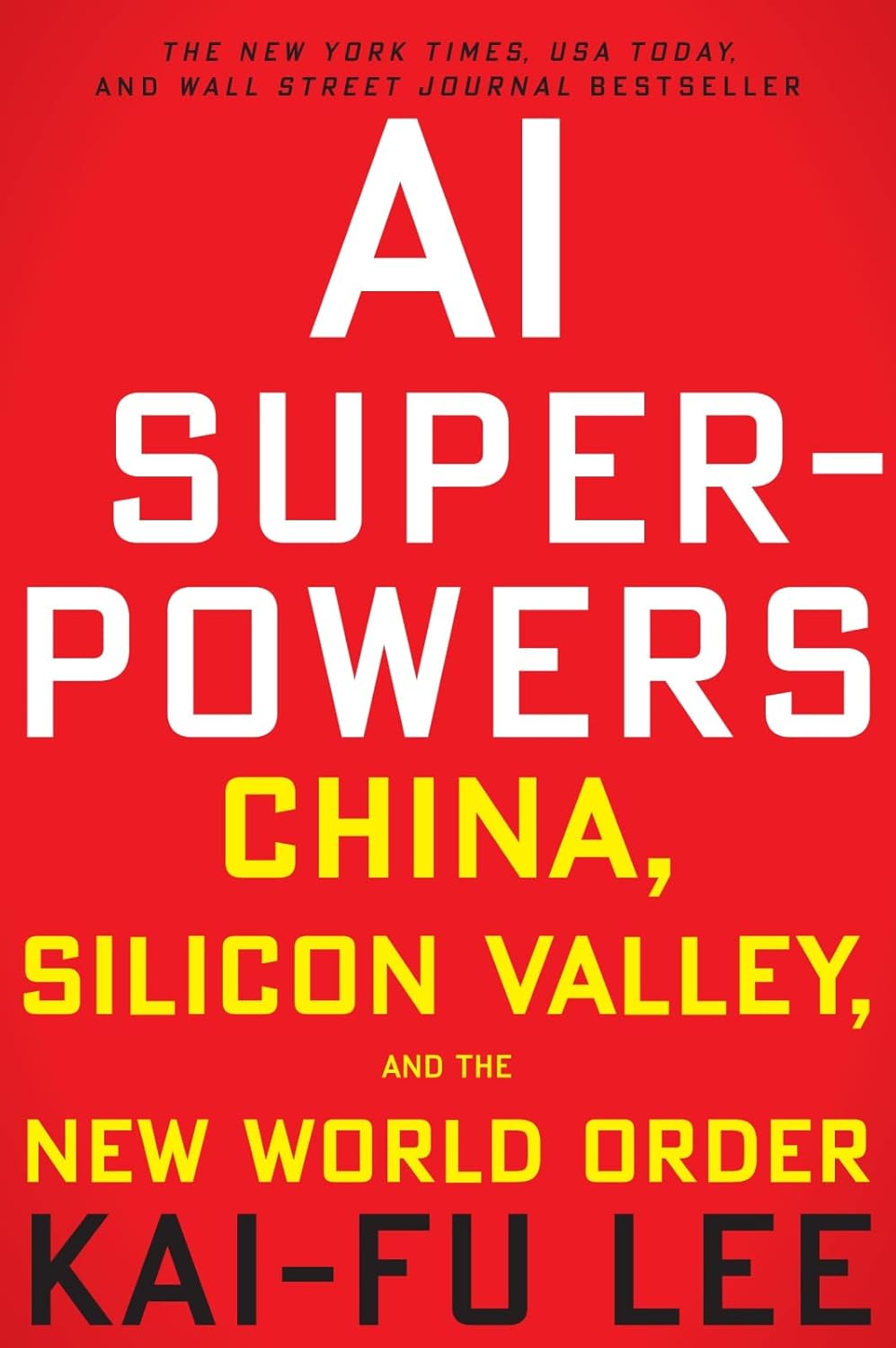
AI Superpowers Book Summary
This AI Superpowers Book Summary covers the key ideas, lessons, and takeaways in about 20 minutes.
Lee argues that while machines will outperform humans in many tasks, they will never replace the human capacity for empathy, connection, and love. The challenge is not to outcompete AI, but to redesign societies so that technological progress enhances rather than diminishes human flourishing.
This requires bold policy innovation, cultural shifts in how work is valued, and a renewed commitment to compassion. The future of AI is not just a technical problem—it is a moral one. And its outcome depends on the choices humans make today.
Helps with these goals
Want the complete 20-minute summary?
- Full structured summary
- Video Summary
- Podcast Summary
- Audio summary
- Key takeaways
- Exercises
- Quiz
- Highlights and notes
- Ask the book with AI
What is in the AI Superpowers book summary?
Below is a preview of Sumizeit’s expert-written summary of AI Superpowers by Kai-Fu Lee. The full summary covers the book’s key ideas in text, audio, and video.
AI Superpowers is not simply a book about algorithms, startups, or technological competition. It is a sweeping examination of how artificial intelligence is reshaping economies, altering geopolitical power, redefining work, and forcing humanity to confront uncomfortable questions about meaning, dignity, and purpose. Written by Kai-Fu Lee, a veteran AI researcher, Silicon Valley executive, and Chinese venture capitalist, the book blends technical insight, economic analysis, cultural comparison, and deeply personal reflection.
Lee frames AI as the most consequential force since electricity or the internet—one that will not arrive all at once, but instead unfold in stages that compound one another. He argues that while many nations will benefit from artificial intelligence, only two countries are positioned to dominate its development and deployment: the United States and China. This rivalry, however, is only one layer of the story. Beneath it lies a far more pressing challenge: how societies will cope with massive job disruption, rising inequality, and the erosion of traditional measures of human worth.
Unlike techno-optimists who see AI as an unqualified blessing or pessimists who predict dystopia, Lee occupies a nuanced middle ground. He believes AI will generate extraordinary wealth and efficiency, but he also insists that without deliberate social and moral choices, that wealth will deepen divisions and hollow out lives. The book ultimately argues that the AI era demands not just smarter machines, but wiser humans.
The Four Waves of Artificial Intelligence
Lee organizes the evolution of artificial intelligence into four overlapping “waves,” each building on the previous one. These waves do not represent clean breaks but rather cumulative layers that reinforce and accelerate one another. Together, they form a comprehensive transformation of how digital and physical systems operate.
The first wave is internet-based intelligence, which thrives on massive amounts of online user data. This form of AI excels at predicting preferences, optimizing engagement, and personalizing experiences. Recommendation systems, targeted advertising, curated news feeds, and algorithmic content ranking all fall into this category. These systems are already deeply embedded in daily life, shaping what people read, watch, and buy—often invisibly.
The second wave is enterprise-driven intelligence, which applies machine learning to structured corporate data. Here, AI becomes a tool for improving decision-making inside organizations rather than influencing consumer behavior directly. Financial institutions use it to detect fraud and assess risk. Hospitals deploy it to support diagnosis and treatment planning. Law firms rely on it to scan vast archives of documents. In this wave, AI does not replace entire professions overnight, but it steadily erodes routine analytical work that once required human judgment.
The third wave is sensory intelligence, which allows machines to interpret the physical world. Advances in computer vision, speech recognition, and sensor fusion enable systems to see faces, recognize voices, interpret gestures, and respond to environmental cues. This wave brings AI out of screens and into streets, stores, homes, and cities. Surveillance systems, smart retail checkout, voice assistants, and intelligent logistics all rely on this capability.
Want the complete 20-minute summary?
- Full structured summary
- Video Summary
- Podcast Summary
- Audio summary
- Key takeaways
- Exercises
- Quiz
- Highlights and notes
- Ask the book with AI
Who should read AI Superpowers?
AI Superpowers is essential reading for business leaders, policymakers, and anyone concerned about the future of work and society. Whether you're a technologist wanting to understand AI's broader implications, an employee worried about automation, or simply a curious citizen seeking to understand how artificial intelligence will reshape economies and human purpose, this book offers clarity and perspective you won't find elsewhere.
Why does AI Superpowers matter?
As artificial intelligence moves from research labs into every sector of the economy, understanding its trajectory and consequences has become urgent. Kai-Fu Lee's book cuts through both techno-optimism and apocalyptic predictions to explore what AI actually means for jobs, inequality, geopolitical power, and human meaning. In a world where AI decisions will affect billions of lives, this book equips readers with the frameworks and foresight needed to navigate unprecedented change.
What are the key themes in AI Superpowers?
- The four waves of AI and how they compound one another
- US-China technological rivalry and its geopolitical implications
- Data as the strategic resource of the AI age
- Automation's threat to employment across all skill levels
- Redefining human value beyond productivity and work
- The capacity for love and connection as humanity's irreplaceable advantage
- Human-AI collaboration rather than competition
- Policy innovation needed to manage technological disruption
What are the key lessons from the AI Superpowers book summary?
AI progresses in overlapping waves, not sudden breakthroughs
Internet-based, enterprise-driven, sensory, and autonomous intelligence each build on previous layers, creating compounding effects that accelerate change across industries.
Data, not algorithms, is the decisive competitive advantage
Countries and companies with access to vast, high-quality datasets can train AI systems more effectively than those with superior algorithms but limited data sources.
China and the US are uniquely positioned to dominate AI development
America leads in foundational research and innovation culture while China excels at rapid execution and large-scale deployment—each brings complementary strengths to the AI race.
Cognitive work faces the same automation risk as manual labor
White-collar professions including accounting, law, journalism, and diagnostics are increasingly vulnerable to AI automation, challenging assumptions about which jobs are safe.
The speed of AI-driven displacement may outpace economic adjustment
While history shows new technologies create jobs, the velocity and breadth of AI's impact could leave societies unable to retrain workers faster than they are displaced.
Privacy-innovation trade-offs shape different national AI strategies
Western societies prioritize data protection and individual privacy, which slows AI development but protects civil liberties; China prioritizes rapid deployment, enabling faster innovation but with fewer privacy safeguards.
Work-based identity is culturally constructed, not inevitable
As automation reduces job availability, societies must expand their definition of meaningful contribution beyond employment to preserve human dignity and purpose.
Emotional connection and empathy are AI-resistant human capabilities
While machines excel at analysis and pattern recognition, they cannot genuinely care, making fields requiring compassion—caregiving, mentorship, counseling—inherently human domains.
Wealth generated by AI will concentrate unless deliberate choices are made
Productivity gains from automation benefit those who own AI systems; without intervention, inequality will deepen and destabilize societies.
A social investment stipend can preserve purpose during displacement
Compensating socially beneficial work like caregiving and community service maintains both economic security and the human sense of contribution that traditional employment provided.
Cultural moments can accelerate or delay technological adoption
AlphaGo's victory over Go champions triggered national recognition in China of AI's importance, demonstrating how symbolic breakthroughs influence collective will and investment decisions.
AI rivalry need not be zero-sum despite geopolitical framing
Collaborative research and shared ethical standards would benefit all nations more than isolationist competition, yet nationalist rhetoric threatens to transform productive symbiosis into confrontation.
Human-AI partnership works best when roles are complementary
Optimal outcomes emerge when AI handles data-intensive tasks while humans provide judgment, creativity, and ethical reasoning rather than using automation simply to eliminate labor costs.
Love is humanity's ultimate competitive advantage against machines
Broadly understood as empathy, kindness, connection, and solidarity, love represents what humans uniquely offer and what no amount of AI capability can replicate.
International cooperation is essential for addressing AI's global impact
Fragmented national responses to automation, inequality, and data governance will amplify harm; shared learning and common ethical standards serve all societies better than isolated approaches.
AI forces a reckoning about what gives life meaning
By displacing work as the primary source of identity and income, artificial intelligence creates an opportunity—or necessity—to rediscover intrinsic human values and purposes.
Sensory intelligence blurs the boundary between digital and physical worlds
Computer vision, speech recognition, and sensor fusion enable AI to leave screens and monitors, entering streets, stores, and homes where it influences behavior at scale.
Caregiving and community work are both economically valuable and deeply human
These domains where humans surpass machines are paradoxically undervalued by markets, making them ideal candidates for compensation in an AI-driven economy.
Technological determinism misses the role of human choice
While AI's capabilities are largely predetermined by physics and mathematics, the impact on society depends entirely on the policies, values, and priorities humans choose to adopt.
Adaptability and emotional intelligence matter more than raw technical knowledge
In an AI age, workers and societies that can learn continuously, collaborate across differences, and navigate complexity will thrive far more than those tied to specific skills or knowledge domains.
Want the complete 20-minute summary?
- Full structured summary
- Video Summary
- Podcast Summary
- Audio summary
- Key takeaways
- Exercises
- Quiz
- Highlights and notes
- Ask the book with AI
How can you apply ideas from AI Superpowers?
- Audit your organization's roles to identify which tasks are vulnerable to AI automation and which require irreplaceable human qualities like empathy or complex judgment
- Invest in continuous workforce development focused on creativity, emotional intelligence, and adaptability rather than domain-specific technical skills that AI may soon replicate
- Design human-AI workflows in your industry that treat automation as augmentation rather than replacement, letting machines handle routine analysis while humans focus on exceptions and ethical decisions
- Advocate for workplace policies that value and compensate caregiving, mentorship, and community contribution as legitimate forms of meaningful work, not just traditional employment
- Develop data governance practices that balance innovation with privacy and consent, recognizing the trade-offs between AI capability and individual autonomy
- Build organizational cultures that explicitly discuss AI's impact on roles and careers, preparing employees for change rather than allowing anxiety and uncertainty to fester
- Support or propose retraining initiatives tied to emerging human-centered fields like healthcare, education, elder care, and mental health support where AI creates tools but cannot replace human presence
What common mistakes do readers make with AI Superpowers?
- Assuming new AI-driven jobs will materialize quickly enough to absorb all displaced workers, ignoring historical evidence that technological transitions create widespread interim suffering
- Treating AI as purely a technical problem rather than recognizing its profound social, ethical, and philosophical dimensions that demand humanistic solutions
- Believing that high-skill workers are immune to automation because their jobs involve cognition; many white-collar roles are increasingly vulnerable to AI despite their prestige
- Overlooking data as the decisive advantage and instead focusing only on algorithm sophistication or computing power, missing why certain nations and companies will dominate AI development
Sumizeit Exercises Apply what you've learned
Turn ideas from AI Superpowers into action with a short guided reflection: identify the biggest takeaway, connect it to your life, and commit to one step you can take in the next 24 hours.
What is the expert analysis of AI Superpowers?
Overview
AI Superpowers by Kai-Fu Lee stands as a seminal work in contemporary discourse on artificial intelligence, authored by a distinguished figure uniquely positioned at the nexus of AI research, venture capital, and cross-cultural technological ecosystems. Lee’s extensive experience in both Silicon Valley and China lends the book a rare dual perspective, enriching its analysis of AI’s transformative impact on global economies, geopolitics, and social structures. The book transcends a mere technical treatise or competitive narrative, instead offering a profound meditation on AI’s ethical and existential implications for humanity.
Core Thesis
Lee’s central argument is that artificial intelligence is not merely a technological innovation but a multifaceted force reshaping the world in layered waves—from internet-based intelligence to self-directed autonomous systems. He posits that the United States and China are uniquely positioned as AI superpowers due to their complementary strengths in innovation and implementation. Crucially, Lee contends that the AI revolution demands a reevaluation of human value and societal purpose, emphasizing that while machines may surpass humans in many cognitive tasks, they cannot replicate the uniquely human capacities for empathy, love, and meaning. The future, therefore, hinges on deliberate social choices that integrate AI’s efficiencies with a renewed commitment to human dignity and moral wisdom.
Strengths
- Comprehensive Framework: Lee’s four waves of AI provide a nuanced and accessible taxonomy that captures the technology’s evolving complexity and interdependencies.
- Bilateral Perspective: The balanced comparison of U.S. and Chinese AI ecosystems offers invaluable insight into how cultural, political, and economic factors shape technological trajectories.
- Humanistic Focus: Moving beyond techno-utopianism and dystopian fears, Lee foregrounds ethical and philosophical questions about work, identity, and social cohesion in an AI-driven world.
- Policy Innovation: The proposal of a social investment stipend reflects creative thinking about mitigating AI-induced displacement by aligning economic support with meaningful social contributions.
- Personal Narrative: Lee’s integration of his own life experiences adds emotional resonance and authenticity to the discussion of love and human worth.
Critiques & Counterarguments
- Optimistic Balance May Understate Risks: While Lee’s middle-ground stance is refreshing, some critics argue it underplays the potential for AI-driven surveillance states, exacerbated authoritarianism, and deepening social fractures, especially in less democratic contexts.
- Data-Centric View Limits Algorithmic Innovation: Lee emphasizes data as the key resource but may underappreciate advances in algorithmic efficiency and transfer learning that reduce dependence on massive datasets, potentially altering the competitive landscape.
- Employment Disruption Complexity: The forecast of widespread job displacement, though compelling, is debated by economists who highlight historical resilience through job creation in new sectors and the adaptability of labor markets, suggesting a more gradual transition.
- Human Value Redefined—Idealistic or Practical?: The call to valorize caregiving and emotional labor raises questions about scalability and economic feasibility, especially in societies with entrenched market logics and limited social safety nets.
- Geopolitical Rivalry Oversimplified: The binary framing of U.S.-China AI competition may obscure the roles of Europe, India, and emerging AI hubs, as well as the potential for multilateral governance frameworks that transcend national rivalries.
Who Should Read This
AI Superpowers is essential reading for policymakers, business leaders, and scholars seeking a sophisticated understanding of AI’s global dynamics beyond technical jargon. It is equally valuable for ethicists and social scientists interested in the intersection of technology and human values. Readers engaged in workforce development, education reform, and social policy will find Lee’s insights on employment and societal adaptation particularly pertinent. Finally, the book offers a compelling narrative for any thoughtful reader grappling with the profound questions AI poses about the future of work, identity, and humanity itself.
Frequently asked questions about the AI Superpowers book summary
What is AI Superpowers about?
AI Superpowers by Kai-Fu Lee is a comprehensive examination of how artificial intelligence will reshape economies, geopolitical power, employment, and human purpose. Rather than focusing narrowly on technology, the book explores the competition between the US and China, the threat of mass unemployment, and the deeper question of how societies should redefine human value in an age of intelligent machines.
Who should read AI Superpowers?
This book is essential for anyone affected by or concerned about AI's future impact: business leaders planning organizational change, policymakers crafting workforce and technology policy, employees worried about job automation, and engaged citizens seeking to understand the forces reshaping society. Lee's insights bridge technical expertise with humanistic concern, making the book accessible to general readers without sacrificing depth.
What are the main takeaways from AI Superpowers?
The core message is that AI will inevitably transform work and wealth, but the outcome depends entirely on human choices about policy and values. Lee argues that data is more valuable than algorithms, that US-China collaboration could serve humanity better than rivalry, that love and empathy are humanity's irreplaceable advantages, and that societies must actively redesign work and purpose around human flourishing rather than passively accepting automation's consequences.
Does Kai-Fu Lee think AI will eliminate most jobs?
Lee predicts that AI will automate a substantial portion of existing jobs across all skill levels—including white-collar professions—within decades. While new jobs will emerge, he emphasizes that the speed and scale of displacement may outpace society's ability to retrain workers, creating widespread underemployment and inequality unless deliberate policy interventions are implemented.
What is the social investment stipend Lee proposes?
Rather than universal basic income, Lee proposes compensating socially beneficial activities like caregiving, community projects, education, and environmental restoration. This approach aims to preserve both economic security and the human sense of purpose that traditional employment provided, recognizing that meaning matters as much as money in an automated economy.
How does Lee frame the US-China AI competition?
Lee argues that America excels at foundational AI research and innovation while China leads in rapid deployment and large-scale implementation. He positions their competition as shaped by data availability, entrepreneurial culture, and political will rather than traditional resources. Importantly, he warns that framing this as a zero-sum technological Cold War misses how collaboration could better serve both nations than isolationist competition.
What does Lee mean by the four waves of AI?
Lee organizes AI's evolution into overlapping stages: internet-based intelligence (data-driven recommendations and personalization), enterprise intelligence (corporate decision-making), sensory intelligence (computer vision and voice recognition), and autonomous intelligence (self-directed machines). These waves compound one another, creating accelerating effects as AI moves from screens into the physical world.
Why does Lee emphasize love as humanity's advantage against AI?
Lee argues broadly that empathy, compassion, connection, and kindness are fundamentally human capacities that machines cannot replicate. As AI handles efficiency and analysis, humans can focus on caregiving, mentorship, and emotional support—domains where authenticity and genuine connection are irreplaceable. This reframes the AI future as an opportunity to rediscover what truly gives life meaning.
About Sumizeit
Sumizeit is a profitable Scomy LLC company based in Miami, Florida. It has been helping readers learn from nonfiction books for 7 years with expert-written summaries in text, audio, podcast, and video.
Want the complete 20-minute summary?
- Full structured summary
- Video Summary
- Podcast Summary
- Audio summary
- Key takeaways
- Exercises
- Quiz
- Highlights and notes
- Ask the book with AI
Here's why readers love Sumizeit
Join thousands of learners getting smarter every day
"Great experience. Detailed summaries. Loved the gamification feature. Makes learning fun. Good customer service. I recommend Sumizeit to anyone. You'll learn a lot."
"I always felt busy but still wanting to keep up with the book discussion in my friend group. This was a great supplement to help me keep reading the books I find fun while keeping up with important books."
"I love this website. Instead of scrolling social media, I find myself learning a lot. I use it everyday. I recommend this app for anyone who is too busy and wants to get up to speed with their favorite books."
AI Superpowers Book Summary PDF
Looking for a AI Superpowers Book Summary PDF you can save and revisit offline? Our AI Superpowers Book Summary PDF captures the book’s core ideas in a clean, printable format — the key frameworks, takeaways, and structure without the fluff. Download the AI Superpowers Book Summary PDF when you want a reference you can annotate, share with your team, or review on the go. Get your AI Superpowers Book Summary PDF from the download page below.
Download AI Superpowers Book Summary PDFPeople also liked these summaries
Readers who explored AI Superpowers often enjoyed these titles next.





Want the complete 20-minute summary?
- Full structured summary
- Video Summary
- Podcast Summary
- Audio summary
- Key takeaways
- Exercises
- Quiz
- Highlights and notes
- Ask the book with AI
Featured Book Titles
Popular Book Summaries at sumizeit, leading book summary app