

At its core, ADHD Is Awesome delivers a powerful message: ADHD is not a flaw to overcome but a reality to understand. When people stop measuring themselves by neurotypical standards and start designing lives that fit their wiring, everything changes.
The book teaches that thriving with ADHD requires knowledge, compassion, systems, and support. Progress comes not from trying harder but from trying differently. By maximizing strengths and minimizing friction, individuals with ADHD can build fulfilling, creative, and connected lives.
Above all, the book reassures readers that they are not broken. Their brains are different—and difference, when understood and supported, can be extraordinary.
Helps with these goals
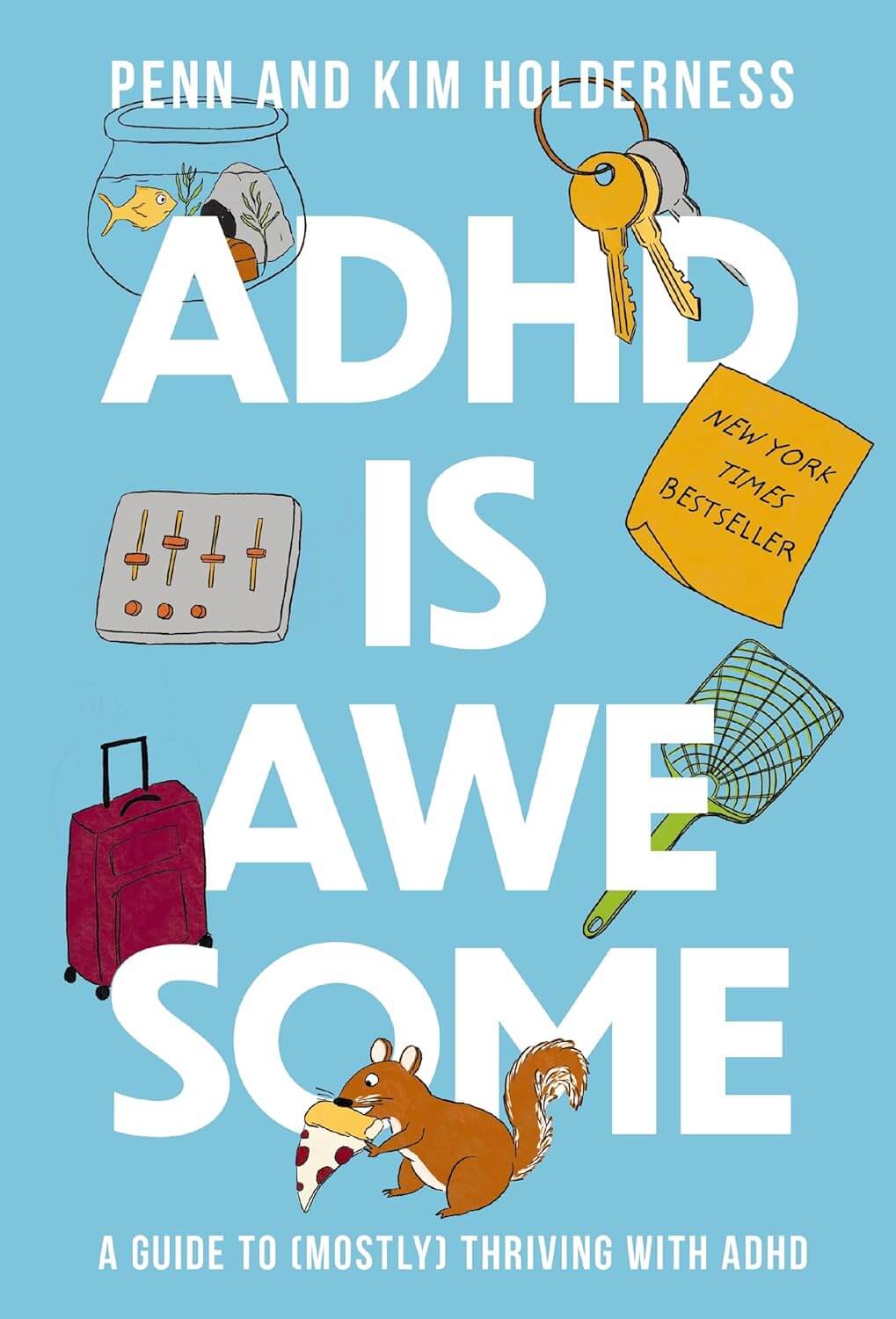
As an Amazon Associate, Sumizeit earns from qualifying purchases.
ADHD Is Awesome begins with a fundamental reframing of what attention-deficit/hyperactivity disorder actually is. Rather than presenting ADHD as a failure of discipline, intelligence, or effort, Penn Holderness positions it as a neurological variation that shapes how the brain processes attention, motivation, and emotion. For much of his life, Penn internalized the idea that his struggles were personal shortcomings. Missed deadlines, forgotten commitments, impulsive decisions, and emotional overreactions all felt like evidence that something was “wrong” with him as a person.
The book dismantles this narrative by grounding ADHD in biology. ADHD, Holderness explains, is rooted in differences in brain development and chemistry, particularly in areas responsible for regulation, planning, and impulse control. These differences are not the result of laziness, bad parenting, or moral weakness. They are inherent neurological traits. This realization becomes a turning point, not just intellectually but emotionally. Understanding that ADHD symptoms are involuntary allows people to release years—sometimes decades—of guilt and self-blame.
By shifting the conversation away from character judgment, the book opens the door to compassion. Penn emphasizes that when someone with ADHD struggles, it isn’t because they don’t care or aren’t trying hard enough. Often, they are trying harder than everyone else just to keep up. This reframing becomes the foundation for everything that follows in the book: self-acceptance, better relationships, and practical strategies for thriving with an ADHD brain.
For Penn Holderness, receiving an ADHD diagnosis as an adult felt like suddenly seeing a hidden image come into focus. Experiences that once seemed random or confusing—why he could obsess over certain projects but avoid others, why small tasks felt overwhelming, why emotions surged so intensely—finally made sense. The diagnosis didn’t define him, but it explained him.
The book treats diagnosis not as a box that limits people, but as a lens that sharpens understanding. Penn describes how many adults go undiagnosed for years, especially those who learned to mask symptoms or compensate through humor, intelligence, or sheer effort. Without a diagnosis, people often invent their own explanations: “I’m irresponsible,” “I’m broken,” or “I just can’t get my life together.”
Holderness stresses that ADHD diagnosis is not a simple lab test or scan. It relies on careful observation, clinical expertise, and honest reflection across multiple settings. This subjectivity can make the process frustrating, but it also underscores the importance of compassionate clinicians who understand ADHD beyond stereotypes.
Perhaps most importantly, diagnosis changes relationships. When loved ones understand that behaviors stem from neurological wiring rather than indifference, conversations soften. Misunderstandings decrease. Partners, friends, and family members become allies instead of critics. Diagnosis becomes less about labeling and more about building a shared language for understanding.
One of the book’s central insights is that ADHD is not an absence of attention—it is an overflow of it. People with ADHD don’t lack focus; they struggle to regulate it. Their attention is constantly pulled in multiple directions, drawn to novelty, urgency, or emotional intensity.
Holderness explains how executive functions—mental skills that govern planning, organization, memory, and self-control—develop differently in ADHD brains. These functions often lag behind, making everyday tasks like starting projects, prioritizing responsibilities, or estimating time far more difficult. This gap can create the illusion of inconsistency: someone with ADHD may excel in complex, creative work while struggling to remember to return a text message.
Dopamine plays a crucial role in this dynamic. The ADHD brain often has difficulty maintaining stable dopamine levels, which affects motivation and reward. Tasks that feel boring or repetitive can become nearly impossible to initiate, while stimulating activities can trigger intense engagement. This neurological reality explains why people with ADHD may procrastinate endlessly—until a looming deadline suddenly unlocks extraordinary productivity.
The book reframes this pattern not as irresponsibility but as chemistry. Once understood, it becomes something that can be managed rather than endlessly fought.
While ADHD is often associated with distraction, ADHD Is Awesome highlights hyperfocus as one of its most misunderstood features. Hyperfocus occurs when attention locks intensely onto something meaningful or exciting. During these periods, distractions fade, time disappears, and productivity can soar.
Penn shares how hyperfocus has fueled creativity, problem-solving, and professional success. When aligned with passion, hyperfocus becomes a powerful engine. Many artists, entrepreneurs, and innovators rely on this ability to dive deeply into complex challenges.
However, hyperfocus also has downsides. It can make transitions difficult, cause people to ignore basic needs like sleep or meals, and lead to imbalance when neglected responsibilities pile up elsewhere. The book does not romanticize hyperfocus as a magical cure-all. Instead, it presents it as a trait that requires awareness and boundaries.
Learning when to lean into hyperfocus—and when to interrupt it—becomes part of the broader strategy of working with the ADHD brain rather than against it.
Holderness paints a vivid picture of daily life with ADHD: forgotten appointments, cluttered spaces, half-finished projects, and moments of intense emotional overwhelm. These experiences are often accompanied by shame, especially in a world that prizes consistency and order.
Yet the book balances honesty with humor. Penn uses storytelling and self-deprecating wit to normalize ADHD mishaps, turning them into moments of connection rather than isolation. Laughing at oneself, he argues, isn’t denial—it’s resilience. Humor becomes a coping mechanism that diffuses frustration and fosters self-acceptance.
The ADHD experience also brings unique gifts. Many people with ADHD are deeply curious, emotionally perceptive, and energetically engaged with the world. They notice patterns others miss, approach problems from unconventional angles, and bring enthusiasm into relationships. The book encourages readers to acknowledge both the struggle and the spark, resisting the urge to define ADHD by its difficulties alone.
A recurring theme in ADHD Is Awesome is the internal dialogue many people with ADHD carry. Years of criticism—both external and internalized—create a harsh mental soundtrack. “Why can’t I just do this?” becomes a constant refrain.
Holderness challenges readers to replace this narrative with one grounded in truth and compassion. ADHD symptoms are not evidence of failure; they are signals that different tools are needed. Instead of asking, “What’s wrong with me?” the book encourages questions like, “What environment would help me succeed?” or “How can I play to my strengths?”
This mindset shift is not about ignoring challenges or pretending ADHD is easy. It’s about recognizing that self-criticism has never improved executive function. Compassion, curiosity, and experimentation, on the other hand, often do.
The book situates ADHD within the broader concept of neurodiversity—the idea that human brains naturally vary and that these differences enrich society. Holderness argues that many systems, workplaces, and schools are designed for a narrow range of cognitive styles, leaving others at a disadvantage.
Rather than forcing ADHD brains to conform, the book advocates for environments that accommodate different ways of thinking. Flexible schedules, visual reminders, movement-friendly spaces, and clear expectations benefit not just people with ADHD but everyone.
By rejecting stigma and embracing neurodiversity, the book invites readers to see ADHD not as something to be fixed but as something to be understood and supported.
In ADHD Is Awesome, self-care is framed not as indulgence but as infrastructure. For people with ADHD, basic regulation—sleep, movement, nutrition, and emotional support—is essential for brain function.
Holderness outlines several pillars of regulation. Physical activity boosts neurotransmitters associated with focus and mood. Sleep stabilizes emotional responses and cognitive flexibility. Balanced nutrition supports energy and attention. Mindfulness builds awareness of impulses and emotional patterns. Medication, for some, provides critical support when used thoughtfully under medical supervision.
The book emphasizes personalization. There is no universal ADHD solution. What works for one person may fail for another. Sustainable self-care comes from experimentation, flexibility, and self-forgiveness when routines fall apart.
One of the book’s most practical lessons is the importance of external systems. ADHD brains struggle with holding information internally, so expecting willpower alone to solve organizational challenges often leads to burnout.
Holderness advocates for offloading memory and decision-making into tools: calendars, alarms, checklists, visual cues, and routines. These systems reduce cognitive load and create consistency where the brain cannot.
Breaking tasks into smaller steps is another key strategy. Large projects often feel overwhelming because the starting point is unclear. By defining the first tiny action—open the document, set a timer, write one sentence—momentum becomes possible.
The book reframes structure not as restriction but as freedom. Systems create space for creativity by reducing chaos.
Environment plays a crucial role in ADHD management. Holderness explains that distraction is not a failure of discipline but a predictable response to sensory overload. Visual clutter, noise, and constant notifications compete aggressively for attention.
The book encourages intentional environmental design: simplified workspaces, controlled digital access, and strategic stimulation. For some, background music or movement enhances focus; for others, silence works best. The key is awareness and adjustment.
Technology, while often a source of distraction, can also be an ally. Timers, productivity apps, and blockers help create boundaries where impulse control falters.
Motivation with ADHD is often misunderstood. The book explains that interest, urgency, and personal meaning drive action far more effectively than abstract obligation. Tasks that feel pointless or disconnected from values quickly lose traction.
Holderness encourages readers to link tasks to purpose. Even mundane responsibilities become easier when connected to personal goals or relationships. Gamification, novelty, and time-based challenges can also spark engagement.
The book reinforces that progress with ADHD is rarely linear. Momentum builds in bursts, stalls, and resumes. Accepting this rhythm reduces frustration and supports long-term growth.
Human connection emerges as one of the most powerful tools for managing ADHD. Holderness describes how understanding relationships reduce isolation and increase accountability.
Open communication is essential. Explaining ADHD-related challenges helps others respond with empathy rather than judgment. Asking for specific support—reminders, flexibility, collaboration—strengthens relationships rather than burdening them.
Professional support also plays a role. Coaches, therapists, and peer groups provide structure, validation, and practical guidance. The book emphasizes seeking professionals who adopt a strengths-based approach rather than focusing solely on deficits.
Listening can be challenging for people with ADHD, especially in conversations that lack stimulation. Holderness addresses this openly, offering strategies for staying engaged: active listening, summarizing, and pausing before responding.
Improving listening isn’t about suppressing ADHD tendencies—it’s about developing awareness and habits that honor relationships. Feedback from trusted people helps identify blind spots and build stronger connections.
ADHD Is Awesome ultimately celebrates the contributions ADHD minds bring to the world. Creativity flourishes when attention jumps between ideas. Energy fuels passion and momentum. Emotional sensitivity fosters empathy and connection.
The book acknowledges that these strengths often emerge alongside struggle. Resilience grows from navigating difficulty. Empathy deepens through lived experience. Adaptability becomes second nature when systems constantly need adjustment.
Rather than denying hardship, Holderness integrates it into a broader narrative of growth and meaning.
At its core, ADHD Is Awesome delivers a powerful message: ADHD is not a flaw to overcome but a reality to understand. When people stop measuring themselves by neurotypical standards and start designing lives that fit their wiring, everything changes.
The book teaches that thriving with ADHD requires knowledge, compassion, systems, and support. Progress comes not from trying harder but from trying differently. By maximizing strengths and minimizing friction, individuals with ADHD can build fulfilling, creative, and connected lives.
Above all, the book reassures readers that they are not broken. Their brains are different—and difference, when understood and supported, can be extraordinary.
Penn Holderness is an internet personality, speaker, and content creator best known for his work with The Holderness Family, a comedy brand that blends humor with honesty about family life, mental health, and relationships. He gained widespread recognition after winning The Amazing Race and for viral videos that mix music, comedy, and vulnerability.
Diagnosed with ADHD as an adult, Penn has become an outspoken advocate for neurodiversity and mental health awareness. Through his writing, podcasting, and public speaking, he combines humor with evidence-based insights, making complex topics accessible and deeply human. ADHD Is Awesome reflects his personal journey toward understanding his brain and helping others do the same—with empathy, laughter, and hope.
Looking for a ADHD Is Awesome Book Summary PDF you can save and revisit offline? Our ADHD Is Awesome Book Summary PDF captures the book’s core ideas in a clean, printable format — the key frameworks, takeaways, and structure without the fluff. Download the ADHD Is Awesome Book Summary PDF when you want a reference you can annotate, share with your team, or review on the go. Get your ADHD Is Awesome Book Summary PDF from the download page below.
Download ADHD Is Awesome Book Summary PDFGet full access to 2,500+ book summaries with audio and video
Start Free Trial →