Question 1 of 5
Where did Barack Obama spend his childhood?
The summary states Obama was born in Honolulu, Hawaii and spent his childhood there with his mother and grandparents.


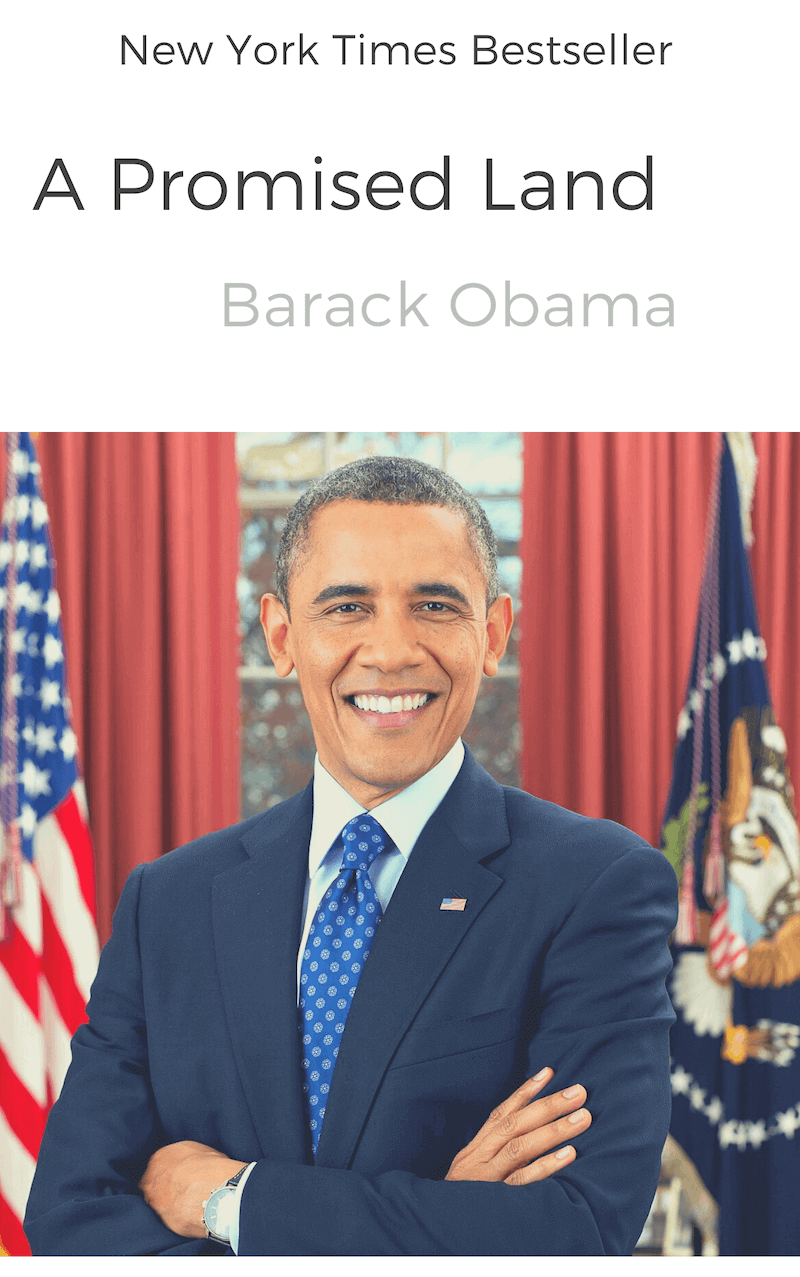
Prefer the print book? Buy on Amazon
As an Amazon Associate, Sumizeit earns from qualifying purchases.
This A Promised Land Book Summary covers the key ideas, lessons, and takeaways in about 20 minutes.
Helps with these goals
Want a Free Weekly Read?
Get a free summary every week straight to your mailbox.
Below is a preview of Sumizeit’s comprehensive human-written summary of A Promised Land by Barack Obama. The full summary is 15-20 minutes long and covers the book’s key ideas in text, audio, visual, and video formats. Unlock the full 20 Minute Summary
President Obama spent his childhood with his mother and grandparents in Hawaii. He was a mediocre student, and it wasn’t until he was a little older than he began to express interest in big questions about inequality. He turned to books for answers, which sparked his interest in politics. He graduated from Columbia University and began working as a community organizer in Chicago, which cemented his interest in policy. He wanted to learn how to implement real change that would have an effect on real Americans, so he returned to school, earning his J.D. from Harvard Law School and becoming the first black president of the Harvard Law Review.
Obama was elected to the Illinois State Senate twice, but his political career really took off following his landmark keynote address at the 2004 Democratic National Convention. Following the speech, many people urged Obama to run for president, and in 2007 he announced he would be entering the primary race. Obama became the Democratic nominee for president and faced Republican John McCain in the presidential election.
Upon entering office, Obama had to address the 2008 global financial crisis but was hindered by extreme partisan Republicans in Congress who refused to compromise and reach across the aisle. He encountered similar problems when he attempted to push through new healthcare legislation. Regardless, the Affordable Care Act passed, extending health care options for Americans. Obama tried to maintain a balance between steady authority and democratic ideals when it came to foreign policy. One of Obama’s most famous foreign policy accomplishments was authorizing the special ops mission that killed Osama bin Laden.
Born Barack Hussein Obama in Honolulu, Hawaii in 1961, the future president was raised by his mother and his maternal grandparents. As a young child, he didn’t show any early signs of political ambition. Rather, he liked to party and play basketball, and he did not particularly excel in his studies. However, by high school, he had begun to wonder about some of the injustices that he saw in his everyday life. For example, he saw that many professional basketball players he watched on TV were Black, but saw no Black coaches. He also began to wonder why honest, hard-working Americans were still struggling to make ends meet. His grandparents did not have the answers to these questions, so he turned to books. Reading began to help expand his view of the world around him.
In 1979, he began attending Occidental College in Los Angeles. He kept up his reading habit, although in college, he admits the only reason he read complicated works of political theory, like those by Foucault and Marx, was to impress the ladies. While it didn’t get him many dates, it did open his eyes up to politics.
In 1981, during his junior year, Obama transferred to Columbia University, where he became more politically active. In fact, many people said he became obsessed with politics, which made it difficult for him to make many friends, as…
A Promised Land is essential reading for anyone interested in American politics, history, and leadership. Political enthusiasts, students of government, and citizens curious about the Obama presidency will find an intimate behind-the-scenes account of one of America's most significant political figures. It appeals equally to those seeking inspiration about overcoming obstacles and those wanting to understand the complexities of modern governance.
Barack Obama's memoir offers a crucial firsthand perspective on pivotal moments in recent American history, from the 2008 financial crisis to the raid on Osama bin Laden. Understanding how political leaders navigate extreme partisanship, economic catastrophe, and competing ideologies remains deeply relevant today. The book illuminates how personal conviction, strategic thinking, and perseverance shape presidential decision-making during times of national crisis.
Turn ideas from A Promised Land into action with a short guided reflection: identify the biggest takeaway, connect it to your life, and commit to one step you can take in the next 24 hours.
A Promised Land is a memoir by Barack Obama, the 44th President of the United States and the first African-American to hold the office. This work is significant not only as a personal narrative but also as a detailed political chronicle of Obama's early life, rise to power, and the complexities of his first term in office. It offers readers an intimate glimpse into the challenges of leadership amid intense partisanship, economic turmoil, and international crises. Obama’s background as a community organizer, constitutional lawyer, and senator enriches the narrative, providing a multifaceted perspective on governance and policy-making.
The central insight of A Promised Land is that meaningful political change requires perseverance, coalition-building, and a nuanced understanding of both idealism and pragmatism. Obama argues that despite systemic obstacles—such as entrenched partisanship, racial tensions, and global instability—progress is achievable through steady leadership, strategic compromise, and an unwavering commitment to democratic principles. The memoir underscores the tension between hope and the harsh realities of political power, illustrating how Obama sought to balance transformative ambitions with the constraints of governance.
Try a few questions from the A Promised Land quiz. Unlock the full summary for the full quiz and answers that will help the ideas stick.
Question 1 of 5
The summary states Obama was born in Honolulu, Hawaii and spent his childhood there with his mother and grandparents.
Question 2 of 5
The summary explains that in 1981 Obama transferred to Columbia University during his junior year.
Question 3 of 5
After graduating from Columbia in 1983, Obama began working as a community organizer in Chicago, according to the summary.
Question 4 of 5
The summary states Obama became the first Black president of the Harvard Law Review while at Harvard Law School.
Question 5 of 5
The summary identifies the keynote address at the 2004 Democratic National Convention as the turning point in Obama’s career.
A Promised Land is Barack Obama's memoir chronicling his journey from childhood in Hawaii through his presidency, covering his intellectual awakening through reading, his community organizing work, his rise through Illinois politics, his 2008 campaign and election, and major presidency events including the financial crisis, healthcare reform, and the raid that killed Osama bin Laden. The book provides an intimate behind-the-scenes account of transformative moments in recent American history.
A Promised Land appeals to political science students and scholars interested in modern American politics, citizens wanting insider perspectives on recent presidencies, and anyone curious about leadership during national crises. It's valuable for those seeking to understand how political figures navigate extreme partisanship, personal challenges, and major policy decisions that shape the nation.
Key takeaways include how intellectual curiosity and reading inform political consciousness, why direct community experience is essential for effective policymaking, how strategic communication and authentic leadership build support across divides, and that meaningful reform requires persisting through partisan opposition. The memoir also illustrates how leaders must balance idealistic values with pragmatic governance while shouldering the moral weight of major decisions.
Obama confronted racial controversies directly rather than deflecting, most notably when he addressed the Reverend Wright controversy through a speech on race that resonated with millions and ultimately strengthened his candidacy. His willingness to acknowledge his mixed-race identity, discuss America's racial history honestly, and engage authentically with diverse communities helped him transcend racial divisions and build unprecedented support across demographic groups.
Obama encountered extreme partisan resistance from Republicans led by Mitch McConnell, who prioritized blocking Obama's accomplishments over solving national crises like the 2008 financial collapse and healthcare gaps affecting 43 million uninsured Americans. Conservative media campaigns portrayed reforms like the Affordable Care Act as government overreach, mobilizing public opposition despite the policies' potential benefits to millions of Americans.
Obama's keynote address at the 2004 Democratic National Convention was a turning point that brought him national recognition and established him as a powerful political voice. The speech, which emphasized the 'audacity of hope,' was transformative enough that Obama could no longer walk into rooms unrecognized, and it set the stage for the presidential ambitions that many began urging him to pursue.
After two years of intelligence gathering, Obama authorized a special Navy SEAL team to raid bin Laden's compound in Abbottabad, Pakistan, with only a 60-80 percent confidence level that The Pacer was actually bin Laden. The twenty-minute raid successfully killed bin Laden, marking a historic military and counterterrorism victory that gave Obama a moment of relief amid ongoing political battles.
Democrats lost 63 House seats in the 2010 midterms despite passing major legislation including the Affordable Care Act and the Recovery Act because Americans still felt the effects of the financial crisis economically. Policy victories don't automatically translate to electoral support when voters haven't felt tangible improvements in their financial situations.
Sumizeit is a profitable Scomy LLC company based in Miami, Florida. It has been helping readers learn from nonfiction books for 7 years with expert-written summaries in text, audio, podcast, and video.
Join thousands of learners getting smarter every day
"Great experience. Detailed summaries. Loved the gamification feature. Makes learning fun. Good customer service. I recommend Sumizeit to anyone. You'll learn a lot."
"I always felt busy but still wanting to keep up with the book discussion in my friend group. This was a great supplement to help me keep reading the books I find fun while keeping up with important books."
"I love this website. Instead of scrolling social media, I find myself learning a lot. I use it everyday. I recommend this app for anyone who is too busy and wants to get up to speed with their favorite books."
Looking for a A Promised Land Book Summary PDF you can save and revisit offline? Our A Promised Land Book Summary PDF captures the book’s core ideas in a clean, printable format — the key frameworks, takeaways, and structure without the fluff. Download the A Promised Land Book Summary PDF when you want a reference you can annotate, share with your team, or review on the go. Get your A Promised Land Book Summary PDF from the download page below.
Download A Promised Land Book Summary PDFReaders who explored A Promised Land often enjoyed these titles next.
Popular Book Summaries at sumizeit, leading book summary app