


As an Amazon Associate, Sumizeit earns from qualifying purchases.
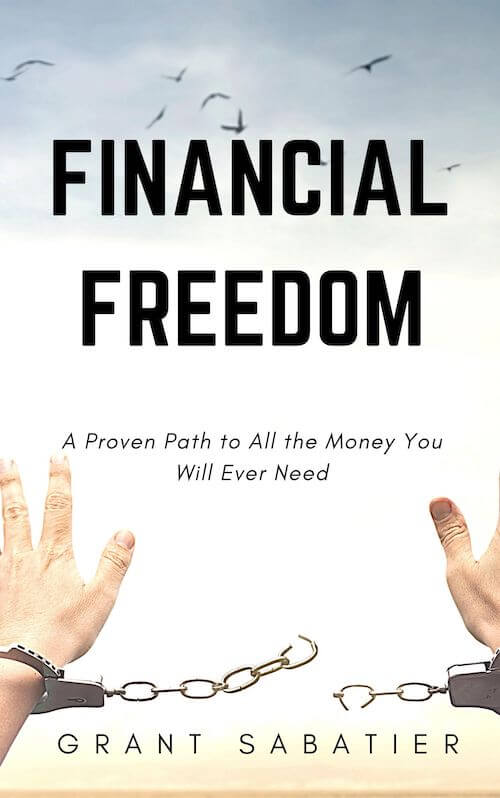
Financial Freedom Book Summary
This Financial Freedom Book Summary covers the key ideas, lessons, and takeaways in about 20 minutes.
Helps with these goals
Want the complete 20-minute summary?
- Full structured summary
- Video Summary
- Podcast Summary
- Key takeaways
- Exercises
- Quiz
- Highlights and notes
- Ask the book with AI
What is in the Financial Freedom book summary?
Below is a preview of Sumizeit’s expert-written summary of Financial Freedom by Grant Sabatier. The full summary covers the book’s key ideas in text, audio, and video.
Financial freedom is possible. It’s when you wouldn’t ‘need’ to work in order to make money.
Find your Financial Independence Number. Define what your net-worth should be and move towards it.
Optimize your full-time job.
Start saving by increasing your savings rate every month.
Launch a profitable side-hustle.
Learn how to invest intelligently.
Fast-track your financial independence and retire early.
Grant Sabatier shares his journey to Financial Independence through this book. He illustrates how his net worth increased from 2.26 dollars to over 1 million in five years. Grant gives you actionable insights that you can use to attain true ‘financial freedom’. He defines the term as a state where you can do what you want with your life without ‘needing’ to work for money.
It is a motivational and inspiring story of how Grant overcame the setbacks of losing a job, envisioning a future he wanted, and how he worked towards it. If you are looking to retire early and be the king of your time, then this book is a great guide.
Define your Financial Independence Number.
The first step to achieving financial freedom is to define how much money you need. In other words, it is the amount of net worth you need to become financially free. This number, called the Financial Independence Number, would differ from person to person and from time to time. You should not set this in stone. It is advisable to revisit this number once a year. You may alter the figure depending on various factors such as a higher target or a personal change. Remember, the idea is to reach a state where you don’t feel ‘burdened’ to make money.
Your Financial Independence Number will serve as your goal. Begin by understanding where you are at the moment in relation to this number. Therefore, all your actions would be directed at reaching this number.
Increase your savings every month.
If you set yourself to saving only 10% of your income each month, for the rest of your life, then you’d never be able to achieve financial freedom. Grant says that you must keep increasing your savings percentage. Ideally, save 1% more than the last month. So, if you are saving 10% in January, aim to save 11% or more in February and so on. Do this for at least the first year on your journey to Financial Independence. Never lose sight of your unique Financial Independence Number.
Once you start saving, you would reconsider all your expenses too. The idea is not to reduce all your expenses but to cut back in order to bring you closer to your number. Keep in mind that recurring expenses are the worst. They slow you down. If you can cancel those unnecessary monthly subscriptions then you’d reach your goal faster. When making such decisions, ask yourself if it is a ‘want’ or a ‘need’.
Want the complete 20-minute summary?
- Full structured summary
- Video Summary
- Podcast Summary
- Key takeaways
- Exercises
- Quiz
- Highlights and notes
- Ask the book with AI
Who should read Financial Freedom?
Financial Freedom is for anyone who dreams of escaping the 9-to-5 grind and building genuine wealth on their own terms. Whether you're a young professional frustrated with your salary, an entrepreneur seeking direction, or someone who simply wants to retire early and reclaim your time, this book offers a practical roadmap. If you've ever wondered whether financial independence is actually achievable, Grant Sabatier's proven framework will show you it's not only possible—it's within reach.
Why does Financial Freedom matter?
In today's economy, relying solely on traditional employment for security is increasingly risky, making personal financial strategy more critical than ever. Financial Freedom by Grant Sabatier addresses the growing desire for autonomy and purpose by demonstrating that you don't need to wait until retirement age to live the life you want. His five-year journey from near-zero net worth to over $1 million proves that with intentional planning and disciplined execution, accelerated wealth-building is achievable for ordinary people. This book matters because it transforms financial independence from an abstract dream into a concrete, actionable goal with specific strategies.
What are the key themes in Financial Freedom?
- Defining and pursuing your personal Financial Independence Number
- Dramatically increasing your savings rate through intentional lifestyle choices
- Optimizing your primary income through career advancement and benefits maximization
- Creating multiple income streams via side hustles and entrepreneurship
- Intelligent investing strategies that compound wealth over time
- Building sustainable financial habits and routines for long-term success
- Balancing ambition with health, relationships, and quality of life
- Leveraging debt strategically while eliminating high-interest obligations
What are the key lessons from the Financial Freedom book summary?
Financial Freedom Has a Clear Definition
Financial freedom isn't vague wishful thinking—it's a specific state where you don't need to work for money. Defining it precisely for yourself is the essential first step to achieving it.
Your Financial Independence Number is Personal
The amount needed for financial freedom differs for everyone and changes over time. Calculate your own number based on your desired lifestyle, then revisit it annually to account for life changes.
Static Savings Rates Don't Work
Saving the same percentage every month indefinitely will never get you to financial freedom. You must progressively increase your savings rate—ideally by 1% monthly—to accelerate your timeline.
Recurring Expenses Are Your Biggest Obstacle
Monthly subscriptions and standing commitments drain wealth far more than occasional purchases. Ruthlessly audit recurring expenses and eliminate those that are 'wants' rather than 'needs'.
Income Growth Matters More Than Expense Cutting Alone
While frugality is important, increasing your earning power is the more powerful lever for reaching financial independence faster. Focus on career advancement, skill development, and networking.
Maximize Your Compensation Package
Beyond base salary, your job likely offers additional benefits like transportation reimbursement, loan assistance, and allowances. Understanding and using these fully amplifies your effective income.
Side Hustles Accelerate the Timeline
Creating multiple income streams—whether freelancing, service-based work, or digital products—lets you save more aggressively without relying solely on your primary job.
Strategic Debt Management Matters
Eliminate high-interest debt before investing, but don't delay investing for low-interest debt if your expected investment returns exceed the interest rate.
Real Estate Offers Unique Advantages
Real estate investments provide tax deductions, lower volatility than stock markets, and leverage opportunities through bank financing—making them a valuable portfolio component.
International Diversification Should Be Limited
To minimize risk while maintaining international exposure, cap international equities at roughly 5% of your investment portfolio rather than overexposing yourself.
Investment Fees Are Silent Wealth Destroyers
Seemingly small fees compound over decades, dramatically reducing your final returns. Scrutinize and minimize fees across all investment vehicles.
Financial Routines Beat Automation
Actively managing your finances through daily, weekly, monthly, and yearly routines keeps you aware and engaged; excessive automation breeds complacency and missed optimization opportunities.
Building Financial Habits Requires a Framework
Create a structured system—spreadsheets, checklists, scheduled reviews—to transform financial management from overwhelming to systematic and sustainable.
Burnout Derails Your Progress
Pushing too hard on income growth while sacrificing sleep, health, and relationships ultimately undermines productivity and your ability to sustain the journey to financial independence.
Rest Increases Long-Term Productivity
Strategic rest, meditation, healthy eating, and walks aren't distractions from your goal—they're essential to maintaining the focus and energy needed for consistent execution.
Small Incremental Improvements Compound
Optimization comes through consistent practice and refinement of your financial habits; small improvements accumulate into transformational results over years.
Time Is Your Most Valuable Asset
Starting early in your financial independence journey multiplies the power of compound growth, meaning you reclaim valuable years you'd otherwise spend working.
Your Financial Strategy Must Be Personal
There's no one-size-fits-all path to financial freedom; your strategy must align with your income level, skills, lifestyle preferences, and personal goals.
Want the complete 20-minute summary?
- Full structured summary
- Video Summary
- Podcast Summary
- Key takeaways
- Exercises
- Quiz
- Highlights and notes
- Ask the book with AI
How can you apply ideas from Financial Freedom?
- Calculate your specific Financial Independence Number by determining your annual expenses, multiplying by 25, and using that as your wealth target
- Implement a progressive savings challenge: increase your savings rate by 1% each month for the first year, tracking it in a spreadsheet
- Audit all recurring monthly expenses and cancel at least three subscriptions or services that are 'wants' rather than 'needs'
- Develop a financial routine with daily (budget checks), weekly (expense reviews), monthly (investment contributions), and quarterly (goal assessments) tasks
- Identify and pitch for a promotion or career development opportunity within your current role to increase primary income
- Launch a side hustle within 30 days based on skills you already have, with the explicit goal of dedicating extra earnings to investments
- Set up an investment portfolio that includes diversified stocks, considers real estate opportunities, and caps international exposure at 5%
- Create a personal board of directors or accountability partner to review financial progress quarterly and maintain motivation
What common mistakes do readers make with Financial Freedom?
- Treating your Financial Independence Number as fixed rather than revisiting it annually as life circumstances change
- Focusing primarily on cutting expenses without simultaneously working to increase income, which limits upside potential
- Neglecting to automate and systematize financial tasks, leading to inconsistency and missed opportunities for optimization
- Burning out by pursuing side hustles and income growth so aggressively that health, relationships, and sleep suffer, ultimately reducing productivity
- Investing heavily in international equities beyond recommended levels, increasing portfolio volatility and risk without proportional benefit
- Delaying investments while paying off low-interest debt, missing years of compound growth that could outpace interest costs
Sumizeit Exercises Apply what you've learned
Turn ideas from Financial Freedom into action with a short guided reflection: identify the biggest takeaway, connect it to your life, and commit to one step you can take in the next 24 hours.
What is the expert analysis of Financial Freedom?
Overview
Financial Freedom: A Proven Path to All the Money You Will Ever Need is authored by Grant Sabatier, a prominent figure in the personal finance and early retirement movement. Sabatier’s rise from near financial destitution to millionaire status within five years lends the book a compelling autobiographical dimension that enhances its motivational appeal. As the founder of the Financial Freedom Summit and creator of Millennial Money, Sabatier brings a contemporary voice to the discourse on financial independence, blending practical advice with a narrative of resilience and strategic planning. The book is significant for its accessible, action-oriented approach to achieving financial autonomy, particularly resonant with younger generations eager to escape traditional employment paradigms.
Core Thesis
The central argument of Financial Freedom is that true financial independence—defined as the state where one no longer needs to work for money—is achievable through a disciplined combination of setting a personalized financial goal (the Financial Independence Number), optimizing income, aggressively increasing savings, cultivating multiple income streams, and intelligent investing. Sabatier emphasizes that this journey requires both strategic financial management and the cultivation of habits that sustain long-term growth. Importantly, he advocates for a balanced approach that avoids burnout, underscoring that financial freedom should enhance life rather than consume it.
Strengths
- Personal Narrative: Sabatier’s personal story provides a relatable and inspiring framework that grounds the book’s advice in lived experience, making abstract financial concepts tangible.
- Actionable Framework: The book offers clear, incremental steps such as increasing savings rates by 1% monthly and defining a dynamic Financial Independence Number, which empower readers to take concrete action.
- Holistic Approach: Beyond mere frugality, Sabatier stresses income optimization, side hustles, and investing, presenting a multifaceted strategy rather than a one-dimensional austerity plan.
- Emphasis on Routine and Mindset: The advocacy for a disciplined financial routine and attention to mental well-being addresses the psychological dimensions often neglected in financial literature.
- Contemporary Relevance: The inclusion of modern financial tools and the focus on millennial audiences make the book timely and culturally resonant.
Critiques & Counterarguments
- Oversimplification of Income Growth: While increasing income is vital, Sabatier’s recommendations may underestimate structural barriers such as wage stagnation, labor market inequalities, and economic downturns that limit upward mobility for many readers.
- Risk and Investment Nuances: The investment advice, including the fixed 5% allocation to international equities and endorsement of real estate leverage, may not sufficiently account for individual risk tolerance, market volatility, or geographic economic variability.
- Side Hustle Feasibility: The promotion of side hustles as a universal solution can overlook the time constraints, burnout risks, and opportunity costs, especially for individuals balancing caregiving responsibilities or multiple jobs.
- Behavioral Economics Perspectives: Competing research in behavioral finance suggests that self-control and savings behavior are heavily influenced by cognitive biases and socio-economic factors, which may limit the efficacy of routine-building without addressing deeper psychological or systemic issues.
- Alternative Philosophies: Schools of thought such as minimalist living or anti-consumerism advocate for redefining needs and desires rather than primarily focusing on income maximization, offering a contrasting paradigm to Sabatier’s balanced but income-centric approach.
Who Should Read This
Financial Freedom is ideally suited for ambitious young professionals, millennials, and early-career individuals seeking a pragmatic roadmap to financial independence. It appeals to readers who appreciate a blend of motivational storytelling and concrete financial strategies, especially those willing to engage actively in increasing their income and savings. Additionally, entrepreneurs and side-hustlers looking for validation and structure in their financial planning will find value in Sabatier’s insights. However, readers facing systemic economic challenges or those seeking purely philosophical or minimalist approaches to money may find the book less aligned with their perspectives.
Frequently asked questions about the Financial Freedom book summary
What is Financial Freedom about?
Financial Freedom by Grant Sabatier is a practical guide to achieving financial independence and retiring early by building wealth intentionally. The book outlines a proven framework combining increased savings rates, income optimization, side hustles, and intelligent investing—illustrated by Sabatier's own journey from $2.26 to over $1 million in five years. It teaches readers how to define their personal Financial Independence Number and systematically work toward a life where they no longer need to work for money.
Who should read Financial Freedom?
Financial Freedom is ideal for young professionals, entrepreneurs, and anyone frustrated with traditional employment who wants to take control of their financial future. The book appeals to people seeking to retire early, escape the 9-to-5 grind, or simply understand how to build wealth strategically. Whether you're starting from scratch or looking to accelerate your path to financial independence, Sabatier's actionable framework works for various income levels and backgrounds.
What are the main takeaways from Financial Freedom?
The core takeaways include: define your specific Financial Independence Number as your goal; progressively increase your savings rate rather than maintaining a static percentage; focus on growing income as much as cutting expenses; create multiple income streams through side hustles; invest strategically while paying off high-interest debt; and build sustainable financial habits through routine rather than automation. Sabatier emphasizes that financial freedom is achievable, doesn't require waiting until traditional retirement age, and demands intentional planning paired with disciplined execution—all while maintaining balance to avoid burnout.
How long does it take to achieve financial freedom according to Grant Sabatier?
Grant Sabatier's own timeline demonstrates the power of aggressive saving and multiple income streams: he achieved over $1 million in net worth in just five years starting from near-zero. However, the actual timeline varies significantly based on your Financial Independence Number, current income, savings rate, and investment returns. The book emphasizes starting early because compound growth accelerates results, and by implementing Sabatier's strategies—increased income, higher savings rates, and intelligent investing—you can dramatically compress your timeline compared to traditional retirement approaches.
What is the Financial Independence Number and how do I calculate mine?
Your Financial Independence Number is the total net worth required for you to no longer need to work for money. To calculate it, determine your annual living expenses, then multiply by 25 (based on the safe withdrawal rate assumption). This number becomes your primary goal and guides all financial decisions. Sabatier emphasizes that this number is personal, varies from person to person, and should be revisited annually since life changes, inflation, and lifestyle preferences may require adjustments.
Should I focus more on saving money or earning more according to Financial Freedom?
Financial Freedom emphasizes that earning more is the more powerful lever for reaching financial independence quickly, though both strategies matter. Sabatier recommends focusing on increasing income through career advancement, skill development, and side hustles rather than relying solely on extreme frugality. However, he advocates for a balanced approach: cut unnecessary recurring expenses (wants) while maximizing income growth, creating the combination that accelerates wealth accumulation fastest.
What investment strategies does Grant Sabatier recommend?
Sabatier recommends a diversified investment approach including stocks, real estate, and savings vehicles while minimizing fees across all investments. Key principles include: eliminate high-interest debt before investing; consider expected investment returns against low-interest debt rates; cap international equities at roughly 5% for safety; leverage real estate for tax advantages and lower volatility; and focus on long-term compound growth. The specific mix should align with your risk tolerance and Financial Independence Number.
About Sumizeit
Sumizeit is a profitable Scomy LLC company based in Miami, Florida. It has been helping readers learn from nonfiction books for 7 years with expert-written summaries in text, audio, podcast, and video.
Want the complete 20-minute summary?
- Full structured summary
- Video Summary
- Podcast Summary
- Key takeaways
- Exercises
- Quiz
- Highlights and notes
- Ask the book with AI
Here's why readers love Sumizeit
Join thousands of learners getting smarter every day
"Great experience. Detailed summaries. Loved the gamification feature. Makes learning fun. Good customer service. I recommend Sumizeit to anyone. You'll learn a lot."
"I always felt busy but still wanting to keep up with the book discussion in my friend group. This was a great supplement to help me keep reading the books I find fun while keeping up with important books."
"I love this website. Instead of scrolling social media, I find myself learning a lot. I use it everyday. I recommend this app for anyone who is too busy and wants to get up to speed with their favorite books."
Financial Freedom Book Summary PDF
Looking for a Financial Freedom Book Summary PDF you can save and revisit offline? Our Financial Freedom Book Summary PDF captures the book’s core ideas in a clean, printable format — the key frameworks, takeaways, and structure without the fluff. Download the Financial Freedom Book Summary PDF when you want a reference you can annotate, share with your team, or review on the go. Get your Financial Freedom Book Summary PDF from the download page below.
Download Financial Freedom Book Summary PDFPeople also liked these summaries
Readers who explored Financial Freedom often enjoyed these titles next.




Want the complete 20-minute summary?
- Full structured summary
- Video Summary
- Podcast Summary
- Key takeaways
- Exercises
- Quiz
- Highlights and notes
- Ask the book with AI
Featured Book Titles
Popular Book Summaries at sumizeit, leading book summary app