


As an Amazon Associate, Sumizeit earns from qualifying purchases.
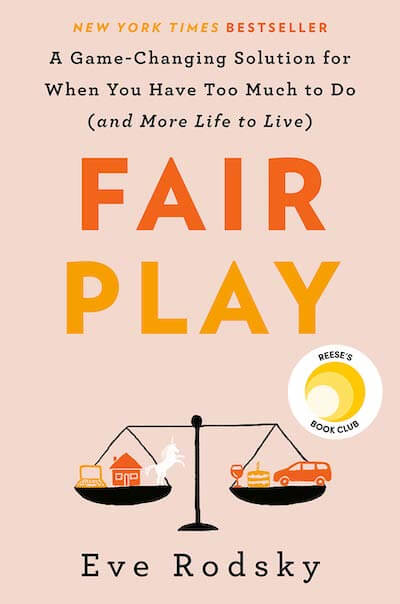
Fair Play Book Summary
This Fair Play Book Summary covers the key ideas, lessons, and takeaways in about 20 minutes.
Helps with these goals
Want the complete 20-minute summary?
- Full structured summary
- Video Summary
- Podcast Summary
- Audio summary
- Key takeaways
- Exercises
- Quiz
- Highlights and notes
- Ask the book with AI
What is in the Fair Play book summary?
Below is a preview of Sumizeit’s expert-written summary of Fair Play by Eve Rodsky. The full summary covers the book’s key ideas in text, audio, and video.
When kids come into the picture, marriages can quickly change.
Many mothers end up doing more than their fair share. Not only are mothers often stuck with half the chores and their entire careers, but they are left to tend to their child’s every need.
In Eve Rodsky’s book, “Fair Play”, she explains how this is all too common in marriages. And, she uses her own experience as an example for her readers.
Rodsky describes the “second shift” that mothers usually pick up when they have kids which includes making lunches, helping with homework, doing extra laundry, etc. While husbands tend to stick to their day jobs, working only one shift.
Mothers also tend to be the emotional caretakers in the relationship, so her duties extend to soothing their children, sending birthday cards, and keeping up with the in-laws.
And, her mental to-do list consists of constant worries about whether or not she washed her son’s football jersey and if there is enough food for dinner.
“I believe in my core that this is the fundamental issue for women, for them to step into their full power in the world, and we have to invite men to step into their full power at home.”- Eve Rodsky
All of these things a woman does is often called “invisible work”. Rodsky explains why this invisible work is underappreciated and why household duties should be 50/50.
The Second Shift Is Causing Unhappiness
Eve shares her experience living the second shift life as a mother. She would come home only to more work and it left her feeling overwhelmed. The stress of all the new demands was affecting her well-being. It took a toll on every single aspect of her life.
First, it affected her marriage. Mothers who do more housework than their partners oftentimes develop resentment toward their husbands. And because they are hustling solo, they feel isolated and alone. Studies confirm that women who do more housework than their husbands are less satisfied in their marriages.
The second shift also affects a woman’s mental health. It creates mental exhaustion. The Today Show website featured a survey that investigated the stress-level of moms in America. Out of 7,000 moms surveyed, the majority ranked their current stress-levels at 8.5 on a ten-point scale.
And, in correlation to the survey, it has been documented that women are diagnosed with anxiety disorders more often than men; more than twice as frequently! This only makes sense as nearly 80% of American women report that taking care of their families is too time-consuming, so they cannot take care of themselves too.
This second shift also has a negative effect on a mother’s career. The pay gap between mothers with children and without is actually bigger than that of the pay gap between men and women. But, why is that?
It is because the woman with children does not fit the company’s ideal employee, which would be someone who is free to focus on their job.
Want the complete 20-minute summary?
- Full structured summary
- Video Summary
- Podcast Summary
- Audio summary
- Key takeaways
- Exercises
- Quiz
- Highlights and notes
- Ask the book with AI
Who should read Fair Play?
Fair Play is essential for married couples and long-term partners who feel stuck in unequal household dynamics, particularly mothers struggling under the weight of invisible work. It's also valuable for couples planning to have children or those early in parenthood who want to establish equitable patterns from the start. If you're experiencing resentment in your relationship or feel your career and identity are being sacrificed to family responsibilities, this book offers a practical roadmap.
Why does Fair Play matter?
The invisible burden of household and emotional labor—disproportionately carried by women—is damaging marriages, derailing careers, and harming mental health at epidemic levels. Fair Play by Eve Rodsky addresses a systemic problem that affects millions of families, showing that perceived fairness in partnership is essential to long-term happiness and stability. In a world where women are advancing professionally, outdated domestic arrangements are holding them back and creating unnecessary resentment that could be resolved through intentional conversations and restructured responsibilities.
What are the key themes in Fair Play?
- Invisible work and emotional labor in households
- The second shift and its consequences for women
- Time equity versus financial contribution
- Ownership and accountability in domestic responsibilities
- Preserving identity and personal passions in partnership
- Perceived fairness as foundation for healthy marriages
- Breaking default assumptions about gender roles
What are the key lessons from the Fair Play book summary?
The Second Shift Creates Cascading Problems
When mothers take on a disproportionate share of household and childcare duties alongside careers, it creates resentment, mental health issues, career penalties, and marital dissatisfaction. The stress compounds with each additional child, making early intervention critical.
Time Is Not Worth Less Than Money
A common myth is that the partner earning more money has less obligation to household duties. Rodsky argues that time should be measured equally regardless of income—both partners have the same 24 hours in a day.
Default Assumptions Are Relationship Killers
Allowing one partner to automatically handle certain tasks because they 'always have' perpetuates unfair arrangements. Conscious choices about who owns each responsibility lead to better outcomes than inherited patterns.
Perceived Fairness Matters More Than Perfect 50/50
Research shows that couples feel happier and more satisfied when they perceive fairness in their arrangements rather than achieving exact numerical equality. This allows flexibility based on what works for each unique household.
Emotional Labor Is Real Work That Must Be Counted
Tasks like managing social connections, soothing children, remembering birthdays, and mental planning consume significant energy. These invisible responsibilities must be acknowledged and shared, not assumed to be a woman's domain.
The Motherhood Pay Penalty Is Steeper Than The Gender Pay Gap
Women with children face a larger economic penalty (5-10% per child) than women without children face compared to men. This career impact is compounded when household responsibilities prevent professional advancement.
Tasks Have Three Distinct Phases
Every domestic responsibility involves conceiving (thinking of it), planning (organizing resources), and executing (doing it). Splitting these phases across partners leads to mistakes; ownership should encompass all three components.
Resentment Grows Predictably With Family Expansion
Most women can manage one child while maintaining careers and identity, but the second child typically triggers a crisis when partners don't step up. Establishing fair systems early prevents resentment from taking root.
Women Must Maintain Their Own Identities
Abandoning personal passions and professional pursuits for family responsibilities erodes self-worth and makes partners less interesting and fulfilled. Men are more willing to take on domestic duties when it enables their partners to pursue meaningful goals.
Visualization Creates Accountability
The card game method makes invisible work visible by physically showing who handles which responsibilities. This tangible representation removes ambiguity and makes imbalances impossible to ignore.
Some Tasks Can Be Eliminated Entirely
Not every household duty must continue. By questioning whether tasks are truly necessary, couples can reduce overall load and focus energy on what genuinely matters to them.
Ownership Is Different From Help
When one partner 'helps' with tasks primarily owned by the other, it reinforces the original imbalance. True fairness means clear ownership where partners are accountable for full responsibility.
Mental Load Is Invisible But Exhausting
The constant mental to-do list of remembering, planning, and worrying about family needs drains cognitive resources. This invisible burden must be distributed, not concentrated on one person.
Men and Women Have Different Perceptions of Time Value
Many men unconsciously treat their own time as finite and valuable while viewing their partners' time as infinite. Explicitly naming and challenging this assumption is essential for change.
Marriage Quality Depends on Relationship Habits
Fair Play is fundamentally about establishing healthy domestic patterns early. It's far easier to build equitable habits from the beginning than to reshape entrenched patterns after years of resentment accumulate.
Anxiety Disorders Are Linked to Domestic Imbalance
Women diagnosed with anxiety more than twice as frequently as men; research connects this partly to overwhelming domestic responsibilities. Redistributing household labor can directly impact mental health.
Caregiving Tasks Require Full Mental Ownership
Simply executing childcare doesn't count as fair contribution if someone else conceives and plans. The partner managing toilet training, bedtimes, and medical appointments owns all three phases, not just the execution.
Career Trajectories Diverge When Domestic Duties Are Unequal
Women burdened with disproportionate household responsibilities receive fewer promotions, raises, and development opportunities. Professional outcomes are directly tied to home life equity.
The Framework Treats Home As A Business That Requires Rigor
Applying organizational principles to household management—defining roles, setting expectations, tracking outcomes—dramatically improves results and fairness. The home deserves the same professionalism as a workplace.
Partnership Requires Inviting Partners Into Full Power
Rodsky's core belief is that for women to reach their full potential, men must be invited and supported to step fully into their power at home. This isn't about burden-shifting but about mutual empowerment.
Want the complete 20-minute summary?
- Full structured summary
- Video Summary
- Podcast Summary
- Audio summary
- Key takeaways
- Exercises
- Quiz
- Highlights and notes
- Ask the book with AI
How can you apply ideas from Fair Play?
- Create a deck of 100 cards representing all household tasks across Home, Out, Caregiving, Magic, and Wild categories, then visually identify who currently holds responsibility for each
- Redistribute cards intentionally so both partners own tasks that matter to them while eliminating unnecessary tasks entirely
- Establish clear ownership for each remaining task—ensuring one person mentally conceives, plans, and executes rather than splitting phases across partners
- Have explicit conversations about how much time each partner actually spends on domestic work versus paid work to make invisible labor visible
- Set household agreements that treat partnership decisions with the same rigor and documentation used in business—not casual assumptions
- Check in regularly about perceived fairness rather than aiming for perfect 50/50 balance, adjusting arrangements as life circumstances change
- Protect time and space for both partners to maintain individual identities, passions, and career development outside family responsibilities
What common mistakes do readers make with Fair Play?
- Assuming that earning more income justifies doing less domestic work—conflating financial contribution with time value
- Allowing tasks to remain unsaid and default to whoever 'always does them' rather than making conscious ownership decisions
- Splitting the conceiving, planning, and executing phases of tasks across partners, leading to miscommunication and quality problems
- Ignoring invisible emotional labor and mental load while only counting visible tasks like dishes or laundry
- Waiting until resentment reaches crisis level before addressing fairness, making it much harder to rebuild trust and change habits
Sumizeit Exercises Apply what you've learned
Turn ideas from Fair Play into action with a short guided reflection: identify the biggest takeaway, connect it to your life, and commit to one step you can take in the next 24 hours.
What is the expert analysis of Fair Play?
Overview
Fair Play is authored by Eve Rodsky, a Harvard-educated lawyer and former philanthropy advisor who brings a unique blend of analytical rigor and personal experience to the discourse on domestic labor equity. The book addresses a pervasive yet often invisible issue in contemporary marriages: the disproportionate burden of household and emotional labor borne by women, especially mothers. Rodsky’s work is significant because it reframes domestic responsibilities as a form of “invisible work” that profoundly affects women’s mental health, career trajectories, and marital satisfaction. By introducing a practical, gamified system to redistribute these duties, Fair Play offers a fresh, actionable framework for couples seeking fairness and partnership in family life.
Core Thesis
Rodsky’s central argument is that the unequal division of domestic labor—what she terms the “second shift”—is a fundamental barrier to women’s empowerment both at home and in the workplace. She posits that household tasks and caregiving responsibilities should be consciously acknowledged, valued equally, and divided fairly between partners. The notion that men’s time is inherently more valuable than women’s is a cultural myth that perpetuates imbalance and resentment. Instead, Rodsky advocates for a system of “ownership” over domestic tasks, where couples explicitly negotiate and share responsibilities in a way that reflects their individual priorities and capacities, thus fostering marital satisfaction and personal fulfillment.
Strengths
- Innovative Framework: Rodsky’s card game methodology transforms abstract ideas about fairness into a tangible, interactive process that couples can use to visualize and renegotiate household labor.
- Integration of Personal and Empirical Evidence: The author blends her own lived experience with relevant sociological data and psychological research, making the argument both relatable and credible.
- Focus on Emotional Labor: The book highlights not just physical chores but the often-overlooked emotional and mental load women carry, expanding the discourse beyond traditional domestic work.
- Pragmatic and Accessible: Rodsky’s writing is practical, offering actionable steps rather than abstract theory, which can empower readers to implement change immediately.
- Attention to Identity and Fulfillment: By emphasizing the importance of women maintaining their passions and identities outside of motherhood, the book addresses deeper psychological and social dimensions of gender roles.
Critiques & Counterarguments
- Potential Oversimplification: While the card game is innovative, it may oversimplify complex emotional dynamics and power imbalances that exist in many relationships, such as those influenced by cultural, socioeconomic, or psychological factors.
- Limited Intersectional Analysis: The book primarily addresses middle-class, heterosexual partnerships and may not fully account for the experiences of LGBTQ+ couples, single parents, or families from diverse cultural backgrounds where domestic roles and expectations differ significantly.
- Assumption of Willing Partners: Rodsky’s model presumes that both partners are equally motivated and capable of participating in the negotiation and execution of household duties, which may not hold true in cases of entrenched gender norms or unequal power dynamics.
- Competing Research on Gender Roles: Some sociological research suggests that men’s participation in domestic labor is increasing organically over time, and that rigid frameworks may inadvertently create tension if not adapted flexibly to each couple’s context.
- Economic and Structural Factors Underexplored: The book focuses on interpersonal solutions but pays less attention to broader structural issues such as workplace policies, social safety nets, and cultural shifts needed to support gender equity beyond the household.
Who Should Read This
Fair Play is ideal for couples—particularly those navigating the challenges of parenthood—who seek a practical, structured approach to achieving domestic equity. It will resonate with women who feel overwhelmed by invisible labor and desire strategies to reclaim time and identity. Additionally, therapists, counselors, and social scientists interested in gender dynamics and family systems will find Rodsky’s blend of personal narrative and data-driven insights valuable. Finally, the book offers meaningful contributions to conversations about work-life balance and gender roles, making it a worthwhile read for anyone invested in fostering fairness and partnership within intimate relationships.
Frequently asked questions about the Fair Play book summary
What is Fair Play about?
Fair Play by Eve Rodsky addresses the hidden crisis in modern marriages where women shoulder a disproportionate share of household, childcare, and emotional labor alongside careers. The book reveals how this "second shift" damages marriages, mental health, and women's careers, and provides a practical card-game-based system to redistribute domestic responsibilities fairly so both partners can thrive.
Who should read Fair Play?
Fair Play is essential for married couples and long-term partners feeling stuck in unequal household dynamics, particularly mothers struggling with invisible work. It's valuable for couples planning families or early in parenthood who want equitable systems from the start, and for anyone experiencing resentment about unfair responsibility distribution in their relationship.
What are the main takeaways from Fair Play?
The main takeaways include: (1) women's time deserves equal value to men's time regardless of income differences, (2) invisible emotional and mental labor must be counted and distributed, (3) tasks have three phases—conceiving, planning, and executing—that should never be split, (4) perceived fairness matters more than perfect 50/50 equality, and (5) establishing equitable patterns early prevents resentment from compounding as families grow.
What is the card game method in Fair Play?
The Fair Play card system involves creating 100 cards representing household responsibilities across five categories: Home (dishes, laundry), Out (grocery shopping, school runs), Caregiving (bedtime, bathing), Magic (celebrations, emotional support), and Wild (major life events). Partners deal the cards to show who currently handles each task, making invisible work visible, then redistribute them based on what each person wants to own.
How does Eve Rodsky define the second shift?
The second shift is the burden of household, childcare, and emotional responsibilities that primarily falls on mothers in addition to their careers. It includes visible tasks like laundry and meal prep plus invisible work like mental planning, emotional caregiving, and managing family logistics. Rodsky argues this unequal distribution is the root cause of marital conflict and women's diminished well-being.
Why does Fair Play say 50/50 is the wrong equation?
Rodsky argues that aiming for exact 50/50 leads to score-keeping and resentment, and it ignores that every household is different. Instead, she emphasizes that perceived fairness—where both partners feel the arrangement is equitable for their specific situation—predicts happier marriages. The focus should be on what feels fair to both people, not on achieving mathematical equality.
What is invisible work according to Fair Play?
Invisible work includes emotional labor, mental load, and household planning that goes unnoticed and undervalued. Examples include remembering birthdays, managing medical appointments, planning meals, soothing upset children, and the constant mental to-do list of family management. Rodsky emphasizes this work is as demanding as visible tasks but often goes completely unacknowledged in relationships.
About Sumizeit
Sumizeit is a profitable Scomy LLC company based in Miami, Florida. It has been helping readers learn from nonfiction books for 7 years with expert-written summaries in text, audio, podcast, and video.
Want the complete 20-minute summary?
- Full structured summary
- Video Summary
- Podcast Summary
- Audio summary
- Key takeaways
- Exercises
- Quiz
- Highlights and notes
- Ask the book with AI
Here's why readers love Sumizeit
Join thousands of learners getting smarter every day
"Great experience. Detailed summaries. Loved the gamification feature. Makes learning fun. Good customer service. I recommend Sumizeit to anyone. You'll learn a lot."
"I always felt busy but still wanting to keep up with the book discussion in my friend group. This was a great supplement to help me keep reading the books I find fun while keeping up with important books."
"I love this website. Instead of scrolling social media, I find myself learning a lot. I use it everyday. I recommend this app for anyone who is too busy and wants to get up to speed with their favorite books."
Fair Play Book Summary PDF
Looking for a Fair Play Book Summary PDF you can save and revisit offline? Our Fair Play Book Summary PDF captures the book’s core ideas in a clean, printable format — the key frameworks, takeaways, and structure without the fluff. Download the Fair Play Book Summary PDF when you want a reference you can annotate, share with your team, or review on the go. Get your Fair Play Book Summary PDF from the download page below.
Download Fair Play Book Summary PDFPeople also liked these summaries
Readers who explored Fair Play often enjoyed these titles next.



Want the complete 20-minute summary?
- Full structured summary
- Video Summary
- Podcast Summary
- Audio summary
- Key takeaways
- Exercises
- Quiz
- Highlights and notes
- Ask the book with AI
Featured Book Titles
Popular Book Summaries at sumizeit, leading book summary app