


Prefer the print book? Buy on Amazon
As an Amazon Associate, Sumizeit earns from qualifying purchases.
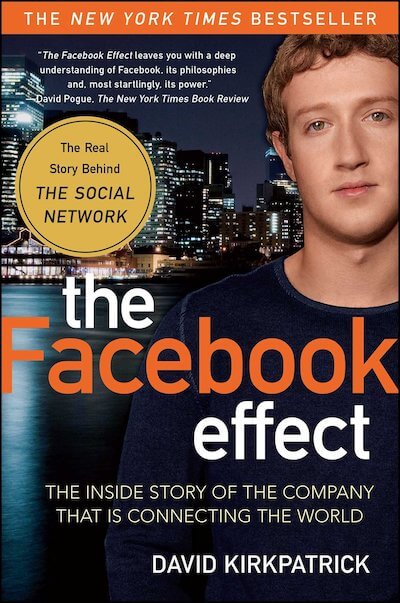
The Facebook Effect Book Summary
This The Facebook Effect Book Summary covers the key ideas, lessons, and takeaways in about 20 minutes.
Facebook evolved into a platform for social and political interaction worldwide.
Helps with these goals
Want the complete 20-minute summary?
- Full structured summary
- Video Summary
- Podcast Summary
- Audio summary
- Key takeaways
- Exercises
- Quiz
- Highlights and notes
- Ask the book with AI
Want a Free Weekly Read?
Get a free summary every week straight to your mailbox.
Preview the The Facebook Effect book summary
Below is a preview of Sumizeit’s comprehensive human-written summary of The Facebook Effect by David Kirkpatrick. The full summary is 15-20 minutes long and covers the book’s key ideas in text, audio, visual, and video formats. Unlock the full 20 Minute Summary
Facebook made a major impact on the world of social media.
And, it’s not just a platform for people to communicate, it’s a business success story.
It has changed how we interact and share with people throughout the world.
“Facebook also has a fundamental characteristic that has proven key to its appeal in country after country—you only see friends there.”- David Kirkpatrick
In the book, “The Facebook Effect” by David Kirkpatrick, you will learn how Facebook created technological change and how it affects you.
Before Facebook
Before Facebook, there were other social media sites including WELL, AOL, and Friendster.
The concept of social media started in 1985. But, the design was a little different. You could chat with people in the community via threads, online bulletin boards, and chat rooms.
Social media began developing fast because of the new technology creators were experimenting with. This led to users being able to create unique profiles for themselves and groups that could remain private and exclusive.
Classmates.com was a popular site that was similar to Facebook which allowed you to find people you went to school with.
Old-school social media was really more of a virtual community. Social media is defined as an online platform that allows you to create a profile, establish a friend’s list, and make new connections.
And, by using this definition, Sixdegrees.com was the first social media site to come about. Sixdegrees.com worked by connecting people based on people on their friend’s lists as well as their interests. It allowed you to search for someone on the search bar, which was something new to the scene at the time.
In 2002, the social media platform Friendster launched and it was the first site that allowed you to add a profile picture.
Many sites followed suit including Myspace, LinkedIn, and Spoke.
But, even though the market was full of competition, Facebook became a success almost instantly.
The Origins of Facebook
Mark Zuckerberg always was a lover of creating and developing. In early 2004, he started a project in his Harvard college dorm called “Thefacebook.” It was named after college “face books” which was essentially a list of all students with a picture and their class listed as well. At first, this project was private to Harvard students. But, Zuckerberg had ideas for its expansion.
Thefacebook went live on February 4th, 2004. In the first four days, 650 Harvard students joined the site. And, in only three weeks 6,000 students had profiles on the site.
The site expanded to 34 schools and by May it had over 100,000 users. Even Mark Zuckerberg didn’t expect that type of success.
In June 2004, Zuckerberg was approached and offered a whopping 10 million for the site, but Zuckerberg refused and wanted to take his site farther.
In September 2005, “Thefacebook” became “Facebook.” This was advice that was given personally to Zuckerberg by Sean Parker, the owner of Napster.
Shortly after the name change, the site became international and spread to schools worldwide.
The…
Want the complete 20-minute summary?
- Full structured summary
- Video Summary
- Podcast Summary
- Audio summary
- Key takeaways
- Exercises
- Quiz
- Highlights and notes
- Ask the book with AI
Who should read The Facebook Effect?
The Facebook Effect is essential reading for anyone curious about how one of the world's most influential platforms came to dominate global communication. Business leaders, entrepreneurs, technology enthusiasts, and anyone interested in understanding modern social dynamics will find valuable insights into platform design, growth strategy, and cultural impact.
Why does The Facebook Effect matter?
Facebook fundamentally reshaped how billions of people communicate, share information, and organize around social and political causes. Understanding Facebook's evolution—from a college dorm project to a global phenomenon—reveals critical lessons about timing, innovation, and the power of social networks to influence society, media, and politics.
What are the key themes in The Facebook Effect?
- The power of timing and being in the right place at the right moment
- How constant innovation keeps platforms competitive and relevant
- The democratization of communication and information sharing
- Social networking's impact on politics, activism, and civic engagement
- The tension between privacy expectations and digital transparency
- Platform design choices that drive user adoption and engagement
- The business model transformation from traditional media to digital advertising
Want the complete 20-minute summary?
- Full structured summary
- Video Summary
- Podcast Summary
- Audio summary
- Key takeaways
- Exercises
- Quiz
- Highlights and notes
- Ask the book with AI
How can you apply ideas from The Facebook Effect?
- Entrepreneurs should identify moments when cultural and technological conditions align, then move decisively rather than waiting for perfect market conditions
- Product teams can learn from Facebook's continuous iteration cycle—regularly updating features based on user behavior keeps platforms competitive and engaging
- Marketers should recognize that advertising works best when placed in spaces where users are actively engaged with content and peers, not interrupting unrelated activities
- Organizational leaders can observe how Facebook's early team combined diverse skill sets—sales, design, engineering, finance—showing startup success requires varied complementary roles
- Communications professionals should understand that platforms enabling user-generated content and peer-to-peer sharing spread information faster and more authentically than traditional top-down messaging
- Policy makers and platform designers can study Facebook's privacy challenges to understand the lasting effects of normalizing information sharing and the difficulty of tightening controls retroactively
- Activists and political campaigns can harness social platforms for organizing, fundraising, and mobilizing audiences at scale, as demonstrated by the 2008 Obama campaign and protest movements
What common mistakes do readers make with The Facebook Effect?
- Assuming that being first to market guarantees success; Facebook won because of timing and execution, not novelty of the social networking concept
- Failing to understand your core audience's psychological needs; many social platforms built features without recognizing why users actually wanted to connect and share
- Staying static instead of iterating; competitors who didn't continuously improve their platforms fell behind Facebook's rapid feature evolution
- Underestimating the power of constraints; Facebook's focus on real identity and friend-only content created trust that open, anonymous platforms couldn't match
Sumizeit Exercises Apply what you've learned
Turn ideas from The Facebook Effect into action with a short guided reflection: identify the biggest takeaway, connect it to your life, and commit to one step you can take in the next 24 hours.
What is the expert analysis of The Facebook Effect?
Overview
The Facebook Effect, authored by David Kirkpatrick, stands as a seminal chronicle of one of the most transformative technological and social phenomena of the 21st century. Kirkpatrick, a seasoned technology journalist with deep industry connections and a history of profiling influential entrepreneurs, offers a comprehensive narrative tracing Facebook’s origins, rapid ascent, and profound impact on global communication, business models, and socio-political engagement. The book’s significance lies not only in its detailed recounting of Facebook’s evolution but also in its exploration of how a digital platform reshaped human interaction, media, and privacy paradigms worldwide.
Core Thesis
Kirkpatrick’s central argument posits that Facebook’s unprecedented success stems from its unique ability to harness social connectivity by focusing exclusively on real-world friendships, combined with strategic timing, technological innovation, and relentless evolution. This platform did not merely provide a new communication tool; it fundamentally altered how individuals engage with each other, participate in political discourse, consume media, and perceive privacy. Facebook’s story exemplifies how a technology company can simultaneously become a cultural and economic powerhouse, influencing global society at multiple levels.
Strengths
- Comprehensive Historical Context: Kirkpatrick situates Facebook within the broader trajectory of social media development, offering readers an informed understanding of precedents and technological milestones that paved the way for its rise.
- Insider Access and Detail: The author’s close relationship with Zuckerberg and other key figures allows for nuanced insights into the company’s internal dynamics, strategic decisions, and pivotal moments.
- Multi-Dimensional Impact Analysis: The book adeptly covers Facebook’s influence beyond mere technology—addressing its role in politics, media disruption, and shifting social norms around privacy.
- Engaging Narrative Style: Kirkpatrick combines journalistic rigor with storytelling, making complex technological and business developments accessible and compelling to a broad audience.
Critiques & Counterarguments
- Potential Bias and Access Limitations: Given Kirkpatrick’s close ties to Zuckerberg and Facebook’s leadership, the narrative occasionally reads as sympathetic, possibly underemphasizing controversies such as data privacy abuses, misinformation propagation, and ethical lapses.
- Oversimplification of Complex Social Dynamics: The book tends to credit Facebook’s design and timing as primary drivers of success, somewhat downplaying broader socio-economic factors, competitor failures, and regulatory environments that also shaped outcomes.
- Dated Examples and Rapid Evolution: Published in the early 2010s, some insights—particularly regarding Facebook’s political role and privacy safeguards—do not fully anticipate later challenges including election interference, algorithmic bias, and intensified scrutiny over user data.
- Competing Perspectives on Social Media Impact: Critical scholarship and alternative schools of thought argue that platforms like Facebook exacerbate social fragmentation, mental health issues, and echo chambers, countering the more optimistic portrayal of connectivity and empowerment.
- Real-World Evidence of Negative Externalities: Subsequent events, such as the Cambridge Analytica scandal and widespread misinformation campaigns, provide empirical challenges to the book’s relatively positive framing of Facebook’s societal role.
Who Should Read This
The Facebook Effect is essential reading for scholars and practitioners interested in technology’s intersection with society, business strategists seeking to understand disruptive innovation, and informed readers curious about the origins and implications of social media’s most influential platform. It offers valuable historical perspective and foundational knowledge, serving as a springboard for deeper critical engagement with ongoing debates about digital culture, ethics, and governance.
Frequently asked questions about the The Facebook Effect book summary
What is The Facebook Effect about?
The Facebook Effect by David Kirkpatrick chronicles the rise of Facebook from Mark Zuckerberg's college dorm project to a global social networking giant with over 500 million users. The book explores how Facebook's design choices, timing, and continuous innovation disrupted communication, media, politics, and advertising while fundamentally changing how people share information and maintain relationships.
Who should read The Facebook Effect?
Entrepreneurs, business leaders, technology professionals, and anyone interested in understanding how platforms shape society will benefit from this book. It's particularly valuable for those studying innovation, startup strategy, digital marketing, and the social impact of technology.
What are the main takeaways from The Facebook Effect?
Key takeaways include the importance of timing over being first to market, the power of understanding your audience's core needs (in Facebook's case, the desire to maintain social connections), the value of continuous product iteration, and how network effects create competitive advantages. The book also highlights how Facebook disrupted traditional media and advertising while enabling activism and political engagement at unprecedented scale.
How did Facebook beat Myspace and other social networks?
Facebook succeeded through a combination of factors: perfect timing when internet speeds supported photo sharing, launching in colleges where users craved social connection, maintaining real identity and trusted friend networks, and continuously evolving features based on user behavior. Competitors like Myspace failed to iterate as quickly and became cluttered with ads and spam, damaging user trust.
What role did Mark Zuckerberg's mentors play in Facebook's success?
Zuckerberg strategically sought advice from experienced entrepreneurs including Sean Parker (Napster), Marc Andreesen (Netscape co-founder), Bill Gates, and Steve Jobs. These mentors helped him avoid mistakes, guided his decision-making, and legitimized the platform during its early growth phases.
How did Facebook change politics and activism?
Facebook democratized political organizing and activism by making it easy for ordinary people to create groups, share information, organize fundraisers, and mobilize supporters at scale. The 2008 Obama campaign leveraged Facebook effectively, and social movements worldwide have used the platform to raise awareness and coordinate action faster than traditional institutions allow.
What privacy challenges does The Facebook Effect discuss?
Kirkpatrick explores how Facebook normalized sharing personal information that people once kept private, blurring lines between personal and professional identities. The book discusses how users struggle to manage different audiences in a unified profile and how friends tagging can expose users to unwanted visibility despite their own careful privacy practices.
How did Facebook disrupt the media and advertising industries?
Facebook attracted advertising revenue from traditional media by offering more targeted, effective placements within engaging user feeds. Ad revenue tripled between 2008 and 2009, forcing traditional media companies to partner with Facebook rather than compete, fundamentally reshaping how advertising dollars flow in the digital age.
About Sumizeit
Sumizeit is a profitable Scomy LLC company based in Miami, Florida. Our founders, Clemens Raemy and Weina Scott, are successful entrepreneurs with several exits. Sumizeit is a popular book summary app / micro learning app used by busy professionals and entrepreneurs with over 2,500 non-fiction book summaries and 10,000 podcast summaries in text, audio, visual, podcast, and video format. We also have stellar retention tools to make ideas stick - such as flashcards with spaced repetition, quizzes, streaks, highlighting and notes, daily challenges, riddles, mini-courses, meditation, and more. You won't only learn the idea, but also remember it. Over 90% of our users change their habits with Sumizeit.
Upgrade Now
Want the complete 20-minute summary?
- Full structured summary
- Video Summary
- Podcast Summary
- Audio summary
- Key takeaways
- Exercises
- Quiz
- Highlights and notes
- Ask the book with AI
Here's why readers love Sumizeit
Join thousands of learners getting smarter every day
"Great experience. Detailed summaries. Loved the gamification feature. Makes learning fun. Good customer service. I recommend Sumizeit to anyone. You'll learn a lot."
"I always felt busy but still wanting to keep up with the book discussion in my friend group. This was a great supplement to help me keep reading the books I find fun while keeping up with important books."
"I love this website. Instead of scrolling social media, I find myself learning a lot. I use it everyday. I recommend this app for anyone who is too busy and wants to get up to speed with their favorite books."
The Facebook Effect Book Summary PDF
Looking for a The Facebook Effect Book Summary PDF you can save and revisit offline? Our The Facebook Effect Book Summary PDF captures the book’s core ideas in a clean, printable format — the key frameworks, takeaways, and structure without the fluff. Download the The Facebook Effect Book Summary PDF when you want a reference you can annotate, share with your team, or review on the go. Get your The Facebook Effect Book Summary PDF from the download page below.
Download The Facebook Effect Book Summary PDFPeople also liked these summaries
Readers who explored The Facebook Effect often enjoyed these titles next.


Want the complete 20-minute summary?
- Full structured summary
- Video Summary
- Podcast Summary
- Audio summary
- Key takeaways
- Exercises
- Quiz
- Highlights and notes
- Ask the book with AI
Featured Book Titles
Popular Book Summaries at sumizeit, leading book summary app