
Question 1 of 10


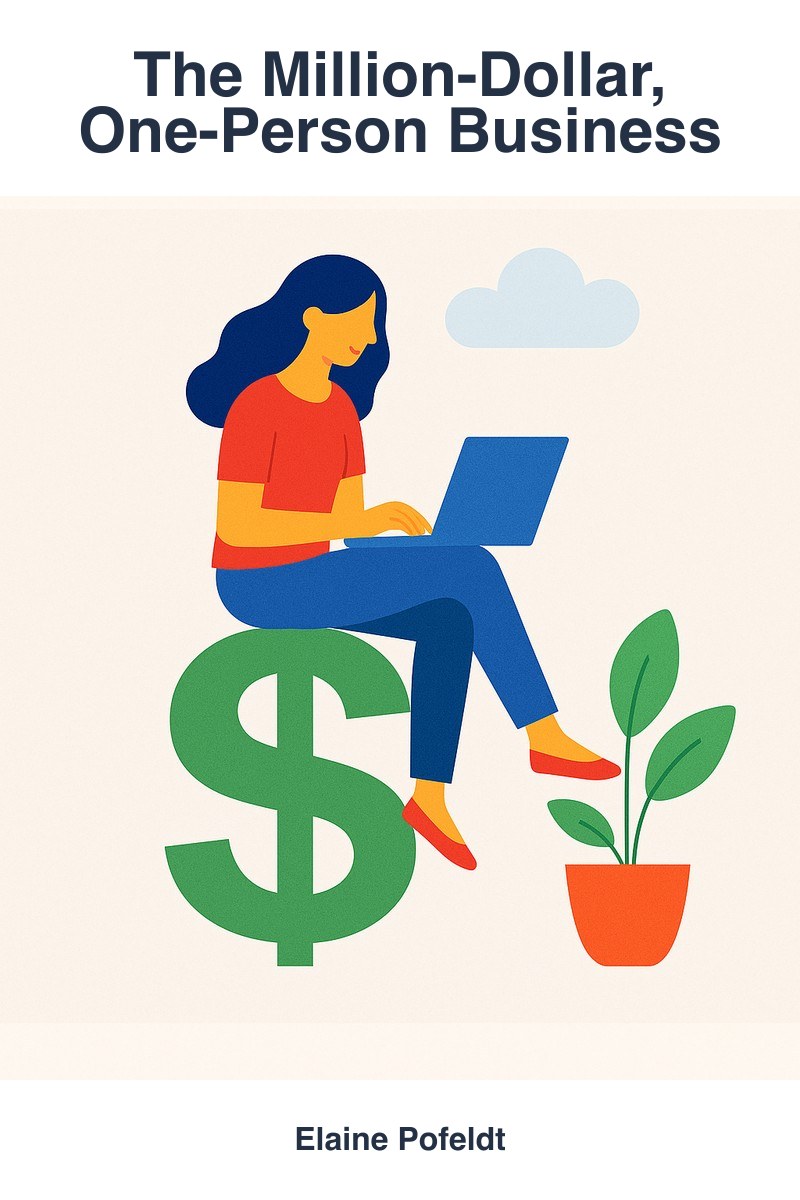
Prefer the print book? Buy on Amazon
As an Amazon Associate, Sumizeit earns from qualifying purchases.
Book Summary
The Million-Dollar, One-Person Business Book Summary
This The Million-Dollar, One-Person Business Book Summary covers the key ideas, lessons, and takeaways in about 20 minutes.
Short Description:
How to build a lean solo business that earns big and fits the life you want
This book argues that a smart, low cost company built around something you're obsessed with and uniquely good at can give you more security and more freedom than a regular job. You pick an idea that comes from your own history, you launch it cheaply so you aren't forced to chase profit before you're ready, and you let your personal goals decide how big it gets. Then you run it with a few habits suited to the internet age. You hire specialists instead of trying to master everything, you test your marketing in small bets, you charge enough to cover the real costs of working for yourself, and you spend your time on purpose instead of just filling it. A million dollars is possible, but Pofeldt keeps pointing back to a bigger target, which is building a business that fits the life you want.
Helps with these goals
Want a Free Weekly Read?
Get a free summary every week straight to your mailbox.
Preview the The Million-Dollar, One-Person Business book summary
Below is a preview of Sumizeit’s comprehensive human-written summary of The Million-Dollar, One-Person Business by Elaine Pofeldt. The full summary is 15-20 minutes long and covers the book’s key ideas in text, audio, visual, and video formats. Unlock the full 20 Minute Summary
Here is the pitch in one breath. You can build a company that brings in a million dollars a year without a payroll, an office, or a pile of investor cash. Elaine Pofeldt says that isn't a fantasy. Technology now lets one person with a laptop do what used to take a full team and serious money. Every year, more solo founders cross the million dollar line with lean businesses built around skills and passions they already have.
Pofeldt is a journalist, and the book comes straight from her reporting. She interviewed entrepreneurs and other experts, then pulled out the patterns that keep showing up. So you won't find a magic formula here. You'll find a map of how real people did it, and how you can borrow their moves.
The book runs in three parts. First comes the case for why right now is a good time to start your own company. Then comes a roadmap for building it. Last come four practices for running it well once it exists. One thread ties everything together. Your business should serve the life you want. It shouldn't be the thing you sacrifice your life to.
Who is this book for? Mostly people who already have something to offer and feel stuck in a setup that won't let them use it. You might be a teacher, a designer, a cook, a nurse, or an engineer. Pofeldt doesn't ask you to become somebody else. She asks you to look hard at what you already know and wonder whether it could support you directly. That's an encouraging place to start, because you aren't building from zero. You're building from years of experience you've been collecting without noticing.
Why a job isn't as safe as it looks
Pofeldt opens with a blunt claim. Starting your own one person company can give you a kind of security that regular employment no longer offers.
Think about how things used to work. Big companies promised people decades of steady income, and most people believed it. That deal is fading a little more every year. Markets shift, technology moves fast, and companies stay competitive by swapping employees for automation and contract workers. Your job might feel solid today and still be gone next spring.
Living with that threat has a cost, and Pofeldt spells it out. When you're afraid of being laid off, you start giving things up. You skip leisure time. You put your family's needs second. Some people even put up with discrimination at work, hoping that staying quiet and useful will keep them off the layoff list. And after all that sacrifice, you still have no guarantee. You paid the price and didn't get the protection.
That's the first reason she wants you to take the idea of your own company seriously. If the old security is gone, the choice isn't between a safe path and a risky one. It's between two kinds of risk. In one, your income depends on a single employer's decisions.
Want the complete 20-minute summary?
- Full structured summary
- Video Summary
- Podcast Summary
- Audio summary
- Key takeaways
- Exercises
- Quiz
- Highlights and notes
- Ask the book with AI
Who should read The Million-Dollar, One-Person Business?
The Million-Dollar, One-Person Business is for skilled professionals—teachers, designers, engineers, nurses, and others—who feel constrained by traditional employment and want to build something on their own terms. If you have expertise or passion you're not fully using in your current role, this book shows you how to turn that into an independent income without needing a team, office, or outside investors.
Why does The Million-Dollar, One-Person Business matter?
Job security has eroded while the tools to go solo have never been more accessible. Elaine Pofeldt argues that building your own lean business can actually offer more stability and freedom than depending on a single employer in today's market. With technology and low overhead costs, one person can now compete globally and reach profitability quickly, making solo entrepreneurship a realistic alternative to traditional career paths.
What are the key themes in The Million-Dollar, One-Person Business?
- Building a profitable business with minimal overhead and no payroll
- Leveraging your unique skills and passions as your competitive advantage
- Designing your business around the life you want, not sacrificing life for business
- Using contractors strategically instead of trying to do everything yourself
- Testing ideas cheaply before committing significant resources
- Charging appropriately for your value to cover true business costs
- Marketing effectively online with small budgets and smart testing
- Protecting your time and attention as a solo founder's most valuable resources
How can you apply ideas from The Million-Dollar, One-Person Business?
- List the tasks people frequently ask for your help with and the topics that make you lose track of time, then look for overlap to identify potential business ideas rooted in your natural abilities
- Keep your current job while building your business on the side to reduce financial stress and validate your idea before committing full-time
- Use crowdfunding platforms, social media testing, and community conversations to gauge customer demand before investing heavily in a product or service
- Create a pricing model that accounts for self-employment taxes, health insurance, retirement contributions, and unpaid administrative work so you don't underprice your services
- Hire contractors for specialized tasks outside your expertise—accounting, design, software development—to free yourself to focus on your core value
- Automate or eliminate recurring administrative tasks by creating resources like FAQs, templates, or workflows that reduce the need for repetitive manual work
- Run small advertising experiments on social media with low budgets to test different messages before scaling spending to proven winners
- Define the ideal life you want your business to support—family time, flexibility, impact, learning—and let those goals guide decisions about growth and scaling
What common mistakes do readers make with The Million-Dollar, One-Person Business?
- Underpricing services and products by forgetting to account for the full cost of self-employment, including taxes, insurance, and retirement contributions that employers normally cover
- Trying to master every function of the business instead of hiring contractors for specialized work, which slows progress and keeps you from focusing on your unique strengths
- Launching with high overhead costs and expecting immediate large profits, which creates desperate pressure to chase revenue before the business idea has proved itself
- Letting small administrative tasks accumulate into unsustainable workloads instead of automating or eliminating them as the business grows
- Chasing arbitrary revenue goals or growth targets instead of staying focused on whether the business supports the life you actually want to live
- Failing to test demand through small, cheap experiments before committing significant time and money to a full product launch
Sumizeit Exercises Apply what you've learned
Turn ideas from The Million-Dollar, One-Person Business into action with a short guided reflection: identify the biggest takeaway, connect it to your life, and commit to one step you can take in the next 24 hours.
What is the expert analysis of The Million-Dollar, One-Person Business?
Overview
The Million-Dollar, One-Person Business by Elaine Pofeldt is a timely and insightful exploration of solo entrepreneurship in the digital age. Pofeldt, a seasoned journalist with a deep background in business reporting, draws on extensive interviews and real-world examples to map out how individuals can build highly profitable businesses without the traditional trappings of payrolls, offices, or venture capital. Published in 2018, the book captures a fundamental shift in the nature of work and enterprise, emphasizing lean, skill-based ventures that prioritize personal freedom and sustainable success. Pofeldt’s journalistic rigor and empathetic storytelling make this work significant for anyone interested in entrepreneurship, career reinvention, or the evolving labor market.
Core Thesis
Pofeldt’s central argument is that the traditional employment model no longer guarantees security or fulfillment, but the rise of technology and the internet has democratized the tools of business creation. This enables a single individual to launch and scale a company that can generate a million dollars in revenue annually, all while maintaining control over their time and life goals. The book posits that success in this arena hinges on leveraging one’s unique skills and passions, maintaining low overhead to minimize risk, and intentionally aligning business growth with personal values. Ultimately, Pofeldt reframes entrepreneurship not as a high-stakes gamble but as a manageable, iterative process that can provide both financial independence and life balance.
Strengths
- Pragmatic and Research-Driven: The book’s foundation in journalistic investigation lends it credibility and practical relevance. Pofeldt’s use of real entrepreneur stories grounds abstract concepts in lived experience.
- Accessible Framework: The three-step roadmap—choose a unique idea, launch with low overhead, and let life goals guide growth—is clear and actionable, avoiding the pitfalls of overly prescriptive business manuals.
- Holistic Approach: Emphasizing that a business should serve life rather than consume it is a refreshing counterpoint to the “growth at all costs” mindset prevalent in startup culture.
- Updated Playbook for Solo Founders: The four practices—strategic use of contractors, savvy online marketing, appropriate pricing, and a focused mindset—address common solo founder challenges with concrete advice tailored to the digital economy.
- Encouragement of Iteration and Resilience: Normalizing failure as part of the process is empowering for readers who may fear the risks of entrepreneurship.
Critiques & Counterarguments
- Potential Oversimplification of Risk: While Pofeldt rightly reframes risk, the narrative may understate the financial and emotional volatility many solo entrepreneurs face, especially those without a safety net or access to capital.
- Limited Discussion of Structural Barriers: The book focuses on individual agency but pays less attention to systemic inequalities such as racial, gender, or socioeconomic factors that can affect access to resources and markets.
- Contrasting Views on Growth and Investment: Pofeldt’s openness to outside investment contrasts with perspectives like those in Rework, which caution that investor pressures can compromise founder vision. This tension reflects broader debates about the trade-offs between independence and scale.
- Reliance on Technology and Online Platforms: The assumption that digital tools democratize entrepreneurship may overlook challenges such as platform dependency, algorithmic gatekeeping, and digital marketing saturation.
- Competing Research on Job Security: Some labor economists argue that traditional employment still offers benefits and protections that solo entrepreneurship cannot replicate, such as legal protections, collective bargaining, and stable benefits, which the book acknowledges but perhaps underemphasizes.
Who Should Read This
This book is ideal for professionals feeling constrained by traditional employment who seek a practical, research-backed guide to building a solo business. It will resonate with creative freelancers, skilled specialists, and anyone contemplating entrepreneurship but daunted by startup myths or high overhead costs. Career changers, side hustlers, and those interested in lifestyle design will find Pofeldt’s emphasis on aligning business with personal goals particularly valuable. However, readers should approach it as a strategic framework rather than a guaranteed formula, supplementing it with awareness of broader economic and social realities.
Discussion questions for The Million-Dollar, One-Person Business Short questions you can actually use in a conversation
Frequently asked questions about the The Million-Dollar, One-Person Business book summary
What is The Million-Dollar, One-Person Business about?
The Million-Dollar, One-Person Business by Elaine Pofeldt argues that you can build a profitable company earning a million dollars annually without employees, office space, or investor capital. The book shows how modern technology and low overhead costs make solo entrepreneurship viable, and it provides a practical roadmap for picking a business idea rooted in your unique skills, launching with minimal risk, and running the business in ways that support the life you want.
Who should read The Million-Dollar, One-Person Business?
This book is ideal for skilled professionals—teachers, designers, engineers, nurses, and others—who feel stuck in traditional employment and want to build something of their own. It's also useful for anyone who suspects their current job may not offer the security it promises and wants to explore whether their expertise could support them as an independent business. You don't need to be a natural businessperson; you just need skills or knowledge you're already good at and a desire to use them on your own terms.
What are the main takeaways from The Million-Dollar, One-Person Business?
The core takeaways are: build a business around your genuine passion and natural competitive advantage; launch with such low costs that you can stay profitable quickly; let your personal life goals, not arbitrary revenue targets, guide how the business grows; hire specialists for work outside your wheelhouse instead of trying to do everything; test marketing ideas cheaply before scaling up; price your services based on the true cost of self-employment; and protect your time and attention by focusing on tasks that genuinely move your business forward. Above all, use your business to support the life you want, not sacrifice your life for the business.
How do you identify a good business idea according to Elaine Pofeldt?
Pofeldt recommends looking for the intersection of three things: a topic you're genuinely obsessed with, something you can do that comes naturally to you but is rare in others, and a real need that customers are willing to pay for. She suggests making a list of tasks people ask your help with and topics that make you lose track of time, then looking for overlap. Your biggest competitive advantage is often something you take for granted because it comes easily to you.
Why does Pofeldt recommend launching with low overhead?
Low overhead means you become profitable quickly and can test your business idea without heavy financial pressure. It allows you to validate demand and refine your offering before committing serious money, keeps you from being forced to chase revenue prematurely, and gives you time and runway to learn and improve. Most business failures come from running out of money before the idea proves itself; low costs solve that problem by giving you more chances to succeed.
What does Pofeldt mean by 'thinking like a solo founder'?
Thinking like a solo founder means being intentional about how you spend your time and attention rather than measuring productivity by hours worked. It means identifying and eliminating recurring tasks before they snowball into unsustainable workloads, treating risk as a source of excitement rather than dread, and making hard choices about what to pursue and what to abandon. Solo founders protect time and attention as their most valuable resources and focus on tasks that genuinely move the business forward.
How should you price your services as a solo entrepreneur?
Pofeldt emphasizes that you must account for the full cost of self-employment, including self-employment taxes, health insurance, retirement savings, and unpaid administrative work that employers normally cover. She also recommends thinking creatively about your pricing model—for example, tying your compensation to client outcomes rather than just charging by the hour. Your prices should reflect the real value you deliver and the true cost of running your own business, not what competitors charge or what feels comfortable.
Should you quit your job immediately to start your business?
No. Pofeldt actually recommends that many people keep their current job while building their business on the side. This reduces financial stress, lets you test whether your idea works before going all-in, and keeps you with steady income during the uncertain early phase. Some entrepreneurs save up first and work full-time on the business from day one, but this requires careful planning for a longer period before profitability. The approach depends on your financial situation and risk tolerance.
About Sumizeit
Sumizeit is a profitable Scomy LLC company based in Miami, Florida. Our founders, Clemens Raemy and Weina Scott, are successful entrepreneurs with several exits. Sumizeit is a popular book summary app / micro learning app used by busy professionals and entrepreneurs with over 2,500 non-fiction book summaries and 10,000 podcast summaries in text, audio, visual, podcast, and video format. We also have stellar retention tools to make ideas stick - such as flashcards with spaced repetition, quizzes, streaks, highlighting and notes, daily challenges, riddles, mini-courses, meditation, and more. You won't only learn the idea, but also remember it. Over 90% of our users change their habits with Sumizeit.
Upgrade Now
Here's why readers love Sumizeit
Join thousands of learners getting smarter every day
"Great experience. Detailed summaries. Loved the gamification feature. Makes learning fun. Good customer service. I recommend Sumizeit to anyone. You'll learn a lot."
"I always felt busy but still wanting to keep up with the book discussion in my friend group. This was a great supplement to help me keep reading the books I find fun while keeping up with important books."
"I love this website. Instead of scrolling social media, I find myself learning a lot. I use it everyday. I recommend this app for anyone who is too busy and wants to get up to speed with their favorite books."
The Million-Dollar, One-Person Business Book Summary PDF
Looking for a The Million-Dollar, One-Person Business Book Summary PDF you can save and revisit offline? Our The Million-Dollar, One-Person Business Book Summary PDF captures the book’s core ideas in a clean, printable format — the key frameworks, takeaways, and structure without the fluff. Download the The Million-Dollar, One-Person Business Book Summary PDF when you want a reference you can annotate, share with your team, or review on the go. Get your The Million-Dollar, One-Person Business Book Summary PDF from the download page below.
Download The Million-Dollar, One-Person Business Book Summary PDFPeople also liked these summaries
Readers who explored The Million-Dollar, One-Person Business often enjoyed these titles next.

Ready to read the whole thing?
- Full structured summary
- Video Summary
- Podcast Summary
- Audio summary
- Key takeaways
- Exercises
- Quiz
- Highlights and notes
- Ask the book with AI
Featured Book Titles
Popular Book Summaries at sumizeit, leading book summary app
Atomic Habits Book Summary Rich Dad Poor Dad Book Summary The Four Agreements Book Summary The 48 Laws of Power Book Summary When Breath Becomes Air Book Summary Think and Grow Rich Book Summary