The big idea
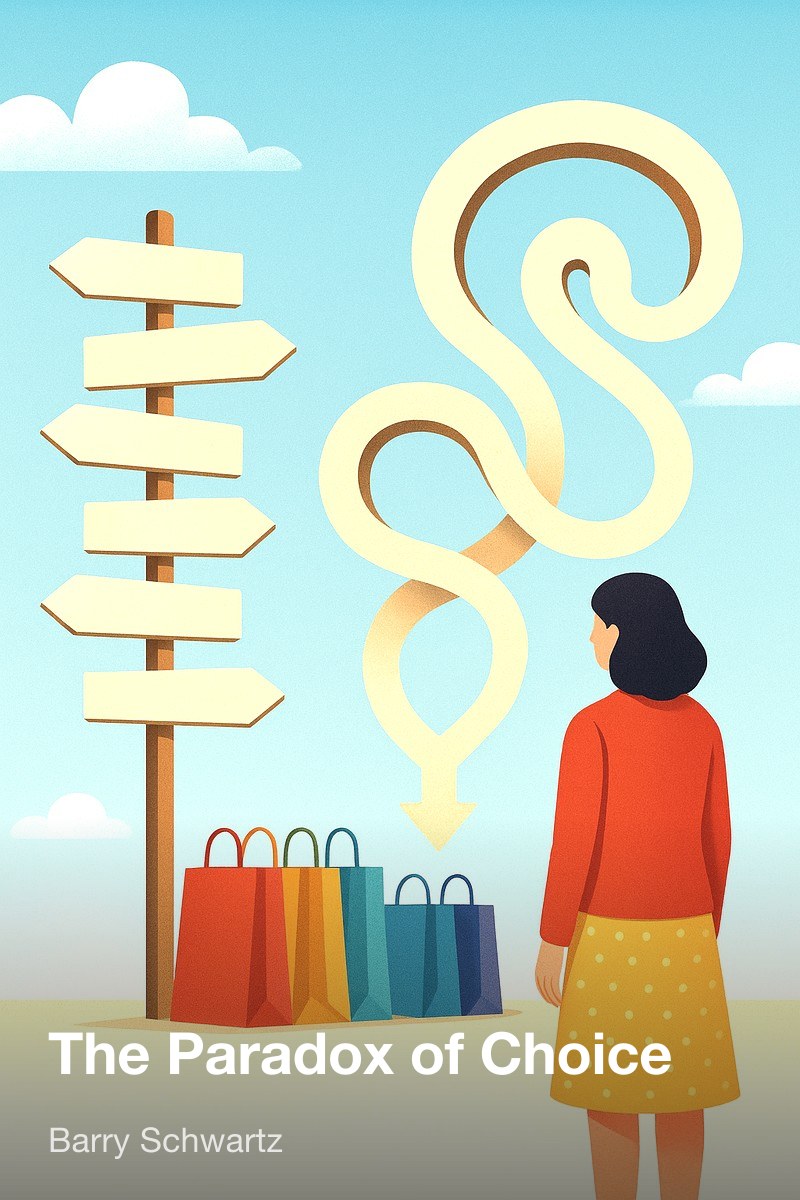
Barry Schwartz starts from a simple observation. Having options feels like freedom, and freedom is good. But somewhere along the way, the number of options we face crossed a line. Now we spend our days picking between dozens of nearly identical products, plans and paths, and it leaves us tired, anxious and unsure we chose well.
Schwartz doesn't argue against choice itself. He says plainly that a life with no choice at all makes people miserable. Autonomy matters. Being able to shape your own life matters. His point is that past a certain level, more options stop adding to your happiness and start taking it away. They crowd your day with small decisions that don't matter and drain the energy you need for the ones that do.
The book covers four things. It looks at the kinds of choices we make, how we make them, why so many choices make us suffer, and what we can do about it. His answer to the last question is not to wish choice away. It's to get better at deciding which choices deserve your attention and which ones you should settle quickly or skip.
Schwartz draws on psychology, economics and his own life. He has said that his own frustration as a shopper faced with a wall of options pushed him to write the book. The ideas leaned heavily on the work of Daniel Kahneman and Amos Tversky, the pair behind prospect theory and much of what we know about mental shortcuts and bias.
The book came out in 2004 and it has been argued over ever since. Some later researchers couldn't reproduce famous results Schwartz relied on, and critics at outlets like The Atlantic and the Financial Times said the case against too much choice wasn't backed by enough evidence. Schwartz has answered them. He admits his claim isn't universal and that more choice helps in some situations. He still holds that too much choice causes real trouble often enough to matter, and he points to a long list of studies that back him up.
Where the explosion of choice comes from
Schwartz gives two reasons why our options keep multiplying. First, market economies reward anyone who can offer one more variety, one more model, one more plan. Companies win by giving you more to pick from, so they do. Second, in the United States especially, independence and freedom are core values. Cutting back on options feels like giving up on the American way, so nobody pushes back.
The result is a world where choices have grown in number and in complexity. And we usually get little guidance on how to make them well.
He sorts the choices we face into three groups. Consumer choices are about things we buy. Complex choices are about services and systems with real consequences for our health, money and careers. Personal life choices are about how we live and who we are. Expanded choice shows up in all three.
Consumer choices
Consumer choices…