New users get 3 free summaries! Upgrade for unlimited access to 2,500+ book summaries.

Upgrade Now

Get the Sumizeit app

Book Summary

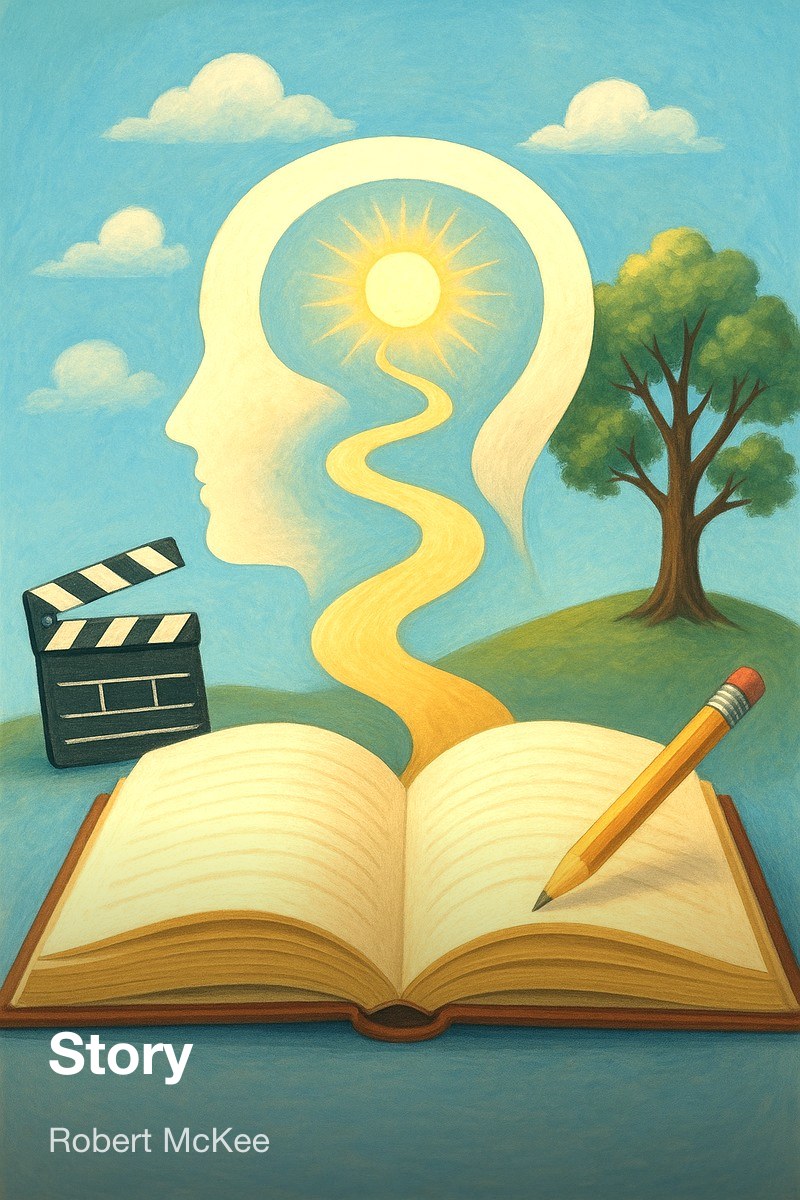
Story Book Summary

By Robert McKee


This Story Book Summary covers the key ideas, lessons, and takeaways in about 20 minutes.

20 min read Audio available
Strip away all the terminology and McKee's real argument is fairly simple. A story earns its emotional power the same way a person earns your trust, through consistent, connected choices that add up to something, not through random events, cleverness for its own sake, or ideas the writer never bothered to sharpen into something specific. Give an audience a character worth caring about, keep surprising that character and the audience together, make sure every surprise actually costs or gains something real, and keep raising what's at stake as the story goes, and you've built the machinery that makes people feel something. Do all of that in service of one sharp, specific idea about how the world works, instead of several vague ones, and that feeling turns into meaning the audience carries with them long after the story ends. That's really what separates a story people remember from one they simply sat through.

Helps with these goals

4.8

Stars

Average ratings on iOS and Google Play

100,000+

Users

On all platforms

6+

Years

Experience igniting personal growth

Want the complete 20-minute summary?

  • Full structured summary
  • Video Summary
  • Podcast Summary
  • Audio summary
  • Key takeaways
  • Exercises
  • Quiz
  • Highlights and notes
  • Ask the book with AI

Want a Free Weekly Read?

Get a free summary every week straight to your mailbox.

Preview the Story book summary

Below is a preview of Sumizeit’s comprehensive human-written summary of Story by Robert McKee. The full summary is 15-20 minutes long and covers the book’s key ideas in text, audio, visual, and video formats. Unlock the full 20 Minute Summary

Why do we care so much about what happens to people who don't exist? Robert McKee spent decades teaching screenwriters the answer to that question, and his book Story is the result. McKee argues that a great story isn't magic. It follows a logic you can study, break down, and learn to build yourself. He wrote the book mainly for screenwriters, but the ideas apply just as well to novels, plays, or the story you tell a friend about your terrible week.

This summary walks through McKee's core argument. First, what actually makes a story good, and why we're drawn to stories at all. Then the building blocks that give any scene its power. After that, the larger structure that holds a whole story together, from the first disruption to the final scene. And finally, the process McKee recommends for actually writing the thing, from a rough outline to a finished script.

What makes a story good

McKee starts by rejecting a common assumption. Most people think we watch movies and read novels to escape our lives. McKee disagrees. He says we return to stories again and again because we're hungry for meaning. We want to understand something true about how the world works, and a good story hands us that understanding in a way that feels emotionally real, not just intellectually correct.

That's why McKee insists every good story has to be true to life. He doesn't mean realistic in a literal sense. Finding Nemo is about a talking clownfish, which obviously isn't realistic. But the way Marlin, the father, reacts to his son being taken captures exactly how a parent who already lost someone would behave when the world threatens to take someone else. That emotional accuracy is what makes the story true, even inside a completely fantastical premise. If Marlin had shrugged off his son's kidnapping with a joke, the story would ring false no matter how funny the moment was on paper.

McKee even extends this to stories that seem to reject meaning altogether. A surreal film where characters melt into shapes and nothing follows logically still says something about life, namely that life itself might be absurd and without any single unifying meaning. Even that bleak conclusion counts as truth in McKee's framework.

It's worth noting that not everyone agrees truth works this way. The philosopher Friedrich Nietzsche argued that human beings can never actually grasp objective truth about existence. In his view, art doesn't reveal truth, it manufactures the comforting feeling that life has order and meaning when it doesn't. Oddly enough, Nietzsche would still end up somewhere close to McKee. He believed the illusion of meaning was worth creating anyway, because the alternative, a purely rational and clear eyed look at a meaningless universe, is bleak and useless. Following that logic, Nietzsche might actually have preferred something like Finding Nemo to a cold, nihilistic art film.


The full structured summary is available after upgrading

Want the complete 20-minute summary?

  • Full structured summary
  • Video Summary
  • Podcast Summary
  • Audio summary
  • Key takeaways
  • Exercises
  • Quiz
  • Highlights and notes
  • Ask the book with AI

Who should read Story?

Story is essential for screenwriters, novelists, and playwrights who want to understand the craft of narrative structure. It's also valuable for anyone who tells stories professionally—marketers, entrepreneurs, and communicators—because McKee's principles apply to any narrative that needs to move an audience emotionally. If you've ever wondered why some stories stick with you while others fade immediately after you finish them, this book offers concrete answers.

Why does Story matter?

In a world saturated with content, understanding what makes a story genuinely resonate has never been more valuable. Robert McKee's Story provides a rigorous framework for the emotional logic behind narrative, showing that powerful storytelling isn't magic or accident—it's a learnable craft. Whether you're creating films, writing books, or pitching ideas, the principles in this book help you cut through noise and create work that audiences actually care about.

What are the key themes in Story?

  • Story as a search for meaning, not escape
  • Emotional truth matters more than literal realism
  • Character transformation through escalating choices
  • Theme as a specific cause-and-effect statement about life
  • Structure as a tool for clarity, not limitation
  • The power of unexpected turns to drive engagement
  • Subtext as the bridge between what characters say and what they mean

Want the complete 20-minute summary?

  • Full structured summary
  • Video Summary
  • Podcast Summary
  • Audio summary
  • Key takeaways
  • Exercises
  • Quiz
  • Highlights and notes
  • Ask the book with AI

How can you apply ideas from Story?

  • Use McKee's three-step process—outline, treatment, final script—to organize your writing work and catch structural problems before investing time in dialogue and description
  • Test every scene by asking whether deleting it would create a visible hole in your story; if not, it's not load-bearing and should be cut
  • Define your controlling idea as a specific cause-and-effect statement about life rather than a vague topic, then test each scene against that statement to ensure it's working
  • Map out both surface text and subtext for each scene during the treatment phase, ensuring what characters say aligns believably with what they actually mean
  • Raise the stakes progressively through your story by forcing your protagonist to risk increasingly more of what they care about as obstacles mount
  • Identify your climax first, then work backward to ensure every earlier beat logically feeds toward that final moment
  • Pitch your story beat-by-beat to a real listener before writing full scenes, and adjust your outline based on where emotional impact actually lands

What common mistakes do readers make with Story?

  • Using surprise for its own sake—adding twists that contradict earlier story information or undo emotional bonds readers built, which feels manipulative rather than clever
  • Building scenes around vague themes like 'love' or 'courage' instead of specific cause-and-effect statements that actually guide scene construction and revision
  • Allowing characters to change without clear motivation from their own choices, making transformation feel arbitrary instead of earned through the story's logic
  • Treating subtext as something that happens by accident rather than something to map deliberately during treatment, resulting in dialogue that states exactly what characters mean instead of hinting at it

Sumizeit Exercises Apply what you've learned

Turn ideas from Story into action with a short guided reflection: identify the biggest takeaway, connect it to your life, and commit to one step you can take in the next 24 hours.

Unlock book-specific exercises with a Sumizeit membership

Unlock Exercises

What is the expert analysis of Story?

Overview

Story by Robert McKee stands as a seminal text in the realm of narrative craft, particularly within screenwriting but extending its influence to novelists, playwrights, and storytellers of all kinds. McKee, a distinguished educator and story analyst, distilled decades of teaching into this comprehensive guide, which has become a cornerstone for understanding the mechanics behind compelling storytelling. Published in 1997, the book’s significance lies not only in its detailed dissection of story elements but also in its practical approach that demystifies what many consider an elusive art. McKee’s work has shaped generations of writers and remains a vital reference in creative writing circles and film schools worldwide.

Core Thesis

At its heart, Story posits that great storytelling is not a product of inspiration alone but a craft governed by discernible principles and structures. McKee argues that stories resonate because they fulfill a deep human craving for meaning, offering emotional truths rather than mere escapism. He emphasizes that a story’s power derives from the interplay of a relatable protagonist, unexpected developments that challenge expectations, and consequential changes that matter to the audience. Central to his thesis is the idea that stories must be “true to life” emotionally, even if their premises are fantastical, and that a coherent, escalating structure culminating in a climactic payoff is essential. The book also champions the concept of a controlling idea—a precise thematic statement that guides the narrative and lends it coherence and depth.

Strengths

  • Systematic Breakdown of Story Elements: McKee’s meticulous categorization of beats, scenes, sequences, and acts provides writers with a clear, scalable framework to construct and analyze stories.
  • Emphasis on Emotional Truth: The insistence that stories must feel emotionally authentic, regardless of genre or realism, offers a nuanced understanding of narrative resonance.
  • Integration of Theory and Practice: The book balances philosophical insights about meaning with actionable advice on outlining, drafting, and revising, making it invaluable for practitioners.
  • Recognition of Story’s Dialectical Nature: Highlighting the tension between theme and anti-theme enriches the narrative by reflecting life’s complexity rather than simplistic moralizing.
  • Influence and Longevity: McKee’s work has profoundly shaped screenwriting pedagogy and remains relevant decades after publication, attesting to its foundational status.

Critiques & Counterarguments

  • Potential Overemphasis on Structure: McKee’s focus on a three-act structure and climactic payoff, while widely accepted in Western storytelling, may marginalize alternative narrative forms such as the kishotenketsu structure prevalent in East Asian traditions, which prioritize internal character development and non-climactic resolutions.
  • Risk of Formulaic Storytelling: Critics argue that rigid adherence to McKee’s framework can lead to mechanical or predictable narratives, potentially stifling creativity and innovation in favor of conventional plot mechanics.
  • Philosophical Assumptions about Truth: McKee’s notion of emotional truth contrasts with postmodern and nihilistic perspectives, such as Nietzsche’s skepticism about objective truth, which suggest that stories may function more as illusions or constructs rather than conveyors of any inherent meaning.
  • Limited Engagement with Diverse Narrative Traditions: The book’s primary orientation toward Hollywood-style storytelling may overlook or undervalue storytelling methods from oral traditions, experimental literature, or non-Western cultures that do not prioritize conflict-driven plots.
  • Empirical Evidence and Cognitive Science: While McKee references some research on reader empathy and surprise, his claims about emotional engagement and narrative impact could benefit from deeper integration with contemporary cognitive science and psychology, which sometimes reveal more complex or contradictory dynamics in how audiences process stories.

Who Should Read This

Story is essential reading for aspiring and professional screenwriters seeking a rigorous, practical guide to narrative construction. Its insights also benefit novelists, playwrights, and storytellers who wish to deepen their understanding of how to craft emotionally compelling and structurally sound stories. Beyond creators, educators in creative writing and film studies will find McKee’s framework a valuable teaching tool. However, readers interested in avant-garde, non-linear, or culturally diverse narrative forms may find the book’s approach somewhat prescriptive. Ultimately, Story is best suited for those who value a disciplined, craft-oriented approach to storytelling that privileges emotional truth and thematic clarity within a classical narrative paradigm.

Test yourself on Story 5 sample questions from the summary quiz

Try a few questions from the Story quiz. Unlock the full summary for the full quiz and answers that will help the ideas stick.

Question 1 of 5

According to McKee, why do people repeatedly return to stories?

Question 2 of 5

What does McKee mean when he says a story must be "true to life"?

Question 3 of 5

Which of the following is one of McKee's three ingredients that make an audience feel something?

Question 4 of 5

How does McKee define a "beat"?

Question 5 of 5

What additional requirement does McKee place on a beat for it to count as meaningful?

Frequently asked questions about the Story book summary

What is Story about?

Story by Robert McKee is a comprehensive guide to narrative structure and screenwriting craft. McKee argues that great stories aren't magic—they follow a learnable logic built on character, surprise, escalating stakes, and a sharp controlling idea. The book breaks down how beats build scenes, scenes build sequences, and sequences build complete stories, providing both theory about why stories move us and practical steps for writing one yourself.

Who should read Story?

Story is essential for screenwriters, novelists, and playwrights, but it's also valuable for anyone who needs to communicate through narrative—marketers, entrepreneurs, and presenters. McKee's principles apply to any form of storytelling, whether you're writing films, books, pitches, or even personal narratives. If you want to understand why some stories resonate while others don't, this book provides concrete answers.

What are the main takeaways from Story?

The core ideas are: stories succeed by delivering emotional truth, not literal realism; a protagonist's own choices must drive their transformation; every scene needs to create a surprise that genuinely changes something the audience cares about; and a story's power comes from consistently raising stakes while building toward one sharp, specific idea about life. McKee also provides a practical three-step writing process—outline, treatment, final script—that forces you to solve story problems before investing time in dialogue and description.

What does McKee mean by 'controlling idea'?

McKee's controlling idea is what most people call theme, but defined much more specifically. Instead of a vague word like 'family,' a controlling idea is a precise cause-and-effect statement about life, like 'children thrive when parents allow them to take risks.' This specificity matters because it gives you a tool to test whether each scene actually serves your story's meaning or just happens near the same topic.

How does McKee define a beat?

A beat is the smallest unit of story. It occurs when a character takes an action expecting one outcome, but the world responds unexpectedly, creating a new obstacle or revelation. In Finding Nemo, when Marlin yells at Nemo not to swim into open water intending to scare him back to safety, but Nemo instead swims farther out to prove his father wrong—that's a beat. The action didn't produce the expected result, so the story has somewhere new to go.

Why does McKee emphasize escalating stakes?

An audience naturally judges how much a character truly values something by how much they're willing to risk for it. If a protagonist faces consistently low-risk obstacles, the audience senses nothing important is actually on the line and checks out emotionally. By forcing your character to risk more and more of what they care about as the story progresses, you make their commitment believable and keep the emotional tension high.

What's the difference between outline, treatment, and script?

McKee's three-step process separates concerns. The outline maps every beat and value change without dialogue or description, forcing you to solve story problems at their essence. The treatment adds detail about what's happening beneath the surface (subtext) without yet writing actual dialogue. The final script adds dialogue and full scene description, which should flow naturally if the earlier stages did their job properly.

About Sumizeit

Sumizeit is a profitable Scomy LLC company based in Miami, Florida. It has been helping readers learn from nonfiction books for 7 years with expert-written summaries in text, audio, podcast, and video.

Want the complete 20-minute summary?

  • Full structured summary
  • Video Summary
  • Podcast Summary
  • Audio summary
  • Key takeaways
  • Exercises
  • Quiz
  • Highlights and notes
  • Ask the book with AI

Here's why readers love Sumizeit

Join thousands of learners getting smarter every day

"Great experience. Detailed summaries. Loved the gamification feature. Makes learning fun. Good customer service. I recommend Sumizeit to anyone. You'll learn a lot."

Chen, TrustPilot

"I always felt busy but still wanting to keep up with the book discussion in my friend group. This was a great supplement to help me keep reading the books I find fun while keeping up with important books."

Daniel, TrustPilot

"I love this website. Instead of scrolling social media, I find myself learning a lot. I use it everyday. I recommend this app for anyone who is too busy and wants to get up to speed with their favorite books."

Erica, TrustPilot

Story Book Summary PDF

Looking for a Story Book Summary PDF you can save and revisit offline? Our Story Book Summary PDF captures the book’s core ideas in a clean, printable format — the key frameworks, takeaways, and structure without the fluff. Download the Story Book Summary PDF when you want a reference you can annotate, share with your team, or review on the go. Get your Story Book Summary PDF from the download page below.

Download Story Book Summary PDF

People also liked these summaries

Readers who explored Story often enjoyed these titles next.

Browse all books →

Want the complete 20-minute summary?

  • Full structured summary
  • Video Summary
  • Podcast Summary
  • Audio summary
  • Key takeaways
  • Exercises
  • Quiz
  • Highlights and notes
  • Ask the book with AI


View Full Summary