


As an Amazon Associate, Sumizeit earns from qualifying purchases.
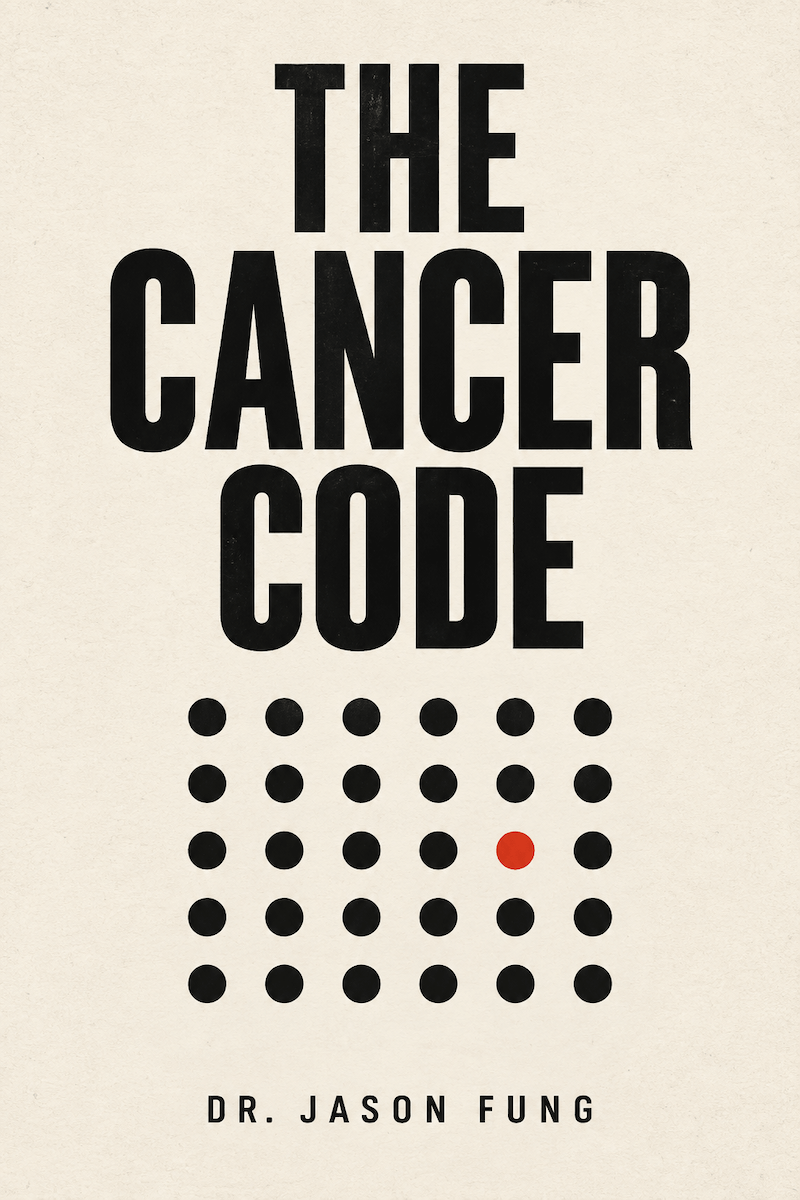
The Cancer Code Book Summary
This The Cancer Code Book Summary covers the key ideas, lessons, and takeaways in about 20 minutes.
Helps with these goals
Want the complete 20-minute summary?
- Full structured summary
- Video Summary
- Podcast Summary
- Audio summary
- Key takeaways
- Exercises
- Quiz
- Highlights and notes
- Ask the book with AI
What is in the The Cancer Code book summary?
Below is a preview of Sumizeit’s expert-written summary of The Cancer Code by Jason Fung. The full summary covers the book’s key ideas in text, audio, and video.
Cancer scares people more than almost any other disease, partly because it still kills so many of us and partly because it can feel random and unbeatable. Jason Fung wrote The Cancer Code to explain why cancer has been so hard to understand, let alone cure, and to walk readers through how scientific thinking about it has changed over time. He's a kidney doctor with a deep interest in metabolism and nutrition, and that background shows up throughout the book. He's less interested in cataloging every drug or every mutation and more interested in the big question underneath all of it. What is cancer, at its core, and why does the body turn against itself this way?
Fung structures the book around three different ways scientists have understood cancer across history. Each one isn't simply wrong and replaced by the next. Instead, each new way of thinking builds on the last, patching up its blind spots while keeping what worked. Walking through these three models in order gives you a surprisingly clear picture of both the history of cancer research and where the science stands today. Along the way, you'll see why cancer resisted a cure for thousands of years, why the genetic revolution of the last century didn't deliver the knockout blow everyone expected, and why a stranger, newer idea, that cancer behaves less like a broken machine and more like its own evolving organism, might be the thing that finally moves treatment forward.
Cancer as a growth that never stops
For most of human history, doctors understood cancer only by what they could see. Lumps. Tumors. A slow, grim decline that usually ended in death. This first way of thinking about cancer, the one that dominated medicine for thousands of years, is basically just a description of symptoms rather than an explanation of causes. Physicians going back to ancient Egypt noticed the tumors and recognized the pattern, but they had no idea what was actually happening inside the body.
One popular ancient theory blamed an imbalance of "black bile," a mysterious fluid believed to sicken the body when it built up in the wrong places. That theory turns out to be flat out wrong, since no such fluid exists, but it did contain a nugget of insight that took centuries to rediscover. The ancient Greeks who believed in it correctly sensed that cancer wasn't just a local problem confined to one lump of tissue. It was something wrong with the whole system. Once doctors abandoned the black bile idea, they lost that systemic perspective for almost two thousand years, focusing instead on the tumor itself as the entire problem.
That narrow focus shaped how doctors tried to treat the disease. If a tumor was the problem, then cutting it out or otherwise destroying it should be the solution. But because this approach never grappled with why the tumor showed up in the first place, treatment failed almost every time.
Want the complete 20-minute summary?
- Full structured summary
- Video Summary
- Podcast Summary
- Audio summary
- Key takeaways
- Exercises
- Quiz
- Highlights and notes
- Ask the book with AI
Who should read The Cancer Code?
The Cancer Code is for anyone seeking to understand cancer beyond surface-level explanations, whether you're concerned about personal risk, interested in the history of medical science, or curious about how our understanding of disease evolves. It's particularly valuable for readers who want to grasp why cancer has resisted cure for so long and what modern science is finally revealing about how it actually works.
Why does The Cancer Code matter?
Cancer remains one of humanity's deadliest and most feared diseases, yet our approach to fighting it has been based on incomplete models for centuries. The Cancer Code reveals how three fundamentally different scientific frameworks have shaped cancer research—each revealing new truths but also critical blind spots—and shows why the newest evolutionary understanding of cancer as an adapting organism, rather than simply a broken machine, could finally unlock more effective prevention and treatment strategies.
What are the key themes in The Cancer Code?
- Cancer as an evolving organism shaped by ancient survival traits
- The limitations of genetic mutation theory in explaining cancer's prevalence
- Prevention through carcinogen avoidance as the most effective weapon
- How evolutionary pressure selects for cancerous cell traits
- The role of growth factors and metabolic conditions in cancer development
- Cancer's ability to adapt and resist treatment through evolutionary competition
What are the key lessons from the The Cancer Code book summary?
Cancer is not one disease but a category of diseases
Despite arising from different cell types across the body, virtually all cancers share core traits like uncontrolled division, metastasis, and resource hijacking. Understanding cancer's shared characteristics across different forms reveals patterns that single-disease thinking would miss.
Telomerase allows cancer cells to cheat the natural cell death limit
Healthy cells have telomeres that shorten with each division until the cell dies; cancer cells produce telomerase enzyme to rebuild telomeres and achieve effective immortality. This fundamental difference points toward a specific therapeutic target with potential to halt cancer while sparing healthy tissue.
Genetic mutations alone cannot explain cancer's true prevalence
The random chance of multiple specific mutations combining to cause cancer should be statistically vanishingly rare, yet cancer is common enough to affect a huge portion of the population. This mathematical impossibility suggests genetics tell only part of cancer's story.
Carcinogens create evolutionary pressure that selects for cancer traits
Rather than mutations being purely random, carcinogens damage cells and create conditions where cells carrying cancerous survival traits are more likely to survive and reproduce. Evolution doesn't plan ahead; it simply rewards whatever traits allow survival in the current environment.
Cancer represents a reemergence of ancient single-celled survival strategies
Cancer cells behave with the self-focused logic of primitive organisms—survive, reproduce, consume resources, and adapt—as though ancient genetic programs buried in our DNA have reactivated under carcinogenic stress. These ancestral traits were never truly gone, just dormant.
Precision medicine based on targeting single mutations has largely failed
Despite decades and billions spent mapping cancer genomes and developing targeted drugs, fewer than 5 percent of cancer patients benefit from treatments targeting their specific mutations. Cancer's rapid mutations and genetic diversity within tumors allow it to evolve past single-target treatments.
Growth factors and nutrient abundance accelerate cancer development
When growth factors stay constantly activated by abundant nutrients, cancerous cells gain ideal conditions to multiply and accumulate additional mutations. Metabolic conditions reflecting Western diet and lifestyle may significantly increase cancer risk.
Tumor self-seeding breeds progressively more aggressive cancer cells
Cells shed from tumors face brutal odds in the bloodstream, but those that survive and return to seed the original tumor have been hardened by evolutionary pressure. This self-seeding process creates a competition that breeds increasingly dangerous, invasive cancer cells.
Cancer actively evokes signals encouraging its own metastatic spread
Tumors don't passively shed cells; they send chemical signals encouraging circulating cancer cells to return and reseed them, and self-seeded tumors grow faster and build blood vessels more effectively. Understanding this process opens specific targets for blocking cancer spread.
Prevention through carcinogen avoidance remains the most effective strategy
Removing exposure to known carcinogens has reliably reduced cancer rates far more effectively than treatments developed after cancer appears. Why treat a disease after it develops when removing the trigger prevents it entirely?
Scientific theories resist change even when anomalies contradict them
Researchers found nearly identical mutation patterns in people with cancer and people without, directly undercutting the somatic mutation theory, yet the theory persisted. Thomas Kuhn's work on science shows how established frameworks can survive contradictory evidence for decades.
Immunotherapy works by recognizing cancer as foreign rather than targeting specific mutations
By training the immune system to detect and destroy cancer cells regardless of their exact genetic makeup, immunotherapy should theoretically remain effective as cancer mutates and diversifies. This approach aligns with cancer's evolutionary nature better than mutation-specific targeting.
Adaptive therapy reverses conventional chemotherapy logic to turn cancer's nature against itself
Using lower, less frequent chemotherapy doses lets sensitive cancer cells outcompete resistant ones during treatment-free periods, then reintroduces drugs to knock them back down. This approach exploits cancer's own evolutionary competitive nature rather than creating selection pressure for resistance.
Ancient physicians correctly sensed cancer was systemic despite wrong explanations
Though the black bile theory was factually false, ancient Greek doctors correctly understood that cancer wasn't merely a local tumor problem but a whole-body disease. Later medicine lost this systemic perspective for nearly two thousand years.
The human body creates ten billion new cells daily, making cancer statistically inevitable
The sheer volume of cell division across a lifetime means that even vanishingly small per-cell risks of mutation compound into near-certainty. Cancer resembles a statistical Black Swan event—individually rare, yet nearly inevitable given enough opportunities.
Environmental carcinogens trigger cancer through damage-and-repair cycles
Every known carcinogen damages or kills cells, forcing the body to repair that damage. Most repairs are flawless, but repeated exposure means repeated opportunities for repair mistakes to introduce cancer-causing mutations.
Angiogenesis inhibitors represent an attempt to starve tumors of resources
Cancer hijacks the body's blood vessel growth to build its own nutrient supply line. Drugs designed to block angiogenesis can choke off tumors, though they typically require combination therapy rather than working as standalone cures.
Combined treatments outperform single approaches because cancers contain genetic diversity
Doctors discovered decades ago that combining multiple chemotherapy drugs or pairing chemotherapy with radiation dramatically outperformed any single treatment alone. This reflects cancer's genetic diversity and ability to adapt, whether or not the theory fully acknowledged it.
Junk DNA may contain suppressed ancestral genes that reactivate as cancer
Large stretches of apparently useless DNA include pseudogenes—broken copies of genes ancestors once relied on. Cancer might represent these suppressed ancestral survival programs reactivating rather than requiring completely new cancerous traits to evolve.
The three-phase progression shows how different evolutionary pressures shape cancer
Carcinogens create initial selection pressure, growth factors drive rapid reproduction and mutation accumulation, and metastasis competition breeds progressively more aggressive cells. Each phase represents a distinct evolutionary stage with different pressures and opportunities.
Want the complete 20-minute summary?
- Full structured summary
- Video Summary
- Podcast Summary
- Audio summary
- Key takeaways
- Exercises
- Quiz
- Highlights and notes
- Ask the book with AI
How can you apply ideas from The Cancer Code?
- Avoid known carcinogens—tobacco, asbestos, excessive UV exposure, and processed foods—since prevention remains more effective than any post-cancer treatment
- Monitor family cancer history to identify genetic risk factors and adjust personal prevention strategies accordingly, even though genetics account for only 5-20 percent of cases
- Evaluate dietary patterns, particularly processed foods and simple sugars, as chronic growth factor activation may create conditions favoring cancer development
- Understand that cancer treatment increasingly requires combination approaches rather than single interventions, reflecting cancer's genetic diversity and adaptive capacity
- Consider participating in clinical trials exploring immunotherapy and adaptive therapy, which represent fundamentally different treatment logic than traditional maximum-dose approaches
- Use routine health screenings and early detection when possible, since catching cancer at earlier evolutionary stages may present better treatment options before maximum adaptation occurs
- Stay informed about emerging cancer research rather than relying solely on conventional wisdom, as our understanding of cancer fundamentals is actively evolving
What common mistakes do readers make with The Cancer Code?
- Assuming cancer results primarily from bad luck or random mutations rather than recognizing how carcinogenic exposures create systematic evolutionary pressure for cancer traits
- Expecting that identifying a cancer's specific genetic mutations will automatically point toward an effective treatment, when cancer's rapid mutation means resistance often develops quickly
- Believing that stronger, more aggressive chemotherapy doses are always better, when lower, adaptive dosing can sometimes exploit cancer's own competitive nature more effectively
- Overlooking prevention as the most powerful cancer-fighting tool, instead focusing attention primarily on treatments needed after cancer develops
Sumizeit Exercises Apply what you've learned
Turn ideas from The Cancer Code into action with a short guided reflection: identify the biggest takeaway, connect it to your life, and commit to one step you can take in the next 24 hours.
What is the expert analysis of The Cancer Code?
Overview
The Cancer Code, authored by Jason Fung, a Canadian nephrologist with expertise in metabolic health and nutrition, offers a comprehensive and accessible exploration of cancer’s complex biology and history. Fung’s medical background, particularly his focus on metabolism and insulin regulation, uniquely informs the narrative, distinguishing this work within the crowded field of cancer literature. Published in 2020, the book synthesizes centuries of scientific progress and reframes cancer not merely as a disease of uncontrolled growth or genetic mutation but as an evolving, adaptive entity. Fung’s approach bridges historical perspectives with cutting-edge theories, making the book significant for readers seeking a nuanced, integrative understanding of cancer beyond conventional biomedical explanations.
Core Thesis
Fung’s central argument is that cancer is best understood as a living, evolving organism—an atavistic throwback to ancient single-celled life forms—that exploits evolutionary survival mechanisms encoded deep within our genome. This evolutionary model supersedes earlier frameworks that viewed cancer solely as unchecked cellular proliferation or as a consequence of random genetic mutations. Fung posits that cancer’s persistence and lethality arise from its ability to adapt rapidly, evade immune detection, and hijack the body’s resources, making it a dynamic adversary shaped by evolutionary pressures rather than a static malfunction. This perspective not only explains cancer’s ubiquity and resilience but also suggests that effective treatment and prevention require strategies aligned with its evolutionary nature, such as immunotherapy, adaptive therapy, and lifestyle modifications aimed at reducing carcinogen exposure and metabolic stress.
Strengths
- Historical and Scientific Integration: Fung skillfully traces the evolution of cancer theories from ancient symptom-based models to modern genetic and evolutionary frameworks, providing readers with a clear, layered understanding of how scientific knowledge has developed.
- Accessible Explanation of Complex Biology: The book demystifies intricate concepts like telomere biology, metastasis, angiogenesis, and somatic mutation theory without sacrificing scientific rigor, making it approachable for a broad audience.
- Innovative Evolutionary Perspective: By framing cancer as an evolving species, Fung offers a compelling explanation for its commonality, treatment resistance, and shared traits across diverse tissues and species, which traditional models struggle to fully address.
- Practical Implications: Fung connects theory to practice by discussing emerging treatments like immunotherapy and adaptive therapy, as well as lifestyle factors such as diet and carcinogen avoidance, providing actionable insights grounded in current research.
- Interdisciplinary Approach: The book’s synthesis of biology, evolutionary theory, clinical medicine, and public health creates a holistic narrative that transcends disciplinary boundaries.
Critiques & Counterarguments
- Overemphasis on Evolutionary Model: While the evolutionary framework is compelling, Fung may understate the continuing relevance and nuance of genetic mutation theory. Many cancer biologists argue that mutations remain central drivers, with evolutionary dynamics layered on top rather than replacing genetic causation.
- Limited Discussion of Molecular Heterogeneity: The book touches on intratumoral genetic diversity but could delve deeper into how epigenetic factors, tumor microenvironment, and immune modulation intricately influence cancer progression and treatment response.
- Diet and Metabolism Link Requires Caution: Fung’s emphasis on insulin, blood sugar, and diet as cancer risk factors reflects his clinical background but is not yet fully supported by consensus in oncology. Current evidence linking specific dietary patterns directly to cancer risk remains inconclusive outside of obesity-related mechanisms.
- Potential Oversimplification of Treatment Outcomes: The portrayal of immunotherapy and adaptive therapy as revolutionary may overstate their current efficacy, given that success rates vary widely by cancer type and many patients do not benefit. The complexity of clinical translation and patient heterogeneity warrants a more tempered optimism.
- Alternative Theories and Research: Competing models, such as the cancer stem cell hypothesis and the role of chronic inflammation, offer additional explanatory power for cancer’s behavior and resistance patterns, suggesting a multifactorial etiology that Fung’s evolutionary model complements but does not wholly supplant.
Who Should Read This
The Cancer Code is ideally suited for educated lay readers, medical professionals, and scholars interested in the intersection of oncology, evolutionary biology, and metabolism. It appeals to those seeking a big-picture understanding of cancer that moves beyond reductionist genetic explanations toward a dynamic, systems-level view. Readers who appreciate historical context, scientific synthesis, and thoughtful discussion of emerging therapies will find Fung’s work both enlightening and provocative. Additionally, individuals curious about the metabolic and lifestyle dimensions of cancer risk may gain valuable perspectives, though they should supplement this book with more specialized oncology literature for clinical guidance.
Frequently asked questions about the The Cancer Code book summary
What is The Cancer Code about?
The Cancer Code by Jason Fung traces how scientific understanding of cancer has evolved through three major frameworks—viewing it as uncontrolled growth, then as genetic mutation, and finally as an evolving organism shaped by ancient survival traits. The book explains why each model revealed important truths while also leaving critical questions unanswered, and argues that understanding cancer as an adaptive species reshapes how we should prevent and treat it.
Who should read The Cancer Code?
Anyone concerned about cancer risk, interested in medical history and how scientific understanding evolves, or curious about why cancer has proven so difficult to cure should read this book. It's particularly valuable for people seeking to understand cancer prevention and those interested in emerging treatment approaches like immunotherapy and adaptive therapy.
What are the main takeaways from The Cancer Code?
The Cancer Code's central takeaways are that cancer is best understood as an evolving organism using ancient survival strategies rather than simply a broken machine or random mutation; that preventing carcinogenic exposure remains the most effective cancer-fighting tool; and that future treatments will likely succeed by working with our biological defenses and cancer's evolutionary weaknesses rather than through brute-force approaches that inadvertently create selection pressure for resistance.
Why has cancer been so hard to cure?
Cancer has resisted cure because earlier medical models misunderstood its fundamental nature. Viewing it only as a local growth led to treatments addressing symptoms rather than causes. The genetic mutation model, while partially correct, failed to explain why cancer is so common or why targeting single mutations so often fails. Understanding cancer as an evolving organism that rapidly adapts to treatment pressure reveals why previous approaches were inherently limited and points toward strategies that might actually work.
What role does evolution play in cancer according to this book?
Fung argues that cancer cells express ancient evolutionary survival traits—originally developed by single-celled organisms—that get reactivated under carcinogenic stress. Carcinogens create evolutionary pressure favoring cells with cancer traits; growth factors provide resources accelerating reproduction and mutation diversity; and metastasis competition breeds progressively more aggressive cells. Cancer isn't random mutation but systematic selection for traits advantageous in the carcinogen-exposed environment.
How much does genetics actually contribute to cancer risk?
Fung puts genetic contribution to cancer at around 5 percent of cases, though other sources estimate 5-20 percent depending on cancer type. While inherited mutations can predispose some people to higher risk, the vast majority of cancer is driven by environmental exposures and metabolic conditions rather than pure genetic inheritance. Knowing your family history matters, but carcinogen avoidance and lifestyle factors matter far more for most people.
What is adaptive therapy and how does it differ from standard chemotherapy?
Adaptive therapy uses lower, less frequent chemotherapy doses aimed at keeping cancer stable rather than trying to eliminate it completely. Unlike standard maximum-dose chemotherapy that creates evolutionary pressure favoring drug-resistant cells, adaptive therapy lets sensitive cells outcompete resistant ones during treatment breaks, then reintroduces drugs strategically. This approach exploits cancer's own competitive nature and evolutionary logic rather than playing into its adaptive strengths.
How does immunotherapy fit with the evolutionary understanding of cancer?
Immunotherapy works by activating the body's immune system to recognize and destroy cancer cells rather than targeting specific genetic mutations. Because it relies on broad immune recognition rather than single-mutation targeting, it should theoretically remain effective even as cancer cells mutate and diversify. This approach aligns better with cancer's evolutionary nature than mutation-specific treatments that cancer readily adapts around.
About Sumizeit
Sumizeit is a profitable Scomy LLC company based in Miami, Florida. It has been helping readers learn from nonfiction books for 7 years with expert-written summaries in text, audio, podcast, and video.
Want the complete 20-minute summary?
- Full structured summary
- Video Summary
- Podcast Summary
- Audio summary
- Key takeaways
- Exercises
- Quiz
- Highlights and notes
- Ask the book with AI
Here's why readers love Sumizeit
Join thousands of learners getting smarter every day
"Great experience. Detailed summaries. Loved the gamification feature. Makes learning fun. Good customer service. I recommend Sumizeit to anyone. You'll learn a lot."
"I always felt busy but still wanting to keep up with the book discussion in my friend group. This was a great supplement to help me keep reading the books I find fun while keeping up with important books."
"I love this website. Instead of scrolling social media, I find myself learning a lot. I use it everyday. I recommend this app for anyone who is too busy and wants to get up to speed with their favorite books."
The Cancer Code Book Summary PDF
Looking for a The Cancer Code Book Summary PDF you can save and revisit offline? Our The Cancer Code Book Summary PDF captures the book’s core ideas in a clean, printable format — the key frameworks, takeaways, and structure without the fluff. Download the The Cancer Code Book Summary PDF when you want a reference you can annotate, share with your team, or review on the go. Get your The Cancer Code Book Summary PDF from the download page below.
Download The Cancer Code Book Summary PDFPeople also liked these summaries
Readers who explored The Cancer Code often enjoyed these titles next.

Want the complete 20-minute summary?
- Full structured summary
- Video Summary
- Podcast Summary
- Audio summary
- Key takeaways
- Exercises
- Quiz
- Highlights and notes
- Ask the book with AI
Featured Book Titles
Popular Book Summaries at sumizeit, leading book summary app