


As an Amazon Associate, Sumizeit earns from qualifying purchases.
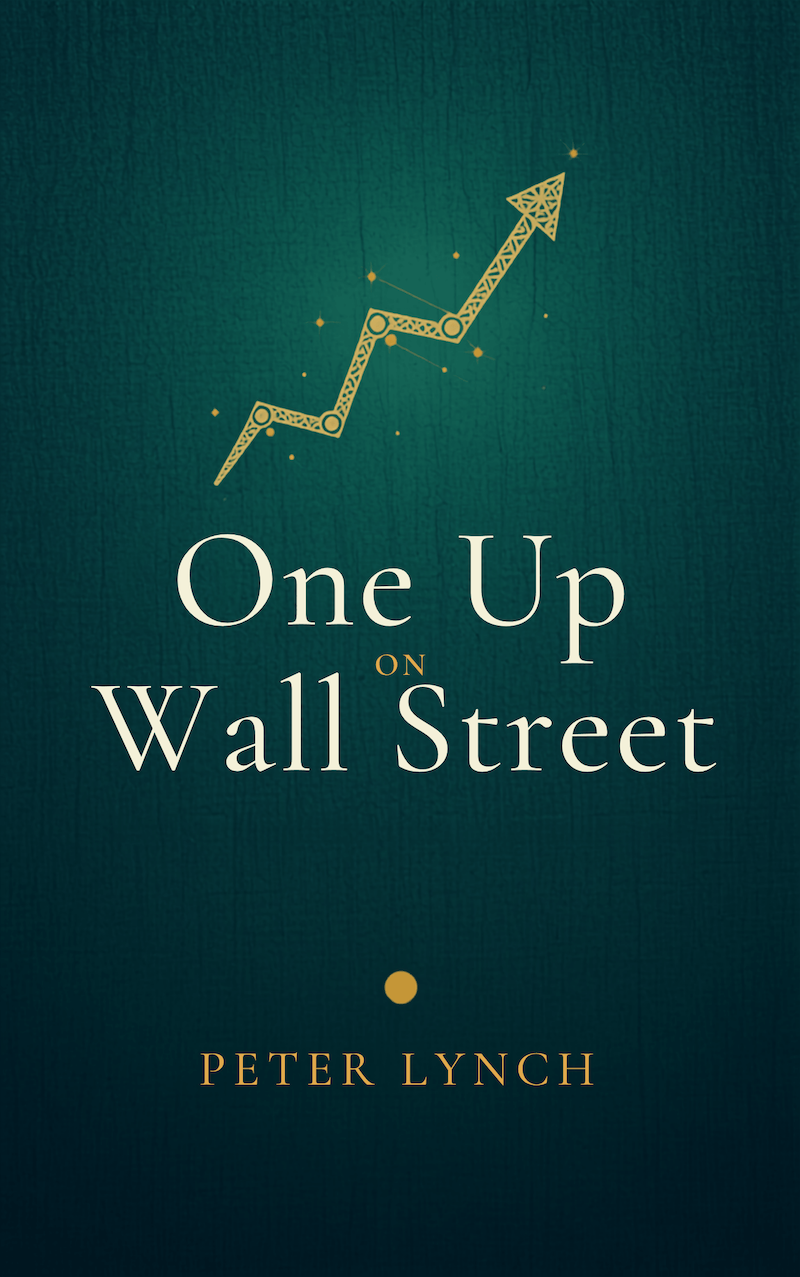
One Up on Wall Street Book Summary
This One Up on Wall Street Book Summary covers the key ideas, lessons, and takeaways in about 20 minutes.
Helps with these goals
Want the complete 20-minute summary?
- Full structured summary
- Video Summary
- Podcast Summary
- Audio summary
- Key takeaways
- Exercises
- Quiz
- Highlights and notes
- Ask the book with AI
What is in the One Up on Wall Street book summary?
Below is a preview of Sumizeit’s expert-written summary of One Up on Wall Street by Peter Lynch. The full summary covers the book’s key ideas in text, audio, and video.
Peter Lynch spent over a decade running Fidelity's Magellan Fund and turned it into one of the best performing mutual funds of its era. In "One Up on Wall Street," he makes a claim that sounds almost backwards. He argues that ordinary people, armed with nothing more than curiosity and a willingness to pay attention, often beat the professionals at their own game. You already carry the raw material for smart investing in your daily routine. You just have to notice it. Lynch's case rests on a simple observation. Professional money managers work inside a system that slows them down and boxes them in. Ordinary investors don't carry that baggage. Take timing. A fund manager usually waits until other investors and firms have already validated a stock before buying in. By the time a professional acts, the cheap early opportunity is gone. You don't answer to a committee, so you can act the moment you spot something promising. Then there's the incentive problem. A financial advisor who swings for the fences and misses risks their career. Playing it safe with established, well known companies protects their reputation even if it caps their upside. Many firms also spread gains evenly across client accounts so nobody feels shortchanged, which flattens returns for everyone. When you hand your money to a firm, you're often buying moderate, unremarkable performance by design. Firms also face real restrictions. Some won't touch companies with unions. Others avoid entire industries for policy reasons that have nothing to do with the numbers. Securities regulators add another layer of rules on top of that. All of this narrows the list of companies a professional will even consider, regardless of how good the opportunity looks. Hedge funds sidestep some of these problems, which is part of why they grew so fast through the 1990s and early 2000s. Because they only accept wealthy, "sophisticated" investors, hedge funds face far fewer restrictions than mutual funds. Managers can chase riskier, more aggressive strategies, and their reputations depend on pulling off smart bets rather than avoiding embarrassing ones. Many staff up with PhDs and cultivate deep networks of contacts. That said, hedge funds remain out of reach for most people, and public trust in them has taken a hit after several insider trading scandals. None of this means professionals are incompetent. It means the structure they operate inside works against speed and against big swings. You don't have that structure holding you back. Your other edge is firsthand knowledge. You use products and services every day, at work and at home, long before most analysts notice them. If you've ever loved a store, relied on a piece of software, or watched a company's customer service quietly get better, you're gathering research that no spreadsheet can replicate. And because you answer to no one, you can act on a small, promising company the moment you notice it, well before Wall Street catches on.
Six Truths to Accept Before You Buy a Single Share
Lynch lays out…
Want the complete 20-minute summary?
- Full structured summary
- Video Summary
- Podcast Summary
- Audio summary
- Key takeaways
- Exercises
- Quiz
- Highlights and notes
- Ask the book with AI
Who should read One Up on Wall Street?
One Up on Wall Street is for individual investors who want to compete with Wall Street professionals without requiring specialized finance training or advanced degrees. If you're curious about the companies in your daily life and willing to do modest research before investing, this book shows you how to turn that advantage into real returns. It's especially valuable for people who feel intimidated by investing jargon or who believe the stock market is rigged against ordinary people.
Why does One Up on Wall Street matter?
Peter Lynch's core argument—that everyday people can outperform professional money managers—remains relevant in an age of algorithmic trading and complex financial instruments. The book cuts through the noise of market timing obsession and hot tips to offer a practical, repeatable system based on what you already know. In today's noisy financial media landscape, Lynch's emphasis on independent thinking and thorough homework before investing provides a refreshing counterweight to herd behavior and social media-driven investment fads.
What are the key themes in One Up on Wall Street?
- Ordinary investors have structural advantages over institutional professionals
- Real investing begins with understanding your own daily life and the companies within it
- Financial discipline and patience matter more than market prediction
- Different stock types require different evaluation criteria and time horizons
- Thorough homework on a few stocks beats casual attention to many
- Your incentives as an individual investor differ from those of Wall Street firms
What are the key lessons from the One Up on Wall Street book summary?
Individual investors operate without the structural constraints that slow professionals
Fund managers must wait for validation from committees, face reputational risks, and navigate regulatory restrictions. You can act immediately on promising opportunities without those barriers.
Your firsthand knowledge of products and companies is a genuine research advantage
Loving a store, relying on software, or noticing improved customer service gives you insights analysts miss because you're gathering real-world data before Wall Street notices.
Accept that investing carries real risk before you buy your first share
Some years you will lose money in stocks. If that possibility keeps you awake at night, the stock market isn't the right place for your savings, and accepting this upfront helps you avoid panic selling.
Hunt for tenbaggers—stocks that return ten times your investment
One massive winner can offset several mediocre picks and transform your overall returns. Lynch believed you'd encounter two or three tenbagger candidates yearly just by paying attention to your life.
Only invest money you can afford to lose without changing your lifestyle
Stocks are genuinely unpredictable over months or a year, so commit only discretionary funds after covering necessities and wants through a spending framework like the 50/30/20 guideline.
Judge the company, not the market's emotional state
Broad market swings are nearly impossible to predict consistently, so focus on whether the business fundamentals remain sound rather than obsessing over where overall indices sit this week.
Understand that different stock types behave differently and require different expectations
Slow growers, dependables, fast growers, cyclicals, turnarounds, and asset plays each follow distinct patterns. Knowing which category you're buying into shapes what data matters and what returns are realistic.
Companies with boring names often stay cheap longer than they deserve
Unglamorous or off-putting company names tend to fly under investor radar, creating opportunities before Wall Street catches on to the underlying quality.
Look for recently spun-off companies and those in flat-growth industries
Spin-offs often launch in solid financial shape, while well-run companies in boring, no-growth industries face less competition for their market share and often thrive as a result.
The price-to-earnings ratio is your most useful single metric for valuation
Dividing stock price by earnings per share roughly shows how many years of earnings would pay back your investment. Context matters more than the raw number—compare to company history and peers.
Prioritize asset growth and debt reduction over flashy metrics
You want to see assets growing over time while debt shrinks, with the company owning more than it owes. Subtract liabilities from assets; a positive number is healthy, a negative number is a warning flag.
Dividends signal different things depending on the company's growth stage
Fast growers often skip dividends to reinvest in expansion, while mature companies pay them regularly. A lack of dividends isn't automatically bad—it depends on whether retained earnings fuel real growth or wasteful spending.
Special assets like brands, patents, and real estate can justify prices above raw earnings
Look for hidden value in natural resources, recognizable brands, valuable real estate, drug patents, broadcast licenses, or favorable tax treatment that make a stock worth more than earnings alone suggest.
Beware of companies on acquisition sprees, especially large ones buying unrelated businesses
Firms frequently overpay for acquisitions or fail to understand what they just bought. Most announced mergers fall apart before closing, and acquisition-focused companies rarely benefit shareholders.
Articulate your investment thesis out loud before committing money
Forcing yourself to explain in two minutes exactly why a company deserves your money either confirms your conviction or exposes flawed logic that gut feeling alone would have hidden.
Hold between three and ten stocks to balance diversification with focused attention
More positions raise your odds of landing a tenbagger and let you shift money as circumstances change. Fewer positions let you maintain deeper understanding of each holding.
Rebalance as circumstances shift rather than locking in one allocation forever
If you believe a cyclical stock has peaked, sell it and rotate into another company closer to cycle bottom. Periodic adjustment beats rigid allocation.
Two windows typically offer the best buying opportunities: year-end selling and market downturns
Tax-driven selling in December and fear-driven dumping during bear markets create price depressions. Your instinct to sell with the crowd is exactly when Lynch recommends buying instead.
Heavy media attention often signals a stock is getting ahead of fundamentals
Press coverage draws waves of new investors that can push prices beyond what the business actually supports, making it a potential warning signal for taking profits.
Trust your own research over outside noise and vague market sayings
Don't sell because a pundit predicts trouble or buy because conventional wisdom says markets always recover. Base decisions on what the specific company is actually worth and whether your original thesis holds.
Want the complete 20-minute summary?
- Full structured summary
- Video Summary
- Podcast Summary
- Audio summary
- Key takeaways
- Exercises
- Quiz
- Highlights and notes
- Ask the book with AI
How can you apply ideas from One Up on Wall Street?
- Start a watchlist of companies from your daily life—stores you frequent, software you use, products you love—and track their financial performance for months before buying
- Calculate the P/E ratio for any stock you're considering and compare it against its own history and industry competitors rather than judging the number in isolation
- Document a two-minute investment thesis for each stock you buy, then revisit it quarterly to confirm the underlying story still holds up
- Use year-end tax-loss selling and market downturns as deliberate buying windows rather than panic-selling triggers
- Build a portfolio of three to ten stocks you genuinely understand, organized by stock type, with allocation matched to your personal risk tolerance
- Automate recurring investments on a schedule while maintaining quarterly check-ins to rebalance based on changing circumstances
- Screen out companies you don't understand, hot stocks, serial acquirers, and single-customer dependents before doing deeper homework
- Review inventory levels, acquisition history, share buybacks, and insider stock purchases alongside traditional financial metrics to build a fuller picture
What common mistakes do readers make with One Up on Wall Street?
- Buying stocks because you like the product without doing financial homework on the company's actual earnings, debt, and competitive position
- Selling out of fear during market downturns instead of using depressed prices as buying opportunities for companies whose fundamentals remain sound
- Attempting to time the overall market rather than focusing on individual companies, which leads to buying high when optimism peaks and selling low when fear spreads
- Holding too many stocks so that you lack genuine understanding of any of them, or holding too few so that one loss cripples your portfolio
Sumizeit Exercises Apply what you've learned
Turn ideas from One Up on Wall Street into action with a short guided reflection: identify the biggest takeaway, connect it to your life, and commit to one step you can take in the next 24 hours.
What is the expert analysis of One Up on Wall Street?
Overview
One Up on Wall Street is a seminal work in investment literature authored by Peter Lynch, a legendary fund manager who helmed Fidelity's Magellan Fund from 1977 to 1990. Under his stewardship, the fund achieved extraordinary returns, setting a benchmark in mutual fund performance. This book distills Lynch’s investment philosophy into accessible guidance for everyday investors, challenging the conventional wisdom that professional money managers inherently hold the upper hand. Its significance lies in democratizing investment strategy, empowering individual investors to leverage their unique insights derived from daily life and consumer experience.
Core Thesis
Lynch’s central argument is that ordinary investors possess a distinct advantage over professionals due to their freedom from institutional constraints and their proximity to firsthand knowledge. Unlike fund managers bound by regulatory restrictions, committee oversight, and risk-averse incentives, individual investors can act swiftly on observations gleaned from their personal consumption and work environments. Lynch posits that by paying attention to the products and services one encounters daily, and by conducting disciplined but straightforward financial analysis, investors can identify undervalued stocks before Wall Street recognizes their potential. This approach, combined with patience and a long-term horizon, can yield superior returns.
Strengths
- Practical Accessibility: Lynch’s writing demystifies stock investing, making it approachable for non-professionals without sacrificing analytical rigor.
- Emphasis on Individual Insight: The book champions the value of personal experience as a legitimate research tool, a perspective that resonates with behavioral finance insights about information asymmetry.
- Clear Framework: The categorization of stocks into six types provides a useful heuristic for investors to tailor their research and expectations according to company characteristics and growth profiles.
- Balanced Realism: Lynch candidly acknowledges market risks and the inevitability of losses, fostering a mindset of patience and long-term commitment rather than speculative frenzy.
- Timeless Principles: Despite being written decades ago, many of Lynch’s core principles—such as focusing on fundamentals, avoiding herd mentality, and understanding what you invest in—remain foundational in contemporary investment thought.
Critiques & Counterarguments
- Oversimplification of Market Dynamics: Lynch’s thesis somewhat underestimates the complexity and efficiency of modern markets, where information travels rapidly and retail investors often compete with sophisticated algorithms and institutional research.
- Limited Consideration of Behavioral Biases: While Lynch encourages personal insight, he does not deeply address cognitive biases that can mislead individual investors, such as overconfidence or confirmation bias, which behavioral finance research highlights as pervasive obstacles.
- Changing Market Landscape: The book predates the rise of passive investing, ETFs, and high-frequency trading, which have transformed market structures and may limit the advantages Lynch describes for individual stock picking.
- Valuation Challenges: Critics from the Benjamin Graham school argue that personal affinity for a product should never supersede rigorous valuation metrics. While Lynch acknowledges this, some contend his approach risks emotional investing without sufficient quantitative discipline.
- Real-World Evidence on Professional Performance: Empirical studies often show that professional fund managers, despite constraints, can outperform retail investors due to superior resources and risk management, challenging the notion that individual investors consistently hold an edge.
Who Should Read This
One Up on Wall Street is ideal for individual investors who seek a grounded, commonsense approach to stock picking without requiring advanced financial expertise. It appeals to curious readers who want to leverage their everyday experiences into investment opportunities and are willing to commit time to disciplined research and long-term portfolio management. Additionally, it serves as a valuable primer for those intimidated by Wall Street jargon and institutional investing, offering a philosophy that balances optimism with caution. However, readers should supplement Lynch’s insights with contemporary market knowledge and an awareness of behavioral pitfalls to navigate today’s complex financial environment effectively.
Frequently asked questions about the One Up on Wall Street book summary
What is One Up on Wall Street about?
One Up on Wall Street by Peter Lynch argues that ordinary investors can outperform Wall Street professionals by paying attention to companies in their daily lives and doing basic financial homework. Lynch shows how individual investors enjoy structural advantages over institutional fund managers—speed, freedom from bureaucracy, and firsthand knowledge of products—that professionals can't access. The book provides practical frameworks for evaluating stocks, building a portfolio, and knowing when to buy and sell.
Who should read One Up on Wall Street?
This book is ideal for individual investors who want to build wealth through stocks but feel intimidated by financial jargon or believe the market is rigged against them. It's especially valuable for curious people who are already paying attention to companies they use, who have some discretionary income to invest, and who are willing to do modest research before committing money. Lynch shows that you don't need an MBA or advanced finance training to make smart investment decisions.
What are the main takeaways from One Up on Wall Street?
The main takeaways are: ordinary people can outperform professionals using everyday curiosity and discipline; look for investment opportunities in companies already woven into your daily life; evaluate stocks methodically using metrics like P/E ratio, assets, and debt; hold three to ten stocks you genuinely understand rather than chasing hot tips; and buy during downturns while others panic instead of trying to predict market movements. Lynch emphasizes that patience, thorough homework, and independent thinking beat market timing and herd behavior.
What is a tenbagger and why does it matter?
A tenbagger is a stock that returns ten times your initial investment. Lynch considers tenbaggers crucial because one huge winner can offset several mediocre picks and dramatically transform your overall portfolio returns. He estimated you'd encounter two or three tenbagger candidates yearly just by paying attention to companies in your daily life, making disciplined research worth the effort even if most of your picks are merely average.
How do you know when to sell a stock according to Lynch?
Lynch recommends selling when the underlying story has genuinely changed—not when you're scared during a downturn or when a pundit predicts trouble. One warning signal is heavy media attention, which often signals a stock has gotten ahead of its fundamentals. Lynch's biggest regret was selling winners too early based on outside advice; he advocates trusting your own research and holding quality companies through market noise.
What are the six stock types Lynch describes?
Lynch categorizes stocks into slow growers (mature, expanded as far as they'll go), dependables or stalwarts (large, stable, growing moderately), fast growers (small, expanding at 20-25% yearly or more), cyclicals (rising and falling with economic cycles), turnarounds or underdogs (beaten down companies due for recovery), and asset plays or hidden treasures (companies sitting on undervalued resources). Each type requires different evaluation criteria and offers different risk-reward profiles.
What does Lynch say about professional money managers and why individual investors can beat them?
Lynch argues that professional fund managers operate inside systems that slow them down: they need committee approval, face reputational risks if they gamble and lose, navigate regulatory restrictions, and often spread gains evenly across accounts to keep all clients happy. Individual investors have no such constraints—you can act immediately on opportunities, aren't punished for small losses, and can concentrate in holdings you truly understand. This structural advantage lets ordinary people outperform despite professionals having more resources.
About Sumizeit
Sumizeit is a profitable Scomy LLC company based in Miami, Florida. It has been helping readers learn from nonfiction books for 7 years with expert-written summaries in text, audio, podcast, and video.
Want the complete 20-minute summary?
- Full structured summary
- Video Summary
- Podcast Summary
- Audio summary
- Key takeaways
- Exercises
- Quiz
- Highlights and notes
- Ask the book with AI
Here's why readers love Sumizeit
Join thousands of learners getting smarter every day
"Great experience. Detailed summaries. Loved the gamification feature. Makes learning fun. Good customer service. I recommend Sumizeit to anyone. You'll learn a lot."
"I always felt busy but still wanting to keep up with the book discussion in my friend group. This was a great supplement to help me keep reading the books I find fun while keeping up with important books."
"I love this website. Instead of scrolling social media, I find myself learning a lot. I use it everyday. I recommend this app for anyone who is too busy and wants to get up to speed with their favorite books."
One Up on Wall Street Book Summary PDF
Looking for a One Up on Wall Street Book Summary PDF you can save and revisit offline? Our One Up on Wall Street Book Summary PDF captures the book’s core ideas in a clean, printable format — the key frameworks, takeaways, and structure without the fluff. Download the One Up on Wall Street Book Summary PDF when you want a reference you can annotate, share with your team, or review on the go. Get your One Up on Wall Street Book Summary PDF from the download page below.
Download One Up on Wall Street Book Summary PDFPeople also liked these summaries
Readers who explored One Up on Wall Street often enjoyed these titles next.


Want the complete 20-minute summary?
- Full structured summary
- Video Summary
- Podcast Summary
- Audio summary
- Key takeaways
- Exercises
- Quiz
- Highlights and notes
- Ask the book with AI
Featured Book Titles
Popular Book Summaries at sumizeit, leading book summary app
