Question 1 of 5
What single reframe does Yung Pueblo say changes everything about how we approach relationships?
The summary's main takeaway is that love is a practice you commit to, rewarded by skill and punished by neglect.


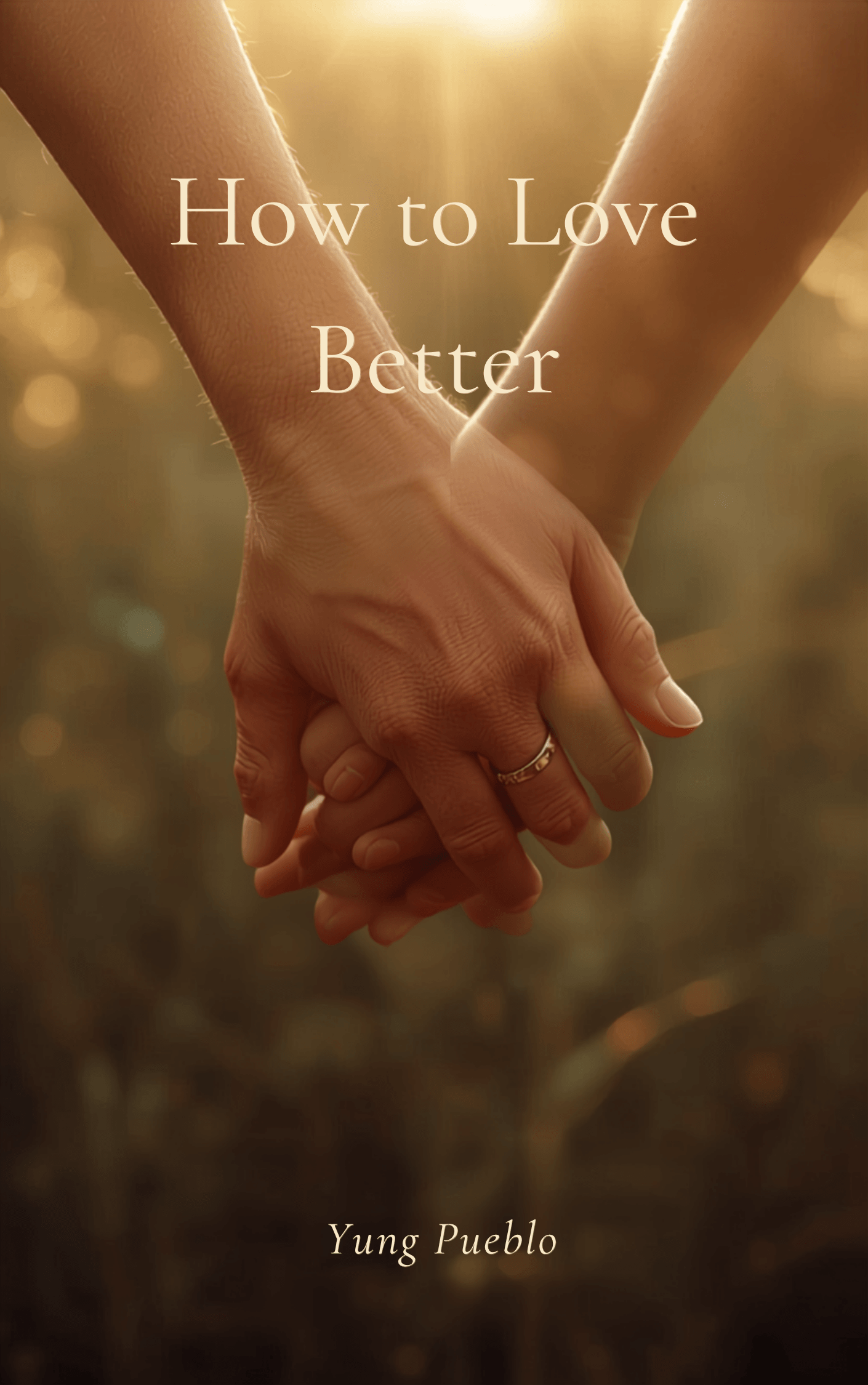
Prefer the print book? Buy on Amazon
As an Amazon Associate, Sumizeit earns from qualifying purchases.
This How to Love Better Book Summary covers the key ideas, lessons, and takeaways in about 20 minutes.
Helps with these goals
Want a Free Weekly Read?
Get a free summary every week straight to your mailbox.
Below is a preview of Sumizeit’s comprehensive human-written summary of How to Love Better by Yung Pueblo. The full summary is 15-20 minutes long and covers the book’s key ideas in text, audio, visual, and video formats. Unlock the full 20 Minute Summary
Most of us grow up believing love arrives on its own. You meet someone, sparks fly, and if the feeling is strong enough the relationship takes care of itself. Yung Pueblo thinks that belief wrecks more couples than almost anything else. In How to Love Better, he argues that affection is only the starting material. What you build with it depends entirely on skills you either develop or ignore. His point is blunt. Caring about someone is easy. Caring for them well takes work you have to do on purpose, over years, usually when you least feel like it. The couples who stay happy for decades are not the ones who felt the strongest attraction at the beginning. They are the ones who treated love as a craft and kept practicing. That framing changes what a relationship problem even means. If love is a feeling you either have or lose, then every rough patch is evidence something died. If love is a practice, a rough patch just means you hit the edge of your current skill. You can learn past it. Pueblo spends the whole book showing you where those edges usually sit and what to do when you find one. He also refuses the expert label. He spent more than ten years practicing Vipassana meditation, and the self awareness that came out of it is what saved his own marriage. He writes as someone who nearly lost the thing he wanted most and had to rebuild himself to keep it. That perspective runs through every chapter. He is not handing down rules from above. He is telling you what worked when he was in trouble.
Pueblo boils the foundation down to four elements. Honesty, trust, care, and balance. Miss one and the whole structure wobbles, no matter how good the other three look from outside. Honesty comes first because nothing else works without it. You cannot be understood by someone who does not know what is actually going on inside you. Pueblo pushes you to say the true thing even when it costs you something, and to say it kindly, and then to make room for your partner to do the same without punishment. That second half gets skipped a lot. Plenty of people demand honesty and then react badly enough that their partner learns to edit. Once editing starts, you are managing a version of each other instead of knowing each other. Trust grows differently. It does not arrive in one big gesture. It accumulates through hundreds of small moments where you did what you said you would do, showed up when things got hard, listened without redirecting the conversation to yourself, and accepted your partner without trying to file down the parts you find inconvenient. When trust is solid, people share their fears. When it is thin, they protect themselves, and protection is the opposite of intimacy.
How to Love Better is for anyone in a committed relationship who wants to move beyond the myth that love should be effortless. It speaks especially to couples who feel stuck in conflict, take each other for granted, or sense they're missing something despite caring deeply. If you're willing to see your relationship as a craft to develop rather than a feeling to manage, this book offers a practical path forward.
Most relationship advice treats love as either a spark you have or lose, leaving couples helpless when difficulties arise. Yung Pueblo reframes love as a learnable practice with specific skills—honesty, trust, attunement, and conflict awareness—that couples can develop intentionally. This perspective matters because it shifts responsibility from fate to action, offering hope to anyone feeling stuck and practical steps for anyone wanting to build something that lasts.
Turn ideas from How to Love Better into action with a short guided reflection: identify the biggest takeaway, connect it to your life, and commit to one step you can take in the next 24 hours.
How to Love Better by Yung Pueblo (Diego Perez) is a contemporary exploration of romantic relationships that challenges conventional notions of love as a spontaneous feeling. Published in 2025, this work stands out for its grounded, practice-oriented approach to love, emphasizing skill development and self-awareness over idealized emotions. Pueblo’s authority derives not from traditional academic credentials but from a decade-long personal journey through Vipassana meditation and the lived experience of repairing his own marriage. His voice is that of a reflective practitioner rather than a detached expert, making the book resonate deeply with readers seeking authenticity and practical wisdom in the realm of intimate partnerships.
Pueblo’s central argument reframes love from a passive, luck-based feeling into an active, deliberate practice requiring continuous effort and growth. He posits that lasting relationships depend on cultivating four foundational elements—honesty, trust, care, and balance—and that these are skills to be honed over time rather than innate qualities or mere chemistry. Furthermore, he insists that true love involves granting freedom for change, managing attachment and ego, and embracing conflict as a source of insight rather than judgment. Crucially, the capacity to love well is intimately tied to one’s self-knowledge and self-acceptance; personal healing and emotional attunement are prerequisites for relational success. Ultimately, Pueblo presents loving better and living better as inseparable, mutually reinforcing endeavors.
How to Love Better is ideally suited for readers who are earnest about deepening their romantic relationships through introspection and deliberate practice. It appeals to those who appreciate a blend of spiritual mindfulness and psychological insight, and who are willing to engage in sustained self-improvement rather than quick fixes. Couples seeking to move beyond surface-level attraction and build durable intimacy will find valuable guidance here. Additionally, individuals interested in the intersection of personal growth and relational health—such as therapists, coaches, and contemplative practitioners—may benefit from Pueblo’s integrative approach. However, readers looking for prescriptive, research-heavy manuals or those facing severe relational crises may need to supplement this book with more specialized resources.
Try a few questions from the How to Love Better quiz. Unlock the full summary for the full quiz and answers that will help the ideas stick.
Question 1 of 5
The summary's main takeaway is that love is a practice you commit to, rewarded by skill and punished by neglect.
Question 2 of 5
Pueblo boils the foundation down to honesty, trust, care, and balance in the summary.
Question 3 of 5
The summary emphasizes saying the truth kindly and allowing your partner to be honest without punishment to avoid edited versions of each other.
Question 4 of 5
The summary states trust accumulates through many small moments like keeping promises, showing up, and listening.
Question 5 of 5
Pueblo says caring well requires curiosity: ask what your partner needs and adjust, rather than assuming they want what soothes you.
How to Love Better by Yung Pueblo reframes love as a learnable practice rather than a feeling you either have or lose. The book teaches specific skills—honesty, trust, attunement, conflict navigation, and self-awareness—that couples can develop intentionally over time to build relationships that last and deepen rather than fade.
This book is for anyone in a committed relationship who recognizes that initial attraction alone is not enough to sustain connection. It speaks to couples stuck in conflict cycles, those who take each other for granted, or anyone willing to invest effort in building love as a craft rather than waiting for it to happen naturally.
The core takeaway is that love requires four foundations—honesty, trust, care, and balance—plus the daily practice of regular communication, conflict as information to learn from, and personal healing work. Most importantly, your ability to love someone well mirrors how well you know and accept yourself, making personal growth and relationship growth inseparable.
Care means asking your partner what they actually need rather than assuming. Since everyone is wired differently, what soothes one person might irritate another. Real care requires curiosity about your partner's specific preferences and the willingness to adjust what you do based on their answer.
Pueblo recommends treating conflicts as information about where you misunderstand each other rather than evidence you are incompatible. Stay curious instead of defensive, take a break if emotions climb too high, dig for the deeper issue under the surface complaint, and set ego down so you can focus on understanding.
Unprocessed experiences and old hurts leak into relationships as overreactions to small moments. Personal healing breaks this cycle by building the self-awareness and inner steadiness needed to respond rather than react, and because inner peace is the foundation you bring to loving another person well.
Preventive communication means checking in regularly with small updates about your day, feelings, and needs before pressure builds. Without this information, partners fill the silence with stories, usually worse than the truth. Regular check-ins prevent most conflicts from happening in the first place.
Sumizeit is a profitable Scomy LLC company based in Miami, Florida. It has been helping readers learn from nonfiction books for 7 years with expert-written summaries in text, audio, podcast, and video.
Join thousands of learners getting smarter every day
"Great experience. Detailed summaries. Loved the gamification feature. Makes learning fun. Good customer service. I recommend Sumizeit to anyone. You'll learn a lot."
"I always felt busy but still wanting to keep up with the book discussion in my friend group. This was a great supplement to help me keep reading the books I find fun while keeping up with important books."
"I love this website. Instead of scrolling social media, I find myself learning a lot. I use it everyday. I recommend this app for anyone who is too busy and wants to get up to speed with their favorite books."
Looking for a How to Love Better Book Summary PDF you can save and revisit offline? Our How to Love Better Book Summary PDF captures the book’s core ideas in a clean, printable format — the key frameworks, takeaways, and structure without the fluff. Download the How to Love Better Book Summary PDF when you want a reference you can annotate, share with your team, or review on the go. Get your How to Love Better Book Summary PDF from the download page below.
Download How to Love Better Book Summary PDFReaders who explored How to Love Better often enjoyed these titles next.
Popular Book Summaries at sumizeit, leading book summary app