


As an Amazon Associate, Sumizeit earns from qualifying purchases.
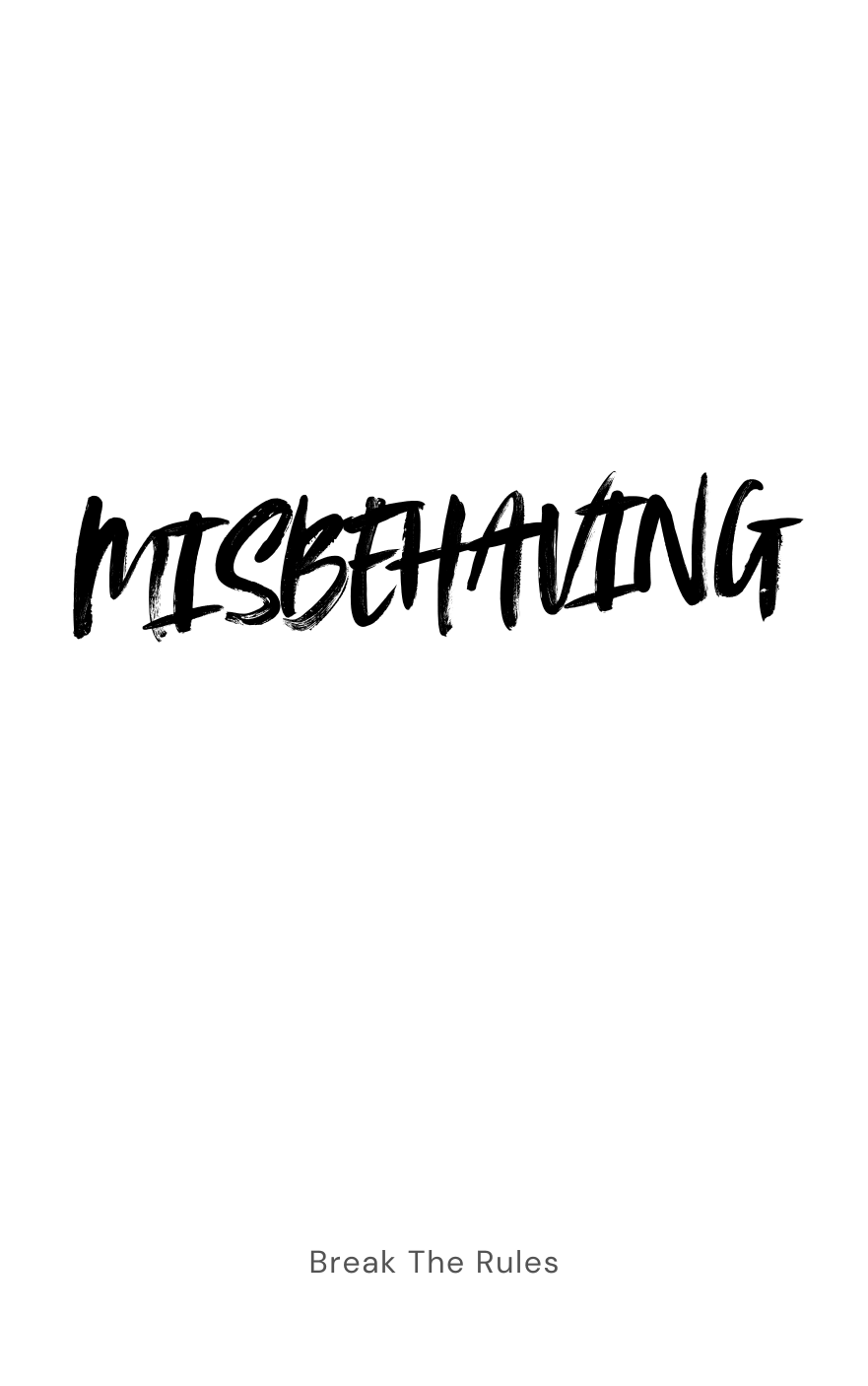
Misbehaving Book Summary
This Misbehaving Book Summary covers the key ideas, lessons, and takeaways in about 20 minutes.
Helps with these goals
Want the complete 20-minute summary?
- Full structured summary
- Video Summary
- Podcast Summary
- Key takeaways
- Exercises
- Quiz
- Highlights and notes
- Ask the book with AI
What is in the Misbehaving book summary?
Below is a preview of Sumizeit’s expert-written summary of Misbehaving by Richard H. Thaler. The full summary covers the book’s key ideas in text, audio, and video.
For most of the twentieth century, economics rested on a convenient fiction: that the people it studied were flawless calculators. Give them a budget and a set of prices, and they would extract the maximum possible satisfaction from every dollar. Give them a market and a stream of news, and prices would settle instantly at the correct figure. The discipline built beautiful mathematics on this foundation, and for decades the beauty was taken as evidence that the foundation was sound.
Richard H. Thaler spent his career pointing out that it is not. Misbehaving, published in 2015, is his account of that campaign — part intellectual argument, part memoir of an academic insurgency that began with a graduate student's private list of odd behaviors and ended with a Nobel Prize. The book's animating claim is deceptively plain: the beings that populate economic models bear little resemblance to the beings who actually shop, save, invest, and vote. And that gap is not a rounding error. It is systematic, it is predictable, and it changes what economics can tell us.
What makes the book unusual is that Thaler does not merely assert this. He reconstructs, step by step, the empirical fights that forced the profession to concede ground — the experiments, the objections, the rebuttals to the objections, and the long stretches where nobody in a position of authority was persuaded by any of it.
The Two Pillars Thaler Set Out to Undermine
Traditional economic theory stands on two supports, and Thaler attacks each separately.
The first is what he calls the premise of constrained optimization. Any consumer facing a limited budget, on this view, allocates it perfectly — every purchase squeezes the maximum available value out of the money spent. Confronted with two products of identical quality priced at ten dollars and eight dollars, the optimizing consumer takes the cheaper one every time, because taking the more expensive one leaves value on the table for no reason.
An important corollary follows. If people optimize purely on economic grounds, then anything non-economic is by definition irrelevant to their choices. Packaging, brand prestige, the framing of a price, the story attached to a purchase — these should wash out entirely. Yet anyone who has watched a shopper reach past a generic bottle of ibuprofen for a branded one at three times the price, containing the identical compound at the identical dose, has watched the corollary fail in real time.
The second pillar is the efficient market hypothesis, which extends the same confidence from individuals to markets as a whole. It makes two related claims. First, that securities always trade at their intrinsic value, because markets absorb every scrap of public information into prices almost instantly — a company reports earnings, and the implications are reflected in the share price before you have finished reading the headline. Second, that consistently beating the market is therefore impossible.
Want the complete 20-minute summary?
- Full structured summary
- Video Summary
- Podcast Summary
- Key takeaways
- Exercises
- Quiz
- Highlights and notes
- Ask the book with AI
Who should read Misbehaving?
Misbehaving is essential for anyone who makes decisions about money, design products, set prices, or shape policy. Economists, business leaders, investors, policymakers, and anyone curious about why people make choices that seem to defy logic will find Thaler's arguments compelling and practically useful.
Why does Misbehaving matter?
Richard H. Thaler's Misbehaving challenges the foundation of modern economics by proving that real humans deviate from the rational actor model in predictable, systematic ways. Understanding these deviations matters because they affect retirement savings, investment returns, consumer spending, tax compliance, and organizational decisions—and learning to design around them can improve outcomes without removing freedom.
What are the key themes in Misbehaving?
- The gap between economic theory and human behavior
- Mental accounting and compartmentalization of money
- Fairness as an economic force
- Present bias and self-control conflicts
- Market inefficiencies and mispricing
- Framing and choice architecture
- Libertarian paternalism and nudges
What are the key lessons from the Misbehaving book summary?
Econs vs. Humans
Economic models assume perfectly rational actors, but real humans are predictably irrational—they procrastinate, overpay for prestige, and reject profitable deals that feel unfair. The gap between these two is not noise but systematic bias.
Transaction Utility Shapes Decisions
People care not just about what something is worth to them, but how good the deal feels relative to their expectations. This explains why shoppers buy discounted items they never use and refuse things they want because the price feels insulting.
Money Is Not Fungible in Practice
Though economics treats all dollars the same, humans mentally separate money into categories—vacation funds, groceries, entertainment—and resist moving funds between them even when it would leave them better off.
The Endowment Effect Distorts Value
People value things they own more highly than identical things they do not, a bias so strong that sellers demand roughly twice what buyers will pay for the same object. Setting exit prices in advance can help counter this effect.
Sunk Costs Are Never Actually Sunk
Humans treat money already spent as though it remains in play, staying in bad movies to avoid wasting the ticket price or pursuing failing projects because of prior investment. The only relevant question is how to proceed from now, not how much was already lost.
Fairness Is Not Sentiment—It Is Economics
Behavioral experiments show people will pay real money to punish unfair offers and reward fair dealing, even against strangers they will never meet. Firms that ignore fairness norms—like raising snow-shovel prices during blizzards—lose goodwill and revenue.
Cooperation Beats Exploitation in Repeated Games
Robert Axelrod's tournament proved that tit for tat—cooperating first and then mirroring the opponent—outperformed more complex strategies. This explains why cooperation persists in markets and organizations despite individual incentives to defect.
Present Bias Makes Future Plans Unreliable
Humans systematically prefer smaller rewards now over larger ones later, and this preference is steeper the closer the decision is to the present. This hyperbolic discounting explains why New Year's resolutions fail and why the Doer in us overrides the Planner's intentions.
Closed-End Funds Prove Markets Are Not Efficient
Closed-end funds trade at persistent discounts to their net asset value—the same assets carrying two prices simultaneously for decades. This violates the law of one price and reveals that market inefficiency is not rare or fleeting.
Markets Overshoot and Reverse Course
Thaler's research found that past losers on the stock exchange outperformed the market by roughly thirty percent over the following years, while past winners underperformed—the opposite of what efficient markets theory predicts.
Risk Does Not Explain Market Anomalies
When defenders claimed outperforming stocks were simply riskier, Thaler showed they had lower volatility than underperformers. The risk explanation not only failed but pointed in the opposite direction.
Stock Prices Are More Volatile Than Fundamentals
Stock prices swing far more dramatically than dividends, the actual cash returns they represent. Something other than new information about future earnings drives these price movements.
Default Rules Are Never Neutral
How choices are presented—what the default is, how options are framed, what timing people face—shapes decisions decisively. Understanding this means you can design defaults that steer people toward what they say they want.
Automatic Enrollment Solves Three Problems at Once
Save More Tomorrow made retirement saving automatic, tied contribution increases to future raises rather than current paychecks, and delayed sacrifice into the future. This design aligned retirement incentives with human psychology and added billions to retirement savings.
Social Proof Is More Powerful Than Rules
Telling taxpayers that most others pay on time proved more effective than threats or penalties, generating millions in additional revenue with no new enforcement. What others do is a more compelling signal than what rules require.
Supposedly Irrelevant Factors Determine Real Behavior
Theory says context should not matter—a beer is a beer, a deal is a deal. But the source of a beer (resort vs. grocery store) and the framing of a deal (discount vs. premium) reshape what people will pay, making these factors central to understanding actual markets.
Arbitrage Has Real Limits
Opportunities for profit do not automatically correct mispricings if the mispricing persists longer than a trader can afford to wait or if short-selling is difficult. This explains why closed-end fund discounts have existed for generations despite being obvious mispricings.
Institutions Succumb to the Same Biases as Individuals
Organizations commit sunk-cost fallacies at scale (like the Concorde project), pursue quarterly earnings targets that damage long-term value, and maintain separate mental budgets that prevent rational capital allocation. Institutional structure does not eliminate behavioral bias.
Behavioral Findings Are Fragile—Some Core Effects Are Not
While some celebrated behavioral results have weakened under replication, the core findings—endowment effect, loss aversion, ultimatum-game behavior—have replicated robustly. Careful distinction between strong and weak evidence matters.
Design for Real Humans, Not Textbook Actors
The deepest lesson is that economics becomes more useful when it models how people actually behave rather than how theory wishes they would. Better products, policies, and plans follow from understanding and accommodating human nature rather than fighting it.
Want the complete 20-minute summary?
- Full structured summary
- Video Summary
- Podcast Summary
- Key takeaways
- Exercises
- Quiz
- Highlights and notes
- Ask the book with AI
How can you apply ideas from Misbehaving?
- Structure retirement plans with automatic enrollment and automatic contribution increases tied to salary raises to overcome enrollment friction and present bias
- Set default options in choice architecture so that the easiest path aligns with what people say they want, while keeping other options available
- Use social proof in communications—telling people that others are already complying with rules or norms is more persuasive than threats or appeals
- Establish exit prices for investments or major purchases in advance, before ownership creates an endowment effect that distorts your judgment
- Avoid raising prices during sudden scarcity (like snow shovels after a blizzard) because fairness norms matter more to revenue than classic supply-and-demand logic suggests
- Design payment systems and budgeting tools that help people move money between mental accounts to avoid carrying high-interest debt while holding savings
- Frame transaction value clearly for consumers—show them the expected price and the discount, not just the final price, because the deal-ness of a purchase drives behavior
What common mistakes do readers make with Misbehaving?
- Assuming that because people occasionally act irrationally, their irrationality is random noise—Thaler shows it is systematic and predictable across populations
- Believing that markets punish all behavioral errors quickly—some mispricings, like closed-end fund discounts, persist for decades despite being obvious to anyone looking
- Designing products, policies, or defaults as though humans were rational Econs, then wondering why adoption is low or compliance is weak
- Treating sunk costs as relevant to future decisions—they are not, and continuing to pursue failing projects or choices because of past investment is a form of throwing good money after bad
- Assuming that high stakes and repeated play will eliminate behavioral biases—Thaler found the same patterns in professional sports, high-stakes game shows, and financial markets
Sumizeit Exercises Apply what you've learned
Turn ideas from Misbehaving into action with a short guided reflection: identify the biggest takeaway, connect it to your life, and commit to one step you can take in the next 24 hours.
What is the expert analysis of Misbehaving?
Overview
Misbehaving is a seminal work by Richard H. Thaler, a pioneering figure in behavioral economics and Nobel laureate. Published in 2015, the book chronicles Thaler’s intellectual crusade against the orthodox economic assumption of perfectly rational agents. By blending rigorous empirical research with engaging memoir, Thaler exposes the systematic deviations of real human behavior from classical economic models. His work not only reshaped economic theory but also laid the groundwork for practical interventions that improve decision-making in domains ranging from personal finance to public policy.
Core Thesis
Thaler’s central argument dismantles the traditional economic pillars of constrained optimization and the efficient market hypothesis. He contends that economic agents—“Humans”—are fundamentally different from the idealized “Econs” of textbook theory. Humans exhibit predictable biases and heuristics that cause systematic deviations from rationality. These behavioral patterns are neither noise nor anomalies but stable phenomena that profoundly affect individual choices and market outcomes. Recognizing these patterns enables economists and policymakers to design better systems—nudges—that align with actual human behavior rather than idealized assumptions.
Strengths
- Empirical Rigor and Narrative Clarity: Thaler’s methodical reconstruction of the empirical battles within economics lends the book both intellectual depth and accessibility. The blend of experimental data, real-world examples, and personal anecdotes creates a compelling narrative that elucidates complex concepts without sacrificing nuance.
- Innovative Concepts: The introduction of ideas such as mental accounting, transaction utility, and the endowment effect has enriched economic thought by integrating psychological realism. These concepts have proven robust across diverse contexts and have been widely replicated.
- Practical Impact: The translation of behavioral insights into actionable policies, exemplified by the Save More Tomorrow retirement plan and behavioral tax compliance letters, demonstrates the book’s real-world relevance. Thaler’s libertarian paternalism offers a middle ground that respects individual freedom while improving outcomes.
- Interdisciplinary Synthesis: By bridging economics, psychology, and behavioral science, Thaler challenges disciplinary silos and encourages a more holistic understanding of decision-making.
Critiques & Counterarguments
- Replication and Fragility of Some Findings: While core effects like the endowment effect and loss aversion have strong empirical support, some behavioral findings, including aspects of the marshmallow test and certain laboratory results, have shown fragility or context-dependence upon replication. This nuance calls for cautious generalization.
- “As If” Defense of Rational Models: Milton Friedman’s argument that economic models need only predict behavior “as if” agents are rational remains a potent counterpoint. Some critics argue that the added complexity of behavioral models may not always improve predictive power or policy efficacy.
- Limits of Arbitrage and Market Efficiency: Thaler convincingly shows persistent anomalies like closed-end fund discounts and excess volatility, but proponents of efficient markets might argue that these inefficiencies are either transient or reflect risk factors not fully captured by traditional metrics. Moreover, the role of institutional investors and algorithmic trading continues to evolve, potentially mitigating some behavioral biases at scale.
- Oversimplification of Human Motivation: Although Thaler acknowledges fairness and social preferences, some philosophical and sociological critiques suggest that human behavior is even more contextually and culturally contingent than behavioral economics admits, complicating attempts to generalize findings globally.
- Ethical Concerns About Nudging: The libertarian paternalism approach, while pragmatic, raises normative questions about the boundaries of influence and autonomy, especially when nudges are deployed by governments or corporations without transparent consent or oversight.
Who Should Read This
Misbehaving is essential reading for economists, policymakers, behavioral scientists, and anyone interested in the intersection of human psychology and economic decision-making. It is particularly valuable for professionals designing products, policies, or financial instruments who seek to ground their work in realistic models of human behavior. Academics and students will appreciate its historical and empirical insights, while general readers with an interest in why people often act “irrationally” will find it both enlightening and accessible. Ultimately, the book is a call to embrace complexity and human fallibility as central to understanding economic life.
Frequently asked questions about the Misbehaving book summary
What is Misbehaving about?
Misbehaving by Richard H. Thaler is an account of behavioral economics that challenges the assumption that people are rational actors who always maximize value. The book documents Thaler's four-decade effort to prove that humans systematically deviate from textbook economics in predictable ways—through mental accounting, fairness concerns, present bias, and other biases—and that these deviations shape real markets and decisions.
Who should read Misbehaving?
Anyone involved in making decisions about money, designing products or policies, setting prices, or managing organizations will benefit from this book. Economists, business leaders, investors, policymakers, and even everyday consumers will find Thaler's explanations of why people behave the way they do both illuminating and practically useful.
What are the main takeaways from Misbehaving?
The core takeaway is that economics becomes more useful when it describes how humans actually behave rather than assuming perfect rationality. Key insights include: money is not fungible in practice, people care about fairness and deal quality, present bias shapes long-term decisions, markets are not always efficient, and thoughtful choice design can improve outcomes without removing freedom.
What is the endowment effect and why does it matter?
The endowment effect is the tendency for people to value things they own more highly than identical things they do not own. This matters because it explains why sellers demand roughly twice what buyers will pay for the same object, affects investment decisions (people cling to holdings they would never buy), and influences real estate and personal finance decisions in ways that cost people money.
How does mental accounting affect personal finance?
Mental accounting is the practice of sorting money into separate psychological compartments that people treat as if they are not interchangeable. This causes people to carry high-interest credit card debt while maintaining savings earning almost nothing, because the mind treats debt and savings as separate piles rather than one fungible pool.
What is libertarian paternalism and how does it work?
Libertarian paternalism, developed by Thaler with Cass Sunstein, is the idea of arranging choices so that the easy default path is what people say they want, while leaving all other options open. Save More Tomorrow exemplifies this: automatic enrollment removes friction for savers while preserving the choice to opt out.
Does Misbehaving apply to financial markets?
Yes, a major portion of Misbehaving applies behavioral findings to markets. Thaler documents real-world inefficiencies like closed-end fund discounts, market overreaction followed by reversal, and excess volatility—all of which contradict the efficient market hypothesis despite being observable in the world's most scrutinized financial markets.
What evidence supports Thaler's criticism of efficient markets?
Thaler presents multiple lines of evidence: closed-end funds trading at persistent discounts to their holdings, past stock market losers outperforming future markets while past winners underperform (the reversal effect), and Robert Shiller's finding that stock prices are vastly more volatile than the dividends they supposedly track, among others.
About Sumizeit
Sumizeit is a profitable Scomy LLC company based in Miami, Florida. It has been helping readers learn from nonfiction books for 7 years with expert-written summaries in text, audio, podcast, and video.
Want the complete 20-minute summary?
- Full structured summary
- Video Summary
- Podcast Summary
- Key takeaways
- Exercises
- Quiz
- Highlights and notes
- Ask the book with AI
Here's why readers love Sumizeit
Join thousands of learners getting smarter every day
"Great experience. Detailed summaries. Loved the gamification feature. Makes learning fun. Good customer service. I recommend Sumizeit to anyone. You'll learn a lot."
"I always felt busy but still wanting to keep up with the book discussion in my friend group. This was a great supplement to help me keep reading the books I find fun while keeping up with important books."
"I love this website. Instead of scrolling social media, I find myself learning a lot. I use it everyday. I recommend this app for anyone who is too busy and wants to get up to speed with their favorite books."
Misbehaving Book Summary PDF
Looking for a Misbehaving Book Summary PDF you can save and revisit offline? Our Misbehaving Book Summary PDF captures the book’s core ideas in a clean, printable format — the key frameworks, takeaways, and structure without the fluff. Download the Misbehaving Book Summary PDF when you want a reference you can annotate, share with your team, or review on the go. Get your Misbehaving Book Summary PDF from the download page below.
Download Misbehaving Book Summary PDFPeople also liked these summaries
Readers who explored Misbehaving often enjoyed these titles next.



Want the complete 20-minute summary?
- Full structured summary
- Video Summary
- Podcast Summary
- Key takeaways
- Exercises
- Quiz
- Highlights and notes
- Ask the book with AI
Featured Book Titles
Popular Book Summaries at sumizeit, leading book summary app