


As an Amazon Associate, Sumizeit earns from qualifying purchases.
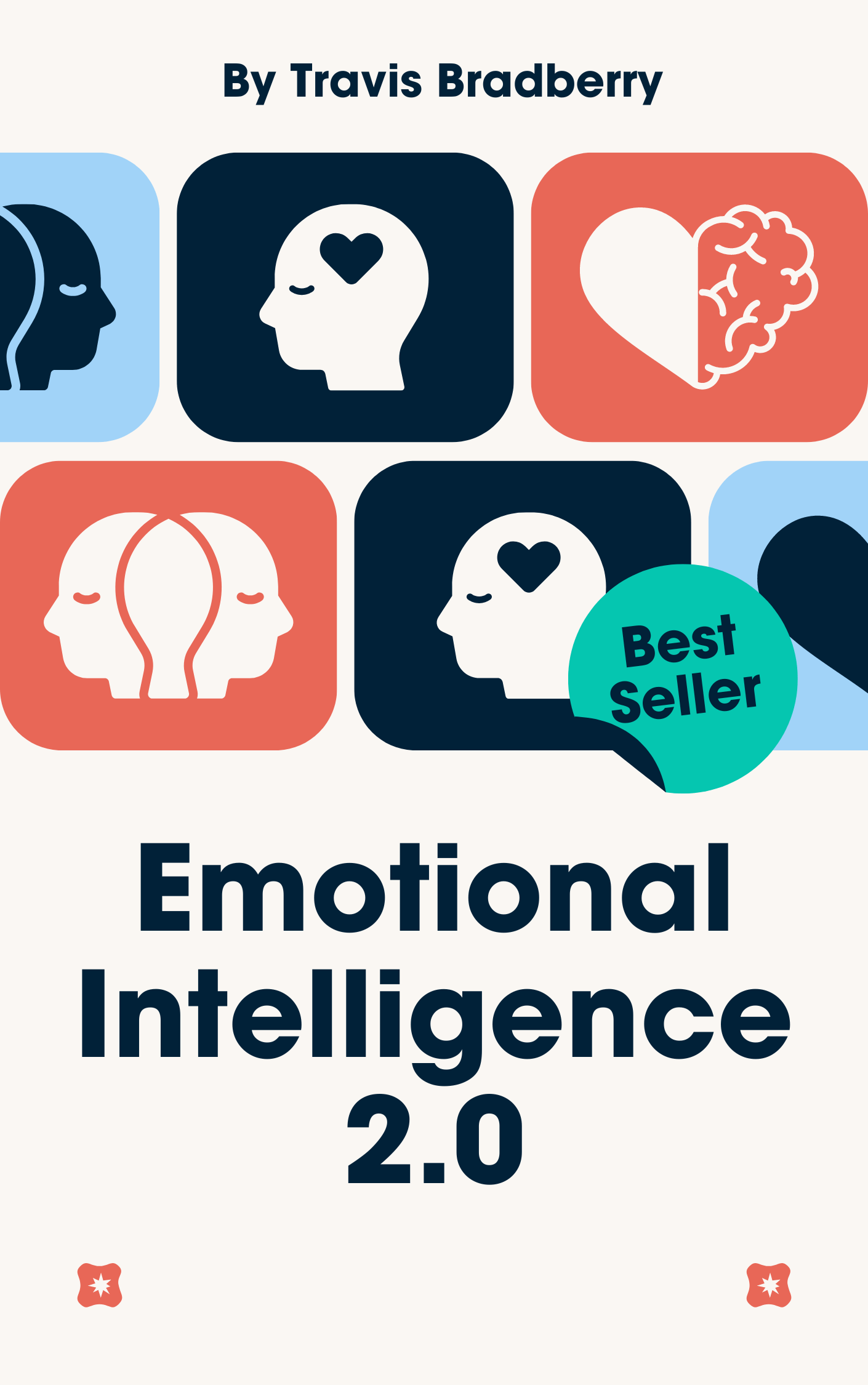
Emotional Intelligence 2.0 Book Summary
This Emotional Intelligence 2.0 Book Summary covers the key ideas, lessons, and takeaways in about 20 minutes.
Helps with these goals
Want the complete 20-minute summary?
- Full structured summary
- Video Summary
- Podcast Summary
- Audio summary
- Infographic
- Key takeaways
- Exercises
- Quiz
- Highlights and notes
- Ask the book with AI
What is in the Emotional Intelligence 2.0 book summary?
Below is a preview of Sumizeit’s expert-written summary of Emotional Intelligence 2.0 by Travis Bradberry. The full summary covers the book’s key ideas in text, audio, and video.
Shouldn’t skill and strategy outweigh something seemingly small like people skills in workplace success? Interestingly enough, being able to interact with people successfully and manage your own emotions are two of the most important elements in being able to successfully climb the corporate ladder. Unfortunately, these are skills that aren’t often taught in schools or college courses. Emotional Intelligence 2.0 lays out basic guidelines for developing your emotional intelligence and having more successful relationships with your colleagues.
What is EQ?
EQ is a combination of factors. It involves self-awareness, self-management, social awareness, and relationship management. Self-awareness is your ability to manage and understand your own feelings and behaviors. Self-management is being able to manage your feelings. Social awareness is your ability to understand other people. Relationship management helps you to build successful relationships between yourself and other people in your life.
Mastering all of these skills can have a direct relationship with your ability to achieve what you’d like to in the workplace. For instance, let's say one of your coworker’s tries to take credit for a difficult project you put a lot of effort into. If you have self-awareness and self-management, you will be able to prevent yourself from having an outburst in the situation (which could limit your credibility) and will also allow you to step back and figure out how to address it best. Here are a few tips for increasing your EQ:
Get to know yourself
Strong moods can lead to dangerous outcomes. Let’s say you’re in a terrible mood: you’ve spilled coffee all over yourself and a project you were working on has hit a major snag. One of your coworker's bursts in to tell you all about her weekend, when you’d much rather concentrate on how to address the snag. Understanding that your bad mood has nothing to do with her is because often we can take our moods out on others. Conversely, think of when you were in a good mood, so you agreed to do something you’d really rather not.
Moods are powerful, and they can control our actions. Preventing yourself from being controlled by your emotions is an important part of EQ. You can do this by checking yourself when you have strong emotional reactions to situations. Understand that moods and emotions are temporary, but the ways we react to them can have lasting consequences.
Create self-management tools
People with emotional intelligence can manage their emotions and are able to balance out being logical and going with their heart or intuition. In the battle between logic and emotion, where do you find you often land? While it is important to make decisions that make rational sense, is purely driven by logic and creates a well-balanced life. People with high emotional intelligence are able to make strong, well thought out decisions. How do they do this?
One tool to resolve a difficult decision is to make an emotion vs reason list.
Want the complete 20-minute summary?
- Full structured summary
- Video Summary
- Podcast Summary
- Audio summary
- Infographic
- Key takeaways
- Exercises
- Quiz
- Highlights and notes
- Ask the book with AI
Who should read Emotional Intelligence 2.0?
Emotional Intelligence 2.0 is ideal for professionals who want to advance their careers and improve their workplace relationships. Whether you're a manager, team member, or anyone looking to understand yourself and others better, this book offers practical tools to strengthen your interpersonal effectiveness and emotional awareness.
Why does Emotional Intelligence 2.0 matter?
In today's competitive workplace, technical skills alone aren't enough—emotional intelligence often determines career success and relationship quality. Emotional Intelligence 2.0 by Travis Bradberry provides actionable strategies to master self-awareness, self-management, social awareness, and relationship management, which are increasingly recognized as critical leadership and professional competencies.
What are the key themes in Emotional Intelligence 2.0?
- Self-awareness and understanding your emotional triggers
- Self-management and controlling emotional reactions
- Social awareness and reading others effectively
- Relationship management and building stronger connections
- Balancing logic and emotion in decision-making
- The power of body language and nonverbal communication
- Accountability and support systems for personal growth
What are the key lessons from the Emotional Intelligence 2.0 book summary?
Your Mood Affects Your Decisions
Strong emotional states can cloud judgment and cause you to make decisions you'll regret. Recognizing that moods are temporary helps you pause before reacting to situations.
Self-Awareness is the Foundation of EQ
Understanding your own emotions and behavioral patterns is the first step to managing them effectively. Without self-awareness, you can't control how your moods influence your actions toward others.
Check Your Body Language
Your nonverbal communication often contradicts your words and confuses others. Being mindful of your posture, facial expressions, and physical presence ensures your message is clear and consistent.
Read Others Through Body Language
People communicate their emotions through subtle physical cues like eye contact, mouth tension, and shoulder position. Learning to observe these signals helps you understand others' true feelings and respond appropriately.
Logic and Emotion Both Matter
High emotional intelligence isn't about choosing emotion or logic—it's about integrating both to make sound decisions. People with strong EQ can balance intuition with reason.
Names Create Connection
Using someone's first name demonstrates respect and makes them feel valued. This small gesture strengthens relationships and enhances your likability.
Mixed Signals Damage Trust
When your words don't match your nonverbal communication, people become confused and distrustful. Alignment between your message and demeanor is essential for clear communication.
Emotions Have Lasting Consequences
While emotional reactions feel temporary, their outcomes can have long-term effects on your reputation and relationships. Preventing impulsive reactions protects your credibility.
External Accountability Strengthens Self-Management
Sharing your goals with others and creating accountability systems (like financial penalties for missed deadlines) reduces the mental energy needed to stay on track.
Use the Emotion vs. Reason Framework
When facing difficult decisions, write down what your emotions want versus what logic suggests. This visual clarity helps you identify which perspective is more grounded.
Don't Project Your Moods Onto Others
A bad day has nothing to do with the people around you. Recognizing this separation prevents you from unfairly venting frustrations on colleagues or friends.
Feedback is Uncomfortable But Invaluable
Asking how others perceive you reveals blind spots in your behavior and communication. The initial discomfort of criticism far outweighs the benefits of self-improvement.
EQ Can Be Developed
Emotional intelligence isn't a fixed trait—anyone can improve it regardless of their starting point. Consistent practice with EQ tools leads to measurable growth.
Social Awareness Requires Observation
Understanding others comes from intentionally observing their verbal and nonverbal cues rather than assuming. Taking time to read a room makes you more effective in interactions.
Strong Moods Lead to Risky Decisions
When emotions are heightened, you're more likely to agree to things you don't want or make decisions that conflict with your goals. Emotional regulation protects your interests.
Want the complete 20-minute summary?
- Full structured summary
- Video Summary
- Podcast Summary
- Audio summary
- Infographic
- Key takeaways
- Exercises
- Quiz
- Highlights and notes
- Ask the book with AI
How can you apply ideas from Emotional Intelligence 2.0?
- Create an emotion vs. reason chart when facing a major decision to clarify which perspective is most sound
- Share your professional goals with colleagues or friends who can hold you accountable and provide motivation
- Before important conversations, check your body language in a mirror to ensure your nonverbal message matches your words
- Observe and interpret body language during meetings to better understand unstated concerns or engagement levels
- Pause for 10 seconds when you feel a strong emotional reaction to prevent an impulsive response you'll regret
- Learn and use colleagues' first names immediately to strengthen professional relationships and show respect
- Ask trusted colleagues for feedback on how you're perceived to identify blind spots in your communication
- When in a bad mood, consciously separate your emotional state from how you treat others around you
What common mistakes do readers make with Emotional Intelligence 2.0?
- Assuming your logical arguments alone will persuade others without considering their emotional perspective
- Ignoring your own emotional triggers and patterns, leading to repeated reactive behavior
- Sending mixed messages by not aligning your body language with your spoken words
- Neglecting to read social cues and continuing interactions when others clearly appear uncomfortable or disengaged
- Making major decisions purely while in a heightened emotional state without waiting for clarity
- Failing to ask for feedback because you fear criticism, missing opportunities to grow
Sumizeit Exercises Apply what you've learned
Turn ideas from Emotional Intelligence 2.0 into action with a short guided reflection: identify the biggest takeaway, connect it to your life, and commit to one step you can take in the next 24 hours.
What is the expert analysis of Emotional Intelligence 2.0?
Overview
Emotional Intelligence 2.0 by Travis Bradberry is a seminal work that builds upon the foundational concept of emotional intelligence (EQ) to offer practical strategies for enhancing interpersonal effectiveness and self-regulation in professional settings. Bradberry, a recognized expert in emotional intelligence and founder of TalentSmart, leverages his clinical and industrial-organizational psychology background to translate complex psychological constructs into accessible, actionable advice. The book’s significance lies in its direct applicability to workplace success, addressing a critical gap often left by traditional education systems that prioritize technical skills over emotional competencies.
Core Thesis
The central argument of Emotional Intelligence 2.0 is that emotional intelligence—comprising self-awareness, self-management, social awareness, and relationship management—is a decisive factor in professional achievement and personal fulfillment. Bradberry posits that mastering these emotional competencies enables individuals to navigate workplace dynamics more effectively than relying solely on intellectual or technical skills. By cultivating EQ, one can better regulate emotions, interpret social cues, and foster meaningful relationships that collectively drive career advancement and organizational success.
Strengths
- Practical Framework: The book excels in breaking down the abstract concept of emotional intelligence into four clear, manageable domains, making it accessible to a broad audience.
- Actionable Tools: Bradberry provides concrete exercises such as emotion-versus-reason lists and strategies for reading body language, which empower readers to apply EQ principles immediately.
- Relevance to Workplace Dynamics: By focusing on scenarios common in professional environments, the book resonates with readers seeking to improve collaboration, leadership, and conflict resolution skills.
- Authoritative Voice: Bradberry’s credentials and experience with Fortune 500 companies lend credibility and weight to his recommendations.
Critiques & Counterarguments
- Oversimplification of Complex Constructs: While the book’s accessibility is a strength, it sometimes reduces emotional intelligence to a checklist of behaviors without fully addressing the nuanced psychological and cultural factors that influence emotional processing.
- Limited Empirical Evidence: The text relies heavily on anecdotal examples and practical tips, but it lacks rigorous citation of empirical studies that would strengthen the scientific grounding of its claims.
- Potential Overemphasis on Individual Responsibility: The focus on personal emotional regulation may underplay systemic and organizational factors that affect workplace dynamics, such as power structures or cultural diversity.
- Competing Views on Emotional Intelligence: Some scholars argue that EQ is not a distinct intelligence but rather a composite of personality traits and cognitive abilities, challenging the premise that it can be trained in isolation from broader psychological development.
- Real-World Variability: The effectiveness of EQ interventions can vary widely depending on context; for example, high emotional intelligence may not always protect against toxic workplace cultures or structural inequities.
Who Should Read This
Emotional Intelligence 2.0 is ideally suited for professionals at all career stages who seek to enhance their interpersonal skills and emotional self-management to improve workplace relationships and leadership effectiveness. It is particularly valuable for managers, team leaders, and individuals in client-facing roles who must navigate complex social interactions regularly. Additionally, those interested in self-improvement and emotional literacy will find Bradberry’s practical approach a useful starting point for developing greater emotional awareness and control.
Frequently asked questions about the Emotional Intelligence 2.0 book summary
What is Emotional Intelligence 2.0 about?
Emotional Intelligence 2.0 by Travis Bradberry is a practical guide to developing emotional intelligence (EQ) through actionable strategies and self-assessment tools. The book covers four core competencies: self-awareness, self-management, social awareness, and relationship management—all essential for professional success and stronger interpersonal connections.
Who should read Emotional Intelligence 2.0?
Anyone seeking to advance their career, improve relationships, or better understand themselves and others will benefit from this book. It's particularly valuable for managers, leaders, professionals in competitive fields, and anyone who wants to develop stronger emotional and social skills.
What are the main takeaways from Emotional Intelligence 2.0?
Key takeaways include recognizing how moods influence decisions, reading body language to understand others, using accountability systems for self-management, creating emotion vs. reason frameworks for decision-making, and aligning your nonverbal communication with your message. The book emphasizes that emotional intelligence can be developed through consistent practice regardless of your starting point.
How can I improve my emotional intelligence?
Emotional Intelligence 2.0 recommends several practical approaches: develop self-awareness by identifying your emotional triggers, create self-management tools like emotion vs. reason charts, practice reading body language to improve social awareness, learn people's names to strengthen relationships, and seek feedback from others to identify blind spots. The book also emphasizes using external accountability systems to support behavior change.
What is the relationship between EQ and career success?
The book argues that emotional intelligence is as important as technical skills for climbing the corporate ladder. Strong EQ helps you manage difficult interpersonal situations, make balanced decisions, communicate effectively, and build stronger professional relationships—all factors that contribute directly to career advancement.
How does body language relate to emotional intelligence?
Body language is central to EQ because it reveals true feelings and intentions that words may hide. Emotional Intelligence 2.0 teaches you to observe others' cues (eyes, mouth, shoulders) to understand their emotional state and to monitor your own body language to ensure your nonverbal communication aligns with your message, preventing confusion and building trust.
Can emotional intelligence be learned or is it innate?
According to Emotional Intelligence 2.0, anyone can develop emotional intelligence regardless of their current skill level or background. The book provides specific tools and techniques that, with consistent practice, lead to measurable improvements in self-awareness, emotional regulation, and relationship quality.
About Sumizeit
Sumizeit is a profitable Scomy LLC company based in Miami, Florida. It has been helping readers learn from nonfiction books for 7 years with expert-written summaries in text, audio, podcast, and video.
Want the complete 20-minute summary?
- Full structured summary
- Video Summary
- Podcast Summary
- Audio summary
- Infographic
- Key takeaways
- Exercises
- Quiz
- Highlights and notes
- Ask the book with AI
Here's why readers love Sumizeit
Join thousands of learners getting smarter every day
"Great experience. Detailed summaries. Loved the gamification feature. Makes learning fun. Good customer service. I recommend Sumizeit to anyone. You'll learn a lot."
"I always felt busy but still wanting to keep up with the book discussion in my friend group. This was a great supplement to help me keep reading the books I find fun while keeping up with important books."
"I love this website. Instead of scrolling social media, I find myself learning a lot. I use it everyday. I recommend this app for anyone who is too busy and wants to get up to speed with their favorite books."
Emotional Intelligence 2.0 Book Summary PDF
Looking for a Emotional Intelligence 2.0 Book Summary PDF you can save and revisit offline? Our Emotional Intelligence 2.0 Book Summary PDF captures the book’s core ideas in a clean, printable format — the key frameworks, takeaways, and structure without the fluff. Download the Emotional Intelligence 2.0 Book Summary PDF when you want a reference you can annotate, share with your team, or review on the go. Get your Emotional Intelligence 2.0 Book Summary PDF from the download page below.
Download Emotional Intelligence 2.0 Book Summary PDFPeople also liked these summaries
Readers who explored Emotional Intelligence 2.0 often enjoyed these titles next.
Want the complete 20-minute summary?
- Full structured summary
- Video Summary
- Podcast Summary
- Audio summary
- Infographic
- Key takeaways
- Exercises
- Quiz
- Highlights and notes
- Ask the book with AI
Featured Book Titles
Popular Book Summaries at sumizeit, leading book summary app