


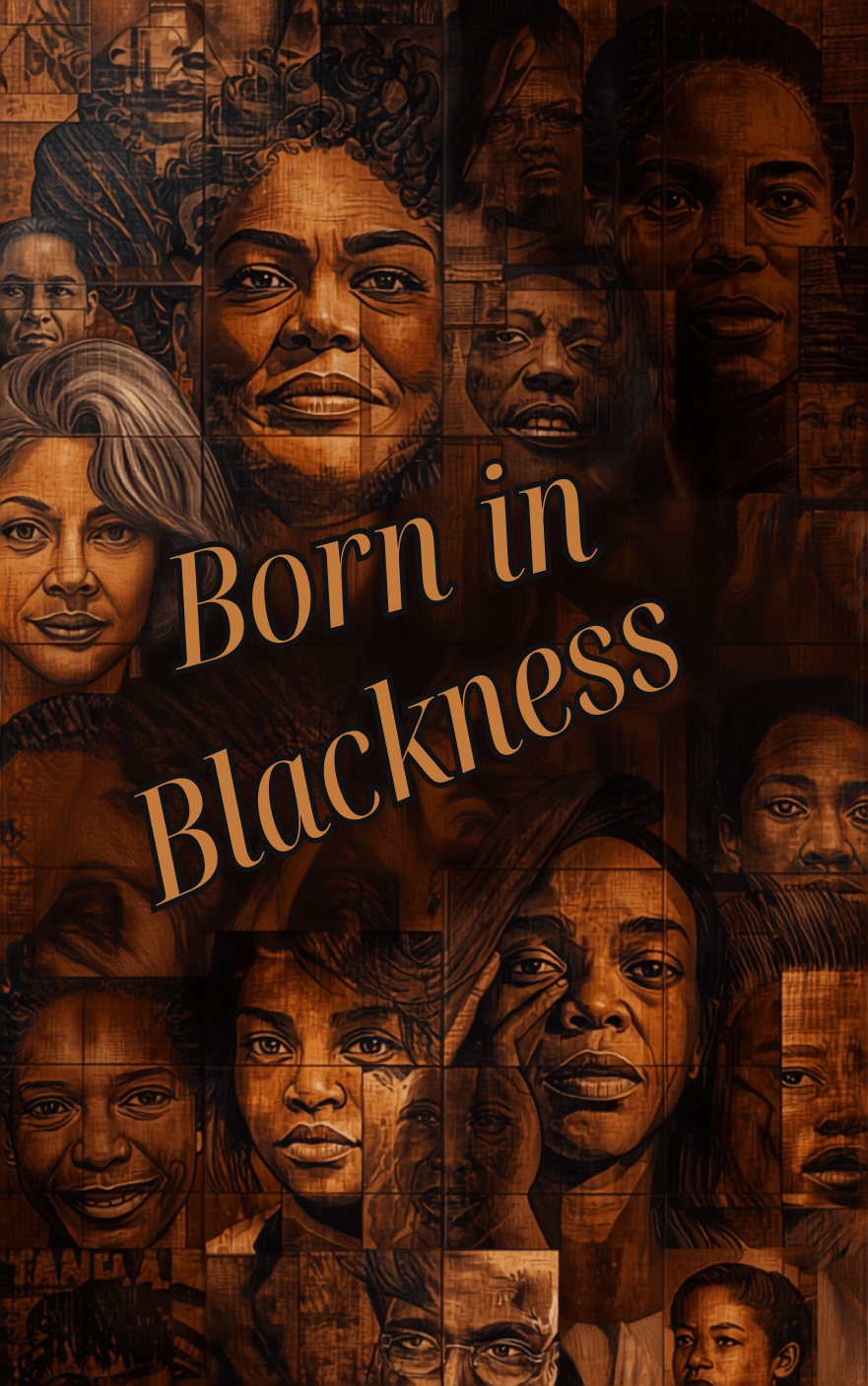
Prefer the print book? Buy on Amazon
As an Amazon Associate, Sumizeit earns from qualifying purchases.
Born in Blackness Book Summary
This Born in Blackness Book Summary covers the key ideas, lessons, and takeaways in about 20 minutes.
Helps with these goals
Want the complete 20-minute summary?
- Full structured summary
- Video Summary
- Podcast Summary
- Audio summary
- Key takeaways
- Exercises
- Quiz
- Highlights and notes
- Ask the book with AI
Want a Free Weekly Read?
Get a free summary every week straight to your mailbox.
Preview the Born in Blackness book summary
Below is a preview of Sumizeit’s comprehensive human-written summary of Born in Blackness by Howard W. French. The full summary is 15-20 minutes long and covers the book’s key ideas in text, audio, visual, and video formats. Unlock the full 20 Minute Summary
Few historical narratives are as deeply entrenched in popular imagination as the story that Europe, through its own ingenuity and ambition, lifted the world into modernity. Howard W. French's Born in Blackness sets out to dismantle that story, not by denying European achievement but by restoring the missing half of the picture. The argument running through the book is direct: Africa and Africans were not peripheral to the rise of the modern world, but central to it. The wealth that built early modern Europe, the commodities that fueled its empires, the labor that produced its sugar and cotton, the diplomatic and commercial relationships that drew it outward across oceans, and the cultural innovations that shaped its musical and artistic traditions all carry African origins that have been systematically minimized or erased in the history Westerners typically tell themselves.
French is a journalist and historian who spent decades covering Africa and the African diaspora, and the book reflects both his archival depth and his journalist's eye for the telling detail. The result is a sweeping reframing of more than five centuries of history, beginning with medieval African empires that European cartographers actively sought out, and ending with the racial hierarchies that survived the formal abolition of slavery. The book is ambitious in scope, but its central claim is precise: without Africa, the modern world as we know it would not exist. The genius of the book lies in how French moves between the macro and the micro, between the sweep of imperial economic history and the textures of specific places, specific rulers, specific commercial transactions. He insists that the abstraction we call global capitalism was built on particular African soil, in particular African ports, with the labor of particular African people whose names and stories have too often been lost to the historical record. Recovering even fragments of that record is part of what the book sets out to do.
The Pilgrimage That Reshaped European Imagination
French begins his historical argument in 1324, with the journey of Mansa Musa, ruler of the Mali Empire, who traveled to Mecca on a Hajj that became legendary across the medieval world. Musa traveled with an enormous entourage and distributed so much gold along his route that he is reported to have caused inflation in the markets of Cairo for years afterward. Accounts of his wealth spread through Arab historians like Al-Umari and eventually reached European cartographers and merchants, who began producing maps that prominently featured the Mali Empire, sometimes labeled "Melly," as a land of extraordinary gold reserves.
The famous 1375 Catalan Atlas depicted Musa seated on a throne holding a golden orb and scepter, an image that would haunt European imagination for generations. French argues that this fascination with African wealth was a more decisive driver of European exploration than the more commonly cited pursuit of Asian spices. Europe set out for Africa because Europe knew Africa was rich.
Want the complete 20-minute summary?
- Full structured summary
- Video Summary
- Podcast Summary
- Audio summary
- Key takeaways
- Exercises
- Quiz
- Highlights and notes
- Ask the book with AI
Who should read Born in Blackness?
Born in Blackness is essential reading for anyone seeking to understand how Africa shaped the modern world. Historians, students of global economics, and readers interested in correcting the Eurocentric narratives that dominate Western education will find it particularly valuable. It's also crucial for anyone grappling with the origins of racial inequality and systemic injustice in contemporary society.
Why does Born in Blackness matter?
This book fundamentally reframes the story of modernity by restoring Africa's central role in building the wealth, systems, and culture of the modern world. In an era of reckoning with colonial legacies and racial justice, understanding how African gold, labor, and innovation fueled European dominance is essential to dismantling myths of European exceptionalism. Born in Blackness provides the historical foundation needed to challenge persistent falsehoods about Africa's supposed backwardness and Europe's inevitable rise.
What are the key themes in Born in Blackness?
- Africa as central, not peripheral, to modernity
- The connection between African wealth and European exploration
- Plantation systems as laboratories of modern capitalism
- African agency and resistance across centuries
- Cultural resilience and creativity emerging from trauma
- How abolition failed to deliver justice
- The lasting impact of slavery on global inequality
Want the complete 20-minute summary?
- Full structured summary
- Video Summary
- Podcast Summary
- Audio summary
- Key takeaways
- Exercises
- Quiz
- Highlights and notes
- Ask the book with AI
How can you apply ideas from Born in Blackness?
- Reframe the history of capitalism by recognizing African origins of labor systems, finance, and industrial organization rather than accepting European narratives of invention
- Examine contemporary wealth gaps between nations by tracing them to centuries of extraction of African resources and labor rather than attributing them to cultural or climatic differences
- Challenge institutional curricula and museum narratives that present European history as independent achievement, inserting African contributions into standard historical accounts
- Understand the legal and social origins of contemporary racial inequality by connecting current systems of criminal justice and economic exclusion to slavery and Jim Crow rather than treating them as separate issues
- Appreciate African and African American cultural contributions—particularly music—as achievements born from resilience and resistance rather than exotic curiosities or entertainment products
- Recognize African agency and sophistication in pre-colonial and early modern periods rather than accepting the false binary of either African victimhood or European inevitability
- Evaluate reparations arguments by understanding the scale and ongoing consequences of wealth extraction from Africa and enslaved labor
What common mistakes do readers make with Born in Blackness?
- Assuming Europe's rise to dominance was inevitable or primarily driven by European innovation rather than African resources and labor
- Treating the slave trade as primarily an African problem by focusing on African participation while minimizing European agency and responsibility
- Believing that abolition ended the systemic extraction of Black labor and wealth, when in fact new systems like sharecropping and mass incarceration perpetuated it
- Viewing African pre-colonial societies as static, primitive, or lacking sophistication rather than recognizing their complex governance, trade networks, and diplomatic relationships
Sumizeit Exercises Apply what you've learned
Turn ideas from Born in Blackness into action with a short guided reflection: identify the biggest takeaway, connect it to your life, and commit to one step you can take in the next 24 hours.
What is the expert analysis of Born in Blackness?
Overview
Born in Blackness by Howard W. French is a landmark work that challenges the Eurocentric narrative of modernity by repositioning Africa and Africans as foundational to the rise of the modern world. French, a seasoned journalist and historian with decades of experience reporting from Africa and the African diaspora, combines archival research with vivid storytelling to reconstruct over five centuries of history. His work is significant not only for its scholarly rigor but also for its narrative power, restoring agency and complexity to African civilizations and peoples whose contributions have been marginalized or erased in traditional Western histories.
Core Thesis
French’s central argument is unequivocal: Africa was not peripheral but central to the development of the modern global economy, culture, and political order. The wealth extracted from African gold, the labor of enslaved Africans in sugar and cotton plantations, the diplomatic sophistication of African states, and the cultural innovations borne from African diasporic communities collectively underpinned European economic expansion and the emergence of global capitalism. To tell the story of modernity without Africa is to tell an incomplete and distorted history.
Strengths
- Comprehensive Historical Scope: French masterfully spans from medieval African empires to the post-abolition racial hierarchies, offering a sweeping yet detailed panorama that connects disparate historical moments into a coherent narrative.
- Restoration of African Agency: By highlighting African political sophistication, economic strategies, and resistance movements, the book counters reductive portrayals of Africa as passive or chaotic, emphasizing instead its active role in shaping global history.
- Interdisciplinary Approach: French integrates economic history, cultural studies, and political analysis, enriching the narrative with insights into how African labor and culture influenced everything from global finance to the blues.
- Nuanced Treatment of the Slave Trade: The book avoids simplistic moral binaries, acknowledging African participation in the slave trade while firmly situating European imperialism as the driving force behind its scale and brutality.
- Vivid Storytelling and Archival Depth: French’s journalistic sensibility brings texture and immediacy to historical episodes, making complex economic and political processes accessible without sacrificing scholarly depth.
Critiques & Counterarguments
- Potential Overemphasis on African Centrality: While restoring Africa’s role is crucial, some scholars might argue that French occasionally risks overstating Africa’s primacy at the expense of acknowledging the multifaceted contributions of other regions, such as Asia, in the development of global capitalism.
- Selective Use of Evidence: The book’s broad scope necessitates selectivity, which may lead to underrepresentation of dissenting historical interpretations or less dramatic but equally important economic and cultural exchanges.
- Complexity of African Societies: Although French highlights African agency, critics from Africanist scholarship might call for deeper engagement with intra-African diversity and the varied impacts of the slave trade across different societies beyond the prominent kingdoms discussed.
- Competing Theories on Capitalism’s Origins: Some economic historians emphasize European institutional developments or Asian trade networks as equally foundational to capitalism’s rise, suggesting that French’s focus on African contributions, while corrective, should be integrated into a more pluralistic framework.
- Modernity and Cultural Transmission: The framing of cultural forms like the blues as direct legacies of enslavement may be challenged by cultural theorists who emphasize syncretism and the dynamic evolution of diasporic identities beyond trauma narratives.
Who Should Read This
Born in Blackness is essential reading for scholars and students of history, African studies, and global economic development seeking a profound reexamination of the origins of modernity. It is also invaluable for readers interested in the intersections of race, labor, and culture, as well as those engaged in debates about historical memory and the legacies of colonialism and slavery. French’s accessible yet rigorous prose makes the book suitable for educated general readers who wish to deepen their understanding of the African diaspora’s foundational role in shaping the modern world.
Frequently asked questions about the Born in Blackness book summary
What is Born in Blackness about?
Born in Blackness by Howard W. French is a sweeping reframing of five centuries of history that argues Africa and Africans were central—not peripheral—to the rise of the modern world. The book traces how African gold, labor, commodities, cultural innovations, and diplomatic relationships directly fueled European exploration, capitalism, and industrialization, restoring a history that Western narratives have systematically erased or minimized.
Who should read Born in Blackness?
Anyone seeking to understand how the modern world actually came to be should read this book, including students, historians, educators, and readers interested in correcting Eurocentric narratives. It's essential for those grappling with the origins of contemporary racial inequality, the legacy of colonialism, and the need to decolonize knowledge and institutions.
What are the main takeaways from Born in Blackness?
The main takeaways are: African gold capitalized early modern Europe and drove exploration; the plantation system pioneered on African soil became the template for Atlantic slavery; enslaved African labor directly powered European industrialization; pre-colonial African societies were sophisticated and exercised agency; and formal abolition failed to end racial exploitation, which simply took new forms. The core message is that the modern world was not made in Europe alone—it was born in Blackness.
How did African gold shape European exploration?
Mansa Musa's legendary 1324 pilgrimage spread accounts of Mali's wealth across the medieval world, fascinating European cartographers and merchants. This knowledge of African gold reserves was a more decisive driver of European exploration than the commonly cited pursuit of Asian spices. The Portuguese discovery of gold at Elmina in 1471 provided the capital that financed further exploration and created the financial infrastructure underlying early capitalism.
What was the plantation system and where did it originate?
The plantation system originated on the island of São Tomé, where the Portuguese established sugar colonies worked by enslaved Africans beginning in 1485. It featured large-scale monoculture, hierarchical labor organization, specialized roles, refining technologies, and a dehumanizing racial ideology. This model became the template exported to Brazil, the Caribbean, and later the American South, making it foundational to modern capitalism.
How did the Haitian Revolution connect to American slavery?
Napoleon lost his army to yellow fever and resistance from formerly enslaved Haitians during the Haitian Revolution. His defeat forced him to abandon his American imperial ambitions and sell the Louisiana Territory to the United States. This territory proved ideal for cotton cultivation, and its incorporation accelerated both the internal slave trade and American slavery's expansion, meaning Haiti's revolutionary victory inadvertently expanded American slavery's geographic scope.
What role did enslaved Africans play in creating modern culture?
Enslaved Africans and their descendants created enduring cultural achievements despite systems designed to destroy them. Most notably, the blues emerged from the Mississippi Delta as a profound art form transmuting experiences of slavery, sharecropping, and segregation into one of the twentieth century's most influential genres, shaping jazz, rock and roll, soul, and hip-hop. This cultural resilience testifies to a creativity that brutal systems could neither anticipate nor extinguish.
About Sumizeit
Sumizeit is a profitable Scomy LLC company based in Miami, Florida. It has been helping readers learn from nonfiction books for 7 years with expert-written summaries in text, audio, podcast, and video.
Want the complete 20-minute summary?
- Full structured summary
- Video Summary
- Podcast Summary
- Audio summary
- Key takeaways
- Exercises
- Quiz
- Highlights and notes
- Ask the book with AI
Here's why readers love Sumizeit
Join thousands of learners getting smarter every day
"Great experience. Detailed summaries. Loved the gamification feature. Makes learning fun. Good customer service. I recommend Sumizeit to anyone. You'll learn a lot."
"I always felt busy but still wanting to keep up with the book discussion in my friend group. This was a great supplement to help me keep reading the books I find fun while keeping up with important books."
"I love this website. Instead of scrolling social media, I find myself learning a lot. I use it everyday. I recommend this app for anyone who is too busy and wants to get up to speed with their favorite books."
Born in Blackness Book Summary PDF
Looking for a Born in Blackness Book Summary PDF you can save and revisit offline? Our Born in Blackness Book Summary PDF captures the book’s core ideas in a clean, printable format — the key frameworks, takeaways, and structure without the fluff. Download the Born in Blackness Book Summary PDF when you want a reference you can annotate, share with your team, or review on the go. Get your Born in Blackness Book Summary PDF from the download page below.
Download Born in Blackness Book Summary PDFPeople also liked these summaries
Readers who explored Born in Blackness often enjoyed these titles next.



Want the complete 20-minute summary?
- Full structured summary
- Video Summary
- Podcast Summary
- Audio summary
- Key takeaways
- Exercises
- Quiz
- Highlights and notes
- Ask the book with AI
Featured Book Titles
Popular Book Summaries at sumizeit, leading book summary app