New users get 3 free summaries! Upgrade for unlimited access to 1,000+ book summaries.

Upgrade Now

Get the Sumizeit app

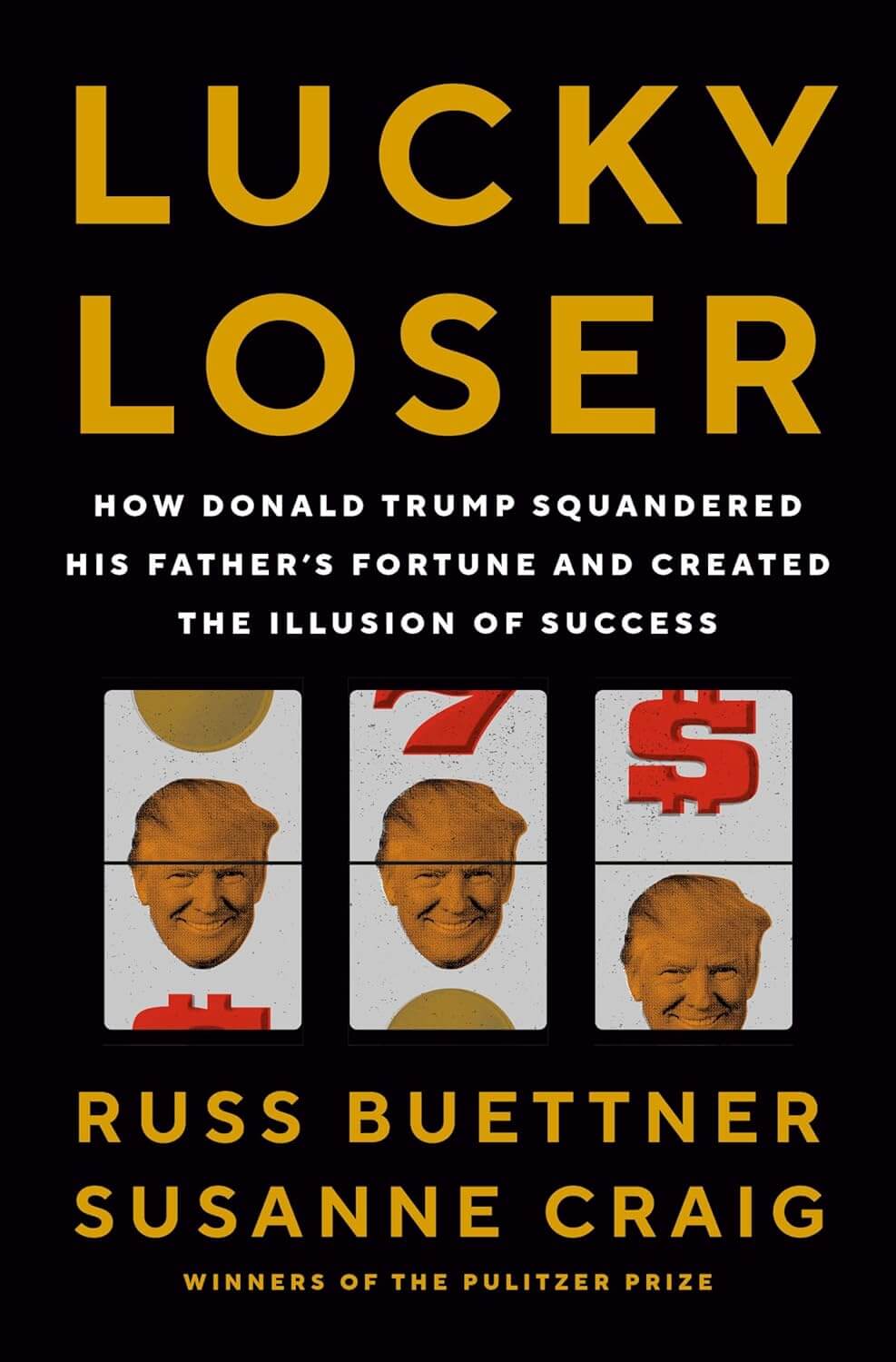
Lucky Loser by Russ Buettner book cover
Buy Book on Amazon

As an Amazon Associate, Sumizeit earns from qualifying purchases.

Book Summary

Lucky Loser Book Summary

By Russ Buettner

This Lucky Loser Book Summary covers the key ideas, lessons, and takeaways in about 20 minutes.

20 min read
Lucky Loser is a methodical dismantling of the self-made billionaire myth. Buettner and Craig demonstrate, through decades of financial records, tax documents, and contemporaneous reporting, that Donald Trump's wealth originated in his father's systematic exploitation of federal housing programs, was preserved and transferred through legally questionable but rarely prosecuted tax strategies, and was amplified by a media environment that rewarded the performance of success over its substance. Fred Trump built real things — thousands of apartments, carefully constructed and diligently managed — while navigating government programs with exceptional skill. Donald Trump built a brand, leveraged it aggressively, ran up debts that would have bankrupted a less famous man, and survived through a combination of inherited resources, lender credulity, and an almost preternatural talent for shaping his own public narrative. The title says it all: lucky, because the fortune was handed to him; a loser, because by almost every conventional measure of business acumen, his independent ventures failed. The book does not argue that Trump was uniquely corrupt — it places him within a broader ecosystem of developers, politicians, and financial institutions that collectively extracted public money for private gain. But it makes a compelling case that the persona he built was constructed on a foundation he neither created nor deserved full credit for.

Helps with these goals

4.8

Stars

Average ratings on iOS and Google Play

100,000+

Users

On all platforms

6+

Years

Experience igniting personal growth

Want the complete 20-minute summary?

  • Full structured summary
  • Video Summary
  • Podcast Summary
  • Key takeaways
  • Exercises
  • Quiz
  • Highlights and notes
  • Ask the book with AI

What is in the Lucky Loser book summary?

Below is a preview of Sumizeit’s expert-written summary of Lucky Loser by Russ Buettner. The full summary covers the book’s key ideas in text, audio, and video.

The story of Donald Trump's wealth does not begin with Donald Trump. It begins with his father, Fred Trump, a child of immigrant parents who came of age in Queens during a period when New York City was expanding rapidly outward into the boroughs. Fred was ambitious, mechanically minded, and possessed of an almost obsessive drive to control costs. Starting out in the 1920s building modest single-family homes in working-class neighborhoods, he developed a construction philosophy that would later define his rise: treat homebuilding like factory production. He excavated basements for entire city blocks simultaneously, pre-erected scaffolding around multiple structures at once, and moved the same specialized teams — plumbers, electricians, bricklayers — from building to building on a tight, repeating schedule. The press compared him to Henry Ford, and Fred accepted the compliment with pride.

But industry and efficiency alone did not make Fred Trump wealthy. The authors argue that his fortune was inseparable from the machinery of the American federal government. When the Great Depression strangled private credit markets and shut down residential construction across the country, President Roosevelt's administration created the Federal Housing Administration in 1934, a body designed to insure private mortgages and unlock financing for developers who agreed to build affordable housing. Fred quickly grasped the opportunity and learned to navigate the FHA's bureaucracy with the same efficiency he applied to his worksites. He would submit project plans along with cost estimates; if the FHA approved the appraised value of the finished project, construction loans flowed with almost no friction. The program essentially printed money for developers who knew how to use it, and Fred was among the most adept.

The Section 608 Windfall

Fred's real transformation from successful builder to major real estate baron came in the years immediately following World War II. As veterans flooded back into American cities and the demand for rental housing surged, Congress amended the National Housing Act to include Section 608 of Title VI, a program that offered federally guaranteed loans directly to developers for the construction of apartment complexes near military installations and industrial centers. Unlike earlier FHA programs, Section 608 did not require developers to verify that their actual construction costs matched their initial estimates. The government, desperate to accelerate housing production, prioritized volume over oversight.

Fred understood immediately what this loophole made possible. His first major apartment project under Section 608, Shore Haven in Brooklyn, contained 1,344 units and was financed with a federally guaranteed loan of over $9 million at a favorable interest rate stretched over four decades. By keeping actual construction costs well below his initial estimates, Fred walked away from the completed project with $1.5 million in surplus funds — money he had not invested himself and was not required to return. Emboldened, he launched Beach Haven, an even larger development of nearly 1,900 apartments, financed with $16 million. Again, construction costs came in below the loan amount. Again, the difference flowed to Fred.

By the time Congress and the IRS investigated…

The full structured summary is available after upgrading

Want the complete 20-minute summary?

  • Full structured summary
  • Video Summary
  • Podcast Summary
  • Key takeaways
  • Exercises
  • Quiz
  • Highlights and notes
  • Ask the book with AI

Who should read Lucky Loser?

Lucky Loser is essential reading for anyone interested in understanding how wealth is actually accumulated in America, particularly those skeptical of self-made billionaire narratives. It appeals to readers curious about the intersection of politics, media, and finance, as well as those seeking to understand how public subsidies have shaped private fortunes. Business students, journalists, and citizens concerned with tax policy and financial accountability will find compelling documented evidence throughout.

Why does Lucky Loser matter?

Lucky Loser challenges the dominant mythology of self-made success at a moment when wealth inequality and the influence of inherited advantage dominate public discourse. By tracing how federal housing programs, tax loopholes, and media manipulation enabled one family's rise, Russ Buettner reveals systemic patterns that remain embedded in American capitalism today. The book exposes how celebrity and perception can substitute for actual business competence, a dynamic that has only intensified in the social media age.

What are the key themes in Lucky Loser?

  • The role of government subsidies in creating private wealth
  • Tax avoidance strategies and their long-term intergenerational impact
  • How media perception shapes financial credibility and lending decisions
  • The gap between public image and actual business performance
  • Inherited advantage masquerading as self-made success
  • Celebrity as a substitute for demonstrated competence

What are the key lessons from the Lucky Loser book summary?

  1. Federal programs can be systematized for private extraction

    Fred Trump treated housing programs like Section 608 as exploitable loopholes rather than social initiatives, systematically extracting surplus value through cost underestimation and favorable loan terms that required no personal capital at risk.

  2. Wealth transfer requires sophisticated legal architecture

    The Trump family used trusts, intermediary companies, and paperless entities to redirect public revenues to private family benefit while minimizing tax obligations across generations.

  3. Actual business performance matters less than projected image

    Donald Trump's casinos, hotels, and ventures consistently failed financially, yet lenders continued extending credit because his media presence convinced them of his competence.

  4. Celebrity can function as collateral

    Banks and investors assumed that someone famous enough to appear on television and in major publications must be making sound financial decisions, allowing debt to accumulate far beyond what underlying business fundamentals justified.

  5. Personal brand licensing generates revenue independent of business success

    Trump earned substantial fees by licensing his name to projects in which he held minimal equity, profiting from association with his brand regardless of whether those ventures succeeded.

  6. Double-valuation strategies exploit regulatory gaps

    Presenting the same assets at low valuations to tax authorities and high valuations to lenders allowed the family to minimize inheritance taxes while maximizing borrowing capacity.

  7. Erasing the previous generation's contribution consolidates control

    Donald Trump systematically removed his father's name from the family enterprise and claimed credit for Fred's substantial achievements, making himself the sole visible architect of success.

  8. Fictional personas can serve strategic public relations purposes

    The 'John Baron' alias allowed Trump to contact journalists, plant stories, and attack critics while maintaining plausible deniability about his involvement in self-promotion.

  9. Media appearances create self-reinforcing cycles of credibility

    Each television appearance or magazine profile generated name recognition that attracted lenders and investors, whose capital then financed the lavish lifestyle required to maintain media visibility.

  10. Debt can be sustained indefinitely if fame prevents creditor action

    Trump's accumulated billion-dollar losses would have forced bankruptcy for less famous operators, but lenders hesitated to force collapse on someone whose public brand remained valuable.

  11. Published memoirs can reinforce false narratives during periods of failure

    The Art of the Deal, published during Trump's most catastrophic financial period, presented a dealmaking genius narrative that contradicted his actual business performance.

  12. Government programs were never designed with adequate oversight

    Section 608's emphasis on housing volume over verification created conditions where developers like Fred Trump could systematically maximize extraction without fraud prosecution.

  13. Tax strategies rarely face prosecution even when legally questionable

    Congressional investigators and tax authorities identified improper wealth redirection and tax undervaluation within the Trump organization, yet prosecution never materialized.

  14. Inherited assets can be reframed as self-built accomplishments

    Donald claimed ownership of apartment complexes built by his father years before his arrival and misattributed Fred's subsidized housing expertise to himself.

  15. Forbes list inclusion validates wealth claims beyond scrutiny

    When Jonathan Greenberg included Donald on the initial Forbes 400 list based partly on false ownership claims, the publication's authority gave those claims credibility that persisted.

  16. Lifestyle purchases signal success even when finances deteriorate

    The purchase of Khashoggi's yacht and its expensive renovations during peak financial stress illustrated how Trump used luxury acquisitions to maintain an image of unlimited wealth.

  17. Licensing agreements allow wealth extraction without ongoing business responsibility

    Trump earned fees by permitting the use of his name on hotels and condominiums while avoiding liability if those projects failed, transferring brand value into personal income.

  18. Media environment determines what counts as credible evidence of success

    Television and magazine coverage celebrating Trump's ambitions created an alternative reality where television appearances substituted for actual financial results.

  19. The myth of self-made success requires systematic erasure of others' contributions

    Presenting oneself as self-made requires minimizing father's role, claiming others' achievements, and controlling narratives through media relationships and false identities.

  20. Wealth systems persist because individuals benefit from obscuring them

    Developers, politicians, lenders, and media figures all benefited from the ecosystem that enabled Trump wealth extraction, creating disincentives for exposure or accountability.

Want the complete 20-minute summary?

  • Full structured summary
  • Video Summary
  • Podcast Summary
  • Key takeaways
  • Exercises
  • Quiz
  • Highlights and notes
  • Ask the book with AI

How can you apply ideas from Lucky Loser?

  • Examine the tax returns and financial documents of wealthy figures claiming self-made status to verify actual sources of wealth and inherited advantages
  • Scrutinize government program designs to identify loopholes that allow private extraction of public resources and implement verification mechanisms
  • Develop media literacy to recognize when celebrity and published image substitute for demonstrated financial competence or actual business success
  • Implement transparency requirements in inheritance tax valuations to prevent systematic double-valuation strategies that minimize tax while maximizing lending capacity
  • Create regulatory frameworks that prevent intermediary shell companies from redirecting public program revenues to private family benefit without legitimate business purpose
  • Design lending criteria that weigh media presence less heavily than actual financial metrics, audited statements, and demonstrated business outcomes
  • Establish investigation protocols for wealth claims submitted to rankings and publications to verify ownership stakes, attribution of achievements, and source documentation

What common mistakes do readers make with Lucky Loser?

  • Assuming that someone famous or frequently featured in media must possess business competence proportional to their visibility
  • Believing that inherited wealth is a reliable indicator of individual business acumen rather than systemic advantage and access
  • Treating published autobiographies or memoirs as objective financial history rather than strategic self-presentation during periods of crisis
  • Overlooking how government subsidies and tax loopholes systematically enable wealth accumulation among those who understand regulatory machinery

Sumizeit Exercises Apply what you've learned

Turn ideas from Lucky Loser into action with a short guided reflection: identify the biggest takeaway, connect it to your life, and commit to one step you can take in the next 24 hours.

Unlock book-specific exercises with a Sumizeit membership

Unlock Exercises

What is the expert analysis of Lucky Loser?

Overview

Lucky Loser, authored by investigative journalists Russ Buettner and Susanne Craig, is a meticulously researched exposé that challenges the widely accepted narrative of Donald Trump as a self-made billionaire. Drawing on extensive tax records, financial documents, and contemporaneous reporting, the book traces the origins of the Trump family fortune back to Fred Trump’s exploitation of federal housing subsidies and reveals how Donald Trump leveraged inherited wealth and media savvy to construct a public persona that often obscured the underlying financial realities. Buettner and Craig’s work stands out for its rigorous investigative pedigree, building on their Pulitzer Prize-winning reporting at The New York Times and offering a comprehensive account of the intertwined dynamics of government policy, family strategy, and celebrity culture that shaped the Trump empire.

Core Thesis

The central argument of Lucky Loser is that Donald Trump’s wealth and business success are fundamentally the product of inherited advantages and systemic exploitation rather than individual entrepreneurial genius. The authors contend that Fred Trump’s adept manipulation of federal housing programs, particularly Section 608 loans, created a financial foundation that was then preserved and expanded through sophisticated but legally dubious tax avoidance strategies. Donald Trump, in turn, capitalized on this foundation by cultivating a media-driven celebrity brand that substituted image for substance, enabling him to secure financing and maintain an illusion of success despite recurrent financial failures. Ultimately, the book dismantles the myth of the “self-made” billionaire by revealing how public resources were funneled into private fortunes within a broader ecosystem of political and financial complicity.

Strengths

  • Thorough Investigative Research: The book’s strength lies in its exhaustive use of primary source materials, including confidential tax returns and government records, which lends considerable credibility and depth to its claims.
  • Nuanced Historical Context: By situating Fred Trump’s rise within the evolution of federal housing policy and New York’s urban development, the authors provide a textured understanding of how public subsidies shaped private real estate fortunes.
  • Complex Portrait of Celebrity and Capital: The analysis of Donald Trump’s media strategies and the construction of his public persona offers valuable insights into the interplay between image, reputation, and financial leverage in late twentieth-century America.
  • Balanced Attribution: The book carefully distinguishes between Fred Trump’s tangible business achievements and Donald Trump’s more performative successes, avoiding simplistic character judgments and instead focusing on systemic factors.
  • Contribution to Public Understanding: By exposing the mechanisms of wealth transfer and tax avoidance, the book adds an important dimension to ongoing debates about inequality, privilege, and the role of government in private wealth accumulation.

Critiques & Counterarguments

  • Potential Overemphasis on Structural Factors: While the book convincingly documents inherited advantages, some readers might argue that it underplays Donald Trump’s own business risks and occasional strategic successes, which complicate a purely deterministic narrative.
  • Limited Exploration of Broader Industry Practices: The focus on the Trump family’s exploitation of federal programs might benefit from a more comparative analysis of contemporaneous developers to contextualize whether these practices were exceptional or endemic.
  • Celebrity as a Double-Edged Sword: The portrayal of Trump’s media savvy as primarily a tool for obfuscation may overlook how celebrity can also create genuine economic opportunities and mobilize capital in ways that traditional business metrics fail to capture.
  • Opposing Schools of Thought: Advocates of free-market entrepreneurship might contest the book’s implicit critique by emphasizing the role of risk-taking, deal-making, and brand-building as legitimate forms of value creation, even if intertwined with inherited privilege.
  • Real-World Evidence of Longevity: Despite documented financial crises, Trump’s ability to repeatedly restructure debt and maintain access to capital could be interpreted as a form of business acumen rather than mere luck, challenging the “loser” label.

Who Should Read This

Lucky Loser is essential reading for scholars and practitioners interested in the intersections of business ethics, political economy, and media studies. It will appeal to readers seeking a rigorous, evidence-based critique of American wealth-building myths and those curious about how public policy shapes private fortunes. Additionally, the book offers valuable lessons for policymakers, journalists, and financial professionals concerned with transparency, accountability, and the social consequences of concentrated wealth. For anyone aiming to understand the complex realities behind one of the most controversial figures in contemporary business and politics, Buettner and Craig’s work provides an indispensable, sobering perspective.

Frequently asked questions about the Lucky Loser book summary

What is Lucky Loser about?

Lucky Loser by Russ Buettner is an investigative account of how the Trump family fortune was built through exploitation of federal housing programs, preserved through questionable tax strategies, and transformed across generations. The book traces Donald Trump's path from inheriting a substantial real estate portfolio to building a celebrity brand that attracted lenders despite massive business failures, revealing the gap between his public image as a self-made dealmaker and his actual financial performance.

Who should read Lucky Loser?

Anyone skeptical of self-made billionaire narratives should read Lucky Loser, as should those interested in wealth inequality, tax policy, media influence, and how public subsidies create private fortunes. The book appeals to business students, journalists, policy advocates, and citizens seeking to understand the systemic mechanisms that allow wealth to accumulate and perpetuate beyond demonstrated competence.

What are the main takeaways from Lucky Loser?

The main takeaway from Lucky Loser is that Donald Trump's wealth originated in his father's systematic exploitation of federal housing programs, was preserved through legally questionable tax strategies, and was amplified by a media environment that rewarded image over substance. Buettner and Craig demonstrate that Trump's actual independent business ventures failed catastrophically, yet lenders continued extending credit because his celebrity convinced them of his competence—revealing that fame can function as a substitute for demonstrated financial acumen in American capitalism.

How did Fred Trump build his wealth?

Fred Trump built wealth through exceptional skill in navigating federal housing programs, particularly the FHA programs of the 1930s and Section 608 following World War II. He systematized construction like factory production and exploited loopholes in government loan programs that did not verify actual construction costs matched estimates, allowing him to extract millions in surplus funds without personal capital at risk while building thousands of apartments.

What was the Section 608 program and how did the Trump family exploit it?

Section 608 was a post-World War II federal program offering guaranteed loans to developers for apartment construction near military and industrial centers, with minimal government oversight of actual construction costs. Fred Trump submitted high cost estimates to the government, completed projects well below those estimates, and kept the surplus difference—generating $1.5 million from Shore Haven and similar windfalls from Beach Haven without investing personal capital or returning the difference.

How did Donald Trump gain credibility despite business failures?

Donald Trump cultivated credibility primarily through celebrity and media appearances rather than demonstrated business success. He appeared on television programs like Lifestyles of the Rich and Famous, granted interviews to journalists covering his ambitious projects, and licensed his name to hotels and condominiums—allowing media visibility to convince lenders and investors of his competence even as his casinos, hotels, and airlines accumulated massive losses.

What was the 'John Baron' persona?

John Baron (sometimes spelled Barron) was a fictional identity that Donald Trump created to manage public relations early in his career. As John Baron, Trump called journalists to plant favorable stories, contacted competitors under false pretenses, and directed media inquiries—effectively conducting his own self-promotion while maintaining plausible deniability about his involvement in orchestrating press coverage.

How did the Trump family transfer wealth while minimizing taxes?

The Trump family used sophisticated legal structures including trusts, ninety-nine-year property leases to children's trusts, and paperless intermediary companies like All County Building Supply to redirect public housing revenues to family benefit. They also employed double-valuation strategies, presenting the same properties at low values to tax authorities and high values to lenders, and ultimately retained an appraiser who valued Fred's rent-stabilized portfolio far below market comparables for inheritance tax purposes.

About Sumizeit

Sumizeit is a profitable Scomy LLC company based in Miami, Florida. It has been helping readers learn from nonfiction books for 7 years with expert-written summaries in text, audio, podcast, and video.

Want the complete 20-minute summary?

  • Full structured summary
  • Video Summary
  • Podcast Summary
  • Key takeaways
  • Exercises
  • Quiz
  • Highlights and notes
  • Ask the book with AI

Here's why readers love Sumizeit

Join thousands of learners getting smarter every day

"Great experience. Detailed summaries. Loved the gamification feature. Makes learning fun. Good customer service. I recommend Sumizeit to anyone. You'll learn a lot."

Chen, TrustPilot

"I always felt busy but still wanting to keep up with the book discussion in my friend group. This was a great supplement to help me keep reading the books I find fun while keeping up with important books."

Daniel, TrustPilot

"I love this website. Instead of scrolling social media, I find myself learning a lot. I use it everyday. I recommend this app for anyone who is too busy and wants to get up to speed with their favorite books."

Erica, TrustPilot

Lucky Loser Book Summary PDF

Looking for a Lucky Loser Book Summary PDF you can save and revisit offline? Our Lucky Loser Book Summary PDF captures the book’s core ideas in a clean, printable format — the key frameworks, takeaways, and structure without the fluff. Download the Lucky Loser Book Summary PDF when you want a reference you can annotate, share with your team, or review on the go. Get your Lucky Loser Book Summary PDF from the download page below.

Download Lucky Loser Book Summary PDF

People also liked these summaries

Readers who explored Lucky Loser often enjoyed these titles next.

Browse all books →

Want the complete 20-minute summary?

  • Full structured summary
  • Video Summary
  • Podcast Summary
  • Key takeaways
  • Exercises
  • Quiz
  • Highlights and notes
  • Ask the book with AI