


As an Amazon Associate, Sumizeit earns from qualifying purchases.
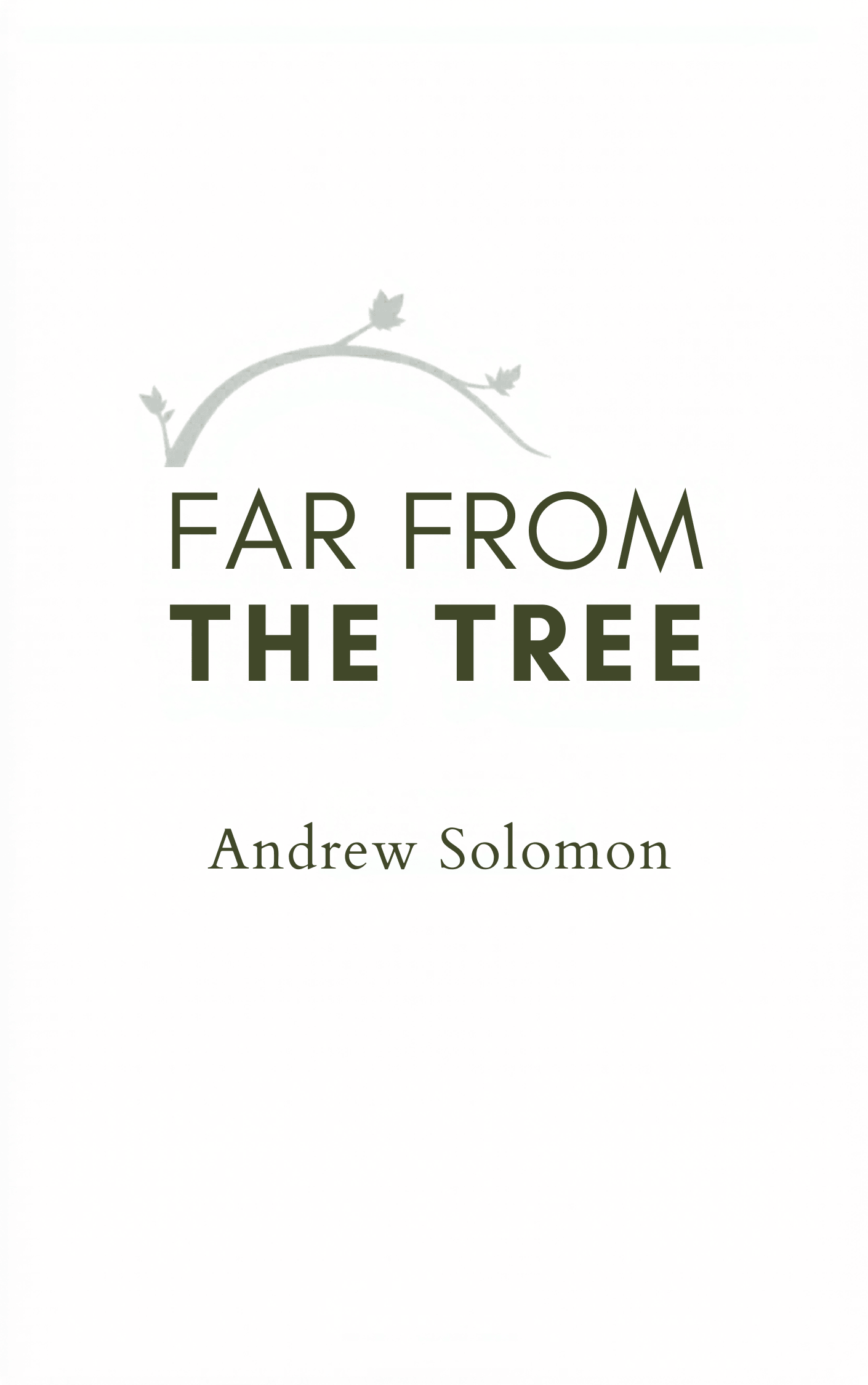
Far From the Tree Book Summary
This Far From the Tree Book Summary covers the key ideas, lessons, and takeaways in about 20 minutes.
Helps with these goals
Want the complete 20-minute summary?
- Full structured summary
- Video Summary
- Podcast Summary
- Audio summary
- Key takeaways
- Exercises
- Quiz
- Highlights and notes
- Ask the book with AI
What is in the Far From the Tree book summary?
Below is a preview of Sumizeit’s expert-written summary of Far From the Tree by Andrew Solomon. The full summary covers the book’s key ideas in text, audio, and video.
Far From the Tree is Andrew Solomon's monumental study of what happens when a child turns out to be fundamentally different from what their parents anticipated. Over the course of a decade, Solomon — a psychologist, journalist, and lecturer who began the project after writing a 1994 New York Times Magazine article about Deaf culture — conducted interviews with more than three hundred families raising children whose identities diverged sharply from their parents' own. The result is a book of unusual scope and unusual depth, treating in successive chapters families of children with dwarfism, Down syndrome, autism, schizophrenia, deafness, multiple severe disabilities, prodigies of extraordinary gift, children conceived through rape, transgender children, and children who have committed serious crimes.
The book's central insight is that all of these families, however different the circumstances they navigate, share something fundamental: they have had to abandon the version of family life they originally imagined, learn the texture of a condition or identity they did not previously understand, and make the harder-than-it-sounds decision of whether to receive their child as the person the child actually is. The families who succeed in doing this, Solomon finds, often report that the experience expanded them in ways nothing else could have, while the families who do not succeed often inflict on their children — and on themselves — sustained damage that the surrounding culture too readily accepts.
Solomon is explicit that his project is not a defense of a single political or therapeutic position. He sympathizes with parents who pursue medical interventions and with those who reject them; with communities that frame a condition as illness and with communities that frame it as identity; with disability rights advocates and with families exhausted by the burdens of severe care. His underlying argument is moral rather than partisan. A society that treats human difference as something to be eliminated, hidden, or pitied is a society that has not yet understood itself, and the families who raise exceptional children are, often without intending to be, the leading edge of that understanding.
Vertical and Horizontal Identities
The conceptual scaffolding of the book is Solomon's distinction between vertical and horizontal identities. Vertical identities are the parts of a person that travel down the family tree — ethnicity, native language, often religion, often nationality. Parents typically share these traits with their children, recognize them, and feel competent to transmit them. The vertical identity is the part of a person whose contours are already familiar to the household into which the person is born.
Horizontal identities are the parts of a person that do not come down the family tree. They come, instead, from the lateral connections the person eventually finds with others who share the trait. A deaf child born to hearing parents holds a horizontal identity, because no one in the immediate family fully knows what it is to be deaf; the child will eventually have to look outside the household for the people who do know.
Want the complete 20-minute summary?
- Full structured summary
- Video Summary
- Podcast Summary
- Audio summary
- Key takeaways
- Exercises
- Quiz
- Highlights and notes
- Ask the book with AI
Who should read Far From the Tree?
Far From the Tree is essential for parents navigating unexpected differences in their children—whether disability, giftedness, gender identity, deafness, or any trait that diverges from family expectations. It is also invaluable for anyone seeking to understand how families adapt, how identity forms outside the family unit, and how human connection transcends difference.
Why does Far From the Tree matter?
In an era of increasing polarization around difference, Andrew Solomon's decade-long study of families raising children with horizontal identities offers a moral framework grounded in real lives rather than ideology. The book demonstrates that how we receive human difference—within families and in society—shapes not only individual flourishing but our collective capacity for inclusion and ethical growth.
What are the key themes in Far From the Tree?
- Vertical versus horizontal identities and their different developmental demands
- The role of belonging and community recognition in psychological health
- How stigma damages people and how its absence transforms possibilities
- The gap between parental empathy and the unknown experience of the child
- Accepting the child as they are versus attempting to normalize difference
What are the key lessons from the Far From the Tree book summary?
The distinction between vertical and horizontal identities
Traits passed down through families (ethnicity, language, religion) differ fundamentally from traits the child must discover laterally (deafness, autism, gender identity, giftedness). Understanding this distinction reshapes how parents approach acceptance and community-building.
Belonging is inseparable from identity
The human brain is wired for belonging; recognition from others is not a luxury but closer to a survival need. For children with horizontal identities, finding community becomes as important as family acceptance.
Stigma operates through three distinct mechanisms
Minority stress, internalized stigma, and rejection sensitivity are the specific psychological pathways through which cultural prejudice damages individuals. Dismantling stigma produces measurably different life outcomes.
The empathy gap is a structural challenge, not a moral failing
Parents cannot reach traits they do not share through introspection alone; empathy must be deliberately constructed. This is buildable but requires acknowledgment that the work is real.
The desire for normalcy can harden into harmful normalization projects
When parents treat a horizontal identity as a defect to repair, the message to the child is that they themselves are not acceptable. This damage typically outlasts any benefit the normalization project produces.
Medical and social models of disability need not be mutually exclusive
Families can simultaneously pursue medical interventions that help their child and advocacy work that pushes society to accommodate better. Both projects answer different parts of the same situation.
Working through parental grief privately prevents inflicting it on the child
Grief about the loss of expected futures is legitimate but should be processed away from the child's face. The child should not carry the burden of managing the parent's disappointment.
Education about the child's condition requires listening to adults who live it
Diagnosis documents and clinical frameworks are insufficient; parents who seek out and listen to adults with the same trait or identity gain crucial perspective that shapes wiser decisions.
Alleviating practical difficulties differs fundamentally from repairing identity
Helping a deaf child navigate a hearing world is appropriate; treating deafness itself as something that requires fixing in the child is different and harmful. Parents must learn this distinction.
Celebrated milestones should be measured by the child's own progress, not peer norms
Parents who celebrate breakthroughs specific to their child's circumstances, rather than waiting for typical-development checkpoints, affirm the child's actual trajectory.
Support networks are not a luxury but a necessity
The burden of unfamiliar caregiving cannot be carried by a household alone. Building networks reduces isolation and improves outcomes for both parent and child.
Professional teams must honor family values, not override them
The most effective interventions come from clinicians and educators who take seriously what families believe matters most, rather than imposing a single therapeutic orthodoxy.
Parental experience magnifies existing traits while pushing toward growth
Raising a child with a horizontal identity intensifies who the parent already is—generous becomes more generous, controlling becomes more controlling—but it also forces transformation beyond the parent's existing patterns.
Loving a child as they are teaches a different kind of love
Parental love based on the child's actual identity rather than the parent's projection is a kind of loving the parent may not have known before and may not have chosen otherwise.
The family is transformed by accepting the child, not just the child by being accepted
Parents often discover that the child who did not reflect their expectations has reshaped who the parent fundamentally is, in ways that would not have occurred otherwise.
Some conditions resist redemptive narratives, and that honesty matters
Not every horizontal identity resolves into a positive outcome; acknowledging this prevents families from feeling that their struggle to accept their child's suffering is itself a failure.
Early intervention timing varies by condition and requires careful discernment
Where early intervention helps, it should be pursued; where it is contested by adults who grew up under it, their voices deserve serious consideration rather than dismissal.
Advocacy inside institutional systems is often relentless and necessary
Schools, medical systems, and insurance structures were not designed with all children in mind; parents must persistently push these systems to adapt rather than expecting their child to fit existing frameworks.
Planning for the child's future beyond the parent's lifetime is an act of love
Parents of children with significant needs must carefully consider guardianship, living situations, and support systems that will outlast them, extending their protection forward.
Human moral expansion emerges from receiving difference within intimate relationships
The practice of meeting a child where they actually are, rather than where the parent expected them to be, is one of the most reliable engines of ethical growth the human species possesses.
Want the complete 20-minute summary?
- Full structured summary
- Video Summary
- Podcast Summary
- Audio summary
- Key takeaways
- Exercises
- Quiz
- Highlights and notes
- Ask the book with AI
How can you apply ideas from Far From the Tree?
- Educate yourself thoroughly about your child's condition or identity by seeking out primary sources, communities, and adults who have lived that experience, not just clinical diagnoses
- Separate the work of alleviating your child's practical difficulties from the work of accepting their identity, recognizing these are distinct projects with different goals
- Build or join a support network of other parents, professionals, and community members who understand the specific terrain you are navigating
- Process your own grief about lost expectations away from your child, in order to avoid burdening them with managing your disappointment
- Advocate persistently within schools, medical systems, and social institutions to ensure they accommodate your child rather than expecting your child to fit unchanged systems
- Seek professional teams that honor your family's values rather than imposing a single therapeutic orthodoxy, and dismiss practitioners who do not respect your child's agency
- Celebrate milestones specific to your child's own trajectory rather than measuring progress against peer-based developmental norms
What common mistakes do readers make with Far From the Tree?
- Assuming that parental love should be enough, without recognizing that your child also needs community recognition from people who share their trait or identity
- Treating a horizontal identity as a temporary phase to be steered out of, rather than as a fact about the person your child is becoming
- Pursuing normalization projects that center your own comfort rather than your child's flourishing and wellbeing
- Failing to seek out and listen to adults who have lived your child's experience, and instead relying solely on professional opinions formed outside community contexts
Sumizeit Exercises Apply what you've learned
Turn ideas from Far From the Tree into action with a short guided reflection: identify the biggest takeaway, connect it to your life, and commit to one step you can take in the next 24 hours.
What is the expert analysis of Far From the Tree?
Overview
Far From the Tree, authored by Andrew Solomon, stands as a landmark contribution to contemporary discussions on identity, family, and difference. Solomon, a distinguished writer, psychologist, and activist, brings to this work a rare combination of rigorous scholarship and empathetic narrative. Drawing on over a decade of research and more than three hundred family interviews, the book explores the profound challenges and transformations that arise when children diverge significantly from their parents’ expectations and identities. Its significance lies not only in its breadth—covering conditions from deafness to prodigious talent, from transgender identity to schizophrenia—but also in its depth, offering nuanced insights into the moral and psychological complexities of acceptance and belonging.
Core Thesis
At the heart of Solomon’s argument is the distinction between vertical and horizontal identities. Vertical identities—ethnicity, language, religion—are inherited traits shared and recognized within families. Horizontal identities, by contrast, are those that do not descend through the family tree but emerge laterally through communities outside the family, such as deafness, autism, or transgender identity. Solomon contends that the fundamental challenge for families raising children with horizontal identities is the necessity to relinquish preconceived notions of family continuity and to embrace a child’s authentic self, often in the face of cultural stigma and personal grief. This process, while arduous, can expand the moral and emotional capacities of both parents and children, fostering a broader societal understanding of human diversity.
Strengths
- Interdisciplinary Approach: Solomon skillfully integrates psychology, sociology, philosophy, and personal narrative, creating a richly textured analysis that transcends disciplinary boundaries.
- Empirical Depth: The extensive qualitative data from hundreds of interviews lends the book a compelling authenticity and diversity of perspective, avoiding reductive generalizations.
- Nuanced Moral Framework: Rather than advocating a singular political or therapeutic stance, Solomon offers a moral argument centered on acceptance, belonging, and the ethical imperative to recognize difference without erasure.
- Conceptual Innovation: The vertical-horizontal identity framework provides a powerful lens for understanding identity formation, family dynamics, and community belonging in a modern, pluralistic society.
- Compassionate Portrayal of Parents: The book’s empathetic depiction of parental struggles, including the psychological pressures of empathy gaps and cultural norms, humanizes often stigmatized experiences.
Critiques & Counterarguments
- Potential Overgeneralization of Horizontal Identities: While the vertical-horizontal dichotomy is illuminating, some critics might argue that it risks oversimplifying the fluidity and intersectionality of identities, particularly in multicultural or non-nuclear family contexts.
- Limited Engagement with Structural Inequalities: The book foregrounds familial and community acceptance but could delve deeper into how systemic factors—such as socioeconomic status, institutional discrimination, and policy failures—shape the experiences of families and children with horizontal identities.
- Challenges to the Universality of Moral Expansion: Solomon’s thesis that embracing difference expands moral imagination might be contested by real-world evidence where acceptance is partial or conditional, and where families may experience profound trauma or breakdown rather than growth.
- Opposing Philosophical Views on Disability and Value: The book critiques Peter Singer’s utilitarian framework but does not fully engage with alternative philosophical traditions (e.g., existentialist or relational ethics) that might offer different perspectives on the moral status of lives affected by disability or cognitive difference.
- Temporal and Cultural Specificity: Some examples, particularly those related to transgender children or psychiatric conditions, may reflect cultural attitudes and medical practices prevalent at the time of research but which continue to evolve rapidly, potentially dating parts of the analysis.
Who Should Read This
Far From the Tree is essential reading for scholars and practitioners in psychology, social work, disability studies, and family therapy, as well as for policymakers interested in inclusive social frameworks. It also offers profound insights for parents and caregivers navigating the complexities of raising children whose identities challenge normative expectations. Beyond these groups, the book speaks to a broader audience invested in questions of identity, belonging, and human dignity, inviting readers to reconsider the boundaries of family, community, and moral responsibility in an increasingly diverse world.
Frequently asked questions about the Far From the Tree book summary
What is Far From the Tree about?
Far From the Tree is Andrew Solomon's comprehensive study of families raising children whose identities diverge sharply from parental expectations—children who are deaf, have autism, dwarfism, Down syndrome, exceptional giftedness, gender identities at odds with assigned sex, or other horizontal identities. Based on interviews with over three hundred families across a decade, Solomon explores how families navigate the gap between the child they expected and the child they have, and how that navigation reshapes both child and parent.
Who should read Far From the Tree?
Far From the Tree is essential for parents of children with unexpected differences, whether disability, neurodivergence, giftedness, gender identity, or deafness. It is also valuable for educators, clinicians, policymakers, and anyone seeking to understand identity formation, family resilience, and how societies can better honor human difference. Readers interested in ethics, psychology, and the nature of acceptance will find the book deeply rewarding.
What are the main takeaways from Far From the Tree?
The core message is that families who receive their children as they actually are—rather than attempting to repair or normalize them—report profound personal growth and raise children who thrive. Solomon argues that accepting horizontal identities requires education, community connection, working through parental grief privately, and advocacy within institutions. Most crucially, he demonstrates that the practice of meeting human difference inside the family is the foundation on which any larger ethic of inclusion depends.
What is the difference between vertical and horizontal identities in Far From the Tree?
Vertical identities are traits that pass down through families—ethnicity, language, religion, nationality—traits parents typically share and feel competent to transmit. Horizontal identities are traits the child must discover laterally from others who share them, because the family itself does not: deafness, autism, gender identity, giftedness, or other conditions. This distinction reshapes parenting strategy, because horizontal identities require community connection, not just family transmission.
How does stigma affect children with horizontal identities according to Far From the Tree?
Solomon identifies three mechanisms through which stigma damages people: minority stress (cumulative burden of discrimination and disclosure calculation), internalized stigma (absorbing the culture's negative judgments into one's self-image), and rejection sensitivity (heightened watchfulness for the next social rejection). He shows that children whose traits are received without panic or grief develop greater freedom and integration, while children whose traits are treated as catastrophes carry that weight into adulthood.
What does Andrew Solomon say parents should do when their child has a horizontal identity?
Solomon distills best practices from families with the best outcomes: educate yourself beyond diagnosis documents, listen to adults with the trait your child has, process your grief privately, distinguish between alleviating practical difficulties and attempting to repair identity, build support networks, work with professionals who honor your values, pursue early intervention where it helps while respecting adult voices who contest it, and advocate within institutional systems. Most importantly, receive your child as the person they are.
Does Far From the Tree take sides on controversial treatments like cochlear implants?
No. Solomon deliberately refuses to flatten debates like the one over cochlear implants. He interviews families on every side, including Deaf parents who chose implants and hearing parents who chose sign language. His point is that parents who imagine these choices as obvious have not yet talked to enough Deaf adults; the richness of the decision lies in understanding both the medical and cultural dimensions, and in honoring the child's voice as they grow.
How does Far From the Tree address disability and worth?
Solomon directly challenges philosophers like Peter Singer who argue that certain cognitive capacities determine whether a life has moral weight. Drawing on the actual lives he has documented, Solomon argues that children with profound disabilities are loved, they love, they form relationships, and they have presence and effect—making them fully persons. Any philosophy that cannot see them this way, he argues, has simply stopped looking at the evidence.
About Sumizeit
Sumizeit is a profitable Scomy LLC company based in Miami, Florida. It has been helping readers learn from nonfiction books for 7 years with expert-written summaries in text, audio, podcast, and video.
Want the complete 20-minute summary?
- Full structured summary
- Video Summary
- Podcast Summary
- Audio summary
- Key takeaways
- Exercises
- Quiz
- Highlights and notes
- Ask the book with AI
Here's why readers love Sumizeit
Join thousands of learners getting smarter every day
"Great experience. Detailed summaries. Loved the gamification feature. Makes learning fun. Good customer service. I recommend Sumizeit to anyone. You'll learn a lot."
"I always felt busy but still wanting to keep up with the book discussion in my friend group. This was a great supplement to help me keep reading the books I find fun while keeping up with important books."
"I love this website. Instead of scrolling social media, I find myself learning a lot. I use it everyday. I recommend this app for anyone who is too busy and wants to get up to speed with their favorite books."
Far From the Tree Book Summary PDF
Looking for a Far From the Tree Book Summary PDF you can save and revisit offline? Our Far From the Tree Book Summary PDF captures the book’s core ideas in a clean, printable format — the key frameworks, takeaways, and structure without the fluff. Download the Far From the Tree Book Summary PDF when you want a reference you can annotate, share with your team, or review on the go. Get your Far From the Tree Book Summary PDF from the download page below.
Download Far From the Tree Book Summary PDFPeople also liked these summaries
Readers who explored Far From the Tree often enjoyed these titles next.
Want the complete 20-minute summary?
- Full structured summary
- Video Summary
- Podcast Summary
- Audio summary
- Key takeaways
- Exercises
- Quiz
- Highlights and notes
- Ask the book with AI
Featured Book Titles
Popular Book Summaries at sumizeit, leading book summary app