


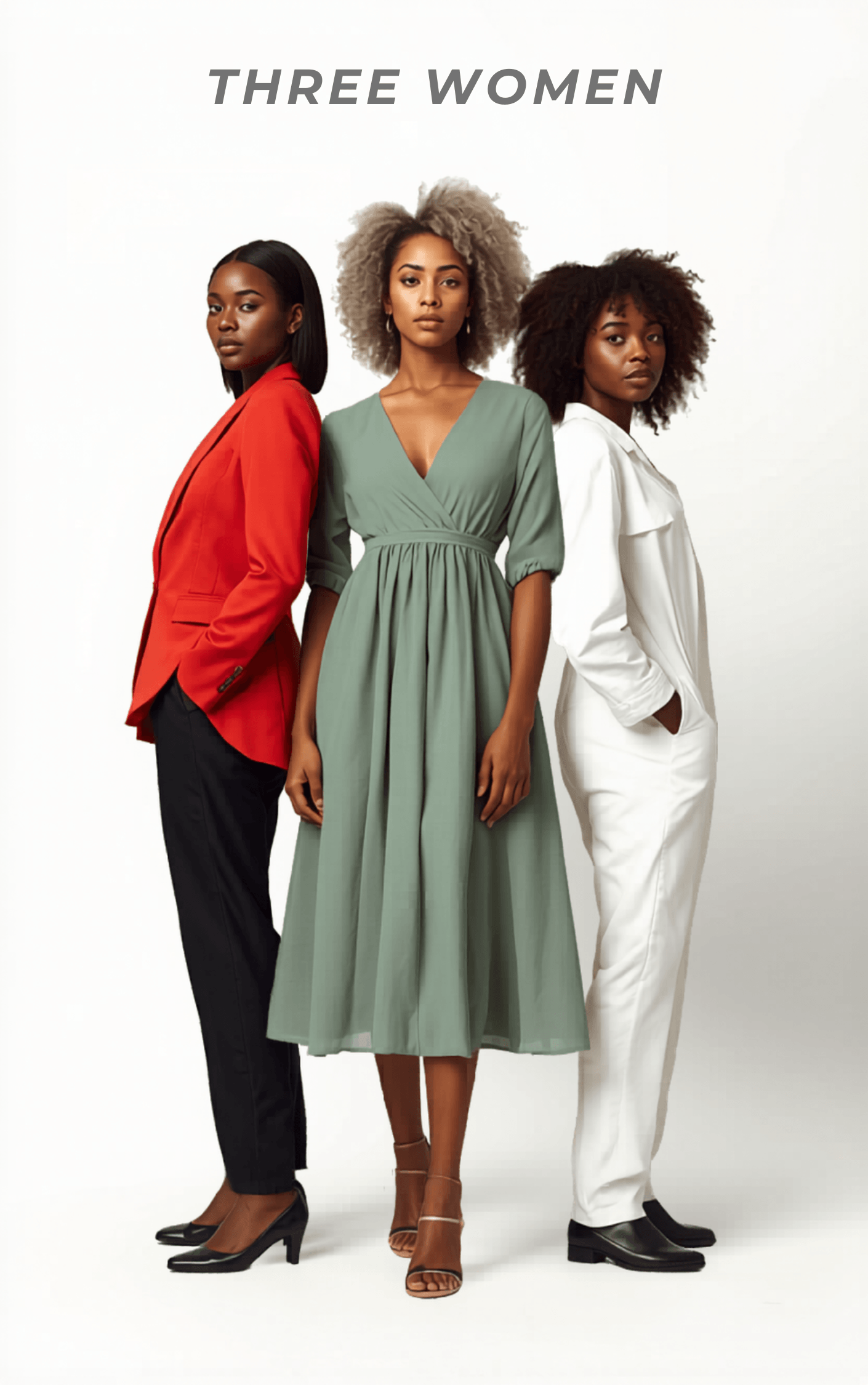
Prefer the print book? Buy on Amazon
As an Amazon Associate, Sumizeit earns from qualifying purchases.
Three Women Book Summary
This Three Women Book Summary covers the key ideas, lessons, and takeaways in about 20 minutes.
Helps with these goals
Want the complete 20-minute summary?
- Full structured summary
- Video Summary
- Podcast Summary
- Audio summary
- Key takeaways
- Exercises
- Quiz
- Highlights and notes
- Ask the book with AI
Not ready to upgrade?
Get this summary + 2 more picks sent to your inbox, free.
What is in the Three Women book summary?
Below is a preview of Sumizeit’s expert-written summary of Three Women by Lisa Taddeo. The full summary covers the book’s key ideas in text, audio, and video.
Three Women is a work of immersive narrative nonfiction that took the journalist Lisa Taddeo nearly a decade to research and write. To produce it, she crossed the United States six separate times, lived for stretches in the towns where her subjects' lives unfolded, and sat with each woman through hours upon hours of interviews — sometimes spread across years — until the texture of their daily lives, their inner monologues, and the people around them became fully legible to her. The resulting book is a slow, intimate, deeply reported portrait of three real American women whose erotic and emotional lives were not the kind of thing they could safely speak about anywhere else.
The book argues, by accumulation rather than by direct statement, that the inner life of female longing is far more complicated, more layered, and more determined by personal history than the prevailing cultural narratives allow. Where mainstream conversations about desire often deploy either tidy empowerment slogans or moral disapproval, Taddeo declines both. She wants the reader to sit very close to her subjects, to feel what they feel without commentary or judgment, and to come away understanding that the things women want — and the things they have done, or had done to them, in pursuit of those wants — refuse to fit any clean ideological frame.
The three women at the heart of the book — Lina in suburban Indiana, Maggie in Fargo, North Dakota, and Sloane in a coastal town in the Northeast — could not appear, on the surface, more different from one another. One is a stay-at-home mother in a sexless marriage, one is a high school student who alleges an affair with her married English teacher, and one is the elegant proprietress of a high-end restaurant whose husband watches her sleep with other people. What unites them, in Taddeo's framing, is the shared experience of trying to want something honestly inside cultures and households that have not given them permission to want anything at all.
How the Book Came to Be
Taddeo introduces her project by way of her own mother, who, she observes, never seemed to allow herself a single visible desire of her own. That memory pushed her to wonder what other women carried beneath the surface of their dutiful lives, and the original premise of the book had actually been to focus on the desires of men. As she conducted early interviews, however, she found the male accounts she gathered to be repetitive in a way she had not expected — patterned, recognizable, often performative. The female accounts, by contrast, kept opening into stranger and more interior territory the longer she listened. She changed direction.
To find her subjects, she posted notices in towns across the country, joined community groups, and sat in diners and coffee shops, asking the women she met to tell her about their lives.
Want the complete 20-minute summary?
- Full structured summary
- Video Summary
- Podcast Summary
- Audio summary
- Key takeaways
- Exercises
- Quiz
- Highlights and notes
- Ask the book with AI
Who should read Three Women?
Three Women is essential reading for anyone interested in understanding the complexity of female desire, marriage, and the interior lives women keep hidden. It's particularly valuable for readers who want to move beyond simplistic cultural narratives about women's sexuality and those seeking deep, empathetic portraits of ordinary lives shaped by extraordinary longings.
Why does Three Women matter?
In a culture that often reduces women's desires to either empowerment slogans or moral judgment, Three Women offers something rare: unflinching, judgment-free access to how women actually experience wanting, loving, and living in marriages and relationships. The book argues that understanding female desire—in all its complication and contradiction—is essential to understanding what women's lives actually cost them.
What are the key themes in Three Women?
- The gap between public respectability and private longing in women's lives
- How childhood wounds shape adult desire and romantic choices
- The limitations and failures of marriage as a container for women's needs
- Power, consent, and the difficulty of distinguishing between genuine choice and accommodation
- Class, appearance, and who gets believed when women speak about their lives
- The role of silence and secrecy in maintaining social order
- Female friendship as both sustenance and judgment
Want the complete 20-minute summary?
- Full structured summary
- Video Summary
- Podcast Summary
- Audio summary
- Key takeaways
- Exercises
- Quiz
- Highlights and notes
- Ask the book with AI
How can you apply ideas from Three Women?
- Examine your own childhood wounds and how they may be shaping your adult choices in relationships and desire
- Create space in conversations with women friends to speak about longing and dissatisfaction without immediately offering judgment or advice
- Question cultural narratives about what women's desires should look like and notice when you are applying different standards to different women based on their class or appearance
- When listening to women's stories about harm or desire, pay attention to whether you are unconsciously assessing their credibility based on their social position rather than the substance of what they are saying
- Notice the silences in your own life—the things you cannot say to your partner, your family, or your community—and consider what structural arrangements those silences protect
- Recognize that women's choices about sex, fidelity, and marriage cannot be understood without understanding the contexts and deprivations that shaped them
What common mistakes do readers make with Three Women?
- Assuming that if a woman stays in a situation, she must truly want to be there, rather than recognizing accommodation and resignation masquerade as choice
- Judging women's desires by whether they conform to what seems empowering rather than attending to what actually fulfills or sustains them
- Treating a woman's vulnerability or past trauma as evidence that her account of her life is unreliable rather than as context that helps explain her choices
- Believing that good intentions or love is enough to make a marriage or arrangement work when fundamental needs are not being met
- Overlooking how class, race, and appearance shape whose desires are seen as tragic versus sordid, romantic versus predatory
Sumizeit Exercises Apply what you've learned
Turn ideas from Three Women into action with a short guided reflection: identify the biggest takeaway, connect it to your life, and commit to one step you can take in the next 24 hours.
What is the expert analysis of Three Women?
Overview
Three Women by Lisa Taddeo stands as a landmark in contemporary narrative nonfiction, notable for its decade-long immersive research and intimate portrayal of female desire. Taddeo, an acclaimed journalist and writer, traverses the inner emotional landscapes of three distinct American women, revealing the complexity and nuance of female longing beyond cultural clichés. The book’s significance lies not only in its subject matter—female desire as lived experience—but also in its methodological rigor and literary style, blending exhaustive reportage with novelistic empathy to challenge prevailing narratives about women’s sexuality and agency.
Core Thesis
At its core, Three Women argues that female desire is a multifaceted, historically conditioned phenomenon that defies simplistic cultural frameworks of empowerment or moral judgment. Taddeo contends that women’s wants are deeply intertwined with their personal histories, social positions, and the silences imposed by their communities and intimate relationships. By immersing readers in the unvarnished realities of Lina, Maggie, and Sloane, the book insists that female longing is neither a straightforward assertion of power nor a mere site of victimhood, but a complicated, often lonely terrain shaped by childhood, societal constraints, and the negotiation of identity within marriage, law, and social expectation.
Strengths
- Immersive Research and Narrative Depth: Taddeo’s commitment to extensive fieldwork and long-term engagement with her subjects allows for a richly textured portrayal that captures the interiority of desire with rare fidelity.
- Blurring of Genres: The hybrid prose style—melding journalistic fact with novelistic scene-setting—creates a compelling intimacy that invites readers to experience the subjects’ emotions viscerally rather than abstractly.
- Complex Characterization: Each woman is presented with nuance and contradiction, resisting reductive labels and instead embodying the tensions between autonomy and constraint, visibility and invisibility.
- Social and Cultural Insight: The book incisively explores how class, gender norms, and social standing mediate the reception of women’s stories, illuminating broader systemic inequities.
- Ethical Listening: Taddeo’s refusal to impose judgment or ideological framing encourages a rare form of empathetic engagement that respects the ambiguity and messiness of lived experience.
Critiques & Counterarguments
- Potential Blurring of Fact and Fiction: The novelistic reconstruction of scenes, while emotionally powerful, raises questions about the boundaries between reportage and creative interpretation, potentially complicating the reader’s trust in the factual accuracy.
- Narrow Demographic Focus: The exclusive focus on white women limits the scope of the book’s claims about female desire, omitting critical perspectives from women of color whose experiences would add necessary complexity regarding race, intersectionality, and systemic oppression.
- Overemphasis on Trauma and Deficit: While childhood influence is a compelling lens, the book’s framing risks pathologizing desire as principally reactive or compensatory, potentially underrepresenting the agency and creativity in women’s erotic lives.
- Competing Research on Desire: Psychological and sociological studies often emphasize the fluidity and social construction of desire, suggesting that it can be reshaped throughout life rather than being predominantly determined by childhood; this challenges the book’s somewhat deterministic undertone.
- Alternative Feminist Perspectives: Some feminist theorists argue for reclaiming desire as a site of empowerment and political resistance, which contrasts with Taddeo’s more ambivalent, sometimes melancholic depiction of female longing constrained by external forces.
Who Should Read This
Three Women is essential reading for scholars and readers interested in gender studies, sexuality, and contemporary American culture who seek a deeply humanized and nuanced exploration of female desire. It will resonate with those who appreciate narrative nonfiction that challenges cultural myths and invites ethical reflection. Additionally, psychologists, sociologists, and literary critics will find its methodology and thematic concerns a rich source for discussion about the intersections of personal narrative, social context, and the politics of representation. Readers looking for a definitive or universal account of women’s erotic lives, however, should approach the book with an awareness of its particular scope and limitations.
Frequently asked questions about the Three Women book summary
What is Three Women about?
Three Women by Lisa Taddeo is a deeply reported narrative nonfiction book that follows the intimate lives of three real American women: Lina, a suburban mother in an affair; Maggie, a young woman alleging abuse by a teacher; and Sloane, a woman whose husband watches her with other partners. The book explores how female desire, longing, and choice are shaped by childhood, marriage, class, and community.
Who should read Three Women?
Three Women is essential for readers interested in women's inner lives, the complexity of desire, marriage, and power dynamics. It appeals to those seeking to understand how childhood shapes adult choices, anyone curious about female sexuality beyond cultural clichés, and readers who value deeply reported narrative nonfiction with literary prose.
What are the main takeaways from Three Women?
The main takeaways are that female desire is rooted in childhood history rather than created in adulthood; that social position determines whose story gets believed; that marriage often fails to meet the longings it promises to fulfill; and that women's choices cannot be understood without attending to the deprivations, power dynamics, and structural silences that shape their lives.
How did Lisa Taddeo research Three Women?
Taddeo spent nearly a decade researching the book, crossing the United States six times and living in the towns where her subjects lived. She conducted extensive interviews across years, reviewed diaries and text messages, and spoke with friends, family members, and other witnesses to verify details. She combined journalistic rigor with novelistic techniques to create intimate, detailed scenes from each woman's perspective.
What does Three Women say about marriage?
Three Women presents marriage as a structure that often fails to deliver on its promises of intimacy, desire, and being truly known. The book shows three different marital failures: one where physical affection has disappeared, one where sexual desire is outsourced by design, and one where a teacher's marriage becomes part of the architecture that silences a student's experience. Together, they suggest marriage routinely leaves women's needs unmet.
Does Three Women take sides in Maggie's legal case?
No, Three Women does not relitigate the legal case or declare guilt or innocence. Instead, Taddeo documents the texture of Maggie's life before, during, and after the alleged relationship, inviting readers to consider whose stories communities choose to believe and how a woman's social position affects whether she will be heard.
Why is Sloane's arrangement with her husband complicated?
Sloane's arrangement—where her husband watches her with other partners—is presented as her choice, but the book leaves ambiguous whether it genuinely serves her desire or whether she has simply learned to perform her husband's vision of sexuality. The ambiguity reflects her deeper history of being valued for her appearance and for satisfying others' gazes rather than for her own autonomous desires.
About Sumizeit
Sumizeit is a profitable Scomy LLC company based in Miami, Florida. It has been helping readers learn from nonfiction books for 7 years with expert-written summaries in text, audio, podcast, and video.
Want the complete 20-minute summary?
- Full structured summary
- Video Summary
- Podcast Summary
- Audio summary
- Key takeaways
- Exercises
- Quiz
- Highlights and notes
- Ask the book with AI
Here's why readers love Sumizeit
Join thousands of learners getting smarter every day
"Great experience. Detailed summaries. Loved the gamification feature. Makes learning fun. Good customer service. I recommend Sumizeit to anyone. You'll learn a lot."
"I always felt busy but still wanting to keep up with the book discussion in my friend group. This was a great supplement to help me keep reading the books I find fun while keeping up with important books."
"I love this website. Instead of scrolling social media, I find myself learning a lot. I use it everyday. I recommend this app for anyone who is too busy and wants to get up to speed with their favorite books."
Three Women Book Summary PDF
Looking for a Three Women Book Summary PDF you can save and revisit offline? Our Three Women Book Summary PDF captures the book’s core ideas in a clean, printable format — the key frameworks, takeaways, and structure without the fluff. Download the Three Women Book Summary PDF when you want a reference you can annotate, share with your team, or review on the go. Get your Three Women Book Summary PDF from the download page below.
Download Three Women Book Summary PDFPeople also liked these summaries
Readers who explored Three Women often enjoyed these titles next.




Want the complete 20-minute summary?
- Full structured summary
- Video Summary
- Podcast Summary
- Audio summary
- Key takeaways
- Exercises
- Quiz
- Highlights and notes
- Ask the book with AI
Featured Book Titles
Popular Book Summaries at sumizeit, leading book summary app