


As an Amazon Associate, Sumizeit earns from qualifying purchases.
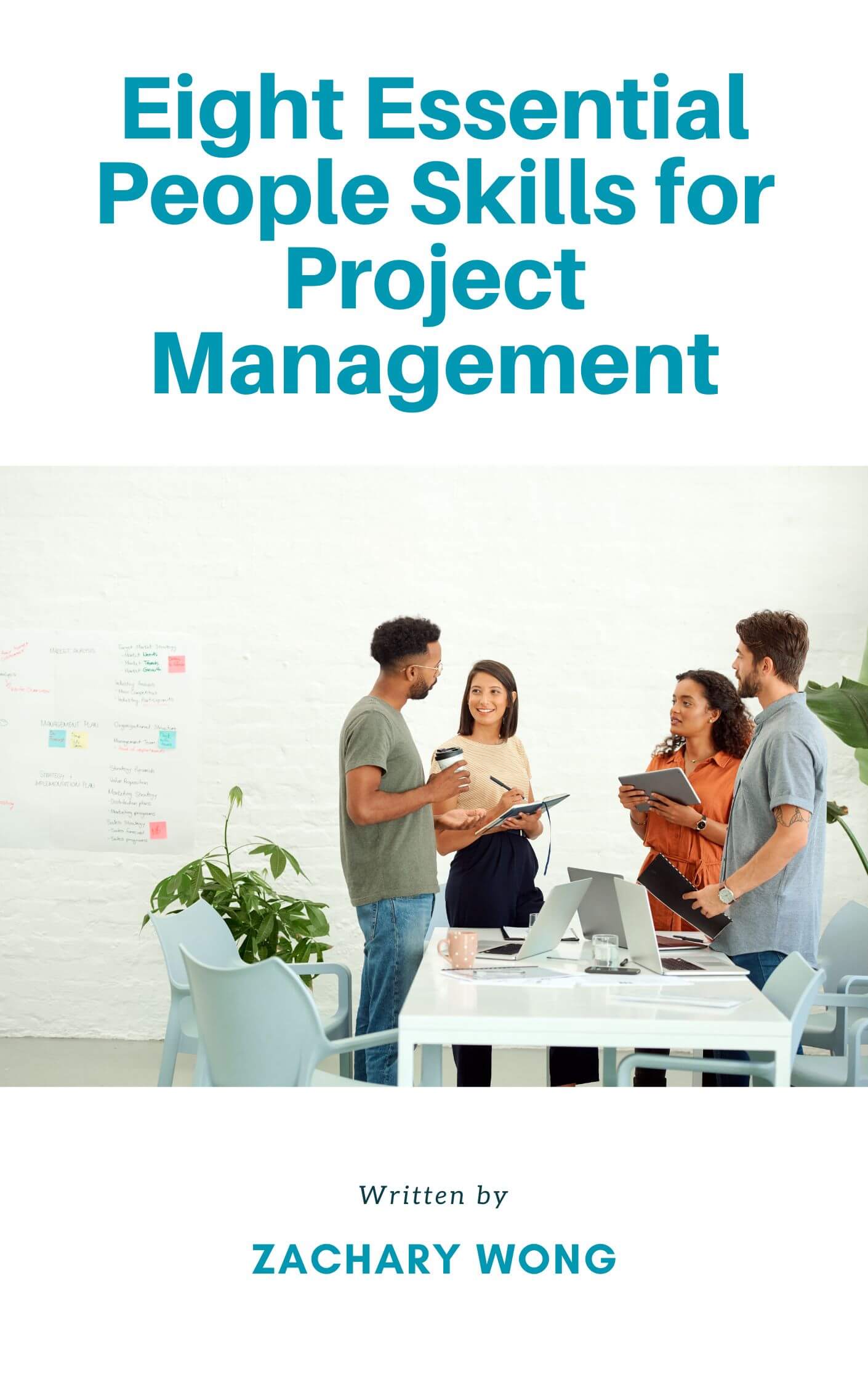
Eight Essential People Skills for Project Management Book Summary
This Eight Essential People Skills for Project Management Book Summary covers the key ideas, lessons, and takeaways in about 20 minutes.
Helps with these goals
Want the complete 20-minute summary?
- Full structured summary
- Video Summary
- Podcast Summary
- Key takeaways
- Exercises
- Quiz
- Highlights and notes
- Ask the book with AI
What is in the Eight Essential People Skills for Project Management book summary?
Below is a preview of Sumizeit’s expert-written summary of Eight Essential People Skills for Project Management by Zachary Wong. The full summary covers the book’s key ideas in text, audio, and video.
In this book on the struggle to maintain a healthy work environment as a project manager, Zachary Wong explores the eight key skills that will help project managers navigate not only challenging employee relationships, but also difficult relationships with superiors. He explores how the horizontal or “wedge” shaped workplace has changed management practices, and how to effectively manage a team and maintain employee attitudes to guarantee project success. Each chapter explores a key principle or people skill that project managers can use to guide their management practices.
In recent years, we have moved from a pyramid to wedge-shaped work culture.
In the past, the office was a top-down, hierarchical environment. It resembled a pyramid, with upper management on top and employees making up the majority of the workforce on the bottom. Rules were expected to be followed, and employees had little say in the way the company was organized and run.
That model is no longer the norm, and project management practices have to shift to reflect that. The new model is wedge-shaped, with individual contributors at one end, working teams in the middle, and management at the other end. A good project manager is able to work within each section of the wedge, to help facilitate the tech-savvy and democratic environment that most managers strive to achieve. The wedge-shaped model is less hierarchical and allows each employee to realize their full potential and move smoothly between sections. Unlike the pyramid where the size of each section was based on numbers, in the wedge, the size represents the power and resources that each section holds.
As a project manager, it is important to understand how to navigate this new system. The wedge-model is not only a way of visually the power and resources in your company - it is also a way to diagnose problems.
Use the wedge-model to diagnose work culture issues.
The wedge-model lets you visualize your work culture, but it also can help you diagnose problems, and find solutions.
Say, for example, you have an employee approach you with a problem. Her colleague is saying cruel things to her at work and degrading her in meetings. She is struggling to work with this colleague, and can’t get her projects done. This might seem like a team problem, but it also has other repercussions - because of the legal ramifications of abuse at work, you should wedge up this problem to include an HR manager. This problem needs a specialist, or manager because management has more resources and power to solve the issue.
For individual problems that don’t need to be wedged up to management, you can use an alternative model: ERAM, or expectations, resources, ability, and motivation. This acronym will help you determine why an employee might be having a problem, and how to fix it. Listen to the employee describe their dilemma, and determine the source of the problem. Were you clear about expectations for the work?
Want the complete 20-minute summary?
- Full structured summary
- Video Summary
- Podcast Summary
- Key takeaways
- Exercises
- Quiz
- Highlights and notes
- Ask the book with AI
Who should read Eight Essential People Skills for Project Management?
This book is essential for project managers who want to master people leadership in modern, less hierarchical workplaces. Whether you're struggling with team dynamics, difficult conversations, or managing upward, this book provides practical frameworks for anyone responsible for guiding teams and maintaining healthy work relationships.
Why does Eight Essential People Skills for Project Management matter?
Today's workplace has fundamentally shifted from rigid hierarchies to more collaborative structures, yet many managers still rely on outdated leadership approaches. Eight Essential People Skills for Project Management equips leaders with evidence-based skills to navigate this new landscape, boost employee satisfaction, and drive sustainable project success through better relationships rather than command-and-control tactics.
What are the key themes in Eight Essential People Skills for Project Management?
- Shifting from pyramid to wedge-shaped organizational structures
- The distinction between friendliness and friendship in professional relationships
- Recognition and praise as drivers of employee satisfaction
- Managing fear and risk in team environments
- Values-driven leadership and sustainable success
What are the key lessons from the Eight Essential People Skills for Project Management book summary?
Visualize power dynamics with the wedge model
Modern organizations distribute power across individual contributors, teams, and management rather than concentrating it at the top. Understanding this wedge structure helps you navigate problems and know when to escalate issues to those with appropriate resources and authority.
Use ERAM to diagnose performance problems
When an employee struggles, systematically assess expectations, resources, ability, and motivation to identify the root cause. This diagnostic approach moves you beyond assumptions toward targeted solutions.
Be friendly, not friends
Maintain professional boundaries by distinguishing between warmth and personal friendship. You can be approachable while still enforcing policies consistently, which actually builds respect and prevents favoritism.
Know your team's personality types
Different personality types (rationals, guardians, idealists, artisans) have different needs and fears at work. Tailoring your approach to individual types creates an inclusive environment where everyone feels valued.
Implement SCOOP recognition
Make praise sincere, consistent, on-time, values-aligned, and personalized to boost morale and job satisfaction. Research shows most employees feel underrecognized, making intentional praise a high-impact practice.
Navigate difficult conversations with Past/Present/Future
Structure performance conversations by first understanding what happened, diagnosing current reality, then collaboratively planning future improvement. This model reduces defensiveness and increases accountability.
Lead with solutions, not punishment
When problems arise, focus on fixing the issue rather than punishing the person. This distinction maintains a positive culture while still addressing real problems head-on.
Make values explicit and visible
Define team values clearly and integrate them into policies and daily practices. When everyone understands shared principles, minor issues can be corrected through gentle nudges rather than escalation.
Help employees understand and manage fear
Fear blocks risk-taking and innovation, but training, preparation, and clarity about why a risk matters help people move through fear. Confidence in skills and alignment with values make risk more manageable.
Manage upward by living shared values
Show your manager support by embodying the values and policies they espouse. Making yourself visible and reliable builds trust that leads to better opportunities and collaboration.
Reward team performance over individual achievement
Design policies and recognition systems that incentivize collaboration rather than internal competition. Team-focused rewards strengthen cohesion and shared accountability.
Create collaborative bonding opportunities
Formal team events and seminars build relationships and trust. These structured bonding moments reinforce the 'we' mindset and make teams more resilient under pressure.
Ask employees to take accountability
When addressing performance issues, ask 'what can you do to improve?' rather than dictating solutions. This question empowers employees and increases their ownership of outcomes.
Recognize the limits of planning in risky situations
No amount of planning eliminates uncertainty, so help your team accept that some unknowns are inevitable. Focus on building competence and confidence rather than false certainty.
Provide a reality check about expectations
Sometimes performance issues stem from misaligned expectations about culture or policy. Clearly articulating what the role and environment actually require prevents ongoing frustration.
Separate circumstance, ability, and failure when managing fear
Help your team understand that fear has three components: unpredictable situations, uncertainty about capability, and worry about failing. Addressing each component reduces overall anxiety.
Recognize that managers need mutual support too
Your relationship with your boss is horizontal, not strictly hierarchical. Both of you need each other to succeed, making mutual respect and visible commitment essential.
Use evidence when discussing past performance
During difficult conversations, ask employees to back up their accounts with specific evidence. This grounds discussions in reality and prevents unfounded claims from derailing solutions.
Embrace active listening in problem-solving
Before offering solutions, truly listen to how employees describe their struggles. This demonstrates respect and often reveals information you wouldn't have considered otherwise.
Set concrete, time-bound goals for improvement
Vague improvement expectations fail; instead, define specific goals with clear deadlines. This clarity creates accountability and gives both you and the employee a way to measure progress.
Want the complete 20-minute summary?
- Full structured summary
- Video Summary
- Podcast Summary
- Key takeaways
- Exercises
- Quiz
- Highlights and notes
- Ask the book with AI
How can you apply ideas from Eight Essential People Skills for Project Management?
- Map your current organization as a wedge model to identify power distribution and diagnosis leverage points for common problems
- Create a recognition calendar using the SCOOP framework to ensure consistent, timely praise aligned with team values
- Develop personality type profiles for each team member and adjust your communication and support style accordingly
- Design a team policy manual that explicitly states core values and how they translate into daily practices
- Prepare a framework for difficult conversations using the Past/Present/Future model to handle performance issues proactively
- Schedule regular one-on-ones where you use ERAM to diagnose any emerging performance concerns before they escalate
- Build team-bonding activities and collaborative recognition systems into your project management cadence
What common mistakes do readers make with Eight Essential People Skills for Project Management?
- Treating all performance problems as motivation issues when expectations or resources may be the real cause
- Blurring professional boundaries by becoming too much of a friend, which undermines your ability to enforce policies fairly
- Recognizing only outstanding individual achievements while overlooking consistent team contributions and collaboration
- Avoiding difficult conversations about poor performance, which allows problems to fester and poison team culture
Sumizeit Exercises Apply what you've learned
Turn ideas from Eight Essential People Skills for Project Management into action with a short guided reflection: identify the biggest takeaway, connect it to your life, and commit to one step you can take in the next 24 hours.
What is the expert analysis of Eight Essential People Skills for Project Management?
Overview
Eight Essential People Skills for Project Management by Zachary Wong stands as a significant contribution to contemporary management literature, particularly for those navigating the evolving dynamics of workplace culture. Wong, a seasoned professor of leadership and business management at UC Berkeley with over three decades of managerial and consulting experience at Chevron, brings both academic rigor and practical insight to the challenges faced by project managers today. His work addresses the critical interpersonal competencies required to lead effectively in environments where traditional hierarchies have given way to more fluid, wedge-shaped organizational structures.
Core Thesis
Wong’s central argument revolves around the transformation of workplace power dynamics from a rigid, pyramid-shaped hierarchy to a more distributed, wedge-shaped model. This shift demands that project managers develop nuanced people skills to manage horizontally across teams, individual contributors, and superiors alike. The book posits that success in project management hinges not merely on technical expertise but on mastering eight essential interpersonal skills that facilitate collaboration, problem-solving, and the maintenance of a healthy, inclusive work culture. Wong emphasizes adherence to core values and policies, solution-focused leadership, and the delicate balance between friendliness and professional boundaries.
Strengths
- Practical Frameworks: Wong introduces accessible models such as the wedge-shaped organizational structure and the ERAM diagnostic tool, which provide managers with concrete methods to analyze and address workplace issues systematically.
- Emphasis on Emotional Intelligence: The book foregrounds the importance of understanding personality types and managing morale through personalized recognition (SCOOP), which aligns with contemporary research on motivation and team dynamics.
- Balanced Approach to Leadership: Wong’s differentiation between friendliness and friendship at work, as well as his advocacy for being tough on problems but not on people, offers a nuanced perspective that respects both human dignity and organizational discipline.
- Inclusivity and Values-Driven Culture: The promotion of inclusive environments and clearly defined team values underscores the book’s commitment to sustainable, ethical leadership practices.
- Integration of Theory and Practice: Drawing from established personality typologies and real-world management challenges, the book bridges academic insights with actionable advice.
Critiques & Counterarguments
- Oversimplification of Organizational Dynamics: While the wedge model is a useful heuristic, it may underrepresent the complexity and fluidity of modern organizational networks, especially in large, matrixed corporations or highly decentralized teams.
- Limited Empirical Evidence: The book relies heavily on anecdotal examples and established theories without extensive empirical validation of the proposed models in diverse industry contexts, which may limit generalizability.
- Potential Underestimation of Power Imbalances: The notion of a horizontal wedge-shaped workplace might be idealistic, as power asymmetries and political dynamics often persist beneath the surface, challenging the feasibility of truly democratic management.
- Competing Perspectives on Motivation: Wong’s emphasis on praise and recognition aligns with humanistic management but may conflict with intrinsic motivation theories that caution against over-reliance on external rewards, which can sometimes undermine long-term engagement.
- Alternative Leadership Models: Schools of thought such as transformational leadership or servant leadership offer broader paradigms that incorporate systemic change and ethical stewardship beyond interpersonal skills, suggesting that Wong’s focus, while valuable, is one facet of effective leadership.
Who Should Read This
This book is ideally suited for project managers and mid-level leaders who seek to enhance their interpersonal effectiveness within evolving organizational structures. It will benefit those grappling with the challenges of managing diverse teams, fostering inclusive cultures, and navigating complex relationships with both subordinates and superiors. Additionally, leadership coaches, HR professionals, and business students interested in the human side of project management will find Wong’s frameworks and practical advice insightful. Readers looking for a concise, experience-informed guide to people skills in project contexts will appreciate the book’s clarity and applicability.
Frequently asked questions about the Eight Essential People Skills for Project Management book summary
What is Eight Essential People Skills for Project Management about?
Eight Essential People Skills for Project Management by Zachary Wong is a guide to managing people effectively in modern, less hierarchical workplaces. The book provides practical frameworks and skills for project managers to navigate team dynamics, have difficult conversations, recognize employees meaningfully, and lead with values rather than punishment.
Who should read Eight Essential People Skills for Project Management?
This book is ideal for project managers, team leads, and anyone responsible for guiding groups in contemporary organizations. It's especially valuable for managers struggling with team relationships, uncomfortable with difficult conversations, or wanting to adapt their leadership style to flatter organizational structures.
What are the main takeaways from Eight Essential People Skills for Project Management?
The core message is that modern project management depends on relationship skills more than hierarchy. Key takeaways include using diagnostic models like the wedge and ERAM to solve problems, implementing consistent recognition through SCOOP, navigating tough conversations with the Past/Present/Future framework, and leading through shared values rather than punishment.
What is the wedge model and how do you use it?
The wedge model visualizes modern organizations as having individual contributors on one end, teams in the middle, and management on the other, with power and resources distributed across these sections rather than concentrated at the top. You use it to diagnose workplace problems and determine when to escalate issues to those with appropriate authority and resources to solve them.
How can I improve employee satisfaction according to this book?
The book emphasizes three main approaches: provide meaningful recognition using the SCOOP framework (sincere, consistent, on-time, on values, personalized), create an inclusive environment where all personality types feel valued, and define clear team values that guide daily behavior so people feel part of something larger than themselves.
What does it mean to be tough on problems but soft on people?
This principle means you should aggressively address performance and cultural issues without being punitive or cruel to individuals. Focus on solving the problem through systems, policies, or skill-building rather than through blame or harsh discipline, which maintains respect and morale while still holding standards.
How do you manage your boss effectively according to Eight Essential People Skills for Project Management?
Managing upward means recognizing that you and your manager need each other to succeed. You can strengthen the relationship by visibly embodying shared values, making yourself noticeable through participation in meetings and events, and showing reliable self-management so your boss trusts you to handle responsibility.
About Sumizeit
Sumizeit is a profitable Scomy LLC company based in Miami, Florida. It has been helping readers learn from nonfiction books for 7 years with expert-written summaries in text, audio, podcast, and video.
Want the complete 20-minute summary?
- Full structured summary
- Video Summary
- Podcast Summary
- Key takeaways
- Exercises
- Quiz
- Highlights and notes
- Ask the book with AI
Here's why readers love Sumizeit
Join thousands of learners getting smarter every day
"Great experience. Detailed summaries. Loved the gamification feature. Makes learning fun. Good customer service. I recommend Sumizeit to anyone. You'll learn a lot."
"I always felt busy but still wanting to keep up with the book discussion in my friend group. This was a great supplement to help me keep reading the books I find fun while keeping up with important books."
"I love this website. Instead of scrolling social media, I find myself learning a lot. I use it everyday. I recommend this app for anyone who is too busy and wants to get up to speed with their favorite books."
Eight Essential People Skills for Project Management Book Summary PDF
Looking for a Eight Essential People Skills for Project Management Book Summary PDF you can save and revisit offline? Our Eight Essential People Skills for Project Management Book Summary PDF captures the book’s core ideas in a clean, printable format — the key frameworks, takeaways, and structure without the fluff. Download the Eight Essential People Skills for Project Management Book Summary PDF when you want a reference you can annotate, share with your team, or review on the go. Get your Eight Essential People Skills for Project Management Book Summary PDF from the download page below.
Download Eight Essential People Skills for Project Management Book Summary PDFPeople also liked these summaries
Readers who explored Eight Essential People Skills for Project Management often enjoyed these titles next.



Want the complete 20-minute summary?
- Full structured summary
- Video Summary
- Podcast Summary
- Key takeaways
- Exercises
- Quiz
- Highlights and notes
- Ask the book with AI
Featured Book Titles
Popular Book Summaries at sumizeit, leading book summary app