


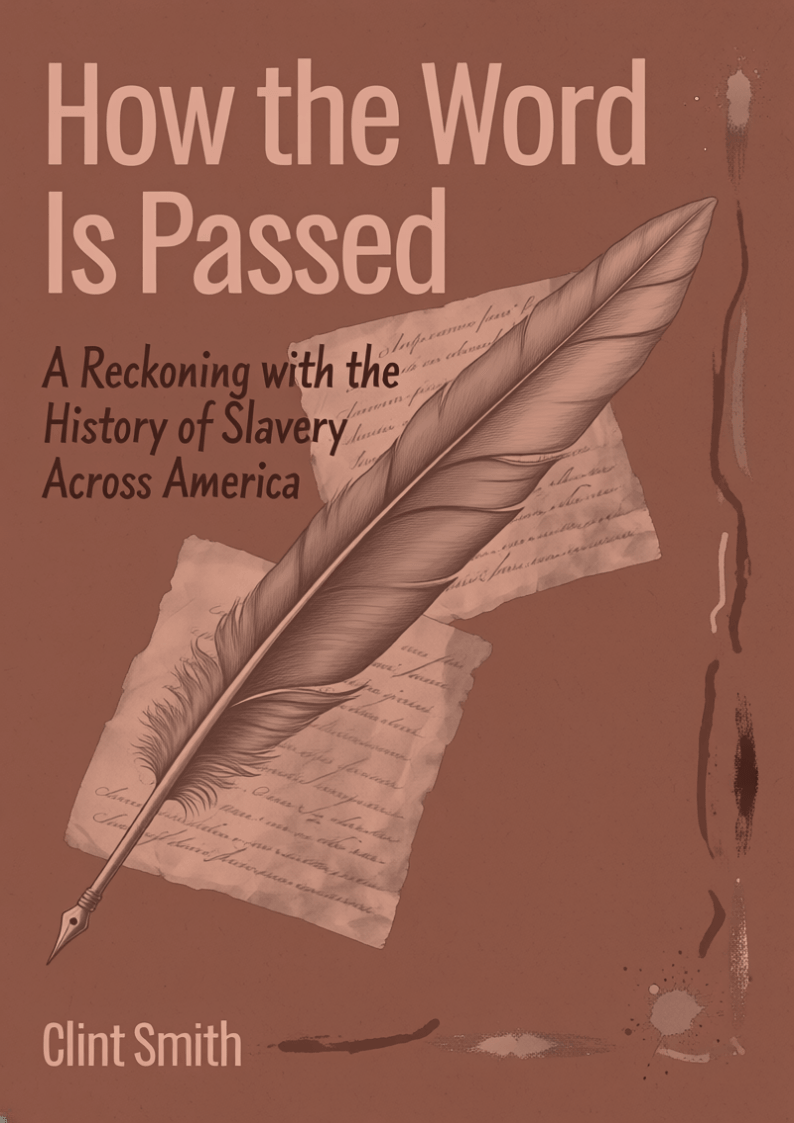
Prefer the print book? Buy on Amazon
As an Amazon Associate, Sumizeit earns from qualifying purchases.
How the Word Is Passed Book Summary
This How the Word Is Passed Book Summary covers the key ideas, lessons, and takeaways in about 20 minutes.
Helps with these goals
Want the complete 20-minute summary?
- Full structured summary
- Video Summary
- Podcast Summary
- Audio summary
- Key takeaways
- Exercises
- Quiz
- Highlights and notes
- Ask the book with AI
Not ready to upgrade?
Get this summary + 2 more picks sent to your inbox, free.
What is in the How the Word Is Passed book summary?
Below is a preview of Sumizeit’s expert-written summary of How the Word Is Passed by Clint Smith. The full summary covers the book’s key ideas in text, audio, and video.
The history of the United States cannot be authentically comprehended without directly engaging with the reality of chattel slavery and its transformative influence on the nation's development. The institution of slavery was not peripheral to American history—it was central to the formation of the country's political systems, economic structures, and social hierarchies. From the nation's inception through contemporary times, the consequences of slavery have permeated every aspect of American society, shaping both visible and invisible systems of power and inequality that continue to define American life.
Smith emphasizes that slavery fundamentally altered the trajectory of the entire nation. The economic significance of slavery cannot be overstated—by 1860, the estimated monetary value of enslaved human beings, approximately four million individuals, totaled roughly $3.5 billion. This astronomical figure exceeded the combined value of all American manufacturing enterprises and railroad infrastructure. Slavery was not a marginal economic activity but rather the economic engine driving national prosperity and development.
The political ramifications of slavery were equally profound. The institution became the pivotal issue dividing the nation, ultimately catalyzing the most devastating conflict in American history. The expansion of slavery into new territories became the central political question of the antebellum era, dominating congressional debates, shaping party politics, and determining the alignment of regional interests. When the South seceded from the Union, the explicit cause was the existential threat to slavery posed by Republican victory in the 1860 presidential election. The Civil War was fought fundamentally over slavery's continuation, despite later historical narratives that would attempt to reframe the conflict.
Beyond economics and politics, slavery created a comprehensive social order that positioned white people at the apex of society and relegated Black people to the absolute bottom of a rigid racial hierarchy. This social stratification was not merely a collection of individual prejudices but rather a systematized structure embedded in law, custom, and institutional practice. Even after the formal abolition of slavery through the Thirteenth Amendment, the fundamental racial hierarchy persisted through new mechanisms designed to maintain white supremacy and Black subordination.
The Architecture of Exploitation: Slavery's Integration into Northern Prosperity
A persistent myth in American historical consciousness portrays slavery as primarily a Southern institution, with the North positioned as an enlightened region that had moved beyond the barbarism of human bondage. Smith systematically dismantles this false narrative by demonstrating the deep complicity of Northern cities and institutions in perpetuating slavery.
New York City, often celebrated as a symbol of progressive values and cosmopolitan sophistication, was in fact thoroughly entangled in the machinery of slavery. The financial institutions of New York provided essential capital for the expansion of slavery in the South. New York bankers and merchants financed the construction of slave ships that transported human cargo across the Atlantic. The city's financial sector funded the development of cotton-processing machinery that enabled the rapid expansion of cotton cultivation dependent on enslaved labor. New York textile manufacturers produced clothing for enslaved people, generating substantial profits from the bondage of Black individuals.
The Manhattan landscape itself bears…
Want the complete 20-minute summary?
- Full structured summary
- Video Summary
- Podcast Summary
- Audio summary
- Key takeaways
- Exercises
- Quiz
- Highlights and notes
- Ask the book with AI
Who should read How the Word Is Passed?
How the Word Is Passed is essential reading for anyone seeking to understand America's true history and its ongoing racial disparities. Whether you're an educator, student, community member, or simply someone curious about how slavery shaped the nation you live in, this book challenges comfortable narratives and demands honest reckoning. It's particularly valuable for those who feel disconnected from slavery as a "historical" issue and need to understand its contemporary relevance.
Why does How the Word Is Passed matter?
Understanding slavery's foundational role in American development is critical for grasping why racial inequality persists today. Clint Smith's work reveals that slavery wasn't peripheral to America's rise but central to it—and that refusing to reckon with this history allows myths of meritocracy and colorblindness to persist unchallenged. In an era of renewed racial reckoning, this book provides the historical grounding necessary for authentic conversations about structural inequality and genuine transformation.
What are the key themes in How the Word Is Passed?
- Slavery as central to American economic and political development, not peripheral
- Northern complicity in slavery through finance, commerce, and institutions
- Continuity of racial oppression from slavery through Jim Crow to mass incarceration
- Historical distortion and Lost Cause mythology that obscures slavery's reality
- Confederate monuments as instruments of power rather than innocent memorials
- The importance of centering enslaved people's perspectives in historical narratives
- How institutions and public spaces either perpetuate or challenge false historical memory
Want the complete 20-minute summary?
- Full structured summary
- Video Summary
- Podcast Summary
- Audio summary
- Key takeaways
- Exercises
- Quiz
- Highlights and notes
- Ask the book with AI
How can you apply ideas from How the Word Is Passed?
- Visit historic sites like Monticello or the Whitney Plantation and engage critically with how slavery is presented, questioning what narratives are centered and which are marginalized
- Examine your own community's history by researching how local wealth, institutions, and infrastructure were built—tracing connections to slavery and slavery's profits
- Support efforts to contextualize or remove Confederate monuments and rename public spaces honoring slavery advocates, recognizing these as acts of historical honesty rather than erasure
- Engage with museums and educational institutions that center enslaved people's perspectives and demand that curricula teach slavery's centrality rather than minimizing it
- Read primary source testimonies from formerly enslaved people collected through the Federal Writers' Project to understand slavery's lived realities beyond sanitized historical accounts
- Participate in community conversations about how your region's racial disparities connect to historical systems of exploitation and how authentic reckoning might inform contemporary policy
- Critically examine textbooks and educational materials you or your children encounter, identifying Lost Cause mythology, selective commemoration, or narratives that minimize slavery's significance
What common mistakes do readers make with How the Word Is Passed?
- Treating slavery as a historical curiosity rather than a system whose logic and consequences continue shaping contemporary inequality
- Accepting comfortable narratives about the Civil War being fought over states' rights or regional autonomy, ignoring slavery as the explicit cause of Southern secession
- Believing that Northern states were innocent of slavery because they didn't develop plantation systems, missing Northern complicity through finance, commerce, and institutions
- Viewing Confederate monument removal as historical erasure rather than recognizing it as a refusal to continue celebrating slavery's defenders in public space
- Focusing on individual prejudice rather than recognizing slavery as a comprehensive social and economic system embedded in law, custom, and institutions
Sumizeit Exercises Apply what you've learned
Turn ideas from How the Word Is Passed into action with a short guided reflection: identify the biggest takeaway, connect it to your life, and commit to one step you can take in the next 24 hours.
What is the expert analysis of How the Word Is Passed?
Overview
How the Word Is Passed is a profound and meticulously researched work by Clint Smith, a distinguished poet, scholar, and essayist. Smith’s background in English literature and his commitment to exploring race, identity, and historical trauma uniquely position him to undertake this ambitious reckoning with America’s legacy of slavery. The book’s significance lies in its comprehensive examination of how slavery’s enduring influence permeates American economic, political, and social structures, challenging sanitized national narratives and confronting readers with uncomfortable truths. By weaving together historical scholarship, personal narrative, and on-site explorations of monuments, plantations, and museums, Smith crafts a narrative that is both intellectually rigorous and emotionally resonant.
Core Thesis
Smith’s central argument is that slavery was not a peripheral or isolated institution in American history but the foundational engine shaping the nation’s wealth, political conflicts, and social hierarchies. He asserts that the legacy of slavery persists through systemic racial inequalities manifest in Jim Crow laws, mass incarceration, and public memory shaped by mythologies like the Lost Cause. The book contends that authentic historical reckoning requires confronting these legacies honestly, dismantling false narratives, and centering the experiences of the enslaved and their descendants. How Americans choose to remember and represent slavery—through monuments, museums, and education—reflects broader commitments either to racial justice or to the perpetuation of white supremacy.
Strengths
- Interdisciplinary Approach: Smith combines history, sociology, cultural criticism, and personal narrative to create a multidimensional portrait of slavery’s legacy, enriching the reader’s understanding beyond traditional historical accounts.
- Site-Based Analysis: The book’s structure, organized around visits to historical sites across the United States and internationally, grounds abstract historical concepts in tangible, physical spaces, enhancing the immediacy and impact of the narrative.
- Centering Marginalized Voices: Smith prioritizes the stories and testimonies of enslaved people and their descendants, challenging dominant narratives that have historically marginalized or erased these perspectives.
- Nuanced Treatment of Memory and Myth: The exploration of Lost Cause mythology and the politics of Confederate monuments offers a sophisticated critique of how public memory is constructed and contested.
- Accessible yet Scholarly Prose: Smith’s lyrical yet precise writing style makes complex historical and social issues accessible to a broad audience without sacrificing intellectual rigor.
Critiques & Counterarguments
- Potential Overemphasis on Structural Determinism: While Smith compellingly traces slavery’s legacy, some readers might argue that the book occasionally underplays individual agency and the diversity of Black experiences, focusing predominantly on systemic oppression.
- Selective Focus on Sites and Narratives: The choice of sites, while powerful, might be critiqued for privileging certain geographic and symbolic locations over others, potentially limiting the scope of the analysis regarding regional variations and Indigenous perspectives on slavery and racial hierarchies.
- Complexity of Historical Memory: The book’s critique of Lost Cause mythology and monument controversies, though persuasive, could be challenged by scholars emphasizing the multifaceted nature of memory, including the role of reconciliation and contested heritage beyond a binary of truth versus falsehood.
- Competing Interpretations of Economic History: Some economic historians might argue that Smith’s portrayal of slavery as the singular economic engine risks oversimplifying the complex interplay of industrialization, immigration, and technological innovation in American economic development.
- Global Context and Comparisons: Although Smith includes Gorée Island and Senegal, the book could be critiqued for limited engagement with broader global slavery systems and postcolonial legacies that might nuance or complicate the American-centric focus.
Who Should Read This
How the Word Is Passed is essential reading for scholars, students, and general readers interested in American history, race relations, and social justice. It is particularly valuable for educators seeking to deepen their understanding of slavery’s pervasive influence and for activists engaged in debates over public memory and racial equity. The book also offers crucial insights for policymakers and cultural institutions grappling with how to represent and reckon with difficult histories. Its accessible prose and compelling narrative make it suitable for a broad audience committed to confronting historical truths and fostering authentic dialogue about America’s past and present.
Frequently asked questions about the How the Word Is Passed book summary
What is How the Word Is Passed about?
How the Word Is Passed by Clint Smith is a comprehensive examination of slavery's foundational role in American development and its persistent legacy in contemporary society. Through visits to significant historical sites—plantations, museums, monuments, and memorials—Smith reveals how slavery was central to American economic prosperity, political formation, and social structure. The book challenges false historical narratives, including Lost Cause mythology and selective commemoration, demonstrating that authentic understanding of present-day racial inequality requires honest reckoning with slavery's history.
Who should read How the Word Is Passed?
This book is essential for educators, students, historians, and anyone seeking to understand American history and contemporary racial disparities. It's particularly valuable for those who feel disconnected from slavery as a "historical" issue and need to grasp its ongoing relevance. Whether you're community organizing, making decisions about public memorials, or simply seeking to understand why racial inequality persists, Smith's work provides both historical grounding and practical insight into how communities can choose truthful representation over comfortable myths.
What are the main takeaways from How the Word Is Passed?
The central takeaways are: slavery was not a Southern aberration but a national enterprise that built American prosperity; racial oppression persisted after slavery's formal abolition through Jim Crow, mass incarceration, and other systems maintaining slavery's logic; dominant historical narratives have systematically distorted or minimized slavery's significance; and authentic historical reckoning requires centering enslaved people's perspectives while refusing to continue honoring slavery's defenders. Smith argues that how Americans choose to understand their past—whether honestly or through mythology—directly shapes their commitment to racial equity in the present.
How does Clint Smith demonstrate Northern complicity in slavery?
Smith traces how Northern cities like New York profited enormously from slavery through financial institutions that funded slave ships and cotton machinery, textile manufacturers that produced clothing for enslaved people, and merchant capital that financed slavery's expansion. New York City hosted one of the nation's largest slave markets, and Wall Street itself was constructed by enslaved labor. This wealth circulated through Northern real estate, businesses, and institutions, making slavery foundational to Northern prosperity, not just Southern development.
Why does How the Word Is Passed focus so much on monuments and memorials?
Monuments function as far more than commemorative objects—they are declarations of power signaling which narratives and which people are valued in public space. Smith demonstrates that Confederate monuments were erected strategically during periods of racial tension (1890s-1900s and 1950s-60s) to reinforce white supremacy. Removing monuments doesn't erase history; it simply refuses to continue celebrating slavery's defenders. This focus reveals how societies choose to remember (or distort) their past and what those choices mean for present racial hierarchies.
What does Smith say about mass incarceration in relation to slavery?
Smith examines Angola Prison in Louisiana, originally a slave plantation, to show how mass incarceration represents slavery's evolution rather than elimination. Black men labor in fields for minimal compensation (as little as 7 cents per hour) while private enterprises profit—directly echoing slavery's logic. Smith argues that mass incarceration isn't an isolated contemporary problem but the latest institutional mechanism for Black subjugation and labor extraction with deep historical roots in slavery itself.
How have institutional responses to slavery changed according to How the Word Is Passed?
Smith traces how institutions like Monticello and the Whitney Plantation have shifted from sanitized narratives toward slavery-centered interpretation. Monticello moved from celebrating Jefferson's genius while ignoring slavery to foregrounding the contradictions between his rhetoric of liberty and his enslavement of 600+ people. The Whitney Plantation structures exhibits around enslaved people's perspectives rather than enslavers' narratives. The National Museum of African American History and Culture represents comprehensive institutional commitment to confronting slavery's brutality and enduring consequences.
What is the Lost Cause mythology and why does Smith emphasize it?
The Lost Cause narrative reframes the Confederacy as defending regional autonomy and cultural tradition while systematically obscuring slavery as the central cause of secession. Organizations like the United Daughters of the Confederacy constructed this mythology through monuments, textbooks, and public education. Smith emphasizes it because this distortion has shaped generations of Americans' historical understanding, allowing false claims that slavery was mutually beneficial and the Civil War was about states' rights. Confronting this mythology is essential for authentic historical reckoning.
About Sumizeit
Sumizeit is a profitable Scomy LLC company based in Miami, Florida. It has been helping readers learn from nonfiction books for 7 years with expert-written summaries in text, audio, podcast, and video.
Want the complete 20-minute summary?
- Full structured summary
- Video Summary
- Podcast Summary
- Audio summary
- Key takeaways
- Exercises
- Quiz
- Highlights and notes
- Ask the book with AI
Here's why readers love Sumizeit
Join thousands of learners getting smarter every day
"Great experience. Detailed summaries. Loved the gamification feature. Makes learning fun. Good customer service. I recommend Sumizeit to anyone. You'll learn a lot."
"I always felt busy but still wanting to keep up with the book discussion in my friend group. This was a great supplement to help me keep reading the books I find fun while keeping up with important books."
"I love this website. Instead of scrolling social media, I find myself learning a lot. I use it everyday. I recommend this app for anyone who is too busy and wants to get up to speed with their favorite books."
How the Word Is Passed Book Summary PDF
Looking for a How the Word Is Passed Book Summary PDF you can save and revisit offline? Our How the Word Is Passed Book Summary PDF captures the book’s core ideas in a clean, printable format — the key frameworks, takeaways, and structure without the fluff. Download the How the Word Is Passed Book Summary PDF when you want a reference you can annotate, share with your team, or review on the go. Get your How the Word Is Passed Book Summary PDF from the download page below.
Download How the Word Is Passed Book Summary PDFPeople also liked these summaries
Readers who explored How the Word Is Passed often enjoyed these titles next.




Want the complete 20-minute summary?
- Full structured summary
- Video Summary
- Podcast Summary
- Audio summary
- Key takeaways
- Exercises
- Quiz
- Highlights and notes
- Ask the book with AI
Featured Book Titles
Popular Book Summaries at sumizeit, leading book summary app