


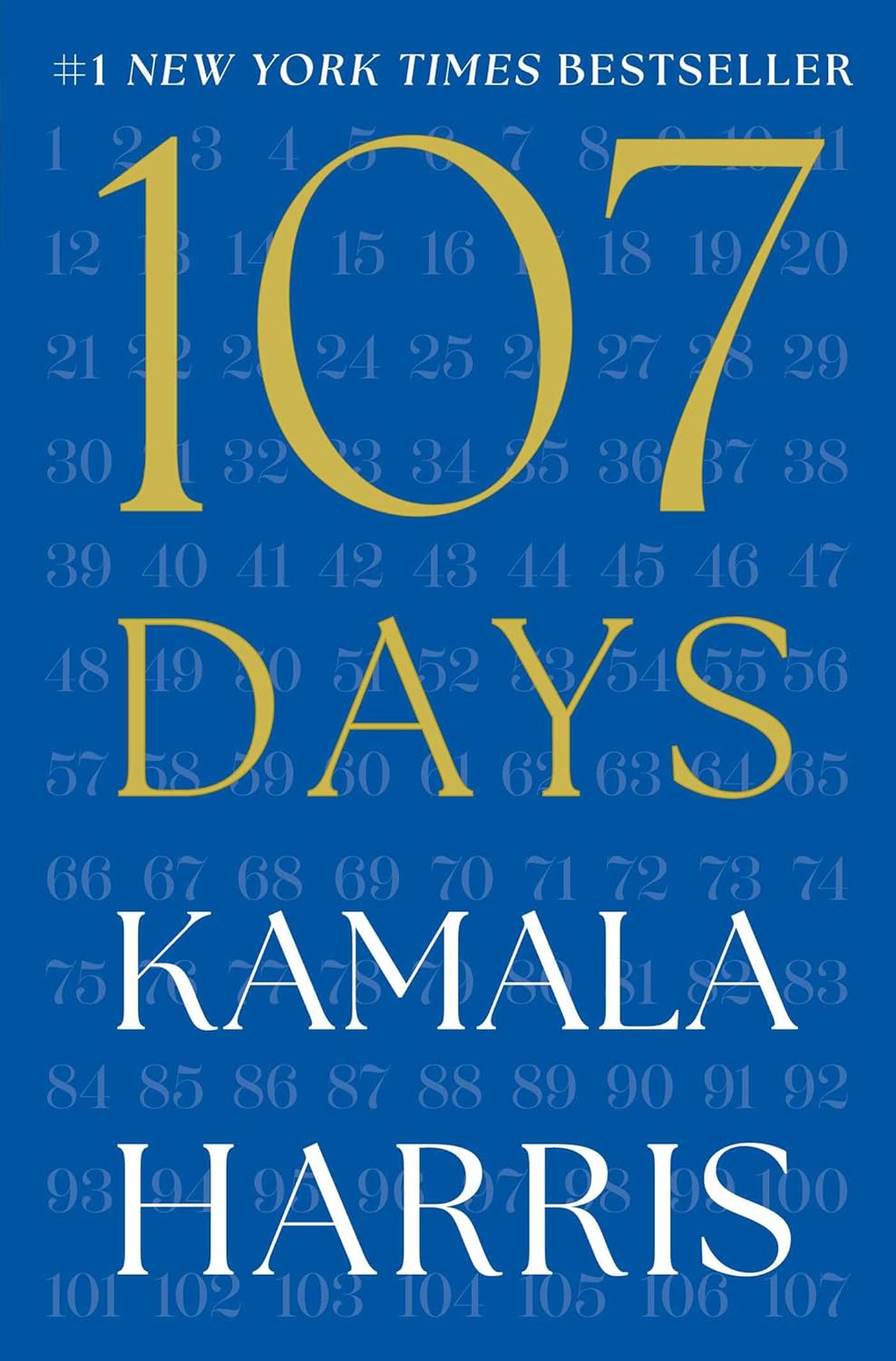
107 Days Book Summary
This 107 Days Book Summary covers the key ideas, lessons, and takeaways in about 20 minutes.
The second, related takeaway is that American campaigns now demand a level of preparation, infrastructure, and time that simply could not be assembled in three and a half months, especially for a candidate stepping out from beneath an unpopular incumbent. Harris's account is less an apology than a warning. The political environment, the media landscape, the role of billionaire spending, and the appetite of voters for someone who feels rather than thinks all conspired to favor the candidate who had been preparing for years. Her book reads as both a defense of her choices and an argument that the system itself made the kind of campaign she might have run in normal circumstances effectively unreachable. Whether readers find the explanation persuasive depends in part on how much weight they give to the constraints she emphasizes versus the decisions she made within them, but the basic frame she offers is hard to dismiss.
Helps with these goals
Want the complete 20-minute summary?
- Full structured summary
- Video Summary
- Podcast Summary
- Audio summary
- Key takeaways
- Exercises
- Quiz
- Highlights and notes
- Ask the book with AI
What is in the 107 Days book summary?
Below is a preview of Sumizeit’s expert-written summary of 107 Days by Kamala Harris. The full summary covers the book’s key ideas in text, audio, and video.
Kamala Harris's 107 Days, published in 2025, is her firsthand account of the brief and intense presidential campaign she ran in 2024 after President Joe Biden withdrew from the race. The title refers to the number of days between Biden's exit on July 21 and Election Day in November, a window Harris describes as far too short to mount the kind of campaign American voters expect from a major-party nominee. She wrote the book within a year of her loss to Donald Trump, working with the Pulitzer Prize–winning novelist Geraldine Brooks. The result is part memoir, part political analysis, and part argument: a defense of the choices Harris made, combined with an explanation of the structural disadvantages that, she contends, made winning effectively impossible.
The walkthrough below organizes Harris's case into the three layers she lays out in the book: the conditions she inherited, the decisions she made within those conditions, and the broader forces that, in her telling, doomed the effort despite sound strategy.
A Sprint Toward the White House
Harris opens by establishing the basic premise of her argument. A presidential campaign typically unfolds across at least eighteen months, during which a candidate competes in primaries, builds a national operation, refines a message, recovers from missteps, and earns the trust of skeptical voters. Harris had a hundred and seven days from the moment she became the presumptive nominee to the moment polls closed. The timeline alone, she argues, would have stressed any candidate; combined with her particular position inside the Biden administration, it produced a set of constraints she could not realistically escape.
The Three Limitations That Shaped Everything
Harris organizes her account around three structural problems that she says were locked in before her campaign began. Biden's White House had spent years preventing her from building an independent public identity. Biden himself ran for reelection at eighty-one, ignored warnings from across the party, and only stepped aside after a disastrous debate in late June. And the resulting compressed schedule made it impossible for her to perform several contradictory tasks at once.
Years Spent in the Background of the West Wing
The first constraint Harris describes is the way Biden's inner circle handled her during their shared term. She argues that his closest advisors operated on a zero-sum assumption that any positive press for the vice president would somehow diminish the president. As a consequence, the West Wing communications operation, despite its scale, rarely defended her against political attacks and rarely promoted her accomplishments.
The Border Assignment That Turned Into a Liability
One of her most pointed examples concerns the work she led on the so-called "root causes" of migration from Central America. Harris had negotiated roughly five billion dollars in private investment for the region, helped generate seventy thousand jobs, and worked with the heads of several Latin American governments on anti-corruption initiatives. None of this was publicized in any meaningful way.
Want the complete 20-minute summary?
- Full structured summary
- Video Summary
- Podcast Summary
- Audio summary
- Key takeaways
- Exercises
- Quiz
- Highlights and notes
- Ask the book with AI
Who should read 107 Days?
107 Days is essential reading for anyone interested in modern American politics, presidential campaigns, and the structural barriers facing women and candidates of color in politics. It will appeal to political strategists, voters who want to understand what happened in the 2024 election, and readers interested in firsthand accounts of high-stakes decision-making under extreme pressure.
Why does 107 Days matter?
107 Days offers a crucial inside perspective on how a presidential campaign unfolds when compressed into an impossibly short timeframe, revealing systemic disadvantages in American politics that extend far beyond any single election. In an era when billionaire influence, media ecosystems, and demographic shifts are reshaping electoral outcomes, Harris's analysis of what structural factors truly move votes provides urgent context for understanding American democracy's future.
What are the key themes in 107 Days?
- The impossible compressed timeline of a 107-day campaign
- Structural barriers facing women and candidates of color in politics
- The tension between loyalty to an incumbent and political independence
- The role of billionaire influence and media ecosystems in shaping elections
- Demographic shifts and whose messages actually reach voters
- The gap between economic statistics and how voters feel their economic reality
- Strategic trade-offs with no acceptable solutions
What are the key lessons from the 107 Days book summary?
Time is a strategic asset campaigns cannot manufacture
A normal presidential campaign unfolds across eighteen months, allowing candidates to introduce themselves, test messages, recover from missteps, and build relationships with skeptical voters. Harris had 107 days to do all of this simultaneously, making every decision carry inflated stakes with no opportunity to correct course.
Vice presidents inherit visibility disadvantages, not advantages
Rather than building Harris's public profile during four years in office, Biden's inner circle operated on a zero-sum assumption that positive coverage of the vice president would diminish the president, leaving voters with little concrete understanding of her accomplishments.
Gender and racial bias compound when voters lack information
Research shows voters assume female candidates are further left than male candidates with identical records, and the same pattern applies to Black candidates relative to white ones. Without clear public information about Harris's positions, these biases had room to fill the gaps.
Successful policy work becomes liability if not publicized
Harris negotiated billions in private investment for Central America and helped generate seventy thousand jobs on root causes of migration, but this went largely unpublicized while Republican messaging branded her the 'border czar'—a lesson in how invisible accomplishments cannot defend against false narratives.
The loyalty trap ensnares nearly every vice presidential candidate
Harris faced an impossible choice: distance herself from an unpopular incumbent and lose his supporters, or stay loyal and appear to offer no change. Her October 8 View interview answer that there was 'not a thing' she would do differently illustrated how loyalty can override political strategy in high-pressure moments.
Running mate selection signals judgment but rarely changes electoral outcomes
Harris chose Tim Walz after concluding that pairing a Black woman with an openly gay man would ask too much of an electorate with no margin for error, revealing how candidates must sometimes make choices based not on merit alone but on perceived voter tolerance.
Broad coalitions can dilute core messages
By campaigning to labor unions, Black sororities, Latino business owners, and young voters simultaneously, Harris demonstrated her ability to govern across constituencies but acknowledged the breadth competed for attention and weakened her central narrative.
Voters in 2024 prioritized emotional alignment over competence
Harris's strategy centered on competence and decency, but voters were asking 'Who is on my side?' rather than 'Who is more capable?'—a fundamental shift that favored candidates channeling anger about systemic unfairness.
Some issues offer no acceptable middle ground
Gaza presented an impossible dilemma: breaking publicly with Biden risked alienating Jewish voters and moderates, while staying silent alienated progressives and satisfied no constituency—a pattern that recurred with transgender rights and other divisive issues.
Private advocacy differs from public positioning in voter perception
Harris privately pressed Biden on Palestinian casualties and encouraged him to push Netanyahu, but voters could not see this private influence, leaving her exposed to accusations of indifference from multiple sides.
Billionaire-backed platforms create asymmetrical advantages
Elon Musk spent at least $288 million supporting Trump, controlled a major platform, dismantled its safety operations, and amplified pro-Trump messaging at scale—an advantage with no Democratic equivalent despite comparable overall spending.
Right-wing media ecosystems operate at a different velocity than traditional campaigns
Trump made fourteen major podcast appearances drawing nearly 70 million YouTube views, with his Rogan episode reaching 60 million—a reach and frequency that pro-Harris media could not match or effectively counter.
Young voters, especially young men, receive information through different channels
Young men of color shifted significantly toward Trump, driven partly by messages from hypermasculine influencers blaming feminism for men's problems—an information ecosystem Harris's campaign struggled to penetrate with policy messages about wages and student debt.
Economic perception matters more than economic statistics
Despite low unemployment, rising wages, and cooling inflation, voters felt worse off than four years prior and held the administration responsible. No amount of policy granularity could overcome the gap between aggregate economic data and household experience in 107 days.
Latino voters prioritize economic and immigration concerns differently than Democratic messaging assumes
While Harris announced Puerto Rico task forces and held Latino business events, 64 percent of Latino voters named economic concerns as their top priority, only 8 percent named immigration, and 1 percent named racial injustice—suggesting her messaging targets may have misaligned with actual voter priorities.
Running mate appearance matters less than most assume
Research suggests running mates rarely change state outcomes by themselves, yet Harris spent political capital on the selection, illustrating how campaigns must sometimes make choices based on perceived symbolism rather than demonstrated electoral impact.
Unscripted media carries both risk and reward
Harris limited unscripted appearances partly due to time constraints, but this choice also left voters with less direct information about her positions—a trade-off that critics argue weakened her while supporters cite as necessary risk management.
Media double standards reward simplicity and punish complexity
Harris's detailed policy proposals were scrutinized closely while Trump's vague answers and conspiracy theories were treated as routine, and media outlets engaged in 'sanewashing' that simplified his incoherent remarks into clean headlines.
Structural advantages compound over time
Biden's years of keeping Harris in the political background, Biden's late withdrawal, the compressed timeline, demographic shifts, and billionaire-backed media all worked together—no single factor was insurmountable alone, but combined they created a compounding disadvantage.
The system itself may now demand preparation that makes spontaneous campaigns nearly impossible
Harris argues that modern American campaigns require so much infrastructure, preparation time, and alignment of external forces that a candidate emerging from beneath an unpopular incumbent faces structural barriers that transcend individual decision-making or skill.
Want the complete 20-minute summary?
- Full structured summary
- Video Summary
- Podcast Summary
- Audio summary
- Key takeaways
- Exercises
- Quiz
- Highlights and notes
- Ask the book with AI
How can you apply ideas from 107 Days?
- Build and maintain independent public identity even while serving in supporting roles—visibility in office translates to electoral viability later
- Communicate policy accomplishments continuously rather than assuming credit will be assigned retroactively—silence allows opponents to define your record
- Understand your target demographic's actual information sources and priorities before designing messaging, rather than assuming what they should care about
- Plan for compressed timelines by building campaign infrastructure and message discipline well in advance—last-minute assembly of these elements cannot be rushed
- Balance loyalty to current leadership with clear differentiation on priorities, testing how to frame this balance with diverse audiences before crises force the choice
- Anticipate asymmetrical media landscapes and billionaire-backed opposition by developing alternative communication channels and community relationships that do not depend on traditional media
- Make high-stakes decisions like running mate selection or policy positions based on actual voter data and constituent feedback rather than assumed sensitivities
What common mistakes do readers make with 107 Days?
- Assuming that aggregate economic data will convince voters who feel personally worse off—perception of economic wellbeing is filtered through lived experience, not statistics
- Underestimating the speed and reach of social media ecosystems controlled by billionaires or hostile platforms, which can operate at velocity traditional campaigns cannot match
- Treating all demographic groups as homogeneous blocs rather than researching specific subgroups' actual priorities—young men and Latino voters may not prioritize issues campaigns assume they care about
- Allowing visibility gaps to form during tenure in supporting roles, assuming accomplishments will speak for themselves or that party communications will eventually publicize your work
Sumizeit Exercises Apply what you've learned
Turn ideas from 107 Days into action with a short guided reflection: identify the biggest takeaway, connect it to your life, and commit to one step you can take in the next 24 hours.
What is the expert analysis of 107 Days?
Overview
107 Days is a compelling and timely memoir-cum-political analysis by Kamala Harris, the former Vice President of the United States and the 2024 Democratic presidential nominee. Co-written with Pulitzer Prize-winning novelist Geraldine Brooks, the book offers a rare insider’s perspective on an unprecedentedly compressed presidential campaign. Harris’s narrative stands out not only for its firsthand account of the 107 days between Joe Biden’s withdrawal and Election Day but also for its broader critique of structural and systemic challenges that shape modern American electoral politics. As a figure who broke multiple historic barriers in U.S. politics, Harris’s reflections carry significant weight for scholars and observers of race, gender, and power in contemporary governance.
Core Thesis
The central argument of 107 Days is that Kamala Harris’s 2024 presidential campaign was effectively set up to fail due to a confluence of structural disadvantages and political decisions beyond her control. Harris contends that the compressed timeline, Biden’s prolonged candidacy, the Democratic Party’s reluctance to elevate her publicly, and the compounded biases she faced as a Black woman of South Asian descent created an insurmountable set of obstacles. Her campaign’s defeat was not a reflection of personal inadequacy but rather the predictable outcome of these intersecting constraints. Moreover, Harris warns that the modern American electoral system demands extensive preparation, infrastructure, and time—luxuries she was denied—underscoring systemic flaws in how presidential candidates are nurtured and presented to the electorate.
Strengths
- Insider Perspective: Harris’s account provides a rare, candid glimpse into the inner workings of a high-stakes presidential campaign under extraordinary conditions, enriching political literature with firsthand detail.
- Intersectional Analysis: The book thoughtfully explores how race, gender, and political positioning intersect to shape voter perceptions and campaign dynamics, contributing to ongoing discourse on identity politics.
- Structural Critique: By situating her campaign’s challenges within broader systemic and institutional frameworks, Harris elevates the conversation beyond personal narrative to a critique of party politics, media ecosystems, and electoral timelines.
- Ethical Reflection: Harris’s emphasis on loyalty, integrity, and principled stances—especially regarding vulnerable populations—adds a moral dimension often absent in political memoirs.
- Nuanced Policy Discussion: The book balances personal story with substantive policy engagement, addressing issues such as immigration, reproductive rights, economic inequality, and foreign policy dilemmas.
Critiques & Counterarguments
- Attribution of Blame: Harris’s framing places significant responsibility for her defeat on external actors and circumstances, which some critics might interpret as deflecting from strategic missteps or messaging failures within her own campaign.
- Limited Engagement with Opposition: The book offers relatively little critical examination of Trump’s appeal or the substantive reasons behind his enduring support, potentially oversimplifying the electoral dynamics to a binary of unfair disadvantages versus inevitable loss.
- Overemphasis on Timeline: While the compressed schedule was undoubtedly a challenge, political history contains examples of successful late-entry campaigns; thus, the timeline argument may risk overstating its determinative power.
- Competing Research on Voter Behavior: Some political scientists argue that voter decisions are less influenced by candidate identity and more by economic conditions and partisan loyalty, challenging Harris’s emphasis on identity-based biases and media narratives.
- Media Strategy and Public Perception: Harris’s limited unscripted media appearances and cautious distancing from Biden may have contributed to an unclear public image, suggesting that strategic choices within her control also played a role in the campaign’s difficulties.
Who Should Read This
107 Days is essential reading for political scientists, campaign strategists, and scholars of identity and representation in politics. It offers invaluable insights for students of American governance and electoral systems interested in the intersection of race, gender, and power. Additionally, the book appeals to a broader audience of engaged citizens and political observers seeking to understand the contemporary challenges of presidential campaigns, media influence, and party dynamics. Readers invested in the ethical dimensions of leadership and the evolving role of women and minorities in high office will find Harris’s reflections particularly illuminating.
Frequently asked questions about the 107 Days book summary
What is 107 Days about?
107 Days is Kamala Harris's firsthand account of her 2024 presidential campaign, which lasted from Vice President Joe Biden's withdrawal on July 21 through Election Day in November—just 107 days. The book is part memoir, part political analysis, and part defense of her decisions, arguing that the compressed timeline and structural disadvantages she inherited made winning effectively impossible, despite sound strategy.
Who should read 107 Days?
107 Days is essential for anyone interested in understanding modern American politics, presidential campaigns, and the obstacles facing women and candidates of color. Political strategists, voters wanting to understand 2024's outcome, students of electoral politics, and readers interested in high-stakes decision-making under pressure will all find the book valuable.
What are the main takeaways from 107 Days?
Harris's primary argument is that she inherited constraints from Biden's decision to run late, his team's suppression of her public profile, and the compressed timeline that made building a traditional campaign infrastructure impossible. Her secondary argument is that modern American campaigns now require so much preparation and alignment of external forces that a candidate emerging from beneath an unpopular incumbent faces nearly insurmountable structural barriers. She frames her own decisions—remaining loyal, not abandoning vulnerable populations, staying true to her values—as ethically defensible even if politically costly.
How does Harris explain her loss in 107 Days?
Harris points to three structural limitations: years of political suppression while vice president that left voters unfamiliar with her record, Biden's late withdrawal that compressed the campaign timeline to an impossibly short 107 days, and the broader political landscape including billionaire-backed media, right-wing podcasting ecosystems, and demographic shifts toward Trump. She argues no single factor was insurmountable, but combined they created compounding disadvantages she could not overcome.
What does Harris say about her time as Vice President in 107 Days?
Harris argues that Biden's inner circle operated on a zero-sum assumption that positive coverage of her would diminish the president, preventing the White House from publicizing her accomplishments. She led major work on Central American root causes of migration (generating $5 billion in investment and 70,000 jobs) and spearheaded the administration's reproductive rights response after Roe v. Wade's reversal, yet voters knew little about these successes when she became the nominee.
What were the biggest challenges Harris faced in her 107-day campaign?
Harris faced the bind between staying loyal to Biden (unpopular at 41% approval) and distancing herself to signal change; the need to introduce herself to voters while defending an unpopular administration's record; compressed time to build infrastructure and test messages; demographic shifts toward Trump among young men and Latino voters; and asymmetrical media advantages for Trump including billionaire-backed platforms and right-wing media ecosystems she could not match.
Did Harris believe her campaign strategy was sound in 107 Days?
Yes, Harris argues her decisions within the constraints she faced were defensible: she did not publicly attack Biden despite pressure to distance herself; she did not abandon transgender Americans or progressives on Gaza despite political costs; she built as broad a coalition as possible; and she emphasized competence and unity. She contends that with a normal campaign timeline these same strategies would have allowed her to introduce herself, recover from missteps, and gradually shift voter perception in her favor.
What does Harris identify as her biggest campaign mistake in 107 Days?
Harris points to her October 8 appearance on The View, where she answered that there was 'not a thing' she would do differently than Biden—a line she knew was politically damaging even as she said it. She frames this as the inevitable result of her commitment to loyalty, but acknowledges it was a strategic error that her campaign staff immediately recognized as a gift to Trump.
About Sumizeit
Sumizeit is a profitable Scomy LLC company based in Miami, Florida. It has been helping readers learn from nonfiction books for 7 years with expert-written summaries in text, audio, podcast, and video.
Want the complete 20-minute summary?
- Full structured summary
- Video Summary
- Podcast Summary
- Audio summary
- Key takeaways
- Exercises
- Quiz
- Highlights and notes
- Ask the book with AI
Here's why readers love Sumizeit
Join thousands of learners getting smarter every day
"Great experience. Detailed summaries. Loved the gamification feature. Makes learning fun. Good customer service. I recommend Sumizeit to anyone. You'll learn a lot."
"I always felt busy but still wanting to keep up with the book discussion in my friend group. This was a great supplement to help me keep reading the books I find fun while keeping up with important books."
"I love this website. Instead of scrolling social media, I find myself learning a lot. I use it everyday. I recommend this app for anyone who is too busy and wants to get up to speed with their favorite books."
107 Days Book Summary PDF
Looking for a 107 Days Book Summary PDF you can save and revisit offline? Our 107 Days Book Summary PDF captures the book’s core ideas in a clean, printable format — the key frameworks, takeaways, and structure without the fluff. Download the 107 Days Book Summary PDF when you want a reference you can annotate, share with your team, or review on the go. Get your 107 Days Book Summary PDF from the download page below.
Download 107 Days Book Summary PDFPeople also liked these summaries
Readers who explored 107 Days often enjoyed these titles next.



Want the complete 20-minute summary?
- Full structured summary
- Video Summary
- Podcast Summary
- Audio summary
- Key takeaways
- Exercises
- Quiz
- Highlights and notes
- Ask the book with AI
Featured Book Titles
Popular Book Summaries at sumizeit, leading book summary app
