


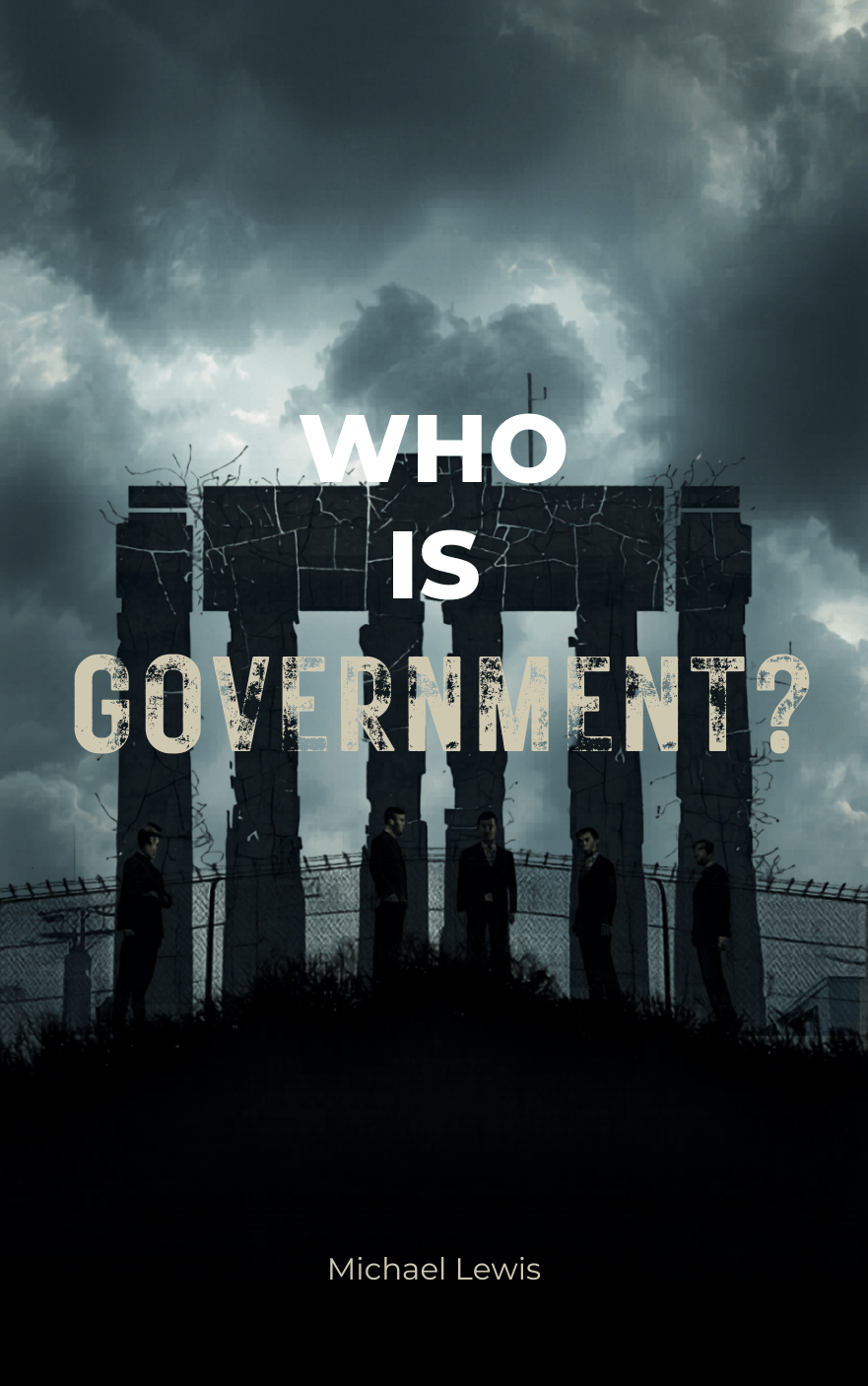
Who Is Government? Book Summary
This Who Is Government? Book Summary covers the key ideas, lessons, and takeaways in about 20 minutes.
That vulnerability is the second half of the book's message. The same invisibility that lets civil servants concentrate on hard problems also strips them of any constituency when their funding is slashed or their jobs are eliminated. The cost of cuts is usually measured in lost expertise, lost institutional memory, and harms that surface only years later, by which point reversal is no longer possible. The contributors argue that the antidote is sustained storytelling: putting names and faces and concrete stakes alongside the abstract concept of "the federal workforce" so that voters and policymakers can see what is actually being dismantled. Their hope is that an informed public will come to value humility, maintenance, and patient institution-building as much as it values novelty, charisma, and disruption, since the country's quiet, daily functioning depends on the former far more than on the latter.
Helps with these goals
Want the complete 20-minute summary?
- Full structured summary
- Video Summary
- Podcast Summary
- Audio summary
- Key takeaways
- Exercises
- Quiz
- Highlights and notes
- Ask the book with AI
What is in the Who Is Government? book summary?
Below is a preview of Sumizeit’s expert-written summary of Who Is Government? by Michael Lewis. The full summary covers the book’s key ideas in text, audio, and video.
Michael Lewis's 2025 book, edited and partly written by him, gathers six long-form profiles of federal employees, each penned by a different author. The contributors include Casey Cep, Dave Eggers, Geraldine Brooks, John Lanchester, Sarah Vowell, and W. Kamau Bell. Together with Lewis, they sketch a portrait of the largely invisible workforce that quietly keeps the country functioning. The collection grew out of a series Lewis curated for The Washington Post in 2024, which itself extended themes he had begun investigating in his 2018 book The Fifth Risk. The piece below walks through the book's main arguments, drawing on the specific stories the authors tell to make those arguments concrete.
Bringing the Hidden Workforce Into View
The premise of the book is straightforward but unsettling: most citizens have only the dimmest idea of what their federal government actually does or who carries out the work. Roads, vaccines, food safety, the security of retirement income, the reliability of statistics, the integrity of national archives, the pursuit of cybercriminals: all of it depends on a workforce of about two million people that the average American can name almost no member of. Lewis suggests this anonymity is not accidental. It results from how agencies communicate, how the press covers Washington, and how civil servants themselves regard their work. The result is a country whose voters cheerfully approve of cutting bureaucrats they have never met while continuing to rely on the services those bureaucrats deliver.
Why Markets Leave Certain Problems Unsolved
Lewis frames much of the work of the federal government as the response to situations where ordinary commercial logic produces no answer. Some problems involve such tiny populations that no business could ever recover the cost of helping them. A drug company, for example, has no reason to invest in a treatment for a disorder that afflicts a couple hundred people. Other problems require everyone in an industry to act simultaneously; without a rule that binds all competitors, the company that improves its safety record alone simply prices itself out of business. Still other problems pay off only over decades and benefit the entire population in ways that cannot be billed. Preserving and digitizing the country's documentary heritage, for instance, helps the public at large but cannot be monetized.
Economists describe these patterns using terms like externalities, public goods, and information asymmetries. Lewis's account dovetails with that vocabulary: when the costs of an activity fall on people outside the deal, when benefits cannot be confined to paying customers, or when one side of a transaction knows more than the other, markets tend to produce too little of what is needed. Some critics argue that government interventions can themselves go wrong, with policymakers chasing political wins rather than actual fixes, but Lewis's contention is that without a public sector willing to address these gaps, important work simply does not get done.
The Story of Coal Mine Safety and Christopher Mark
The book's clearest illustration of this dynamic is the underground mining industry.
Want the complete 20-minute summary?
- Full structured summary
- Video Summary
- Podcast Summary
- Audio summary
- Key takeaways
- Exercises
- Quiz
- Highlights and notes
- Ask the book with AI
Who should read Who Is Government??
Who Is Government? is essential for citizens who want to understand how federal workers actually keep the country functioning. It's particularly valuable for voters, policymakers, and anyone concerned about the future of public institutions, as well as those curious about the people behind the government services they rely on daily.
Why does Who Is Government? matter?
At a time when federal workforce cuts are accelerating and public trust in institutions is eroding, Who Is Government? reveals the invisible work that prevents disasters, saves lives, and maintains democratic infrastructure. Michael Lewis argues that understanding who civil servants are and what they accomplish is critical for informed citizenship and for protecting the institutions that markets cannot or will not sustain.
What are the key themes in Who Is Government??
- Market failures and why government exists
- The invisibility of successful prevention
- Mission-driven public servants who choose meaning over money
- The vulnerability of invisible workers to political attack
- Democratic infrastructure as public goods
- Storytelling as a path to public understanding
- The gap between what government costs and what citizens believe
- Institutional knowledge and the cost of workforce disruption
What are the key lessons from the Who Is Government? book summary?
Markets leave critical gaps unfilled
Private companies cannot profitably address problems affecting tiny populations, requiring universal industry compliance, or paying off over decades. Government fills these gaps because markets naturally produce too little of what society actually needs.
Prevention is invisible success
The most effective government programs prevent disasters from happening, which means their success appears as an absence of news. A year with zero coal mining deaths from roof collapses generates no headlines despite representing extraordinary accomplishment.
Federal workers are highly educated and underpaid
About 54 percent of federal employees hold bachelor's degrees and 21 percent hold advanced degrees, yet they earn 10-30 percent less than comparable private-sector workers, showing their commitment stems from mission rather than compensation.
Personal experience drives lifelong public service
Many federal workers enter government after experiencing problems firsthand—like Heather Stone's rare childhood diseases leading her to build CURE ID—and dedicate their careers to solving them for others.
Technical expertise combined with humility defines effective civil servants
The most accomplished federal workers are technically gifted, mission-oriented, and allergic to personal recognition. Christopher Mark became the most-cited figure in mining engineering scholarship without ever expecting public recognition.
The preparedness paradox undermines public support
When vaccination or safety programs work perfectly, the absence of disease makes people question why the program exists at all, creating pressure to cut the very infrastructure that maintains protection.
Shared measurement is democracy infrastructure
Neutral, universally accessible statistics like the Consumer Price Index enable economic coordination across society. Without shared factual baselines, democratic deliberation becomes impossible as every dispute devolves into competing realities.
Innovation in government means doing more with available resources
Federal innovation is not about disruption but about creative problem-solving within constraints—like using volunteer crowdsourcing to digitize archives when no budget exists for hiring staff.
Citizen participation in government work creates informed constituencies
When ordinary people participate in federal projects like citizen science initiatives, they gain direct knowledge of what government does, becoming defenders of institutions they understand firsthand.
The federal workforce has actually shrunk relative to population
The civilian workforce has remained around 2.3 million for fifty years while the population has grown enormously; as a share of all American workers, federal employees have dropped from 5.2 percent in 1952 to under 2 percent today.
Invisibility leaves workers defenseless against cuts
Because citizens never connect government benefits to specific people, they support cutting vague 'bureaucracy' without realizing they're eliminating expertise that took decades to build. Once institutional memory is lost, reversal becomes nearly impossible.
Contractors are more expensive than federal employees
The federal government spends nearly three times as much on private contractors ($759 billion in 2024) as on its entire civilian workforce ($293 billion), making cost-cutting arguments that target employees fiscally incoherent.
Some work cannot be monetized but is essential
Preserving documentary heritage, maintaining rare-disease information networks, or producing neutral inflation statistics cannot generate revenue streams, yet markets cannot exist without these public-sector functions.
Federal services reach nearly all Americans
In 2019, ten major safety-net programs reached 99 million Americans including roughly half the country's children, demonstrating that government's reach and importance are vastly underappreciated.
Storytelling changes perception in ways data cannot
Specific narratives about named individuals doing concrete work penetrate stereotypes and reshape public attitudes more effectively than abstract policy arguments or statistics.
Public-sector excellence requires decades of committed leadership
The National Cemetery Administration's 97 ACSI score resulted from one leader's forty-page manual on grass height and burial timing—standards no profit-driven business could sustain because they reduce margins.
Rare diseases reveal why markets fail
Thirty million Americans have rare conditions, but only 5 percent have FDA-approved treatments. The rarest diseases remain uncovered because companies cannot justify investment in populations too small to generate profit.
Blockchain expertise is available but underutilized
Federal cryptocurrency forensics units detect real-world identities behind digital wallets to stop money laundering and terrorism financing, yet team members routinely receive private-sector offers worth three to four times their federal pay.
Hiring processes discourage talented applicants
Federal hiring takes an average of 101 days, requires four- to six-page applications and opaque job titles, driving away exactly the young candidates who express interest in meaningful public work.
Silent institutional collapse is more dangerous than visible crisis
When cuts occur, damage is usually measured in lost expertise and institutional memory that surfaces only years later, by which point the relationships and knowledge needed to rebuild are irrecoverable.
Want the complete 20-minute summary?
- Full structured summary
- Video Summary
- Podcast Summary
- Audio summary
- Key takeaways
- Exercises
- Quiz
- Highlights and notes
- Ask the book with AI
How can you apply ideas from Who Is Government??
- Evaluate government programs not by whether they prevent visible crises, but by whether they maintain conditions where crises do not occur
- Support federal workers by connecting specific benefits you receive (safe food, working roads, accurate inflation data) to the named people who enable them
- Advocate for modernizing federal hiring processes to reduce time-to-hire and simplify applications to attract younger talent
- Participate in citizen science or citizen archivist programs to gain firsthand knowledge of what your government actually does
- Push elected officials to halt workforce cuts and address the federal-private sector pay gap to recruit mission-driven talent
- Demand greater communicative freedom for civil servants so they can describe their work without political approval
- Resist startup-style disruption rhetoric when applied to institutions that require decades to build functional capacity
- Value institutional maintenance and patient problem-solving as much as innovation and charisma in your evaluations of leadership
What common mistakes do readers make with Who Is Government??
- Assuming federal employees are overhead to be eliminated rather than infrastructure to be maintained, like roads or electrical grids
- Supporting cuts to vague 'bureaucracy' without understanding which specific people and services would be eliminated
- Believing inflation statistics are fabricated when prices keep rising despite the CPI showing inflation has slowed, misunderstanding what the number actually measures
- Judging government success by whether dramatic failures occurred rather than recognizing that prevented disasters represent the highest form of accomplishment
Sumizeit Exercises Apply what you've learned
Turn ideas from Who Is Government? into action with a short guided reflection: identify the biggest takeaway, connect it to your life, and commit to one step you can take in the next 24 hours.
What is the expert analysis of Who Is Government??
Overview
Who Is Government? is a 2025 collaborative work curated and partly authored by Michael Lewis, a celebrated nonfiction writer known for his incisive explorations of economic, political, and social institutions. This volume assembles six long-form profiles by distinguished contributors, including Casey Cep, Dave Eggers, Geraldine Brooks, John Lanchester, Sarah Vowell, and W. Kamau Bell, each illuminating the often invisible but indispensable federal workforce. Building on themes from Lewis’s 2018 work The Fifth Risk, the book offers a nuanced, humanized portrait of the civil servants who maintain the infrastructure of American democracy and public welfare, revealing the complexity and quiet heroism embedded in their work.
Core Thesis
The central argument of Who Is Government? is that the United States depends profoundly on a largely anonymous cadre of federal employees who address societal challenges that markets either cannot or will not solve. These workers operate in domains characterized by market failures—externalities, public goods, and information asymmetries—where private incentives are misaligned with public needs. The book contends that this workforce’s technical expertise, mission-driven ethos, and willingness to accept lower compensation underpin critical public goods ranging from mine safety and rare disease treatment to inflation measurement and veterans’ services. Yet, paradoxically, their invisibility renders them vulnerable to political neglect and budgetary cuts, threatening the continuity and quality of essential government functions.
Strengths
- Humanizing the Bureaucracy: Through vivid storytelling and detailed profiles, the book transcends abstract policy debates, offering concrete narratives that make the federal workforce relatable and dignified.
- Interdisciplinary Insight: By integrating economic theory on market failure with real-world examples, the book bridges academic concepts and practical governance, enhancing reader understanding of why government intervention is often indispensable.
- Rich Case Studies: The diverse range of profiles—from Christopher Mark’s decades-long work on mine safety to Heather Stone’s rare disease initiatives—illustrate the multifaceted nature of public service and its societal impact.
- Critical Examination of Invisibility: The analysis of why federal employees remain largely unknown—due to institutional culture, media framing, and political incentives—adds depth to the discourse on public administration and democratic accountability.
- Call for Narrative Change: The emphasis on storytelling as a strategy to reshape public perception is both timely and grounded in cognitive science, offering a pragmatic path to fostering greater civic engagement and policy support.
Critiques & Counterarguments
- Potential Oversimplification of Government Efficacy: While the book highlights successes, it may understate instances where government programs fail due to bureaucratic inertia, mismanagement, or political interference, thus presenting an overly optimistic view of public sector competence.
- Limited Engagement with Political Economy Critiques: The analysis could benefit from deeper exploration of how partisan polarization and institutional design constrain effective governance, beyond the focus on workforce invisibility.
- Neglect of Private Sector Innovations: The argument that markets cannot solve certain problems might overlook emerging private-public partnerships and social enterprises that address niche or long-term challenges innovatively.
- Risk of Narrative Fragility: The reliance on storytelling to shift public attitudes, while compelling, may be vulnerable to reversal amid shifting political climates and media ecosystems, as acknowledged but not fully resolved in the book.
- Insufficient Discussion of Diversity and Inclusion: The profiles emphasize technical skill and mission orientation but could engage more critically with how issues of representation, equity, and systemic bias affect the federal workforce and its legitimacy.
Who Should Read This
Who Is Government? is essential reading for policymakers, public administration scholars, and informed citizens interested in the mechanics of governance and the sociology of public service. It offers valuable insights for advocates of government reform and those concerned with democratic resilience, as well as professionals in the nonprofit and public sectors seeking to understand the interplay between institutional capacity and societal outcomes. Moreover, readers drawn to narrative nonfiction that combines rigorous analysis with human stories will find this book both enlightening and engaging.
Frequently asked questions about the Who Is Government? book summary
What is Who Is Government? about?
Who Is Government? by Michael Lewis is a collection of six long-form profiles of federal employees written by different authors, including Casey Cep, Dave Eggers, and Geraldine Brooks. The book argues that the United States is sustained by an extraordinary, largely anonymous workforce of about two million civil servants who solve problems that markets cannot or will not address—from mine safety to rare-disease treatment to election security—and explores why their work remains invisible to most citizens despite its critical importance.
Who should read Who Is Government??
Who Is Government? is essential for voters and policymakers who want to understand how federal workers actually keep the country functioning. It's valuable for anyone concerned about the future of public institutions, those curious about federal workers themselves, and citizens who want to understand what their government actually does and why it matters.
Why are federal workers invisible if they do such important work?
Federal workers are invisible for several reasons: agencies have almost no public relations capacity, political appointees prioritize avoiding embarrassment over celebrating accomplishments, the press covers politics rather than institutions, and the workers themselves are often uncomfortable with recognition. Critically, successful prevention produces no news—a year with zero mining deaths generates no headlines despite being a triumph.
Does cutting federal workers actually save money?
No. Federal employee salaries account for only 5 percent of federal spending, while the government spends nearly three times as much on private contractors ($759 billion in 2024) as on its entire civilian workforce ($293 billion). The civilian workforce has also shrunk from 5.2 percent of all American workers in 1952 to under 2 percent today despite massive population growth.
What examples does Lewis use to show why government matters?
Lewis profiles several federal workers, including Christopher Mark, who rebuilt mining safety standards and produced a year with zero coal mining deaths; Heather Stone, who created CURE ID to share information about rare-disease treatments; and Pamela Wright, who used crowdsourcing to digitize national archives when the agency had no money for staff. Each story illustrates work that private companies could not justify funding.
How does Who Is Government? connect to Michael Lewis's earlier work?
Who Is Government? builds on themes from Lewis's 2018 book The Fifth Risk, which examined how the Trump administration handled the transition into federal agencies. The current book expands that earlier inquiry into intimate profiles of individual workers and grew from a Washington Post series Lewis curated in 2024, bringing the largely hidden work of civil servants into public view.
About Sumizeit
Sumizeit is a profitable Scomy LLC company based in Miami, Florida. It has been helping readers learn from nonfiction books for 7 years with expert-written summaries in text, audio, podcast, and video.
Want the complete 20-minute summary?
- Full structured summary
- Video Summary
- Podcast Summary
- Audio summary
- Key takeaways
- Exercises
- Quiz
- Highlights and notes
- Ask the book with AI
Here's why readers love Sumizeit
Join thousands of learners getting smarter every day
"Great experience. Detailed summaries. Loved the gamification feature. Makes learning fun. Good customer service. I recommend Sumizeit to anyone. You'll learn a lot."
"I always felt busy but still wanting to keep up with the book discussion in my friend group. This was a great supplement to help me keep reading the books I find fun while keeping up with important books."
"I love this website. Instead of scrolling social media, I find myself learning a lot. I use it everyday. I recommend this app for anyone who is too busy and wants to get up to speed with their favorite books."
Who Is Government? Book Summary PDF
Looking for a Who Is Government? Book Summary PDF you can save and revisit offline? Our Who Is Government? Book Summary PDF captures the book’s core ideas in a clean, printable format — the key frameworks, takeaways, and structure without the fluff. Download the Who Is Government? Book Summary PDF when you want a reference you can annotate, share with your team, or review on the go. Get your Who Is Government? Book Summary PDF from the download page below.
Download Who Is Government? Book Summary PDFPeople also liked these summaries
Readers who explored Who Is Government? often enjoyed these titles next.





Want the complete 20-minute summary?
- Full structured summary
- Video Summary
- Podcast Summary
- Audio summary
- Key takeaways
- Exercises
- Quiz
- Highlights and notes
- Ask the book with AI
Featured Book Titles
Popular Book Summaries at sumizeit, leading book summary app
