


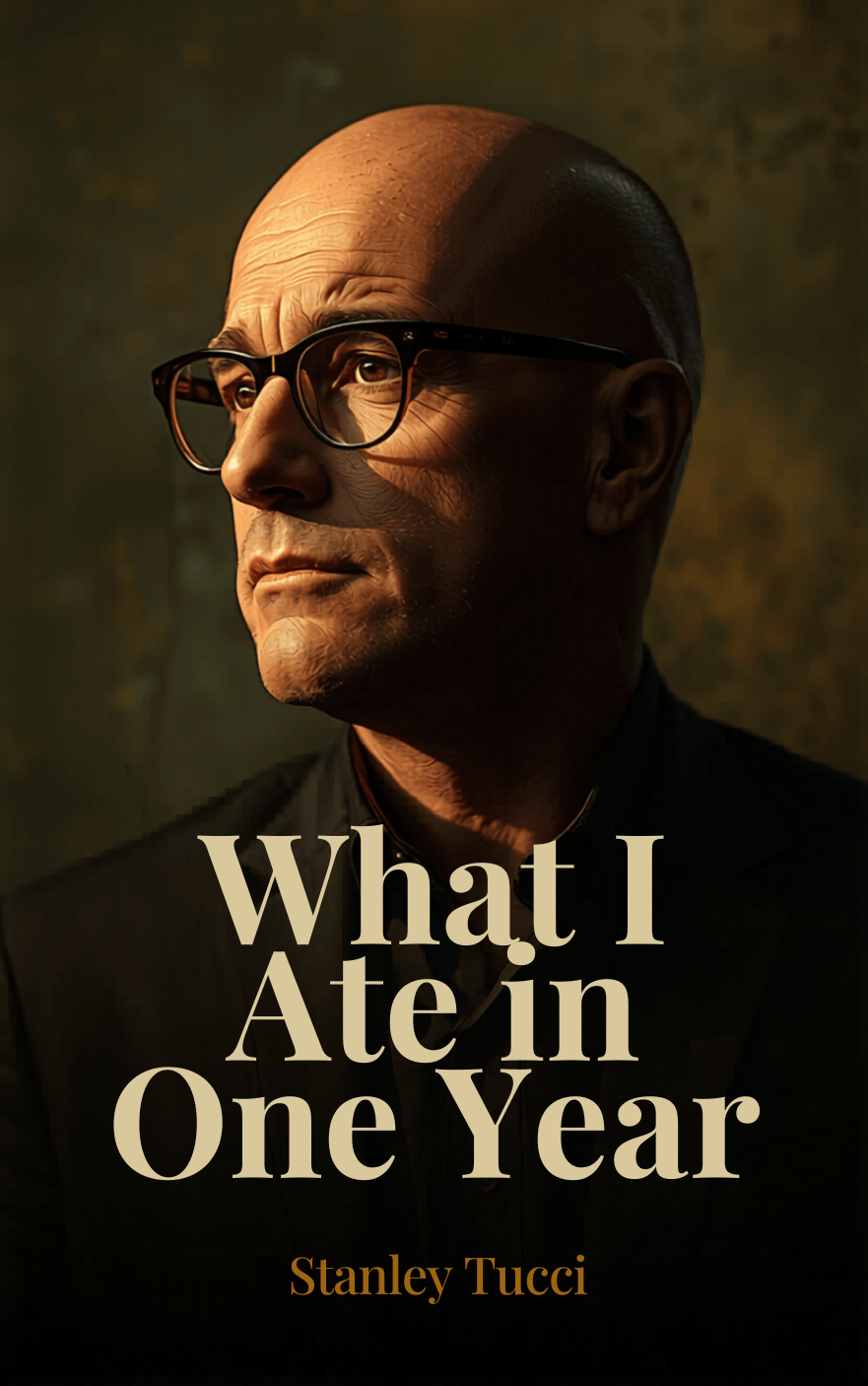
Prefer the print book? Buy on Amazon
As an Amazon Associate, Sumizeit earns from qualifying purchases.
What I Ate in One Year Book Summary
This What I Ate in One Year Book Summary covers the key ideas, lessons, and takeaways in about 20 minutes.
The other major thread of the book is the unwavering centrality of family. Whether he is describing the warmth that fills a previously sterile apartment when his wife and children arrive, the legacy of cooking left to him by his mother, or the recipes that keep his late wife present in his daily routine, Tucci consistently treats kinship as the deepest source of meaning available to a person. Career achievements, public recognition, and elaborate dining experiences are all worthwhile, but they pale next to the steady, sustaining presence of those who know and love you. This humility about the value of fame, paired with reverence for ordinary domestic happiness, gives the memoir its enduring warmth.
Helps with these goals
Want the complete 20-minute summary?
- Full structured summary
- Video Summary
- Podcast Summary
- Audio summary
- Key takeaways
- Exercises
- Quiz
- Highlights and notes
- Ask the book with AI
Not ready to upgrade?
Get this summary + 2 more picks sent to your inbox, free.
What is in the What I Ate in One Year book summary?
Below is a preview of Sumizeit’s expert-written summary of What I Ate in One Year by Stanley Tucci. The full summary covers the book’s key ideas in text, audio, and video.
Stanley Tucci's memoir blends three of his greatest devotions: acting, family, and food. Drawing on a year of journal entries written across various film locations, kitchens, and dining rooms, the book invites readers into the rhythms of his daily existence, where meals serve as both nourishment and a lens through which he interprets his identity, his memories, and the world around him. The narrative is intimate, often funny, sometimes mournful, and packed with sensory detail. Below is a thorough walkthrough of the major threads of the book.
Setting the Stage: Life Behind the Camera in the Eternal City
A substantial portion of the memoir centers on the period when Tucci was filming the political thriller Conclave in Rome. Although the picture itself is set in the highest chambers of the Vatican, the day-to-day reality of being on a film crew in Italy proved far less glamorous than the romantic image many outsiders carry of the city. Tucci uses this gap between expectation and reality as fertile ground for reflection. He paints scenes of long shooting hours, of mornings rushing to set before sunrise, and of returning home depleted to a flat that felt more like a holding cell than a refuge. These vignettes function almost as confessions: Rome, even for someone of Italian descent who adores the country, can feel hollow when stripped of the comforts of one's loved ones.
Spartan Lodgings and Disappointing Catering at Cinecittà
Tucci pulls back the curtain on the modest apartment provided to him during his stretch in Rome. He describes a living space that, in his telling, prioritized the architect's ego over genuine livability. The couch was unyielding, the bed firm to the point of discomfort, and the overall atmosphere felt drab. Without his wife and children nearby, the rooms only emphasized loneliness rather than offering peace. He yearned for the soft fixtures and cluttered warmth of his actual home, the kind that comes from years of accumulated life rather than from a designer's blueprint.
The cuisine on the premises of Cinecittà fared no better. Despite a quarter century of working in Italian productions, he found that the catering had stubbornly refused to evolve. Sauces still ran heavy and gluey, pasta arrived bloated past al dente, and the meats tended toward stringiness. He treats these culinary disappointments with a wry humor, but underneath the jokes lies a sincere disappointment that the country known the world over for its culinary brilliance often serves uninspired food to those laboring to make its films. As a workaround, Tucci adopted the practice of preparing his own provisions at home and bringing them to the soundstage in containers, a small daily ritual that allowed him to maintain both his palate and his sense of well-being.
Tucci's Philosophy on Performance and Character Embodiment
Beyond the practical inconveniences of location work, Tucci uses portions of the book to articulate his ideas about acting itself.
Want the complete 20-minute summary?
- Full structured summary
- Video Summary
- Podcast Summary
- Audio summary
- Key takeaways
- Exercises
- Quiz
- Highlights and notes
- Ask the book with AI
Who should read What I Ate in One Year?
This book is ideal for anyone who views food as more than mere sustenance—as a window into culture, memory, and identity. Readers who cherish the intersection of storytelling, culinary tradition, and personal reflection will find deep resonance here, whether they are aspiring actors curious about the craft, parents navigating work-life balance, or simply those who believe that meals matter.
Why does What I Ate in One Year matter?
In an era of convenience culture and rushed eating, Stanley Tucci's memoir reminds us that the daily choices we make about food and family are profoundly consequential. The book arrives at a moment when many are reassessing what truly brings fulfillment, offering a seasoned artist's honest meditation on how cooking, presence, and shared tables sustain us through both ordinary and extraordinary times.
What are the key themes in What I Ate in One Year?
- Food as a vessel of memory and identity
- The tension between ambition and family presence
- Craftsmanship in both acting and cooking
- Mortality, gratitude, and life's fragility
- Cultural heritage and Italian-American roots
- The restorative power of domestic rituals
- Navigating public recognition with grace
- Culinary tradition as an expression of community resilience
Want the complete 20-minute summary?
- Full structured summary
- Video Summary
- Podcast Summary
- Audio summary
- Key takeaways
- Exercises
- Quiz
- Highlights and notes
- Ask the book with AI
How can you apply ideas from What I Ate in One Year?
- Establish a regular cooking ritual at home, even simple dishes, to ground yourself and create space for reflection and creativity
- Research the history and cultural origins of dishes you cook, transforming meals into opportunities to honor communities and traditions
- Prioritize quality ingredients over convenience, following the principle that what enters your kitchen shapes what nourishes you and your family
- Create unrushed time for family meals, treating the table as a gathering place for love, conversation, and transmission of values across generations
- When facing career or life demands, identify the domestic practices that anchor you—whether cooking, gardening, or other rituals—and protect them fiercely
- Practice meeting unexpected social moments (like being recognized in public) with grace rather than defensiveness, reframing intrusion as human connection
- Channel personal crises or difficult seasons into creative acts that process emotion, using food or other crafts as vehicles for grief or growth
What common mistakes do readers make with What I Ate in One Year?
- Treating food primarily as fuel rather than recognizing it as a primary language through which families communicate love and continuity
- Sacrificing quality family presence for proximity, such as uprooting children repeatedly for work rather than maintaining their stability and friendships
- Overcomplicating dishes or performances in an attempt to impress, rather than allowing craft to serve the story or meal with restraint and clarity
- Overlooking the cultural and historical weight embedded in traditional recipes, reducing them to mere technique rather than community resilience
Sumizeit Exercises Apply what you've learned
Turn ideas from What I Ate in One Year into action with a short guided reflection: identify the biggest takeaway, connect it to your life, and commit to one step you can take in the next 24 hours.
What is the expert analysis of What I Ate in One Year?
Overview
What I Ate in One Year is a memoir by Stanley Tucci, an acclaimed American actor and food enthusiast of Italian descent. The book stands out for its intimate fusion of Tucci’s passions: acting, family, and food. Drawing from a year of journal entries penned across diverse film locations and domestic spaces, Tucci offers readers a richly textured exploration of identity, memory, and culture through the prism of daily meals. This work is significant not only as a personal narrative but also as a meditation on the profound role of food in shaping human experience, making it a noteworthy contribution to contemporary memoir and food writing alike.
Core Thesis
At its heart, What I Ate in One Year argues that food is far more than sustenance; it is a vital conduit for love, tradition, grief, and connection. Tucci posits that the rituals surrounding meals—preparation, sharing, and remembrance—are foundational to human life and identity. The memoir intertwines this culinary philosophy with reflections on family, career, and mortality, asserting that the everyday acts of eating and cooking carry profound emotional and cultural weight. Through his narrative, Tucci elevates the ordinary meal to a symbol of life’s continuity and meaning.
Strengths
- Evocative Sensory Detail: Tucci’s writing vividly captures the textures, aromas, and flavors of Italian regional cuisines, imbuing the memoir with a palpable sensory richness that engages readers beyond the intellectual.
- Interweaving of Personal and Cultural History: The memoir adeptly situates individual memories within broader culinary traditions, offering a layered understanding of Italian-American heritage and the histories embedded in food.
- Honest Portrayal of the Actor’s Life: Tucci’s candid reflections on the challenges of filming, celebrity awkwardness, and balancing family life provide a nuanced portrait of a public figure grappling with private realities.
- Philosophical Insight on Craftsmanship: His analogy between acting and cooking—both requiring restraint, clarity, and respect for the material—offers a compelling meditation on artistry and authenticity.
- Emotional Resonance: The memoir’s treatment of grief, particularly through the remembrance of his late wife Kate and his battle with cancer, lends the narrative a profound emotional depth without sentimentality.
Critiques & Counterarguments
- Selective Cultural Focus: While the memoir excels in celebrating Italian and Italian-American culinary traditions, it occasionally risks a narrow cultural lens, potentially underrepresenting the complexity and diversity of global foodways that also shape identity.
- Romanticization of Food and Family: Tucci’s portrayal of meals as almost sacred vessels of meaning may overlook the socio-economic disparities and systemic issues surrounding food access and family dynamics, which complicate such idealized narratives.
- Limited Engagement with Broader Food Politics: The book touches on charitable work with food banks but largely sidesteps deeper discussions about food justice, sustainability, or the environmental impacts of culinary culture, areas increasingly central to contemporary food discourse.
- Opposing Views on Acting Philosophy: Tucci’s emphasis on restraint and clarity in performance contrasts with schools of thought that celebrate theatricality and actor-centric interpretation, suggesting that his approach, while valid, is not universally accepted within the craft.
- Potential Overemphasis on Nostalgia: The memoir’s recurrent theme of longing for domestic stability and past familial rituals might be critiqued as overly nostalgic, potentially glossing over the complexities and tensions inherent in family life and career demands.
Who Should Read This
What I Ate in One Year is ideally suited for readers who appreciate literary memoirs that blend cultural history with personal narrative, especially those interested in the intersections of food, identity, and artistry. Fans of culinary literature, Italian culture, and nuanced reflections on family life will find much to admire. Additionally, practitioners and enthusiasts of acting may gain valuable insights from Tucci’s thoughtful commentary on performance. Finally, readers drawn to stories of resilience and the human condition, framed through the everyday ritual of eating, will find this memoir both comforting and intellectually stimulating.
Frequently asked questions about the What I Ate in One Year book summary
What is What I Ate in One Year about?
What I Ate in One Year is Stanley Tucci's memoir that weaves together his three great passions: acting, family, and food. Drawing from a year of journal entries written across film sets and kitchens, the book uses meals as a lens through which Tucci examines identity, memory, work-life balance, and what truly sustains us through ordinary and extraordinary times.
Who should read What I Ate in One Year?
This book is ideal for readers who see food as more than sustenance—as a reflection of culture, memory, and identity. It resonates with aspiring actors curious about the craft, parents navigating demanding careers, and anyone who believes that daily choices about cooking and shared tables profoundly shape our lives.
What are the main takeaways from What I Ate in One Year?
The central lesson is that everyday choices about food and family are quietly profound. Meals are vehicles for love, tradition, and healing rather than mere calories. Additionally, Tucci emphasizes that family presence and ordinary domestic happiness matter far more than career achievement or public recognition, and that confronting life's fragility deepens gratitude for the moments we share with those we love.
Does Stanley Tucci discuss his cancer experience in the book?
Yes, Tucci candidly addresses his experience with cancer, writing about scans, treatments, and the dread between appointments without dramatizing but also without minimizing the illness. He emphasizes the importance of regular medical attention and reflects on how confronting mortality deepened his appreciation for ordinary moments and strengthened his commitment to what truly matters.
How much of the book focuses on Italian food and cooking?
Food is the spine of What I Ate in One Year, with substantial portions devoted to Italian regional gastronomy, memorable meals Tucci experienced while filming in Rome, and his own cooking experiments at home. However, the book also explores his heritage as an Italian-American, his mother's influence, recipes shared with his late wife, and his openness to cuisines beyond Italy.
What does Tucci reveal about working as an actor in the memoir?
Tucci shares insights into his philosophy of acting, emphasizing restraint and allowing scripts to do the heavy lifting rather than seeking attention through showy performances. He also recounts the less glamorous realities of location filming, including long hours, modest accommodations, and the challenge of balancing an itinerant career with being present for his children.
How does Tucci address the tension between his acting career and family life?
Tucci is honest about the difficulty of balancing relentless travel with his desire to be present for his children. Rather than uprooting his family repeatedly, he has chosen to keep them based in a stable home, acknowledging that this decision is harder on him personally but better for his children's wellbeing—a choice he frames as parental duty rather than sacrifice.
Does the book include recipes or cooking instructions?
While What I Ate in One Year centers on Tucci's reflections about food rather than step-by-step recipes, it is filled with detailed descriptions of dishes, meals, and culinary traditions. The book captures his philosophy of cooking and his approach to food as much as the specific techniques, making it rewarding for readers interested in food culture even if they are not seeking a traditional cookbook.
About Sumizeit
Sumizeit is a profitable Scomy LLC company based in Miami, Florida. It has been helping readers learn from nonfiction books for 7 years with expert-written summaries in text, audio, podcast, and video.
Want the complete 20-minute summary?
- Full structured summary
- Video Summary
- Podcast Summary
- Audio summary
- Key takeaways
- Exercises
- Quiz
- Highlights and notes
- Ask the book with AI
Here's why readers love Sumizeit
Join thousands of learners getting smarter every day
"Great experience. Detailed summaries. Loved the gamification feature. Makes learning fun. Good customer service. I recommend Sumizeit to anyone. You'll learn a lot."
"I always felt busy but still wanting to keep up with the book discussion in my friend group. This was a great supplement to help me keep reading the books I find fun while keeping up with important books."
"I love this website. Instead of scrolling social media, I find myself learning a lot. I use it everyday. I recommend this app for anyone who is too busy and wants to get up to speed with their favorite books."
What I Ate in One Year Book Summary PDF
Looking for a What I Ate in One Year Book Summary PDF you can save and revisit offline? Our What I Ate in One Year Book Summary PDF captures the book’s core ideas in a clean, printable format — the key frameworks, takeaways, and structure without the fluff. Download the What I Ate in One Year Book Summary PDF when you want a reference you can annotate, share with your team, or review on the go. Get your What I Ate in One Year Book Summary PDF from the download page below.
Download What I Ate in One Year Book Summary PDFPeople also liked these summaries
Readers who explored What I Ate in One Year often enjoyed these titles next.


Want the complete 20-minute summary?
- Full structured summary
- Video Summary
- Podcast Summary
- Audio summary
- Key takeaways
- Exercises
- Quiz
- Highlights and notes
- Ask the book with AI
Featured Book Titles
Popular Book Summaries at sumizeit, leading book summary app