


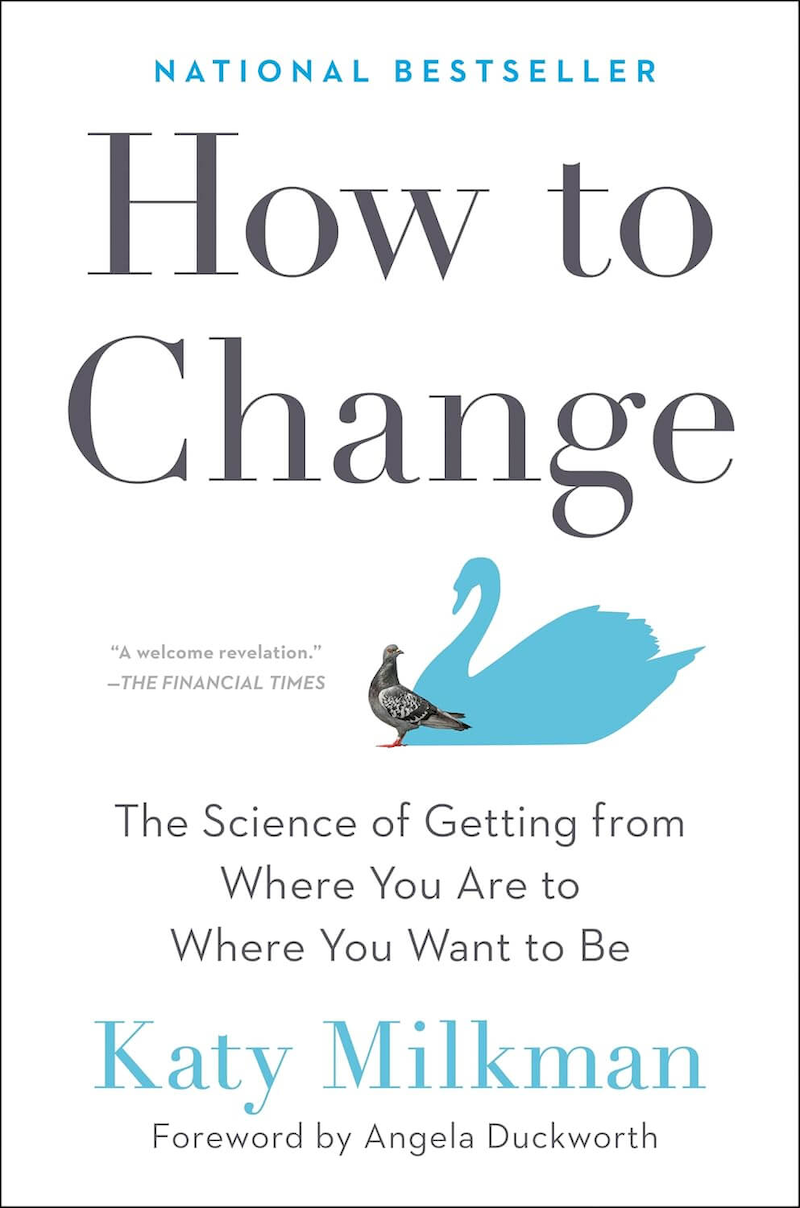
Prefer the print book? Buy on Amazon
As an Amazon Associate, Sumizeit earns from qualifying purchases.
How to Change Book Summary
This How to Change Book Summary covers the key ideas, lessons, and takeaways in about 20 minutes.
Short Description:
A science-based guide to building lasting habits and overcoming change barriers.
Ultimately, the book reframes personal growth as a process of experimentation rather than perfection. You are not expected to succeed immediately—you are expected to adapt. With the right mindset, tools, and persistence, change becomes less about willpower and more about intelligent design. When you continuously refine your approach and stay committed, meaningful change is not only possible—it becomes inevitable.
Helps with these goals
Want the complete 20-minute summary?
- Full structured summary
- Video Summary
- Podcast Summary
- Audio summary
- Key takeaways
- Exercises
- Quiz
- Highlights and notes
- Ask the book with AI
Want a Free Weekly Read?
Get a free summary every week straight to your mailbox.
Preview the How to Change book summary
Below is a preview of Sumizeit’s comprehensive human-written summary of How to Change by Katy Milkman. The full summary is 15-20 minutes long and covers the book’s key ideas in text, audio, visual, and video formats. Unlock the full 20 Minute Summary
At its core, How to Change tackles a frustrating reality: most people genuinely want to improve their lives, yet they repeatedly fail to follow through. Whether it’s exercising regularly, saving money, or breaking bad habits, the gap between intention and action is enormous.
Milkman explains that this gap exists not because people lack discipline, but because they misunderstand how behavior actually works. Human beings are not naturally wired for long-term thinking. Instead, we are influenced by biases, emotions, environmental triggers, and cognitive limitations that often push us toward short-term comfort instead of long-term benefit.
Rather than blaming yourself for a lack of willpower, the book reframes change as a design problem. The key is not trying harder—it’s designing smarter systems that align with how your brain naturally operates.
This shift in perspective is crucial. When you stop seeing failure as a personal flaw and instead view it as a mismatch between strategy and psychology, change becomes more achievable.
Treating Behavior Change Like a Scientific Problem
Milkman emphasizes that successful change begins with diagnosing the real problem. Instead of applying generic advice, you must identify the specific obstacle preventing progress.
For example, if you want to start meditating but never follow through, the issue could be:
Distractions
Lack of motivation
Competing rewards (like scrolling your phone)
Forgetfulness
Each of these requires a different solution.
Milkman compares this process to engineering: you don’t fix every machine the same way—you study the breakdown and apply a targeted fix.
This approach eliminates one-size-fits-all thinking. Instead of forcing yourself into rigid systems, you build customized strategies tailored to your behavior patterns.
Using Fresh Starts to Reset Your Identity
One of the most powerful insights in the book is the concept of “fresh start moments.” These are points in time that psychologically separate your past from your future, making it easier to adopt new behaviors.
These moments include:
The beginning of a new year
Birthdays
Moving to a new place
Starting a new job
Even something as simple as a new week
These transitions help because people naturally think in chapters. When a new chapter begins, past failures feel less relevant, and motivation increases.
Milkman identifies three types of fresh starts:
Time-based resets
Dates like Mondays or New Year’s Day create symbolic opportunities to begin again.
Event-based resets
Major life changes disrupt routines and open space for new habits.
Location-based resets
Changing environments breaks old patterns and reduces automatic behaviors.
However, she also warns that fresh starts are not magic solutions. Many people fail after New Year’s resolutions because they choose overly ambitious goals or act before they are ready.
The takeaway: fresh starts are powerful, but only when paired with realistic strategies.
Why Belief in Yourself Shapes Outcomes
Even the best strategy won’t work if you don’t believe you can succeed.
Milkman highlights that expectations influence behavior in multiple ways:
Emotionally: Confidence increases energy and reduces stress
Mentally: Positive beliefs change how you interpret challenges
Motivationally: Belief increases persistence
Physiologically : Your…
Want the complete 20-minute summary?
- Full structured summary
- Video Summary
- Podcast Summary
- Audio summary
- Key takeaways
- Exercises
- Quiz
- Highlights and notes
- Ask the book with AI
Who should read How to Change?
How to Change is for anyone struggling to close the gap between their intentions and actions—whether you want to exercise regularly, save money, break bad habits, or achieve any personal goal. If you've tried willpower alone and failed, or if you're tired of generic self-help advice, this book offers a science-backed framework tailored to how your brain actually works. Katy Milkman's approach is especially valuable for people who want to stop blaming themselves and start designing smarter systems instead.
Why does How to Change matter?
Most people fail at change not because they lack discipline, but because they misunderstand the psychology of behavior. How to Change reframes personal transformation from a willpower problem into a design problem, offering practical strategies backed by behavioral science. In a world where endless self-help advice often contradicts itself, Milkman provides a diagnostic approach that helps you identify your specific obstacles and apply targeted solutions. This shift in perspective makes sustainable change achievable for anyone willing to experiment.
What are the key themes in How to Change?
- Behavior change as a design problem, not a discipline problem
- Diagnosing specific obstacles rather than applying generic solutions
- Leveraging fresh start moments to reset identity and motivation
- Making good habits enjoyable through pairing and gamification
- Environmental design and reducing friction for desired behaviors
- The role of belief and confidence in sustaining change
- Using social influence and community to support goals
- Treating change as an ongoing process, not a destination
Want the complete 20-minute summary?
- Full structured summary
- Video Summary
- Podcast Summary
- Audio summary
- Key takeaways
- Exercises
- Quiz
- Highlights and notes
- Ask the book with AI
How can you apply ideas from How to Change?
- Diagnose your specific barrier to change before selecting a strategy—identify whether you struggle with motivation, memory, competing rewards, or environmental friction
- Pair an enjoyable activity with a desired behavior—watch shows only during workouts, listen to audiobooks while doing chores, or enjoy a treat after completing tasks
- Use fresh start moments strategically—launch habit changes on Mondays, after birthdays, or after moving to amplify psychological motivation
- Design your environment to make good choices easier—hide temptations, place reminders in visible locations, and set up automatic systems (like auto-savings transfers)
- Create commitment devices with real or social consequences—join accountability groups, announce goals publicly, or establish penalty systems that raise the stakes
- Set specific, vivid reminders close to when you need to act—place gym clothes by your bed, use alarms with detailed instructions, or use sensory cues tied to daily routines
- Build flexible habits rather than rigid schedules—establish consistent routines done at varying times, making them resilient to disruptions and easier to maintain long-term
What common mistakes do readers make with How to Change?
- Choosing overly ambitious goals during fresh starts—using the motivation boost of a new chapter without realistic planning leads to quick failure and discouragement
- Relying solely on willpower to resist present bias—fighting the brain's natural preference for immediate rewards is exhausting and ineffective; design systems instead
- Applying generic advice without diagnosing your specific obstacle—one-size-fits-all strategies fail because everyone's barrier to change is different
- Abandoning change efforts after setbacks—treating failure as personal inadequacy instead of expecting it as part of the process and adapting your approach
- Using gamification that feels forced or artificial—adding points or badges without genuine meaning creates short-term engagement that collapses when the novelty wears off
- Ignoring maintenance once a habit forms—assuming established habits will sustain themselves without ongoing attention, feedback, and adjustment
Sumizeit Exercises Apply what you've learned
Turn ideas from How to Change into action with a short guided reflection: identify the biggest takeaway, connect it to your life, and commit to one step you can take in the next 24 hours.
What is the expert analysis of How to Change?
Overview
How to Change by Katy Milkman stands as a significant contribution to the literature on behavioral change, blending rigorous academic research with practical application. Milkman, a behavioral economist and professor at The Wharton School, leverages her expertise in psychology and economics to dissect why people struggle to translate intentions into sustained actions. The book’s importance lies in its reframing of personal transformation—not as a matter of willpower or moral failing, but as a problem of design and strategy aligned with human cognitive realities.
Core Thesis
Milkman’s central argument is that lasting change is not achieved through sheer discipline but through understanding and working with the psychological mechanisms that govern human behavior. She posits that change efforts fail because people misdiagnose the barriers they face and apply generic, one-size-fits-all solutions. By treating behavior change as a scientific problem—identifying specific obstacles such as procrastination, forgetfulness, or present bias—and designing tailored interventions that harness natural cognitive tendencies, individuals can create sustainable habits. The book also emphasizes the power of “fresh start moments,” environmental design, social influence, and confidence-building as critical levers in this process.
Strengths
- Interdisciplinary Integration: Milkman skillfully synthesizes insights from behavioral economics, psychology, and neuroscience, providing a robust, evidence-based framework for change.
- Practical Framework: The book offers actionable strategies, such as commitment devices, gamification, and environmental restructuring, that readers can immediately apply to their own lives.
- Nuanced Understanding of Human Nature: By acknowledging cognitive biases and emotional factors, Milkman moves beyond simplistic notions of willpower, offering a compassionate and realistic perspective on why change is difficult.
- Emphasis on Customization: The insistence on diagnosing individual obstacles and tailoring solutions respects the complexity and variability of human behavior.
- Clear Communication: Complex scientific concepts are conveyed with clarity and engaging examples, making the book accessible without sacrificing intellectual rigor.
Critiques & Counterarguments
- Potential Oversimplification of Complex Behaviors: While the book advocates for tailored strategies, some readers may find that the proposed solutions, such as pairing enjoyable activities with habits or using fresh start moments, can feel formulaic or insufficient for deeply ingrained or clinical behavioral issues.
- Limited Engagement with Structural Factors: Milkman’s focus is predominantly on individual psychology and environment design, which may underplay broader social, economic, or cultural determinants of behavior that also significantly impact change efforts.
- Evidence Base and Generalizability: Although grounded in research, some interventions rely heavily on studies with specific populations or controlled settings, raising questions about their universal applicability across diverse demographics and contexts.
- Competing Schools of Thought: Alternative approaches, such as Acceptance and Commitment Therapy (ACT) or psychoanalytic perspectives, emphasize emotional acceptance and unconscious processes rather than behavioral engineering, offering contrasting methodologies for change.
- Real-World Complexity: The book’s structured approach may underestimate the chaotic, nonlinear nature of human change, where setbacks and regressions are not just expected but can be transformative in ways that rigid frameworks might not accommodate.
Who Should Read This
How to Change is ideally suited for readers who are intellectually curious about the science behind personal transformation and seek evidence-based, pragmatic tools for self-improvement. It appeals to professionals in psychology, behavioral economics, coaching, and organizational leadership who want to understand how to design effective interventions. Additionally, individuals frustrated by repeated failures to change habits will find Milkman’s compassionate and strategic approach both validating and empowering. However, readers looking for deep therapeutic exploration or those facing severe psychological disorders may need to supplement this book with clinical guidance.
Frequently asked questions about the How to Change book summary
What is How to Change about?
How to Change by Katy Milkman is a behavioral science guide that explains why people fail to achieve their goals and provides practical strategies to close the gap between intention and action. Rather than relying on willpower, the book teaches you to design systems aligned with how your brain actually works, using techniques like environmental design, fresh starts, commitment devices, and pairing enjoyable activities with desired behaviors.
Who should read How to Change?
Anyone struggling to break bad habits, build good ones, or achieve personal goals will benefit from this book. It's especially valuable for people who've tried willpower-based approaches and failed, or those frustrated by generic self-help advice that doesn't work. The book appeals to anyone wanting a science-backed, diagnostic framework for sustainable behavior change.
What are the main takeaways from How to Change?
The key takeaways include: change is a design problem, not a discipline problem; diagnose your specific obstacle before choosing a strategy; leverage fresh start moments for psychological advantage; make good behaviors enjoyable and easy through environmental design; and treat change as ongoing experimentation rather than a one-time achievement. Milkman emphasizes that sustainable transformation comes from understanding psychology and building aligned systems, not from willpower alone.
How does Katy Milkman explain the failure of willpower?
Milkman argues that willpower is unreliable because humans naturally prioritize immediate gratification over future benefits—a tendency called present bias. Rather than fighting this instinct through sheer discipline, she advocates designing external systems (environmental constraints, commitment devices, reward structures) that make good choices easier and more appealing in the moment.
What are fresh start moments and why do they matter?
Fresh start moments are psychological reset points—like new years, birthdays, job changes, or even new weeks—that psychologically separate your past from your future. They increase motivation because people naturally think in chapters, making past failures feel less relevant. Milkman identifies three types: time-based (Mondays, New Year's), event-based (major life changes), and location-based (moving to a new place).
What is a commitment device and how does it work?
Commitment devices are systems that create consequences for failing to act, shifting motivation from unreliable internal willpower to external accountability. Hard commitments involve real penalties (losing money or privileges), while soft commitments rely on social or emotional accountability (telling a friend). Hard commitments tend to be more effective because the cost of failure is tangible and unavoidable.
How can I make habits stick using Milkman's strategies?
To build lasting habits, Milkman recommends: reward yourself immediately after completing the behavior, link new habits to existing routines (habit stacking), track your progress visually, and keep routines flexible rather than rigidly scheduled. She emphasizes that repetition and immediate feedback strengthen neural pathways, eventually making behaviors automatic and requiring less mental effort.
How does social influence affect behavior change?
Human behavior is heavily shaped by group norms and the desire to belong. How to Change teaches that you can leverage this by surrounding yourself with people modeling positive behaviors, joining communities aligned with your goals, and choosing role models slightly ahead of you (not too far ahead, which can feel discouraging). Social influence provides powerful, sustained motivation for change.
About Sumizeit
Sumizeit is a profitable Scomy LLC company based in Miami, Florida. Our founders, Clemens Raemy and Weina Scott, are successful entrepreneurs with several exits. Sumizeit is a popular book summary app / micro learning app used by busy professionals and entrepreneurs with over 2,500 non-fiction book summaries and 10,000 podcast summaries in text, audio, visual, podcast, and video format. We also have stellar retention tools to make ideas stick - such as flashcards with spaced repetition, quizzes, streaks, highlighting and notes, daily challenges, riddles, mini-courses, meditation, and more. You won't only learn the idea, but also remember it. Over 90% of our users change their habits with Sumizeit.
Upgrade Now
Want the complete 20-minute summary?
- Full structured summary
- Video Summary
- Podcast Summary
- Audio summary
- Key takeaways
- Exercises
- Quiz
- Highlights and notes
- Ask the book with AI
Here's why readers love Sumizeit
Join thousands of learners getting smarter every day
"Great experience. Detailed summaries. Loved the gamification feature. Makes learning fun. Good customer service. I recommend Sumizeit to anyone. You'll learn a lot."
"I always felt busy but still wanting to keep up with the book discussion in my friend group. This was a great supplement to help me keep reading the books I find fun while keeping up with important books."
"I love this website. Instead of scrolling social media, I find myself learning a lot. I use it everyday. I recommend this app for anyone who is too busy and wants to get up to speed with their favorite books."
How to Change Book Summary PDF
Looking for a How to Change Book Summary PDF you can save and revisit offline? Our How to Change Book Summary PDF captures the book’s core ideas in a clean, printable format — the key frameworks, takeaways, and structure without the fluff. Download the How to Change Book Summary PDF when you want a reference you can annotate, share with your team, or review on the go. Get your How to Change Book Summary PDF from the download page below.
Download How to Change Book Summary PDFPeople also liked these summaries
Readers who explored How to Change often enjoyed these titles next.


Want the complete 20-minute summary?
- Full structured summary
- Video Summary
- Podcast Summary
- Audio summary
- Key takeaways
- Exercises
- Quiz
- Highlights and notes
- Ask the book with AI
Featured Book Titles
Popular Book Summaries at sumizeit, leading book summary app