


As an Amazon Associate, Sumizeit earns from qualifying purchases.
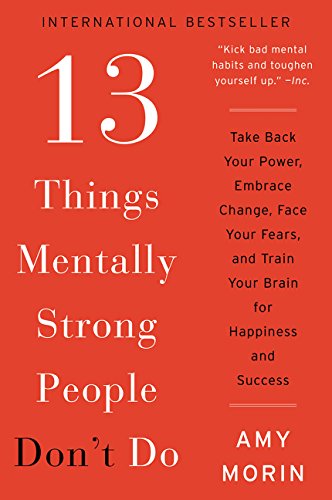
13 Things Mentally Strong People Don't Do Book Summary
This 13 Things Mentally Strong People Don't Do Book Summary covers the key ideas, lessons, and takeaways in about 20 minutes.
Helps with these goals
Want the complete 20-minute summary?
- Full structured summary
- Video Summary
- Podcast Summary
- Audio summary
- Infographic
- Key takeaways
- Exercises
- Quiz
- Highlights and notes
- Ask the book with AI
What is in the 13 Things Mentally Strong People Don't Do book summary?
Below is a preview of Sumizeit’s expert-written summary of 13 Things Mentally Strong People Don't Do by Amy Morin. The full summary covers the book’s key ideas in text, audio, and video.
Happiness and success are things we are all striving for. And in order to achieve these goals in our lives, it is important to live life to its fullest.
In order to make this happen, it is important to be mentally strong. However, being mentally strong is not an innate gift, and instead it is something that people can train themselves for.
With 13 Things Mentally Strong People Don’t Do, Amy Morin reveals tips, tricks, and solutions for how one can gain the mental strength needed to control your emotions, think rationally, and generally handle situations that are typically stressful.
And while it is important to note that mental strength can help improve one’s overall mental health, these two things do not go hand-in-hand. Rather, you can be mentally strong and have a mental health issue. But with mental strength, you can handle your symptoms with a realistic outlook on life and improvement on one’s attitude toward your mental health.
Where to begin improving mental strength.
The key to improving one’s mental strength is identifying the different behaviors and thoughts associated with what is holding you back. There are 13 traits that Morin points to as being maladaptive behaviors.
The 13 traits to be mindful of are: feeling self-pity, allowing others to influence your actions and thoughts, refusing to change, constantly living in the past, being a people pleaser, always wanting to be in control, wanting to be recognized immediately for your actions, having an expectation of success immediately, feeling envy over other people’s successes, making the same mistakes over and over again, giving up quickly, avoiding your own company, and not taking enough “mitigated” risks.
All of these traits are considered to be those that someone with a weaker mental strength would engage in. Instead, to be someone with real mental strength, it is important to avoid these traits and focus on positivity and working to overcome the challenges put in your path.
Self-pity should be replaced with gratitude to gain mental strength
Mentally strong people are people who do not indulge in self-pity when things don’t go their way. Instead, it is about being grateful for the opportunity to learn something new. It is about not feeling knocked down when things are not going your way.
Never see an obstacle in front of you, but rather look at whatever is in front of you as a new opportunity. Think of the challenges you face as a gift to be thankful for, rather than something that is there to stop you.
By being more grateful, you will not only improve your mental strength, but also your physical health and wellness. In fact, a study published in the Journal of Personality and Social Psychology has indicated that people who choose to be grateful for things are more likely to deal with less aches and pains, while even having an improved immune system.
Gratitude might seem like something to brush off, but it is clearly very important, particularly when looking at…
Want the complete 20-minute summary?
- Full structured summary
- Video Summary
- Podcast Summary
- Audio summary
- Infographic
- Key takeaways
- Exercises
- Quiz
- Highlights and notes
- Ask the book with AI
Who should read 13 Things Mentally Strong People Don't Do?
This book is for anyone seeking to build resilience and take control of their emotional well-being. Whether you're struggling with self-doubt, perfectionism, people-pleasing tendencies, or difficulty bouncing back from setbacks, 13 Things Mentally Strong People Don't Do offers practical strategies to strengthen your mind and improve your life outcomes.
Why does 13 Things Mentally Strong People Don't Do matter?
Mental strength is not an innate talent but a trainable skill that directly impacts your ability to handle stress, pursue goals, and achieve lasting happiness. In today's fast-paced world filled with rejection, comparison, and constant change, understanding what weakens mental resilience and how to avoid those pitfalls is essential for personal growth and success.
What are the key themes in 13 Things Mentally Strong People Don't Do?
- Mental strength as a learnable skill rather than an inborn trait
- Replacing limiting beliefs and behaviors with empowering alternatives
- The power of gratitude and forgiveness in reclaiming personal power
- Embracing change and accepting what you cannot control
- Building resilience through realistic expectations and self-discipline
- The importance of solitude for reflection and personal growth
- Taking calculated risks as a path to growth and success
What are the key lessons from the 13 Things Mentally Strong People Don't Do book summary?
Replace Self-Pity With Gratitude
Mentally strong people view obstacles as learning opportunities rather than defeats. Practicing gratitude not only strengthens mental resilience but also improves physical health and immune function.
Don't Let Others' Opinions Define You
Forgiveness and rejection resilience are critical to maintaining your power and sense of self. Holding onto anger only damages you while allowing others to control your emotional state.
Embrace Change Proactively
Mental strength requires willingness to adapt and change. Following a structured five-step process—setting short-term goals, creating daily actions, identifying obstacles, establishing accountability, and measuring progress—makes change manageable and sustainable.
Focus Only on What You Can Control
Wasting energy on uncontrollable circumstances drains your mental resources. Redirect your attention to aspects of your life where you can make a real difference.
Prioritize Your Own Well-Being
Being mentally strong sometimes means disappointing others by setting healthy boundaries. Choosing yourself first leads to greater confidence, happiness, and ultimately better mental health.
Take Calculated, Mitigated Risks
Success requires risk-taking, but reckless behavior leads to discouragement. Analyze potential outcomes, understand your fears, and take thoughtful risks that push you forward without destabilizing you.
Accept Your Past and Move Forward Constructively
Mental strength involves acknowledging what happened while refusing to let it define your future. Forgiveness and permission to enjoy life are essential steps in moving past negative experiences.
Learn From Your Mistakes Deliberately
Mentally strong people study their failures, understand what went wrong, and apply self-discipline to avoid repeating patterns. Consistency in this practice prevents habitual mistakes.
Celebrate Others' Success Rather Than Envy It
Envy weakens mental strength and blocks opportunity. Instead, view successful people as inspiration and seek collaboration; their achievement can fuel your own growth.
Persist Through Failure and Rejection
Every failure is a stepping stone to success, not a permanent defeat. Self-compassion during setbacks allows you to learn and improve faster than those who give up easily.
Value Solitude and Reflection
Time alone is essential for mental strength, enabling you to assess goals, gain clarity, and rejuvenate. Meditation and quiet reflection strengthen resilience and self-awareness.
Cultivate a Giving Mindset Over Entitlement
Mentally strong people create their own opportunities rather than waiting for things to be handed to them. This proactive, generous approach builds confidence and actual results.
Set Realistic Timelines for Achievement
Success rarely happens overnight, and meaningful change requires patience. Flexible deadlines and understanding that progress is gradual prevent discouragement and maintain motivation.
Separate Mental Strength From Mental Health
You can be mentally strong while managing a mental health condition. Mental strength helps you handle symptoms with realistic perspective and a constructive attitude toward recovery.
Use Negative Emotions as Information, Not Direction
Instead of letting fear, doubt, or anxiety stop you, examine what they're telling you about potential risks or areas needing attention. This transforms emotions into useful data.
Build Accountability Into Your Goals
External or internal accountability keeps you committed to change and progress. Whether through tracking systems, journaling, or partnerships, accountability dramatically increases success rates.
Distinguish Between Controlling Others and Managing Yourself
Mental strength is about directing your own life, not trying to control others. Focusing on your sphere of influence builds power; attempting to control others drains it.
Practice Consistency in Mental Strength Behaviors
Building mental strength is a daily practice, not a one-time fix. Consistent application of these principles compounds over time, creating lasting transformation.
Want the complete 20-minute summary?
- Full structured summary
- Video Summary
- Podcast Summary
- Audio summary
- Infographic
- Key takeaways
- Exercises
- Quiz
- Highlights and notes
- Ask the book with AI
How can you apply ideas from 13 Things Mentally Strong People Don't Do?
- Create a 30-day change plan for an area of your life you want to improve, including daily actions, identified obstacles, accountability measures, and progress tracking
- Start a gratitude practice by noting three specific things you're grateful for each day, focusing on challenges as learning opportunities
- Practice setting boundaries by identifying one area where you tend to people-please, then communicate a clear boundary this week
- Establish a regular solitude practice of at least 15 minutes daily for reflection, journaling, or meditation to strengthen resilience and clarity
- Review a recent failure or setback and write out what you learned, how you'll apply that lesson, and one small step to demonstrate growth
- Identify one person whose success you envy and research one way you could collaborate with them or learn from their approach
- List obstacles that might derail a current goal and develop a specific response plan for each one before you encounter them
- Practice forgiveness by writing a letter (you don't need to send it) to someone who has hurt you, focusing on reclaiming your power from resentment
What common mistakes do readers make with 13 Things Mentally Strong People Don't Do?
- Assuming mental strength means never feeling negative emotions or struggling—mental strength is actually about how you respond to difficulties, not their absence
- Trying to change everything at once instead of focusing on one realistic goal over 30 days, which leads to overwhelm and abandonment
- Continuing to waste emotional energy on things completely outside your control rather than redirecting that energy to actionable areas
- Expecting results and recognition immediately instead of understanding that meaningful achievement requires time and patience
- Avoiding solitude and reflection, missing the mental clarification and rejuvenation that alone time provides for building real strength
Sumizeit Exercises Apply what you've learned
Turn ideas from 13 Things Mentally Strong People Don't Do into action with a short guided reflection: identify the biggest takeaway, connect it to your life, and commit to one step you can take in the next 24 hours.
What is the expert analysis of 13 Things Mentally Strong People Don't Do?
Overview
13 Things Mentally Strong People Don't Do is authored by Amy Morin, a psychotherapist and internationally recognized expert on mental strength. Morin’s background as a clinician and educator lends credibility to her exploration of psychological resilience and personal empowerment. The book has garnered widespread attention, partly due to Morin’s popular TEDx talk, and appeals to a broad audience seeking practical strategies to enhance mental toughness, emotional regulation, and overall well-being.
Core Thesis
At its core, Morin’s work argues that mental strength is not an innate trait but a skill that can be cultivated by consciously avoiding certain detrimental behaviors and thought patterns. She identifies thirteen specific habits that mentally strong individuals consciously reject—ranging from self-pity and envy to fear of change and avoidance of risk. By eliminating these behaviors, individuals can reclaim control over their emotions, embrace challenges, and foster resilience that supports both happiness and success.
Strengths
- Accessible Framework: Morin distills complex psychological concepts into thirteen clear, actionable “don’ts,” making the book highly approachable for readers at various levels of self-improvement experience.
- Practical Guidance: The book offers concrete steps—such as goal-setting, accountability, and risk assessment—that readers can implement immediately to build mental strength.
- Holistic Approach: Morin integrates insights about emotional regulation, forgiveness, gratitude, and self-discipline, emphasizing mental strength as multifaceted rather than narrowly defined.
- Empirical Support: While not heavily academic, the book references relevant psychological research (e.g., benefits of gratitude and forgiveness) that ground its recommendations in scientific findings.
- Encouragement of Self-Reflection: The emphasis on examining past mistakes and emotional responses encourages readers to engage in introspection, a critical component of psychological growth.
Critiques & Counterarguments
- Oversimplification of Complex Issues: The framing of mental strength as simply avoiding thirteen behaviors risks reducing nuanced psychological phenomena to checklist items, potentially overlooking deeper systemic or clinical factors influencing mental health.
- Limited Engagement with Mental Health Disorders: While Morin acknowledges that mental strength and mental health are distinct, the book may underplay the challenges faced by individuals with serious psychological conditions, for whom “training” mental strength may not suffice without professional intervention.
- Potential Cultural Bias: The emphasis on individual control and self-discipline reflects a Western, individualistic perspective that may not fully resonate in collectivist cultures where relational interdependence shapes mental resilience differently.
- Competing Psychological Models: Schools of thought such as Acceptance and Commitment Therapy (ACT) or Dialectical Behavior Therapy (DBT) emphasize acceptance and mindfulness over control and avoidance, challenging the notion that avoiding certain thoughts or behaviors is always beneficial.
- Risk and Failure Nuances: The advice to take “mitigated risks” is prudent but may understate the value of embracing failure as an integral and sometimes unpredictable part of growth, as championed by growth mindset research and existential philosophy.
Who Should Read This
This book is ideally suited for readers who are motivated to enhance their psychological resilience through practical, behavior-focused strategies. It will particularly benefit individuals seeking self-help tools for emotional regulation, goal-setting, and overcoming common mental barriers such as fear, envy, and procrastination. Professionals in coaching, education, or human resources may also find Morin’s framework useful as a foundation for fostering mental strength in others. However, readers with clinical mental health concerns should view this book as a complement to, rather than a substitute for, professional treatment.
Frequently asked questions about the 13 Things Mentally Strong People Don't Do book summary
What is 13 Things Mentally Strong People Don't Do about?
13 Things Mentally Strong People Don't Do by Amy Morin identifies 13 limiting behaviors and mindsets that undermine resilience, such as self-pity, people-pleasing, refusing change, and giving up easily. The book teaches readers how to replace these patterns with empowering alternatives like gratitude, healthy boundaries, calculated risk-taking, and persistence. Morin demonstrates that mental strength is a trainable skill anyone can develop to improve emotional well-being, handle stress effectively, and achieve their goals.
Who should read 13 Things Mentally Strong People Don't Do?
This book is ideal for anyone seeking to build resilience, overcome self-doubt, or break limiting patterns in their life. It's particularly valuable for people struggling with perfectionism, fear of failure, people-pleasing tendencies, difficulty bouncing back from rejection, or resistance to change. Whether you're pursuing personal growth, facing setbacks in your career, or simply wanting to strengthen your mental resilience, Morin's practical framework offers actionable strategies for improvement.
What are the main takeaways from 13 Things Mentally Strong People Don't Do?
Key takeaways include replacing self-pity with gratitude, not letting others' opinions define you, embracing change proactively, focusing only on controllable factors, prioritizing your well-being, taking calculated risks, learning from mistakes, celebrating others' success, persisting through failure, and understanding that achievement takes time. Morin emphasizes that mental strength is a learnable skill developed through consistent daily practice, and that building resilience involves both removing limiting behaviors and cultivating empowering ones.
Can you build mental strength if you have a mental health condition?
Yes, absolutely. Morin clarifies that mental strength and mental health are distinct; you can be mentally strong while managing a mental health condition. Mental strength helps you respond to challenges with realistic perspective, self-compassion, and constructive action. Rather than replacing professional mental health support, building mental strength complements it, allowing you to handle symptoms more effectively and maintain a healthier outlook on your recovery journey.
How long does it take to build mental strength using Amy Morin's approach?
Morin emphasizes that building mental strength is a gradual process requiring consistent daily practice rather than a quick fix. She recommends starting with 30-day focused goals for specific changes, understanding that meaningful progress compounds over time. The timeline varies by individual and situation, but the key is maintaining consistency in applying these principles daily, as incremental improvements eventually create substantial transformation.
What's the difference between controlling others and building mental strength?
Mental strength is about directing your own life and managing what you can influence—your thoughts, actions, and responses. It's not about controlling others or external circumstances. Morin teaches readers to focus their energy on their sphere of influence rather than wasting it on uncontrollable factors. This distinction is crucial because attempting to control others actually undermines mental strength, while managing yourself builds genuine power.
How does gratitude relate to mental strength in this book?
Gratitude is foundational to mental strength in Morin's framework. She teaches readers to replace self-pity with gratitude by viewing obstacles as learning opportunities rather than defeats. Research cited in the book shows that people who practice gratitude experience less physical pain, better immune function, and greater resilience. By training your mind to find value in challenges, you build the emotional flexibility and perspective that defines true mental strength.
About Sumizeit
Sumizeit is a profitable Scomy LLC company based in Miami, Florida. It has been helping readers learn from nonfiction books for 7 years with expert-written summaries in text, audio, podcast, and video.
Want the complete 20-minute summary?
- Full structured summary
- Video Summary
- Podcast Summary
- Audio summary
- Infographic
- Key takeaways
- Exercises
- Quiz
- Highlights and notes
- Ask the book with AI
Here's why readers love Sumizeit
Join thousands of learners getting smarter every day
"Great experience. Detailed summaries. Loved the gamification feature. Makes learning fun. Good customer service. I recommend Sumizeit to anyone. You'll learn a lot."
"I always felt busy but still wanting to keep up with the book discussion in my friend group. This was a great supplement to help me keep reading the books I find fun while keeping up with important books."
"I love this website. Instead of scrolling social media, I find myself learning a lot. I use it everyday. I recommend this app for anyone who is too busy and wants to get up to speed with their favorite books."
13 Things Mentally Strong People Don't Do Book Summary PDF
Looking for a 13 Things Mentally Strong People Don't Do Book Summary PDF you can save and revisit offline? Our 13 Things Mentally Strong People Don't Do Book Summary PDF captures the book’s core ideas in a clean, printable format — the key frameworks, takeaways, and structure without the fluff. Download the 13 Things Mentally Strong People Don't Do Book Summary PDF when you want a reference you can annotate, share with your team, or review on the go. Get your 13 Things Mentally Strong People Don't Do Book Summary PDF from the download page below.
Download 13 Things Mentally Strong People Don't Do Book Summary PDFPeople also liked these summaries
Readers who explored 13 Things Mentally Strong People Don't Do often enjoyed these titles next.





Want the complete 20-minute summary?
- Full structured summary
- Video Summary
- Podcast Summary
- Audio summary
- Infographic
- Key takeaways
- Exercises
- Quiz
- Highlights and notes
- Ask the book with AI
Featured Book Titles
Popular Book Summaries at sumizeit, leading book summary app