


As an Amazon Associate, Sumizeit earns from qualifying purchases.
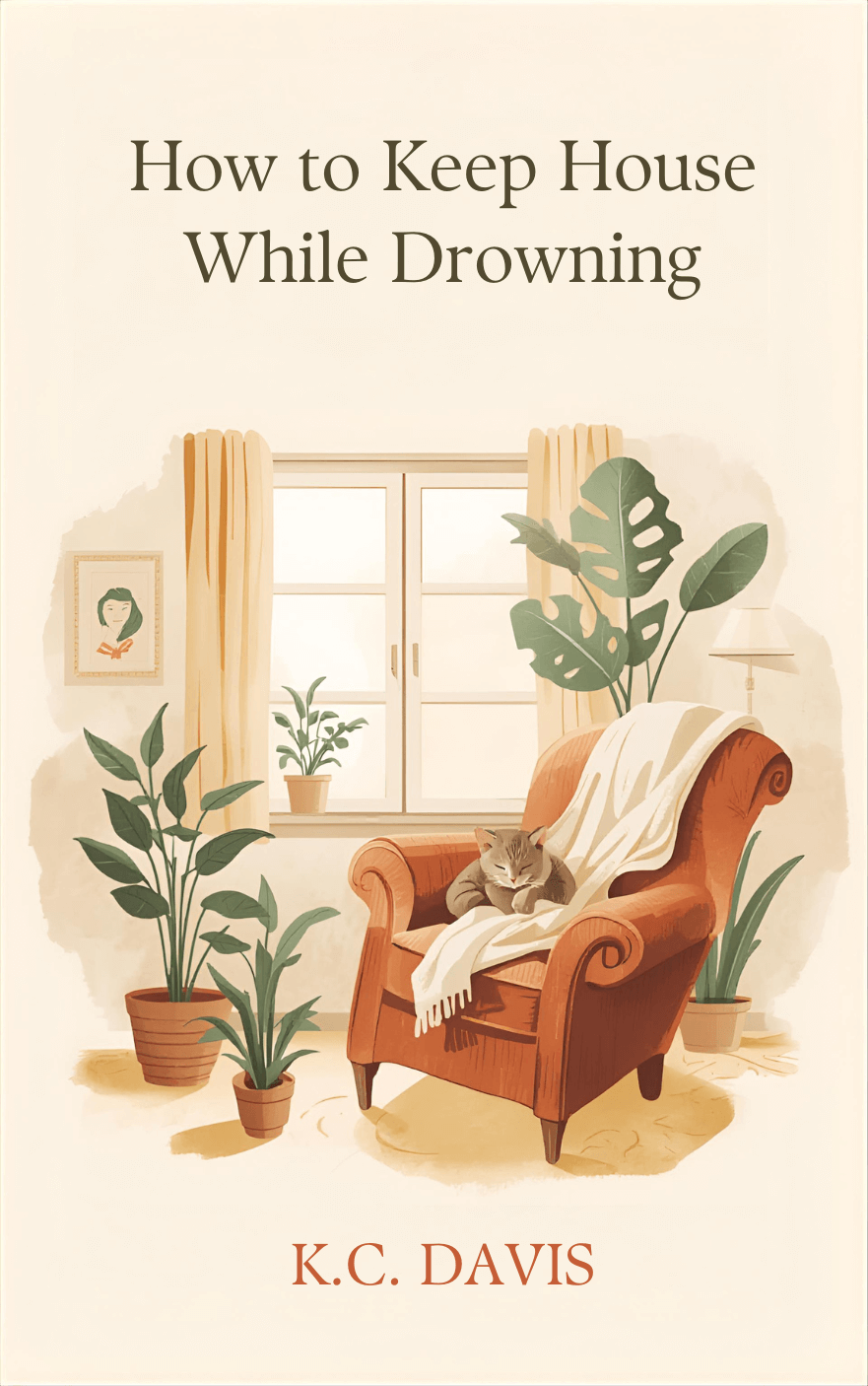
How to Keep House While Drowning Book Summary
This How to Keep House While Drowning Book Summary covers the key ideas, lessons, and takeaways in about 20 minutes.
By removing morality from care tasks, embracing flexibility, practicing self-compassion, and prioritizing rest, people can rebuild their relationship with their home in a way that supports healing rather than punishment. The goal is not control or perfection, but safety, functionality, and dignity.
A life lived with gentleness—toward both space and self—is not a lesser life. It is a sustainable one.
Helps with these goals
Want the complete 20-minute summary?
- Full structured summary
- Video Summary
- Podcast Summary
- Audio summary
- Key takeaways
- Exercises
- Quiz
- Highlights and notes
- Ask the book with AI
What is in the How to Keep House While Drowning book summary?
Below is a preview of Sumizeit’s expert-written summary of How to Keep House While Drowning by K.C. Davis. The full summary covers the book’s key ideas in text, audio, and video.
One of the most powerful messages in How to Keep House While Drowning is the idea that household upkeep has been unfairly linked to personal value. Many people grow up believing that a tidy home reflects discipline, responsibility, and moral goodness—while a messy space signals laziness, failure, or lack of care. K.C. Davis dismantles this belief entirely.
The book reframes domestic work as neutral. Cleaning, organizing, and self-care are not indicators of who you are as a person. They are simply actions that serve practical functions. A sink full of dishes does not say anything about your worth. Unfolded laundry does not reveal your motivation or integrity. A cluttered floor does not make you undeserving of love or respect.
Davis emphasizes that these tasks exist for one reason only: to support daily living. Their purpose is functional, not moral. When we attach ethical meaning to them, we create unnecessary shame—especially for people facing depression, burnout, chronic illness, ADHD, grief, or overwhelming life transitions.
By separating identity from domestic output, the book invites readers to breathe again. You are not failing at life because your house is chaotic. You are a human navigating limited energy in a demanding world.
Seeing Care Tasks as Tools, Not Judgments
Another core shift the book encourages is changing why we do chores. Instead of viewing them as obligations that must be completed “properly,” Davis encourages focusing on what those tasks are meant to accomplish.
For example:
Washing dishes exists so you can eat safely again later—not to prove responsibility.
Sweeping the floor exists to keep walkways safe—not to achieve perfection.
Laundry exists to provide clean clothes—not to meet some invisible standard.
When chores are stripped down to their actual purpose, they become far less overwhelming. You no longer need to do them the “right” way—only the way that meets your needs in that moment.
This reframing allows people to choose the minimum effective effort. If a task accomplishes its function, then it is enough. That mindset alone can reduce paralysis, guilt, and avoidance.
The goal is not excellence. The goal is usability.
Letting “Good Enough” Be the Goal
Perfectionism is one of the biggest contributors to burnout around household maintenance. When people believe everything must be done thoroughly—or not at all—they often end up doing nothing.
Davis introduces the idea of “care at a sustainable level.” Instead of aiming for spotless counters, color-coded closets, and magazine-ready rooms, she encourages choosing standards that support survival and well-being.
A home can be functional without being beautiful.
A routine can work without being consistent.
Care can happen without being complete.
When the expectation shifts from “everything must be done” to “what helps me today,” tasks become approachable again. This reduces exhaustion and increases the likelihood that small steps actually happen.
Progress becomes flexible instead of fragile.
Transforming the Voice Inside Your Head
A significant portion of the book focuses on how people speak to themselves. Many readers carry an internal critic that becomes loudest when they fall…
Want the complete 20-minute summary?
- Full structured summary
- Video Summary
- Podcast Summary
- Audio summary
- Key takeaways
- Exercises
- Quiz
- Highlights and notes
- Ask the book with AI
Who should read How to Keep House While Drowning?
This book is essential for anyone struggling with household maintenance due to depression, burnout, chronic illness, ADHD, grief, or simply feeling overwhelmed by life. It's also valuable for people who tie their self-worth to a clean home or carry shame about domestic spaces that don't match cultural ideals. If you've ever felt like a failure because your dishes are piling up or your laundry sits in baskets, this book speaks directly to you.
Why does How to Keep House While Drowning matter?
How to Keep House While Drowning by K.C. Davis dismantles the harmful myth that a person's moral character or worth is reflected in their home's cleanliness. In a culture obsessed with productivity and perfection, this book offers radical permission to prioritize your well-being over impossible standards. It's particularly vital today as more people struggle with burnout, mental health challenges, and the exhausting pressure to do everything perfectly.
What are the key themes in How to Keep House While Drowning?
- Separating personal worth from domestic output
- Reframing chores as functional tools rather than moral obligations
- Embracing 'good enough' over perfectionism
- Self-compassion as a foundation for sustainable living
- Flexible patterns instead of rigid routines
- Rest as a necessity, not a luxury
- Designing systems around real life, not ideal behavior
- Removing shame from asking for help
What are the key lessons from the How to Keep House While Drowning book summary?
Your home's condition does not reflect your character
A messy house, unwashed dishes, or cluttered floor are not indicators of laziness, failure, or unworthiness. They are simply practical challenges that everyone faces, and struggling with them does not diminish your value as a person.
Chores have one purpose: to support daily function
When you strip household tasks down to their actual purpose—dishes exist so you can eat safely, sweeping keeps walkways clear, laundry provides clean clothes—they become less overwhelming and easier to approach.
Perfectionism creates paralysis, not progress
All-or-nothing thinking about household maintenance often leads to avoidance. When you accept that 'good enough' is actually sufficient, tasks become manageable and you're more likely to take action.
Minimum effective effort is a valid strategy
You don't need to do chores the 'right way'—only the way that meets your actual needs in that moment. If a task accomplishes its function, it is enough.
Your internal critic may be sabotaging you
Many people carry a harsh internal voice that reinforces shame when they fall behind on care tasks. Replacing this voice with genuine self-compassion reduces emotional exhaustion and often naturally increases capacity.
Self-compassion is not the same as giving up
Treating yourself with the same kindness you'd offer a struggling friend doesn't mean abandoning effort—it means acknowledging reality without cruelty, which actually builds resilience.
Mess can carry emotional memory
If household disorganization triggers anxiety or shutdown, it may be connected to past experiences where cleanliness was linked to punishment or criticism. Recognizing this emotional charge is the first step to healing.
A home should feel safe, not punishing
Design your space to support and comfort yourself, not to meet external standards. Allowing visible clutter and keeping objects that bring you joy creates an environment of protection rather than judgment.
The five-category reset prevents cognitive overload
Instead of trying to 'clean everything,' focus on one category at a time: trash, dishes, laundry, items that belong somewhere, and items without a home. This breaks overwhelming projects into manageable chunks.
Small improvements in one category create momentum
Removing trash alone, gathering dishes in one spot, or placing items in bins—even temporarily—restores visual calm and emotional breathing room without requiring perfection.
Systems fail when they're built for ideal behavior
Most organization systems collapse because they assume perfect consistency. Design your environment around what you actually do—open shelves instead of hidden storage, clear containers, hooks instead of hangers—to reduce friction.
Visible and accessible storage beats hidden perfection
When items are easy to see and reach, you're more likely to maintain them without discipline. This supports real-world behavior rather than fighting against your natural patterns.
Patterns are more resilient than rigid schedules
Instead of 'I must clean every Saturday,' embrace 'laundry usually happens early in the week.' Patterns bend when life happens; schedules snap, triggering shame and abandonment.
Flexible routines work better for fluctuating energy
People with chronic illness, depression, ADHD, or unpredictable life demands benefit from routines that can shift without feeling broken. This allows adaptation without self-blame.
Asking for help is morally neutral
Hiring a cleaner, ordering delivery, using disposable plates, or delegating tasks to a partner are practical choices—not signs of weakness or failure. Outsourcing labor is as acceptable as hiring a mechanic.
You don't have to handle everything alone to be worthy
Sharing the workload doesn't diminish your value. Redirecting energy from household tasks toward health, connection, and rest creates a more sustainable and meaningful life.
Capacity varies based on individual circumstances
Physical conditions, mental health, trauma, neurodivergence, and caregiving demands all affect what someone can reasonably manage. What works for one person may be impossible for another—and that's not failure.
Adapt the system to the person, not vice versa
Personalize strategies to match your reality: use assistive tools for physical limits, cook in batches during high-energy days, simplify routines during depression, automate when possible.
Rest is maintenance, not indulgence
Rest is not something you earn after everything is finished—it's something your body and mind require to function. Scheduling and protecting rest without guilt is essential to sustainable living.
A home exists to support living, not the other way around
Life is not an endless cycle of upkeep. When well-being is prioritized, care tasks naturally balance. A perfect home is less important than a life lived with gentleness, joy, and dignity.
Want the complete 20-minute summary?
- Full structured summary
- Video Summary
- Podcast Summary
- Audio summary
- Key takeaways
- Exercises
- Quiz
- Highlights and notes
- Ask the book with AI
How can you apply ideas from How to Keep House While Drowning?
- Use the five-category system (trash, dishes, laundry, items with homes, items without homes) when feeling overwhelmed instead of trying to 'clean everything at once'
- Design storage and organizational systems around your actual behavior rather than aspirational habits—use open shelves, clear containers, hooks, and drop zones
- Replace rigid time-based schedules with flexible patterns that allow tasks to shift without triggering shame or abandonment
- Practice replacing your internal critic with genuinely compassionate self-talk, treating yourself as you would a struggling friend
- Identify one household task and reframe it functionally—focus on what it actually accomplishes rather than perfection standards
- Create an intentional rest practice that genuinely replenishes your energy without waiting until 'everything is done'
- Audit which care tasks you could delegate, automate, or outsource without guilt—treat it as practical problem-solving, not failure
What common mistakes do readers make with How to Keep House While Drowning?
- Believing that a messy home reflects your moral character or worth as a person, leading to unnecessary shame and self-judgment
- Waiting until you have time and energy to tackle everything at once, which often means tasks never get done and frustration builds
- Adopting organization systems designed for ideal behavior rather than your actual behavior, then blaming yourself when they fail
- Harsh internal criticism that sabotages motivation instead of supporting genuine change—using shame as a tool for behavior change actually backfires
Sumizeit Exercises Apply what you've learned
Turn ideas from How to Keep House While Drowning into action with a short guided reflection: identify the biggest takeaway, connect it to your life, and commit to one step you can take in the next 24 hours.
What is the expert analysis of How to Keep House While Drowning?
Overview
How to Keep House While Drowning is a groundbreaking work by K.C. Davis, a licensed professional counselor and mental health advocate. The book challenges entrenched cultural narratives that equate domestic upkeep with personal virtue or failure. Davis brings a trauma-informed, compassionate perspective to the often-overlooked emotional and psychological dimensions of household maintenance, especially for those grappling with mental health challenges, chronic illness, or life transitions. This work is significant for its reframing of domestic labor as a neutral, practical activity rather than a moral barometer, offering a fresh lens through which to view self-care and home management.
Core Thesis
Davis’s central argument dismantles the pervasive belief that cleanliness and organization are proxies for personal worth. Instead, she posits that household tasks serve purely functional purposes—to support daily living—and that attaching moral value to them fosters unnecessary shame and burnout. By advocating for a mindset of “minimum effective effort” and “good enough” care, Davis promotes self-compassion, flexible routines, and emotional safety within the home. The book’s thesis is that sustainable living arises not from perfection or control, but from gentleness toward oneself and one’s environment, recognizing individual limits and prioritizing rest as essential maintenance.
Strengths
- Compassionate, Trauma-Informed Approach: Davis’s expertise as a counselor enriches the text with sensitivity to mental health struggles, making the advice deeply empathetic and accessible.
- Reframing Domestic Labor: The book’s insistence on decoupling chores from moral judgment is a powerful corrective to societal stigma, reducing guilt and shame around household management.
- Practical Frameworks: The five-category method for managing overwhelming tasks and the emphasis on designing systems that align with real behavior offer actionable, low-barrier strategies.
- Focus on Flexibility and Individualization: Recognizing neurodivergence, chronic illness, and fluctuating energy levels, the book promotes adaptive routines and personalized care systems.
- Promotion of Self-Compassion and Rest: The transformation of internal critical voices and the radical redefinition of rest as a necessity rather than a luxury are psychologically astute contributions.
Critiques & Counterarguments
- Potential Oversimplification of Structural Issues: While the book adeptly addresses individual experience, it may underemphasize systemic factors like socioeconomic status, cultural expectations, and gender roles that shape domestic labor burdens.
- Limited Engagement with Productivity Culture: The critique of productivity norms is compelling but could benefit from deeper integration with contemporary research on work-life balance and societal pressures.
- Evidence Base and Empirical Support: The book leans heavily on clinical experience and anecdotal insights; a more robust engagement with empirical studies on habit formation, executive function, or occupational therapy might strengthen its claims.
- Competing Schools of Thought: Some organizational experts advocate for stricter routines and accountability as paths to mental clarity and reduced anxiety, suggesting that flexibility might sometimes enable procrastination or chaos.
- Real-World Constraints: In certain living situations—such as shared housing or families with children—minimalist or flexible approaches may clash with external expectations or practical necessities, complicating the application of Davis’s methods.
Who Should Read This
This book is essential reading for individuals overwhelmed by household expectations, especially those dealing with mental health challenges, chronic illness, or neurodivergence. It offers solace and practical guidance for anyone caught in the perfectionism-burnout cycle or struggling with internalized shame around domestic tasks. Mental health professionals, caregivers, and advocates may also find it a valuable resource for understanding the emotional dimensions of home care. Additionally, readers interested in self-compassion, trauma-informed approaches, and sustainable living will appreciate Davis’s nuanced, humane perspective.
Frequently asked questions about the How to Keep House While Drowning book summary
What is How to Keep House While Drowning about?
How to Keep House While Drowning by K.C. Davis is about dismantling the harmful belief that household cleanliness reflects personal character or worth. The book reframes domestic care as neutral, functional tasks rather than moral obligations, and provides compassionate strategies for managing these tasks without shame—especially for people struggling with depression, burnout, chronic illness, ADHD, or overwhelming life circumstances.
Who should read How to Keep House While Drowning?
Anyone struggling with household maintenance due to mental health challenges, chronic illness, grief, burnout, neurodivergence, or simply feeling overwhelmed by life's demands should read this book. It's also valuable for people who tie their self-worth to a clean home or feel shame about domestic spaces. If you've ever felt like a failure because your dishes are piling up, this book offers radical permission and practical help.
What are the main takeaways from How to Keep House While Drowning?
The main takeaways include: (1) domestic care has no moral value—it's simply practical maintenance; (2) perfectionism creates paralysis, so 'good enough' is genuinely sufficient; (3) self-compassion and gentle internal dialogue are more effective than harsh criticism; (4) systems should be designed around real behavior, not ideal behavior; and (5) rest is a necessity, not a luxury. The overarching message is that struggling with household tasks doesn't diminish your worth as a person.
What is the five-category system mentioned in the book?
When overwhelmed, instead of trying to clean everything, focus on one of five categories: trash, dishes, laundry, items that belong somewhere, and items that don't yet have a home. Addressing just one category at a time reduces cognitive overload, creates immediate improvements in how a space feels, and builds momentum without requiring perfection or completing everything at once.
How does K.C. Davis recommend designing home systems?
Davis recommends designing systems around what you actually do rather than what productivity culture says you should do. This means using open shelves instead of hidden storage, clear containers instead of closed cabinets, hooks instead of hangers, visible drop zones, and baskets where clutter naturally gathers. These strategies reduce friction and make tasks more likely to happen without discipline or guilt.
Is it okay to outsource household tasks according to this book?
Yes, absolutely. K.C. Davis makes clear that getting help—whether by hiring a cleaner, ordering meal delivery, using disposable plates, or delegating to a partner—is morally neutral and practical, not a sign of weakness or failure. Care tasks are labor, and outsourcing labor is as acceptable as hiring a mechanic. Sharing the workload allows energy to be redirected toward health, connection, and rest.
How does the book address mental health and household maintenance?
How to Keep House While Drowning acknowledges that depression, anxiety, burnout, and trauma can make household tasks extremely challenging, and that these struggles don't reflect character or worth. The book emphasizes that people have different capacities based on their circumstances, and that personalized, flexible strategies—rather than rigid standards—are essential. Rest, self-compassion, and adapting systems to your real needs are presented as foundations for sustainable living.
About Sumizeit
Sumizeit is a profitable Scomy LLC company based in Miami, Florida. It has been helping readers learn from nonfiction books for 7 years with expert-written summaries in text, audio, podcast, and video.
Want the complete 20-minute summary?
- Full structured summary
- Video Summary
- Podcast Summary
- Audio summary
- Key takeaways
- Exercises
- Quiz
- Highlights and notes
- Ask the book with AI
Here's why readers love Sumizeit
Join thousands of learners getting smarter every day
"Great experience. Detailed summaries. Loved the gamification feature. Makes learning fun. Good customer service. I recommend Sumizeit to anyone. You'll learn a lot."
"I always felt busy but still wanting to keep up with the book discussion in my friend group. This was a great supplement to help me keep reading the books I find fun while keeping up with important books."
"I love this website. Instead of scrolling social media, I find myself learning a lot. I use it everyday. I recommend this app for anyone who is too busy and wants to get up to speed with their favorite books."
How to Keep House While Drowning Book Summary PDF
Looking for a How to Keep House While Drowning Book Summary PDF you can save and revisit offline? Our How to Keep House While Drowning Book Summary PDF captures the book’s core ideas in a clean, printable format — the key frameworks, takeaways, and structure without the fluff. Download the How to Keep House While Drowning Book Summary PDF when you want a reference you can annotate, share with your team, or review on the go. Get your How to Keep House While Drowning Book Summary PDF from the download page below.
Download How to Keep House While Drowning Book Summary PDFPeople also liked these summaries
Readers who explored How to Keep House While Drowning often enjoyed these titles next.



Want the complete 20-minute summary?
- Full structured summary
- Video Summary
- Podcast Summary
- Audio summary
- Key takeaways
- Exercises
- Quiz
- Highlights and notes
- Ask the book with AI
Featured Book Titles
Popular Book Summaries at sumizeit, leading book summary app
