


As an Amazon Associate, Sumizeit earns from qualifying purchases.
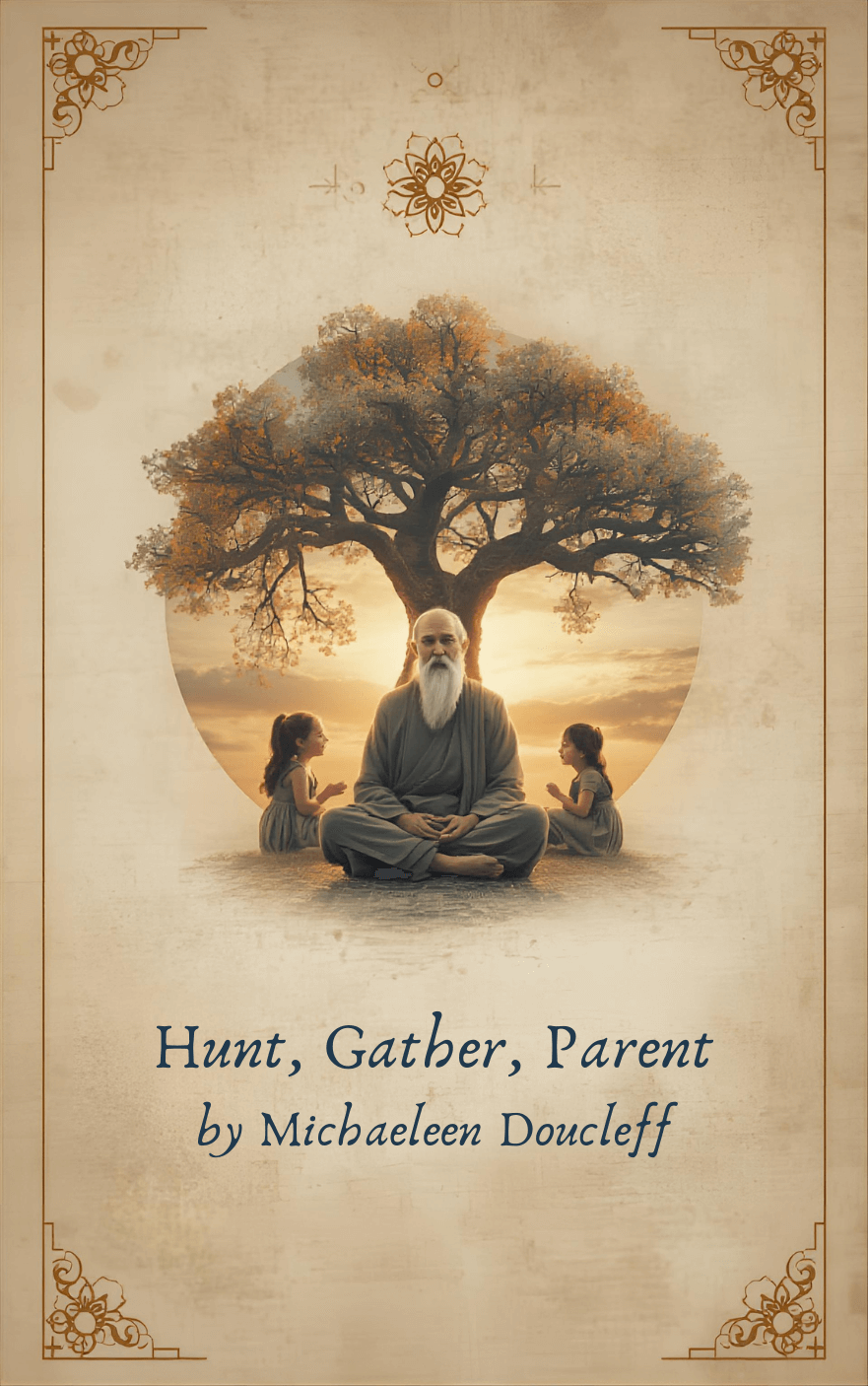
Hunt, Gather, Parent Book Summary
This Hunt, Gather, Parent Book Summary covers the key ideas, lessons, and takeaways in about 20 minutes.
Modern parenting often creates stress by trying to control outcomes. Indigenous parenting reduces stress by trusting natural development. When children are allowed to observe, participate, and belong, cooperation emerges organically. Emotional regulation develops through modeling. Independence grows through responsibility. Confidence forms through contribution.
Ultimately, Doucleff shows that parenting does not require perfection—only connection. By stepping back slightly, speaking less, and trusting more, families can rediscover a calmer, more sustainable way of raising capable humans.
Helps with these goals
Want the complete 20-minute summary?
- Full structured summary
- Video Summary
- Podcast Summary
- Audio summary
- Key takeaways
- Exercises
- Quiz
- Highlights and notes
- Ask the book with AI
What is in the Hunt, Gather, Parent book summary?
Below is a preview of Sumizeit’s expert-written summary of Hunt, Gather, Parent by Michaeleen Doucleff. The full summary covers the book’s key ideas in text, audio, and video.
Modern parenting often feels exhausting. Many parents follow strict routines, monitor emotions constantly, manage endless activities, and still feel like they are failing. Michaeleen Doucleff began questioning whether this constant pressure was truly necessary—or even helpful.
In Hunt, Gather, Parent, Doucleff explores how children have been raised for thousands of years across different societies. She argues that many common Western parenting beliefs are extremely new and not rooted in long-term human experience. Instead of being the result of careful evolution, many modern techniques emerged recently from industrial systems, orphanage management strategies, and expert theories that were never meant for family life.
By traveling to Indigenous communities—including the Maya in Mexico, the Inuit in the Arctic, and the Hadzabe in Tanzania—Doucleff observed parenting styles that consistently produced calm, capable, emotionally balanced children without reward charts, punishments, or constant supervision.
Her central claim is not that Western parents are doing something “wrong,” but that they have been handed a system that fights against human nature.
Parenting Did Not Evolve in Isolation
For most of human history, children were not raised by two exhausted adults managing everything alone. Parenting developed in large groups where multiple generations shared responsibility.
In these environments, children naturally learned by observing adults, participating in daily life, and feeling like valued members of a group. Knowledge passed down gradually, not through instruction manuals but through lived experience.
Doucleff emphasizes that this long-term stability matters. While Western parenting styles change dramatically every few decades, Indigenous methods often remain consistent for centuries. These practices survived because they worked—not because an expert declared them correct.
This contrast raises an important question: if these approaches helped humans thrive for thousands of years, why are they largely absent from modern parenting?
How Expert Culture Reshaped Childhood
In the past century, parenting advice has increasingly come from professionals rather than communities. Doctors, psychologists, and educators began publishing rules around feeding, sleep schedules, discipline, and developmental milestones.
Many of these recommendations were originally created for institutional settings like hospitals or orphanages, where caretakers managed dozens of children at once. Over time, those rigid systems were transferred into private homes—even though family life operates very differently.
As a result, parents began managing children as projects to be optimized rather than humans learning naturally. Schedules replaced intuition. Instructions replaced observation. Correction replaced participation.
Doucleff argues that this shift created anxiety on both sides: parents feel overwhelmed trying to “do everything right,” and children become dependent on direction rather than confident in their own abilities.
The Impact of Consumer Culture on Childhood
Industrialization introduced another powerful influence: the commercialization of childhood.
Before mass production, children simply joined adult life. After industrial growth, toys, learning tools, activity programs, and child-specific products flooded homes. Play became separated from real work. Children were entertained instead of included.
Parents were encouraged to keep children busy with structured activities rather than involving them in daily responsibilities. Over time, this unintentionally taught children that adults work while children consume.
Doucleff notes that this separation…
Want the complete 20-minute summary?
- Full structured summary
- Video Summary
- Podcast Summary
- Audio summary
- Key takeaways
- Exercises
- Quiz
- Highlights and notes
- Ask the book with AI
Who should read Hunt, Gather, Parent?
Hunt, Gather, Parent is ideal for parents feeling overwhelmed by modern parenting expectations and searching for a more sustainable approach. It appeals to those curious about how children develop naturally across different cultures, as well as anyone questioning whether constant optimization and expert-driven parenting truly serves families. The book resonates with parents who want to reduce stress while raising capable, emotionally balanced children.
Why does Hunt, Gather, Parent matter?
Modern parenting advice often comes from systems designed for institutions rather than families, creating unnecessary stress and disconnecting children from meaningful participation in daily life. Michaeleen Doucleff's research reveals that time-tested parenting methods from Indigenous cultures—proven effective across centuries—offer practical alternatives that reduce conflict and build cooperation naturally. In an era of parental burnout and childhood anxiety, this book provides permission and concrete strategies to trust natural development rather than constantly managing every outcome.
What are the key themes in Hunt, Gather, Parent?
- Children thrive through participation and belonging, not optimization
- Observation and modeling are more powerful than verbal instruction
- Cooperation emerges from inclusion; compliance comes from control
- Modern parenting systems borrowed from institutions fail in family contexts
- Emotional regulation develops through calm adult modeling, not punishment
- Consumer culture has separated children from meaningful contribution
- Extended family and community have been replaced by isolated nuclear units
What are the key lessons from the Hunt, Gather, Parent book summary?
Parenting wasn't designed for nuclear families
For most of human history, children were raised by entire communities sharing responsibility. Modern isolated parenting is an evolutionary anomaly that puts unsustainable pressure on two adults.
Expert culture replaced intuition and observation
Parenting advice from the past century largely originated in institutional settings like hospitals and orphanages, then was transferred into homes where it doesn't fit. This shift created anxiety rather than competence.
Children willingly cooperate when they feel needed
Indigenous cultures show that children don't require rewards or punishments to help—they participate naturally when included in real work and made to feel essential to the family's functioning.
Subtle guidance works better than constant correction
A raised eyebrow or pause communicates more effectively than verbal criticism because it preserves the child's initiative and internal motivation without shame or resentment.
Acknowledge contribution, not just achievement
Focusing praise on effort and group belonging rather than individual success reduces sibling competition and keeps children internally motivated rather than seeking adult approval.
Adult emotional calm teaches emotional regulation
Children learn emotional control through observing how adults handle frustration and conflict, not through punishment. Staying calm during tantrums models the behavior you want to see.
Stories teach deeper lessons than rules
Narratives allow children to explore consequences and morality safely within their imagination, creating lasting understanding without shame or direct confrontation.
Independence grows from trusted responsibility
When children are given real responsibilities that matter to family survival, they develop confidence and self-reliance naturally rather than through forced independence exercises.
Speaking less allows children to think more
Excessive verbal instruction interferes with observational learning. Stepping back and allowing children to watch and figure things out mirrors how humans naturally absorbed knowledge for millennia.
Belonging matters more than obedience
Children cooperate most readily when they feel like valued members of a group, not when they comply with authority. This distinction transforms household responsibilities from power struggles into collaboration.
Consumer culture separated play from work
Industrialization created toys and structured activities that isolated children from adult work, inadvertently teaching them that adults are productive while children consume.
Mistakes are learning, not failures to correct immediately
Indigenous parenting tolerates imperfect attempts because practice—not perfection—builds skill. Allowing children to struggle teaches problem-solving better than adult intervention.
Emotional distress often signals disconnection, not defiance
Many behavioral problems stem from children feeling unnecessary and excluded from meaningful contribution, not from inherent disobedience or lack of discipline.
Family identity creates intrinsic motivation
When children understand themselves as essential team members with shared purpose, they internalize responsibility and cooperation as part of who they are, not as external obligation.
Patience and delayed response reduce conflict
Addressing behavior after everyone has calmed down, rather than in the heat of emotion, teaches more effectively and preserves the parent-child relationship.
Trust creates responsibility, not vice versa
Early trust in children's capability—even before they've proven themselves—builds confidence and genuine responsibility rather than compliance based on fear.
Observation learning mirrors human evolution
Humans learned through proximity and watching for thousands of years before formal instruction existed. Returning to this method aligns parenting with how brains naturally absorb knowledge.
Small changes reduce major stress
Parents don't need to abandon modern life entirely; selective adoption of time-tested principles—less talking, more inclusion, authentic tasks—dramatically shifts family dynamics.
Want the complete 20-minute summary?
- Full structured summary
- Video Summary
- Podcast Summary
- Audio summary
- Key takeaways
- Exercises
- Quiz
- Highlights and notes
- Ask the book with AI
How can you apply ideas from Hunt, Gather, Parent?
- Involve children in real household tasks like cooking, cleaning, and maintenance rather than creating separate 'chores' or using reward systems
- Reduce unnecessary explanations and instructions; instead, invite children to observe and participate in adult activities
- Model calm emotional responses during conflicts and tantrums instead of matching children's intensity with anger or raised voices
- Replace verbal praise focused on individual achievement with quiet acknowledgment of contribution to the family unit
- Create shared family responsibilities and goals that give children a sense of belonging and meaningful purpose
- Allow children to make mistakes and learn through natural consequences rather than immediate correction
- Use storytelling and gentle role-play to explore lessons and consequences instead of lectures or punishment
- Build extended family or community connections to share the parenting load and give children access to multiple adult role models
What common mistakes do readers make with Hunt, Gather, Parent?
- Assuming that constant praise and correction motivate children, when belonging and trust are actually more powerful drivers of cooperation
- Separating children from real adult work through entertainment and structured activities, unintentionally teaching them they are consumers rather than contributors
- Over-explaining and instructing, which interrupts children's natural observational learning and creates dependence on adult direction
- Reacting to tantrums with anger or punishment instead of remaining calm, missing the opportunity to model emotional regulation
Sumizeit Exercises Apply what you've learned
Turn ideas from Hunt, Gather, Parent into action with a short guided reflection: identify the biggest takeaway, connect it to your life, and commit to one step you can take in the next 24 hours.
What is the expert analysis of Hunt, Gather, Parent?
Overview
Hunt, Gather, Parent is authored by Michaeleen Doucleff, a seasoned science journalist and global health correspondent known for her insightful exploration of human behavior and culture. This book stands out by challenging contemporary Western parenting norms through an anthropological lens, drawing on immersive research within Indigenous communities worldwide. Doucleff’s work is significant because it bridges scientific inquiry, cultural anthropology, and practical parenting advice, offering a nuanced critique of modern child-rearing practices and proposing a return to time-tested, communal approaches to raising children.
Core Thesis
Doucleff’s central argument is that many modern Western parenting methods are recent inventions, shaped by industrialization, institutional care models, and consumer culture, rather than by evolutionary or cultural continuity. She contends that parenting historically evolved within extended, cooperative communities where children learned through participation, observation, and belonging rather than through direct instruction, reward, or punishment. By examining Indigenous parenting styles—such as those of the Maya, Inuit, and Hadzabe—she illustrates how children thrive emotionally and socially when trusted as contributors rather than controlled as projects. The book advocates for a parenting paradigm that emphasizes cooperation, emotional modeling, and shared family identity over micromanagement and compliance.
Strengths
- Cross-cultural empirical grounding: Doucleff’s extensive fieldwork in diverse Indigenous societies provides rich, vivid examples that challenge Western assumptions about child development and discipline.
- Interdisciplinary synthesis: The book skillfully integrates anthropology, psychology, and evolutionary perspectives, offering a holistic understanding of parenting across time and cultures.
- Practical relevance: Rather than romanticizing Indigenous life, Doucleff distills actionable principles—such as fostering belonging, reducing verbal correction, and encouraging participation—that parents can adapt within modern contexts.
- Compassionate tone: The author avoids judgment of Western parents, instead inviting reflection on systemic pressures and cultural legacies that shape parenting anxieties.
- Focus on emotional regulation: The emphasis on calm adult modeling and emotional resilience provides a valuable counterpoint to punitive or overly directive approaches common in Western parenting.
Critiques & Counterarguments
- Romanticization and idealization: While Doucleff highlights positive aspects of Indigenous parenting, the book may understate challenges within these communities, such as economic hardship or social change, potentially oversimplifying complex cultural dynamics.
- Limited generalizability: The transferability of Indigenous practices to highly industrialized, urbanized Western societies is not fully interrogated, especially given differences in social structure, safety, and economic demands.
- Evidence scope: The reliance on qualitative observations and anecdotal evidence, while compelling, could benefit from integration with quantitative developmental psychology research to substantiate claims about emotional and cognitive outcomes.
- Competing research on discipline: Some psychological studies suggest that certain forms of structured guidance and consistent boundaries can promote secure attachment and self-regulation, challenging the notion that less verbal correction is universally beneficial.
- Modern complexities: The book’s critique of expert advice and institutional influences may overlook the benefits of evidence-based interventions that address specific developmental or behavioral disorders.
Who Should Read This
Hunt, Gather, Parent is ideal for parents, educators, and caregivers seeking a thoughtful alternative to high-pressure, outcome-driven parenting models. It appeals to readers interested in anthropology, psychology, and cultural studies who appreciate a global perspective on child-rearing. Additionally, professionals in child development and family counseling may find Doucleff’s insights valuable for broadening their understanding of diverse parenting paradigms. Those overwhelmed by contemporary parenting demands will benefit from the book’s compassionate, practical guidance toward fostering connection, cooperation, and emotional resilience within modern families.
Frequently asked questions about the Hunt, Gather, Parent book summary
What is Hunt, Gather, Parent about?
Hunt, Gather, Parent by Michaeleen Doucleff examines how children have been raised across different cultures for thousands of years, comparing ancient Indigenous parenting practices with modern Western approaches. The book argues that contemporary parenting often relies on systems borrowed from institutions rather than families, creating unnecessary stress while disconnecting children from meaningful participation. Doucleff suggests that by adopting principles from Maya, Inuit, and Hadzabe cultures—such as inclusion in daily work, calm modeling, and community belonging—modern parents can raise capable, emotionally balanced children with far less strain.
Who should read Hunt, Gather, Parent?
Hunt, Gather, Parent is ideal for parents feeling overwhelmed by modern expectations, those questioning expert-driven parenting advice, and anyone curious about how different cultures raise children. It appeals to parents seeking practical alternatives to constant optimization, as well as educators and caregivers interested in natural child development. Anyone experiencing parental burnout or concerned about childhood anxiety will find this book both validating and actionable.
What are the main takeaways from Hunt, Gather, Parent?
The core takeaways include: children cooperate naturally when included in real family work rather than managed through rewards and punishments; emotional regulation develops through observing calm adults, not through discipline; speaking less and allowing observation accelerates learning; and children thrive when they feel needed and belong to a group with shared purpose. Doucleff shows that sustainable parenting doesn't require perfection or constant management—only connection, trust, and selective adoption of time-tested principles.
How does Hunt, Gather, Parent address emotional regulation?
The book emphasizes that emotional regulation is learned through modeling, not discipline. Inuit parenting practices demonstrate that when adults remain calm during children's tantrums and address behavior later through storytelling or gentle guidance, children internalize emotional control. Rather than punishment or criticism, the approach treats emotional outbursts as temporary states and shows children how to move through them by observing how adults handle frustration.
What do Indigenous cultures in Hunt, Gather, Parent teach about motivation?
Indigenous parenting methods show that children are motivated by belonging and contribution, not by praise or punishment. When children participate in real work that benefits their family and are made to feel essential to group survival, they cooperate willingly. The book contrasts this with Western parenting's focus on compliance and individual achievement, which often requires external rewards or threats to maintain motivation.
How can I apply Hunt, Gather, Parent principles in my modern home?
Practical applications include involving children in real household tasks, reducing verbal instruction and allowing observation-based learning, modeling calm during conflicts, giving children genuine responsibilities that matter to family functioning, and building a sense of team identity. You don't need to abandon modern life—small changes like less talking, more participation in daily work, and increased trust in children's capability can dramatically reduce family stress.
Does Hunt, Gather, Parent suggest abandoning modern parenting entirely?
No, Doucleff does not advocate returning to pre-industrial life. Instead, she encourages selective adoption of time-tested principles that have proven effective across centuries—such as inclusion, community involvement, and calm modeling—while maintaining the benefits of modern life. The book shows that even small shifts in perspective and behavior can create meaningful, sustainable improvements in family dynamics.
About Sumizeit
Sumizeit is a profitable Scomy LLC company based in Miami, Florida. It has been helping readers learn from nonfiction books for 7 years with expert-written summaries in text, audio, podcast, and video.
Want the complete 20-minute summary?
- Full structured summary
- Video Summary
- Podcast Summary
- Audio summary
- Key takeaways
- Exercises
- Quiz
- Highlights and notes
- Ask the book with AI
Here's why readers love Sumizeit
Join thousands of learners getting smarter every day
"Great experience. Detailed summaries. Loved the gamification feature. Makes learning fun. Good customer service. I recommend Sumizeit to anyone. You'll learn a lot."
"I always felt busy but still wanting to keep up with the book discussion in my friend group. This was a great supplement to help me keep reading the books I find fun while keeping up with important books."
"I love this website. Instead of scrolling social media, I find myself learning a lot. I use it everyday. I recommend this app for anyone who is too busy and wants to get up to speed with their favorite books."
Hunt, Gather, Parent Book Summary PDF
Looking for a Hunt, Gather, Parent Book Summary PDF you can save and revisit offline? Our Hunt, Gather, Parent Book Summary PDF captures the book’s core ideas in a clean, printable format — the key frameworks, takeaways, and structure without the fluff. Download the Hunt, Gather, Parent Book Summary PDF when you want a reference you can annotate, share with your team, or review on the go. Get your Hunt, Gather, Parent Book Summary PDF from the download page below.
Download Hunt, Gather, Parent Book Summary PDFPeople also liked these summaries
Readers who explored Hunt, Gather, Parent often enjoyed these titles next.


Want the complete 20-minute summary?
- Full structured summary
- Video Summary
- Podcast Summary
- Audio summary
- Key takeaways
- Exercises
- Quiz
- Highlights and notes
- Ask the book with AI
Featured Book Titles
Popular Book Summaries at sumizeit, leading book summary app
