


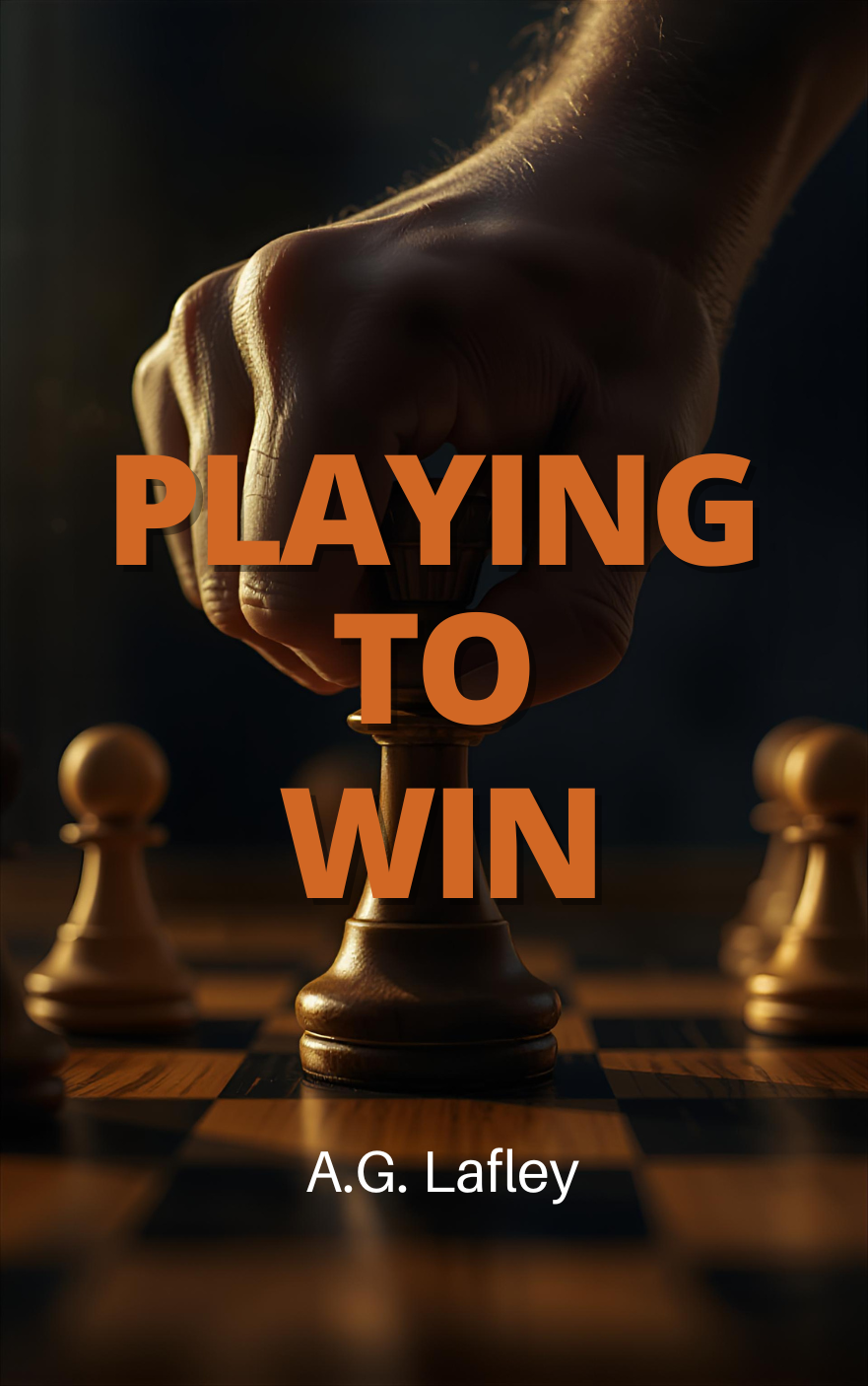
Prefer the print book? Buy on Amazon
As an Amazon Associate, Sumizeit earns from qualifying purchases.
Playing to Win Book Summary
This Playing to Win Book Summary covers the key ideas, lessons, and takeaways in about 20 minutes.
Short Description:
A clear, practical guide to building and executing winning business strategy.
Lafley shows that winning is not accidental or mystical. It is the result of disciplined thinking, customer-centered ambition, and the courage to commit. By treating strategy as a cascade of reinforcing decisions—and revisiting those decisions as reality evolves—leaders can build organizations that are not just competitive, but consistently chosen.
Helps with these goals
Want a Free Weekly Read?
Get a free summary every week straight to your mailbox.
Preview the Playing to Win book summary
Below is a preview of Sumizeit’s comprehensive human-written summary of Playing to Win by A.G. Lafley. The full summary is 15-20 minutes long and covers the book’s key ideas in text, audio, visual, and video formats. Unlock the full 20 Minute Summary
At the heart of Playing to Win is a deceptively simple idea: strategy is not about being busy, ambitious, or well-intentioned—it is about making hard, deliberate choices. Lafley argues that many organizations mistake motion for progress. They launch initiatives, chase trends, and pursue growth everywhere at once, yet fail to build lasting advantage because they refuse to choose.
According to Lafley, every business operates under constraints: limited capital, limited talent, limited time, and limited attention. Strategy exists precisely because you cannot do everything. Winning requires deciding what not to do just as clearly as deciding what to do. Organizations that avoid trade-offs often appear flexible, but in reality they dilute their resources and confuse their people.
The book challenges the comforting idea that strategy is just vision or long-term planning. Instead, Lafley presents strategy as a system of interconnected decisions that guide daily behavior. When those decisions reinforce one another, they create momentum. When they conflict, even the best execution fails.
Competing Isn’t Enough—You Must Intend to Win
Lafley draws a sharp distinction between participating in a market and dominating it. He argues that companies that merely aim to “compete” unconsciously accept mediocrity. They invest cautiously, imitate rivals, and avoid bold moves. As a result, they are outpaced by firms that commit fully to winning.
Winning, in this context, does not mean eliminating all rivals or achieving permanent superiority. It means deliberately positioning the company so that customers consistently choose it over alternatives. This requires ambition, clarity, and a willingness to make bets.
Lafley emphasizes that this mindset applies at every level of an organization. A CEO must decide how the company will win overall, but a brand manager, product lead, or sales representative must also make strategic choices about how they will succeed within their domain. Strategy cascades downward, shaping thousands of individual decisions each day.
Strategy as a Chain of Interlocking Decisions
Rather than treating strategy as a single document or presentation, Lafley introduces it as a sequence of connected choices. Each decision narrows the field and sharpens focus, creating a logical flow from aspiration to action.
This sequence works like a waterfall: decisions at the top influence everything below, while insights from execution can force revisions upstream. Strategy is therefore dynamic, not static. Companies must revisit and refine their choices as markets change, without losing coherence.
The power of this approach lies in alignment. When all major choices point in the same direction, the organization gains leverage. Resources reinforce one another instead of pulling apart.
Defining What Success Actually Means
The starting point of strategy is deciding what “winning” looks like. Lafley stresses that this is more than a mission statement or financial target. It is a concrete picture of the future the organization is trying to create.
A meaningful aspiration balances ambition with realism. It should stretch the organization without becoming fantasy. Crucially, it must be grounded in customer value.
Want the complete 20-minute summary?
- Full structured summary
- Video Summary
- Podcast Summary
- Audio summary
- Key takeaways
- Exercises
- Quiz
- Highlights and notes
- Ask the book with AI
Who should read Playing to Win?
Playing to Win is for business leaders, entrepreneurs, and managers who want to move beyond vague ambitions and build organizations that win through deliberate choice. If you struggle to prioritize competing demands or feel your company lacks strategic focus, this book provides a practical framework for making the hard decisions that separate winning companies from the rest.
Why does Playing to Win matter?
In today's fast-moving business environment, companies are tempted to pursue every opportunity and trend simultaneously—a trap that dilutes resources and confuses execution. A.G. Lafley's Playing to Win cuts through this noise by proving that strategy is fundamentally about choosing what not to do as clearly as what to do. This discipline is more critical than ever when markets shift rapidly and attention spans shrink.
What are the key themes in Playing to Win?
- Strategy as deliberate choice, not motion
- The power of saying no to create focus
- Building competitive advantage through integrated systems
- Customer-centered definition of winning
- Cascading decisions from aspiration to execution
- Loyalty as strategic protection against volatility
- Flexibility within commitment
How can you apply ideas from Playing to Win?
- Map your organization's current decisions (where you play, how you compete, which capabilities you invest in) to identify contradictions that dilute strategy
- Conduct a capability audit to determine which few strengths directly support your winning approach and which investments distract from that focus
- Design a strategy cascade by translating corporate aspirations into specific choices at the business unit, brand, and functional level
- Create a brand portfolio review to assess whether each brand aligns with corporate strategy or represents resources that could be better deployed elsewhere
- Establish quarterly strategy review sessions focused on learning rather than blame, with clear metrics to track whether reality matches assumptions
- Define explicit alternatives when facing major decisions and test your assumptions through data or market experiments before committing
- Document your playing field choice (target customers, geographies, channels, value chain) in specific terms to guide daily decisions across the organization
What common mistakes do readers make with Playing to Win?
- Pursuing growth everywhere at once and calling it ambition, rather than making hard choices about where to focus
- Trying to compete on both cost and differentiation simultaneously, resulting in a middle-ground position that excels at neither
- Building impressive capabilities that do not matter to customers or reinforce your winning strategy
- Making strategic choices based on pride or past identity rather than adapting when market evidence contradicts assumptions
Sumizeit Exercises Apply what you've learned
Turn ideas from Playing to Win into action with a short guided reflection: identify the biggest takeaway, connect it to your life, and commit to one step you can take in the next 24 hours.
What is the expert analysis of Playing to Win?
Overview
Playing to Win is a seminal work on business strategy authored by A.G. Lafley, the former chairman and CEO of Procter & Gamble. Lafley’s stature as a transformative leader who doubled P&G’s sales and market value lends considerable weight to his insights. The book’s significance lies in its pragmatic dismantling of common strategic misconceptions, emphasizing that strategy is fundamentally about making deliberate, often difficult choices rather than merely engaging in activity or setting lofty visions. Lafley’s approach is grounded in real-world experience, making the book a vital contribution to contemporary strategic thinking.
Core Thesis
The central argument of Playing to Win is that winning in business requires a clear, interconnected system of strategic choices that define where to compete, how to win, and which capabilities to develop. Lafley asserts that strategy is not a static plan or vague aspiration but a dynamic cascade of decisions that must align and reinforce each other. Crucially, he highlights that organizations must embrace trade-offs and deliberately decide what not to do, as trying to be all things to all people dilutes focus and erodes competitive advantage. This disciplined choice-making, coupled with ongoing learning and adaptation, forms the foundation for sustainable success.
Strengths
- Clarity and Practicality: Lafley breaks down the abstract concept of strategy into a concrete, actionable framework centered on five interrelated choices, making it accessible for leaders at all levels.
- Emphasis on Trade-offs: The insistence on choosing what not to do challenges the pervasive but flawed notion that growth and expansion are always positive, encouraging strategic focus.
- Integration of Execution and Strategy: By framing strategy as a living system of decisions cascading through an organization, Lafley bridges the often-separate realms of planning and operational execution.
- Customer-Centric Orientation: The book grounds winning in delivering real value to customers, avoiding inward-looking metrics that can mislead organizations.
- Leadership Wisdom: Lafley’s insights into governance, decision discipline, and humility provide a nuanced understanding of the human and organizational dynamics critical to strategy.
Critiques & Counterarguments
- Potential Oversimplification of Complex Markets: While the framework is elegant, real-world markets often involve multifaceted competitive dynamics and blurred boundaries that resist neat categorization into “where to play” and “how to win.”
- Underemphasis on Innovation and Disruption: The book focuses heavily on deliberate choice and alignment but may understate the role of emergent innovation, serendipity, and disruptive shifts that can upend even well-crafted strategies.
- Limited Attention to Organizational Politics: The model presumes rational decision-making cascades, yet internal politics, power struggles, and cultural inertia often complicate strategy execution.
- Competing Schools of Thought: Approaches like Blue Ocean Strategy advocate creating uncontested market space rather than choosing among existing competitive fields, offering a contrasting paradigm to Lafley’s emphasis on trade-offs within established arenas.
- Empirical Evidence on Strategy Flexibility: Some research suggests that overly rigid strategic commitments can hinder responsiveness, especially in volatile industries where adaptability trumps consistency.
Who Should Read This
Playing to Win is essential reading for senior executives, strategists, and business leaders who seek a grounded, experience-based framework for making strategic choices that drive competitive advantage. It is equally valuable for MBA students and consultants who require a clear methodology to navigate the complexities of strategy formulation and execution. Those interested in aligning organizational behavior with strategic intent and fostering disciplined decision-making will find Lafley’s insights especially instructive. However, readers looking for deep dives into innovation management or emergent strategy may need to supplement this work with complementary perspectives.
Frequently asked questions about the Playing to Win book summary
What is Playing to Win about?
Playing to Win by A.G. Lafley is about how organizations achieve sustainable competitive advantage through deliberate, interconnected strategic choices. The book argues that strategy is not about vision or motion alone, but about a disciplined cascade of decisions—where to play, how to win, and what capabilities matter—that all reinforce one another. Lafley shows that winning companies distinguish themselves by choosing what not to do as clearly as what to do, and by treating strategy as a living system that evolves with market reality.
Who should read Playing to Win?
Playing to Win is essential for CEOs, business leaders, entrepreneurs, and managers who want to build organizations that consistently outperform competitors. It is particularly valuable for leaders who feel their company lacks strategic focus, is spreading resources too thin, or is reactive rather than intentional. The book is practical and grounded in real business experience, making it useful for leaders at any level who influence organizational strategy or major decisions.
What are the main takeaways from Playing to Win?
The core takeaways are: (1) strategy is about making hard, deliberate choices rather than pursuing every opportunity; (2) winning requires choosing one primary path to advantage—either cost leadership or differentiation—rather than trying both; (3) strategic decisions must cascade throughout the organization, shaping behavior at all levels; (4) competitive advantage comes from integrated systems of reinforcing capabilities, not individual strengths; and (5) strategy must be revisited regularly as markets evolve, requiring both commitment and flexibility. Lafley emphasizes that winning is not mystical or accidental—it is the result of disciplined thinking and the courage to choose.
How does Lafley define winning in business?
In Playing to Win, Lafley defines winning not as eliminating all rivals or achieving permanent dominance, but as deliberately positioning your company so customers consistently choose it over alternatives. Winning begins with a concrete aspiration grounded in customer value—a picture of the future your organization is trying to create. It requires understanding what customers would miss if your company disappeared, then building strategy to deliver that irreplaceable value in a way that competitors cannot easily replicate.
What is the difference between cost leadership and differentiation strategy?
According to Playing to Win, cost-based strategies depend on efficiency, scale, and disciplined operations; companies pursuing this path relentlessly eliminate waste and control expenses. Value-based strategies depend on differentiation through design, branding, innovation, and customer experience. Lafley cautions that most organizations must choose one primary approach or risk being stuck in the middle—neither the cheapest nor the best. The choice should align with your capabilities and market position.
Why does Lafley emphasize saying no as part of strategy?
Lafley stresses that strategy exists precisely because you cannot do everything; every business operates under constraints of capital, talent, time, and attention. Companies that avoid trade-offs appear flexible but actually dilute their resources and confuse their people, mistaking motion for progress. By clearly deciding what not to do, organizations create focus, concentrate resources where they matter most, and build competitive advantage through coherent, mutually reinforcing choices rather than scattered initiatives.
How should organizations measure and review strategy?
Playing to Win emphasizes that strategy requires three essential supports: structured strategy review, clear communication, and meaningful measurement. Regular strategic discussions should focus on learning rather than blame, encouraging honest assessment of what is working and what is not. Communication ensures employees understand not just the strategy but why it exists and how their work contributes. Measurement provides feedback by tracking outcomes across functions, allowing companies to adjust before problems become crises.
About Sumizeit
Sumizeit is a profitable Scomy LLC company based in Miami, Florida. Our founders, Clemens Raemy and Weina Scott, are successful entrepreneurs with several exits. Sumizeit is a popular book summary app / micro learning app used by busy professionals and entrepreneurs with over 2,500 non-fiction book summaries and 10,000 podcast summaries in text, audio, visual, podcast, and video format. We also have stellar retention tools to make ideas stick - such as flashcards with spaced repetition, quizzes, streaks, highlighting and notes, daily challenges, riddles, mini-courses, meditation, and more. You won't only learn the idea, but also remember it. Over 90% of our users change their habits with Sumizeit.
Upgrade Now
Here's why readers love Sumizeit
Join thousands of learners getting smarter every day
"Great experience. Detailed summaries. Loved the gamification feature. Makes learning fun. Good customer service. I recommend Sumizeit to anyone. You'll learn a lot."
"I always felt busy but still wanting to keep up with the book discussion in my friend group. This was a great supplement to help me keep reading the books I find fun while keeping up with important books."
"I love this website. Instead of scrolling social media, I find myself learning a lot. I use it everyday. I recommend this app for anyone who is too busy and wants to get up to speed with their favorite books."
Playing to Win Book Summary PDF
Looking for a Playing to Win Book Summary PDF you can save and revisit offline? Our Playing to Win Book Summary PDF captures the book’s core ideas in a clean, printable format — the key frameworks, takeaways, and structure without the fluff. Download the Playing to Win Book Summary PDF when you want a reference you can annotate, share with your team, or review on the go. Get your Playing to Win Book Summary PDF from the download page below.
Download Playing to Win Book Summary PDFPeople also liked these summaries
Readers who explored Playing to Win often enjoyed these titles next.


Ready to read the whole thing?
- Full structured summary
- Video Summary
- Podcast Summary
- Audio summary
- Key takeaways
- Exercises
- Quiz
- Highlights and notes
- Ask the book with AI
Featured Book Titles
Popular Book Summaries at sumizeit, leading book summary app