


Prefer the print book? Buy on Amazon
As an Amazon Associate, Sumizeit earns from qualifying purchases.
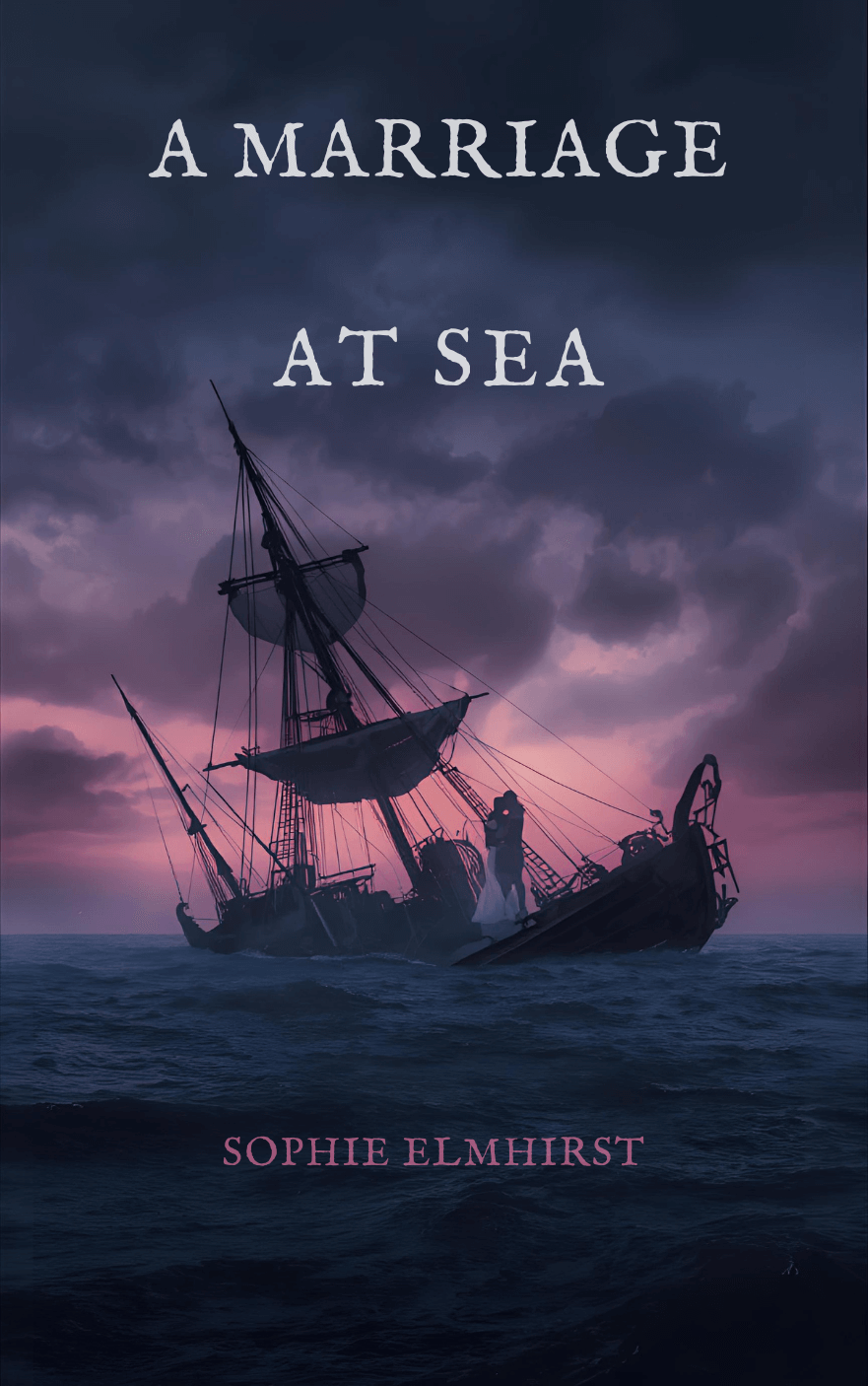
A Marriage at Sea Book Summary
This A Marriage at Sea Book Summary covers the key ideas, lessons, and takeaways in about 20 minutes.
What follows reveals that preparation matters, but temperament matters more. On a raft in the Pacific, survival depends on routine, invention, and the ability to keep meaning alive. Maurice is pulled toward guilt, despair, and collapse. Maralyn responds with structure and relentless imagination, turning scarcity into systems—rationing water, creating tools from safety pins, fishing by routine, building games, and designing a future boat as if the future is already guaranteed.
Their rescue after 117 days is not the end of suffering but the beginning of a different struggle: public attention turns trauma into commodity, forcing them to perform their pain. And even after everything, the sea’s pull returns, especially for Maralyn, whose will refuses to treat catastrophe as conclusion. In the long arc of their lives, the story becomes less about a single shipwreck and more about how marriage functions as a shared expedition—one person faltering, the other insisting, both surviving through interdependence.
In the end, the book suggests the most important survival equipment was not a sextant or a raft patch kit. It was the stubborn, practical love that kept routine intact, kept hope in circulation, and kept two people moving forward when logic said they should stop.
Helps with these goals
Want the complete 20-minute summary?
- Full structured summary
- Video Summary
- Podcast Summary
- Audio summary
- Key takeaways
- Exercises
- Quiz
- Highlights and notes
- Ask the book with AI
Want a Free Weekly Read?
Get a free summary every week straight to your mailbox.
What is in the A Marriage at Sea book summary?
Below is a preview of Sumizeit’s expert-written summary of A Marriage at Sea by Sophie Elmhirst. The full summary covers the book’s key ideas in text, audio, and video.
Sophie Elmhirst’s A Marriage at Sea begins far from the dramatic images people associate with shipwrecks and survival rafts. It starts in ordinary England, in a version of adulthood that looks stable from the outside and suffocating from the inside. Maurice and Maralyn Bailey are not presented as reckless thrill-seekers. They are a couple whose life, on paper, seems comfortable: a house, steady work, predictable routines, and the sense of having “made it” in the modest postwar way.
But the book’s first tension is psychological rather than physical. Maurice feels trapped by what he experiences as a lifetime of constraint—work that grinds him down and a personal history that still presses on him. He carries the residue of a difficult childhood and a long habit of emotional distance. Even when he is surrounded by domestic normality, he seems slightly outside it, watching his own life as if it belongs to someone else.
Maralyn, meanwhile, has her own form of restlessness. She is not framed as unhappy in the dramatic sense; she is framed as alert—convinced that life contains more possibilities than the narrow corridor she has been given. She has lived under strong parental expectations, held a job at a tax office, and followed the sensible path. Yet something in her refuses to treat “sensible” as the final destination.
Elmhirst sets up their marriage as a partnership built on complementary hunger. Maurice wants to escape the grimness of obligation, to step out of the identity shaped by work and old pain. Maralyn wants to move toward a life that feels chosen rather than assigned. Their longing converges on a single, enormous idea: they will leave everything behind and sail.
The Dream Becomes a Blueprint: Selling Up, Building a Boat, Rehearsing a New Self
The most striking early element of the story is how quickly the fantasy hardens into a plan. Maralyn doesn’t simply daydream about travel; she proposes a radical redesign of their entire existence. They will sell their home. They will commission a yacht built for serious ocean passages. They will sail across the world and aim for New Zealand—an endpoint that feels both geographically distant and symbolically clean, a way to start over.
Maurice is captivated. For him, the plan offers reinvention. It suggests that the past can be outrun and that a new version of himself—capable, independent, respected—can be built through competence at sea. The sea becomes a stage on which he can become the person he wants to be.
Elmhirst emphasizes how methodical they are. Their dream is not romantic chaos. It is engineering, budgeting, lists, diagrams, and practice. They commission a tough 31-foot Bermuda sloop named Auralyn, and then they reshape it for the kind of voyage most people only read about. They add modifications meant for endurance and self-steering. They build systems. They imagine failures in advance.
One of their most revealing choices is what they refuse. They decide not to install a radio transmitter because they want to protect the purity of…
Want the complete 20-minute summary?
- Full structured summary
- Video Summary
- Podcast Summary
- Audio summary
- Key takeaways
- Exercises
- Quiz
- Highlights and notes
- Ask the book with AI
Who should read A Marriage at Sea?
A Marriage at Sea is essential reading for anyone interested in survival narratives that go deeper than physical endurance. This book appeals to those exploring how relationships function under extreme stress, how two people navigate complementary strengths and weaknesses, and what it truly means to sustain partnership when everything external has been stripped away. It also speaks to readers seeking literary nonfiction that treats historical events as windows into human psychology and resilience.
Why does A Marriage at Sea matter?
In an era that often romanticizes escape and reinvention, Sophie Elmhirst's A Marriage at Sea offers a brutally honest account of what happens when dreams collide with reality and survival depends on unglamorous, daily acts of discipline. The book reveals that the most important survival tools are psychological and relational rather than material. It matters because it reframes marriage itself as an expedition requiring mutual adaptation, creative problem-solving, and the willingness to let one partner lead when the other falters—lessons that extend far beyond maritime disaster.
What are the key themes in A Marriage at Sea?
- Marriage as survival partnership in extreme conditions
- The tension between escape fantasy and everyday constraint
- Complementary temperaments: how strength in one partner compensates for collapse in another
- The role of routine and discipline in psychological survival
- The transformation of private trauma into public spectacle
- Memory and writing as tools for grieving and connection
- How preparation reveals character under pressure
Want the complete 20-minute summary?
- Full structured summary
- Video Summary
- Podcast Summary
- Audio summary
- Key takeaways
- Exercises
- Quiz
- Highlights and notes
- Ask the book with AI
How can you apply ideas from A Marriage at Sea?
- Develop backup systems and redundancy in critical areas of your life, recognizing that single points of failure exist even with meticulous planning
- Build daily routines and structure during crisis rather than abandoning them, as consistency sustains mental stability more than comfort does
- Identify your partner's or team's core strengths and explicitly rely on them during pressure rather than insisting on self-sufficiency in all domains
- Practice creative problem-solving with limited resources regularly, training your mind to see possibility in constraint before survival demands it
- Create shared rituals and small goals when facing uncertainty, as these give the mind permission to imagine continuation
- Document important experiences and relationships through writing or detailed memory work, both during and after events, as this preserves meaning and supports processing
- Recognize when despair is a temperamental response rather than a logical conclusion, and allow others to generate hope on your behalf when you cannot
What common mistakes do readers make with A Marriage at Sea?
- Assuming that thorough planning eliminates the role of chance and randomness, leading to surprise and paralysis when unforeseeable events occur despite excellent preparation
- Treating despair as a permanent character trait rather than a temporary psychological state that can be interrupted by imposed structure and external focus
- Believing that escape from one's environment solves internal psychological patterns; the self travels with you and reasserts itself even in radically new circumstances
- Underestimating the importance of psychological survival tools relative to physical ones; people give up and die even when resources technically remain available
- Assuming that after surviving extreme trauma, life returns to normal; the aftermath often involves unexpected ordeals like fame, guilt, and the need to integrate incompatible narratives of self
Sumizeit Exercises Apply what you've learned
Turn ideas from A Marriage at Sea into action with a short guided reflection: identify the biggest takeaway, connect it to your life, and commit to one step you can take in the next 24 hours.
What is the expert analysis of A Marriage at Sea?
Overview
A Marriage at Sea by Sophie Elmhirst is a compelling narrative that transcends the conventional survival story to explore the intricate dynamics of marriage under extreme duress. Elmhirst, a journalist renowned for her psychological insight and narrative precision, reconstructs the Baileys’ harrowing 117-day ordeal adrift in the Pacific after their yacht was destroyed by a sperm whale. This work is significant not only for its vivid recounting of physical survival but also for its profound examination of emotional endurance, partnership, and identity. By weaving detailed archival research with intimate psychological portraiture, Elmhirst offers readers a nuanced meditation on love, resilience, and the human capacity to find meaning amid chaos.
Core Thesis
At the heart of A Marriage at Sea lies the argument that survival is as much a psychological and relational endeavor as it is a physical one. The Baileys’ story illustrates that preparation and technical skill, while necessary, are insufficient without the sustaining power of routine, hope, and mutual dependence. Elmhirst posits that marriage itself functions as an expedition—a shared journey where complementary strengths and persistent care become the ultimate tools for enduring hardship. The book suggests that love, expressed through insistence, structure, and refusal to surrender, is the foundational mechanism that enables survival when all else fails.
Strengths
- Psychological Depth: Elmhirst excels in portraying the complex emotional landscapes of Maurice and Maralyn, avoiding simplistic heroism in favor of nuanced vulnerability and resilience.
- Meticulous Detail: The author’s use of diaries, logbooks, and interviews grounds the narrative in authenticity, enriching the reader’s understanding of the practical and existential challenges faced.
- Marriage as Metaphor: The framing of marriage as a microcosm of survival under pressure is both original and insightful, offering a fresh lens on intimacy and partnership.
- Balance of Narrative and Analysis: The book skillfully balances gripping storytelling with reflective passages that probe the meaning of hope, identity, and loss.
- Exploration of Post-Trauma Life: By extending the narrative beyond rescue to the Baileys’ public fame and subsequent grief, Elmhirst highlights the enduring complexities of trauma and memory.
Critiques & Counterarguments
- Potential Overemphasis on Psychological Interpretation: While the psychological focus is a strength, some readers might find the interpretation of Maurice and Maralyn’s internal states speculative, given the inevitable gaps in reconstructing private thoughts.
- Limited Engagement with Broader Survival Literature: The book could deepen its analysis by situating the Baileys’ experience within wider survival psychology research or contrasting it with other maritime survival accounts to test the universality of its conclusions.
- Romanticization of Routine: The valorization of routine and order as survival tools, while compelling, may underplay the role of spontaneity and emotional expression found in other survival narratives or psychological studies.
- Public Fame and Trauma Commodification: Elmhirst’s critique of media spectacle is poignant but might benefit from a more critical exploration of how survivors negotiate agency and narrative control in the public eye, drawing on trauma theory and media studies.
- Counterpoint from Individualistic Survival Models: Some survival psychology emphasizes individual grit and self-reliance over interdependence; the Baileys’ story challenges this, but the book could engage more explicitly with these opposing frameworks.
Who Should Read This
A Marriage at Sea is ideal for readers interested in the intersections of human psychology, relationship dynamics, and survival. Scholars and enthusiasts of maritime history, trauma studies, and intimate biographies will find Elmhirst’s approach both rigorous and emotionally resonant. Additionally, those drawn to philosophical inquiries about meaning, identity, and endurance in adversity will appreciate the book’s depth. It also offers valuable insights for couples and therapists exploring the mechanics of partnership under stress, as well as for general readers seeking a profound, literary exploration of love’s capacity to sustain life beyond catastrophe.
Frequently asked questions about the A Marriage at Sea book summary
What is A Marriage at Sea about?
A Marriage at Sea by Sophie Elmhirst tells the true story of Maurice and Maralyn Bailey, a couple who sold everything to sail around the world in their custom yacht, only to have their boat struck and destroyed by a sperm whale in 1973. The narrative follows their 117-day survival on a raft in the Pacific Ocean, but more importantly, it examines how their marriage functioned as a survival system—how Maralyn's discipline and resourcefulness sustained Maurice when psychological despair threatened to overwhelm him, and how extreme circumstances reveal the true mechanics of partnership.
Who should read A Marriage at Sea?
This book appeals to readers interested in survival narratives that prioritize psychological and relational depth over physical spectacle, as well as those exploring how partnerships function under extreme stress. It speaks to anyone curious about what makes some people resilient while others collapse, how complementary strengths sustain relationships, and how trauma reshapes identity. It's also valuable for those seeking literary nonfiction that treats historical events as lenses for understanding universal human dynamics.
What are the main takeaways from A Marriage at Sea?
The central insight is that survival depends more on temperament and psychological discipline than on preparation or expertise. Maralyn's ability to create routine, improvise solutions, and maintain hope proved more essential than Maurice's technical knowledge. The book also reveals that marriage functions as an expedition requiring mutual adaptation—when one partner falters, the other must be capable of generating forward motion. Finally, it demonstrates that private suffering becomes a different kind of ordeal when transformed into public spectacle, and that grief after loss mirrors the original survival crisis.
How long were Maurice and Maralyn Bailey adrift on the raft?
The Baileys spent 117 days adrift on a life raft in the Pacific Ocean after their yacht was destroyed by a sperm whale on March 4, 1973. They were rescued on June 30, 1973, by a Korean fishing vessel. During this time they rationed water to one shared pint per day and sustained themselves through fishing, turtle hunting, and strict discipline imposed by Maralyn.
What was the turning point in their survival?
The turning point came when Maralyn realized they could fish using improvised hooks made from safety pins. This provided a renewable food source beyond their dwindling packaged supplies, fundamentally changing their survival prospects. However, the deeper turning point was psychological: when Maralyn established strict routines and forced Maurice to engage with detailed plans for a future boat despite his despair, she provided him with reasons to continue living beyond mere survival logistics.
Did the Baileys attempt another voyage after being rescued?
Yes. Despite the trauma of the shipwreck, Maralyn remained committed to ocean voyaging and convinced Maurice to fund and build a second boat, Auralyn II, using money from selling their story to the Daily Express. However, the second voyage was fundamentally different—it became a public performance rather than private escape, as media attention and public interest shaped the experience in ways neither had anticipated.
How does Sophie Elmhirst structure the narrative beyond the survival episode?
A Marriage at Sea extends far beyond the 117 days adrift. It traces the Baileys' path from their dissatisfaction with suburban life through their meticulous preparation, the whale strike, the survival ordeal, their rescue and subsequent fame, their second voyage attempt, and finally into their aging years. The book culminates with Maralyn's death from cancer and Maurice's grief, revealing that marriage continues to function as a survival system even after external crises have passed.
About Sumizeit
Sumizeit is a profitable Scomy LLC company based in Miami, Florida. It has been helping readers learn from nonfiction books for 7 years with expert-written summaries in text, audio, podcast, and video.
Want the complete 20-minute summary?
- Full structured summary
- Video Summary
- Podcast Summary
- Audio summary
- Key takeaways
- Exercises
- Quiz
- Highlights and notes
- Ask the book with AI
Here's why readers love Sumizeit
Join thousands of learners getting smarter every day
"Great experience. Detailed summaries. Loved the gamification feature. Makes learning fun. Good customer service. I recommend Sumizeit to anyone. You'll learn a lot."
"I always felt busy but still wanting to keep up with the book discussion in my friend group. This was a great supplement to help me keep reading the books I find fun while keeping up with important books."
"I love this website. Instead of scrolling social media, I find myself learning a lot. I use it everyday. I recommend this app for anyone who is too busy and wants to get up to speed with their favorite books."
A Marriage at Sea Book Summary PDF
Looking for a A Marriage at Sea Book Summary PDF you can save and revisit offline? Our A Marriage at Sea Book Summary PDF captures the book’s core ideas in a clean, printable format — the key frameworks, takeaways, and structure without the fluff. Download the A Marriage at Sea Book Summary PDF when you want a reference you can annotate, share with your team, or review on the go. Get your A Marriage at Sea Book Summary PDF from the download page below.
Download A Marriage at Sea Book Summary PDFPeople also liked these summaries
Readers who explored A Marriage at Sea often enjoyed these titles next.





Want the complete 20-minute summary?
- Full structured summary
- Video Summary
- Podcast Summary
- Audio summary
- Key takeaways
- Exercises
- Quiz
- Highlights and notes
- Ask the book with AI
Featured Book Titles
Popular Book Summaries at sumizeit, leading book summary app