New users get 3 free summaries! Upgrade for unlimited access to 2,500+ book summaries.

Upgrade Now

Get the Sumizeit app

Book Summary

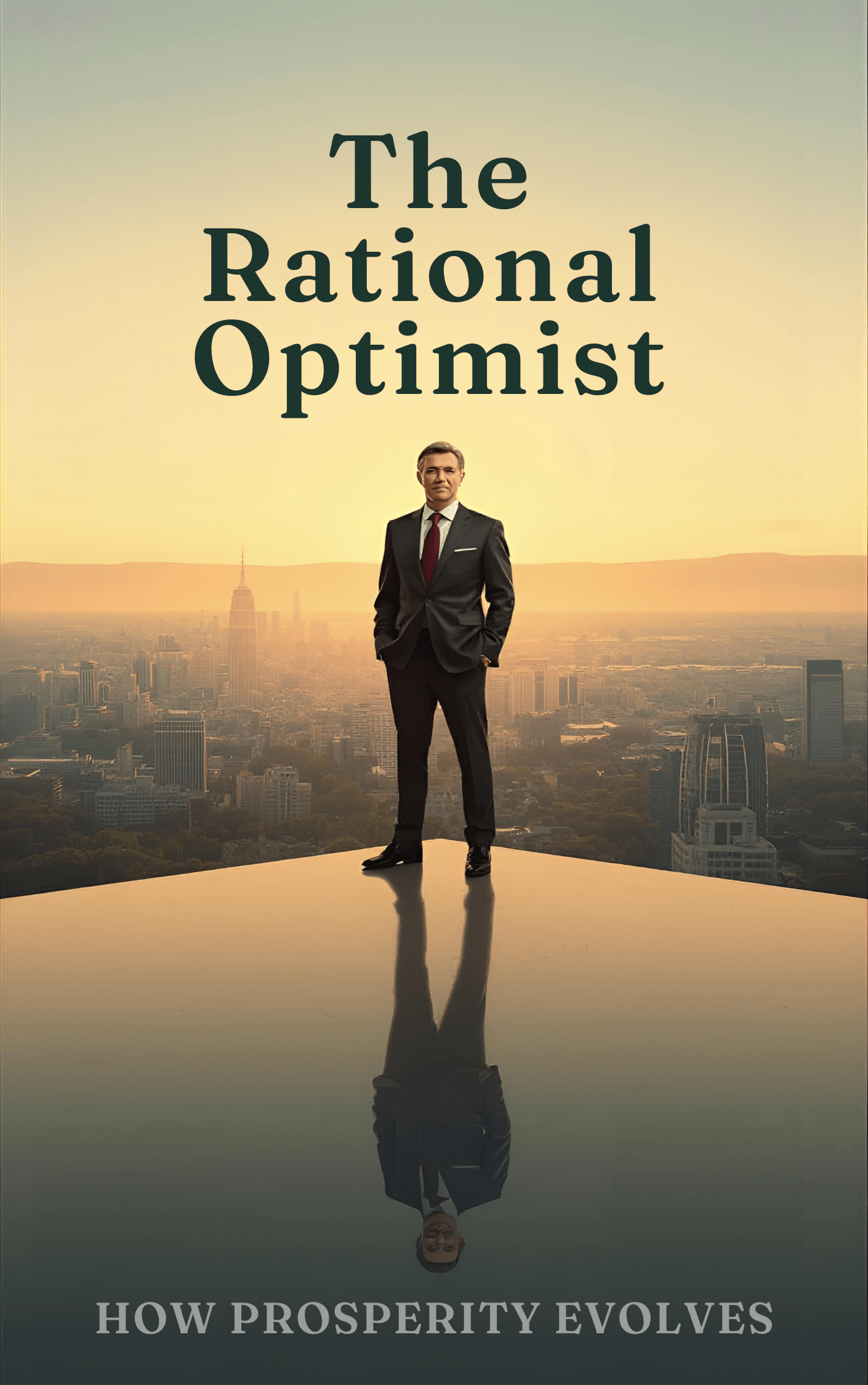
The Rational Optimist Book Summary

By Matt Ridley


This The Rational Optimist Book Summary covers the key ideas, lessons, and takeaways in about 20 minutes.

4.0 (2 ratings)
20 min read Audio available
The core message of The Rational Optimist is that human progress emerges from cooperation, not control. Our greatest achievements are not the result of top-down design, but bottom-up exchange.

When people are free to trade goods and ideas, they innovate. When they innovate, living standards rise. When living standards rise, societies become healthier, safer, and more capable of solving new problems.

Ridley’s optimism is not naive. It acknowledges risk, failure, and uncertainty. But it insists that history provides strong evidence for confidence in humanity’s creative capacity.

The lesson is not to ignore challenges, but to approach them with trust in human ingenuity. The future is not doomed by default. It is shaped by whether we allow ideas to move, mix, and multiply.

Helps with these goals

4.8

Stars

Average ratings on iOS and Google Play

100,000+

Users

On all platforms

6+

Years

Experience igniting personal growth

Want the complete 20-minute summary?

  • Full structured summary
  • Video Summary
  • Podcast Summary
  • Audio summary
  • Key takeaways
  • Exercises
  • Quiz
  • Highlights and notes
  • Ask the book with AI

Want a Free Weekly Read?

Get a free summary every week straight to your mailbox.

Preview the The Rational Optimist book summary

Below is a preview of Sumizeit’s comprehensive human-written summary of The Rational Optimist by Matt Ridley. The full summary is 15-20 minutes long and covers the book’s key ideas in text, audio, visual, and video formats. Unlock the full 20 Minute Summary

The Rational Optimist begins with a position that feels almost provocative in an era dominated by headlines of crisis and decline: humanity is not collapsing—it is improving. According to Matt Ridley, the long arc of human history bends not toward catastrophe but toward abundance, safety, and opportunity. This optimism is not sentimental or blind. It is grounded in data, history, and a specific explanation of how progress actually happens.

Ridley does not argue that the world is perfect or that suffering has disappeared. Instead, he asserts that by nearly every measurable standard—health, longevity, safety, access to goods, knowledge, and freedom—human life has improved dramatically over time. What makes this improvement possible, he argues, is not central planning, heroic leadership, or moral enlightenment, but something far more mundane and powerful: the exchange of ideas.

The book’s central claim is that human prosperity is driven by innovation—and innovation is fueled by interaction. When people trade, converse, imitate, and build on each other’s insights, progress accelerates. When societies isolate themselves or restrict exchange, stagnation follows.

Ridley’s optimism is therefore “rational” not because it ignores problems, but because it recognizes a recurring pattern: whenever humans are allowed to connect freely, solve problems collaboratively, and specialize in what they do best, living standards rise.

Humans as a Collective Intelligence

One of Ridley’s foundational arguments is that humans are unique not because of individual intelligence, but because of shared intelligence. Unlike most animals, humans do not rely solely on instinct or isolated learning. We pool knowledge across generations and geographies, allowing ideas to evolve and compound.

An innovation does not need to be rediscovered repeatedly by every individual. Once discovered, it spreads, mutates, improves, and combines with other ideas. Over time, this process produces outcomes far beyond what any single mind could achieve.

Ridley emphasizes that intelligence resides not inside brains alone, but in networks—markets, communities, cultures, and institutions that allow knowledge to circulate. Civilization itself is a vast memory system, storing and transmitting information across time.

This perspective reframes progress as emergent rather than designed. Breakthroughs rarely appear fully formed. Instead, they arise from countless small exchanges: one person improves a tool, another adapts it, a third applies it somewhere new. Progress is cumulative, decentralized, and often invisible in the moment.

Cultural Evolution: How Ideas Compete and Improve

Ridley introduces the concept of cultural evolution to explain how ideas change over time. Just as biological traits evolve through variation and selection, ideas evolve through experimentation and adoption. Better ideas spread because they work—not because they are mandated.

This process does not follow a straight line or a single direction. Some ideas flourish briefly and vanish. Others persist, adapt, and become foundational. What matters is not perfection, but openness—the freedom for ideas to be tested, shared, and refined.

Trade plays a crucial role in this process. When societies interact, their ideas collide. Agricultural methods, technologies, languages, and social norms mix and mutate. This cross-pollination generates solutions that no isolated group could have invented alone.

Ridley highlights…

The full structured summary is available after upgrading

Want the complete 20-minute summary?

  • Full structured summary
  • Video Summary
  • Podcast Summary
  • Audio summary
  • Key takeaways
  • Exercises
  • Quiz
  • Highlights and notes
  • Ask the book with AI

Who should read The Rational Optimist?

The Rational Optimist is for anyone skeptical of doom-laden narratives about the future and curious about why human living standards have improved so dramatically over time. Readers interested in economics, innovation, history, and the mechanics of progress will find Ridley's evidence-based perspective particularly compelling. This book appeals to those seeking an antidote to apocalyptic thinking without abandoning critical thinking about real challenges.

Why does The Rational Optimist matter?

In an age dominated by crisis narratives and environmental anxiety, The Rational Optimist offers a counterbalance grounded in historical data rather than blind hope. The book's core insight—that human progress emerges from free exchange of ideas and goods rather than central planning—remains urgently relevant as societies debate trade policies, regulation, and climate action. Understanding why specialization and open systems drive innovation helps readers evaluate contemporary debates about protectionism, globalization, and development strategy with clearer thinking.

What are the key themes in The Rational Optimist?

  • Progress emerges from voluntary exchange and open systems
  • Shared intelligence and idea networks drive civilization forward
  • Specialization and trade create exponential improvements in living standards
  • Innovation solves problems better than restriction or austerity
  • Cultural evolution allows ideas to adapt and improve over time
  • Economic freedom enables political freedom by dispersing power
  • Isolation and protectionism lead to stagnation

Want the complete 20-minute summary?

  • Full structured summary
  • Video Summary
  • Podcast Summary
  • Audio summary
  • Key takeaways
  • Exercises
  • Quiz
  • Highlights and notes
  • Ask the book with AI

How can you apply ideas from The Rational Optimist?

  • Evaluate policy proposals by asking whether they preserve or restrict freedom to trade and exchange ideas, as this determines whether progress mechanisms remain active
  • Recognize that global trade, despite costs to some workers, delivers access to innovations and lower prices that improve overall living standards and fund future problem-solving
  • Support institutional conditions for specialization and focus in your organization or community rather than expecting individuals or groups to excel at everything
  • Approach environmental and resource challenges with confidence in technological solutions emerging from markets rather than assuming today's limitations define tomorrow's possibilities
  • When choosing between aid-based and trade-based development strategies, favor integration into global markets as a more sustainable path to prosperity than external transfers
  • Create conditions in your workplace or community for ideas to circulate, collide, and combine rather than isolating teams or departments
  • Recognize that trusting strangers and building reputational systems creates economic and social benefits, making integrity and transparency valuable investments

What common mistakes do readers make with The Rational Optimist?

  • Assuming that pessimism about the future reflects realism rather than imagination failure, when history shows innovations reliably exceed expectations
  • Believing that self-reliance or autarky creates strength, when isolation actually erodes capability by preventing specialization and knowledge flow
  • Treating foreign aid as equivalent to development assistance, when aid often undermines governance whereas trade integration builds self-sustaining prosperity
  • Dismissing trade as exploitative or harmful without acknowledging how market integration has lifted billions from poverty and accelerated innovation

Sumizeit Exercises Apply what you've learned

Turn ideas from The Rational Optimist into action with a short guided reflection: identify the biggest takeaway, connect it to your life, and commit to one step you can take in the next 24 hours.

Unlock book-specific exercises with a Sumizeit membership

Unlock Exercises

What is the expert analysis of The Rational Optimist?

Overview

The Rational Optimist is a provocative and data-driven work by British science writer Matt Ridley, who is renowned for his interdisciplinary approach at the nexus of biology, economics, and human behavior. Published amid widespread narratives of crisis and decline, the book stands out by offering a compelling counter-narrative: humanity’s trajectory is one of sustained improvement rather than inevitable collapse. Ridley’s synthesis of history, economics, and evolutionary theory challenges pessimistic worldviews and reframes progress as an emergent phenomenon fueled by the exchange of ideas and specialization.

Core Thesis

Ridley’s central argument is that human prosperity and progress arise not from centralized planning or moral awakening, but from the decentralized, cumulative process of innovation driven by interaction and trade. He posits that the collective intelligence of humanity—manifested through networks of exchange—enables ideas to evolve, combine, and improve over time. This process of cultural evolution, akin to biological evolution, thrives on openness, specialization, and trust, creating a virtuous cycle that elevates living standards, fosters political freedom, and underpins civilization itself.

Strengths

  • Interdisciplinary Synthesis: Ridley adeptly weaves insights from history, economics, evolutionary biology, and sociology to build a holistic understanding of progress, enriching the reader’s perspective beyond traditional disciplinary silos.
  • Optimism Grounded in Evidence: Unlike sentimental or naive optimism, Ridley’s hopefulness is firmly rooted in empirical data and historical trends, lending credibility and nuance to his argument.
  • Conceptual Innovation: The framing of human progress as a form of collective intelligence distributed through networks and markets is a powerful conceptual tool that challenges individualistic or top-down explanations.
  • Emphasis on Trade and Specialization: By highlighting the centrality of exchange and division of labor, Ridley revives classical economic insights while integrating them with cultural and technological evolution.
  • Balanced Consideration of Challenges: Ridley acknowledges environmental, political, and social risks without succumbing to despair, advocating for innovation and adaptability as solutions rather than coercion or austerity.

Critiques & Counterarguments

  • Overreliance on Historical Optimism: While Ridley’s historical data is compelling, critics may argue that past trends do not guarantee future outcomes, especially given unprecedented global challenges such as climate change and geopolitical instability.
  • Underestimation of Structural Inequalities: The book’s focus on trade and innovation as universal drivers of progress may overlook persistent disparities in wealth, power, and access to resources that can inhibit equitable participation in these processes.
  • Technological Determinism and Environmental Risks: Ridley’s faith in innovation as the ultimate climate solution can be challenged by environmental scholars who emphasize the limits of technological fixes and the need for systemic behavioral and policy changes.
  • Critique of Foreign Aid May Oversimplify Complex Realities: While Ridley highlights the pitfalls of aid dependency, some development economists argue that aid, when well-targeted and coupled with institutional reforms, can play a critical role in alleviating poverty and supporting fragile states.
  • Political Freedom and Market Dynamics: The association between economic freedom and political liberty is contested; authoritarian regimes have sometimes harnessed market mechanisms without democratizing, suggesting a more complex relationship than Ridley implies.

Who Should Read This

The Rational Optimist is essential reading for scholars, policymakers, and intellectually curious readers interested in the grand narrative of human progress. It will especially resonate with those skeptical of doom-laden forecasts and eager to explore a data-driven, interdisciplinary perspective on innovation, economics, and societal development. Readers seeking a nuanced, hopeful framework that balances realism with optimism will find Ridley’s work both challenging and inspiring. However, those interested in critical perspectives on inequality, environmental limits, or development policy might approach the book with a critical eye toward its assumptions and conclusions.

Test yourself on The Rational Optimist 5 sample questions from the summary quiz

Try a few questions from the The Rational Optimist quiz. Unlock the full summary for the full quiz and answers that will help the ideas stick.

Question 1 of 5

What is the central claim of Ridley's The Rational Optimist about how human prosperity is driven?

Question 2 of 5

According to Ridley, where does much of human intelligence primarily reside?

Question 3 of 5

What concept does Ridley use to explain how ideas change and improve over time?

Question 4 of 5

What consequence does Ridley associate with societies that pursue economic isolation or self-reliance?

Question 5 of 5

How does specialization contribute to progress, according to the summary?

Frequently asked questions about the The Rational Optimist book summary

What is The Rational Optimist about?

The Rational Optimist by Matt Ridley argues that human progress emerges not from central planning or heroic leadership but from free exchange of ideas and goods through trade. The book contends that by nearly every measurable standard—health, longevity, safety, knowledge, and freedom—life has improved dramatically over time, and this improvement accelerates when societies allow specialization, innovation, and open interaction among people. Rather than naive hope, Ridley grounds this optimism in historical evidence showing that innovation solves problems more effectively than austerity or restriction.

Who should read The Rational Optimist?

The Rational Optimist appeals to readers skeptical of apocalyptic narratives who want evidence-based reasons for confidence in humanity's future. It is valuable for those interested in economics, innovation history, and the mechanisms of progress, as well as anyone seeking to evaluate contemporary debates about trade, globalization, climate policy, and development strategy more clearly. Business leaders, policymakers, and engaged citizens will find Ridley's insights on specialization, markets, and institutional design particularly useful.

What are the main takeaways from The Rational Optimist?

The main takeaways include: (1) Progress emerges from voluntary exchange and shared intelligence networks, not top-down design; (2) Specialization and trade create exponential improvements in living standards; (3) Isolation and protectionism lead to stagnation while open systems enable innovation; (4) Technological solutions, not austerity, offer the best responses to environmental challenges; and (5) Trade-driven integration is more effective than foreign aid for sustainable development. The overarching lesson is that confidence in human creativity is justified by evidence, provided societies preserve freedom to exchange ideas and compete.

How does Ridley explain human progress?

Ridley explains progress as emerging from the exchange and circulation of ideas through trade, markets, and social interaction. Humans are uniquely capable of pooling knowledge across generations and geographies, creating shared intelligence that no individual could achieve alone. When people specialize in what they do best, trade freely, and build on each other's insights, innovation accelerates exponentially. Isolation and restriction disrupt this process, leading to stagnation.

What does Ridley say about climate change and environmental challenges?

Ridley acknowledges environmental problems as real but argues that despair is counterproductive because it can justify shutting down the market systems that enable solutions. He advocates for gradual innovation-driven transition rather than abrupt restriction, believing that technological advancement emerging from competition and experimentation will address challenges more effectively than coercive austerity. He emphasizes that energy abundance from fossil fuels enabled development for billions and that abandoning these without alternatives could harm developing nations.

Why does Ridley criticize foreign aid?

Ridley argues that foreign aid often treats symptoms rather than root causes of poverty and can undermine governance by reducing accountability. When governments depend on external money rather than taxpayers, they face weaker incentives to govern effectively. By contrast, trade-driven development integrates countries into global markets, giving them access to ideas, technology, and competition that spur sustainable business growth, job creation, and skill development without requiring continued dependence on external transfers.

How does trade build trust and social stability?

According to Ridley, trade requires and builds trust because repeated market transactions reward honesty and punish deception. Over time, this creates reputational systems that extend cooperation beyond family or tribe to strangers. Economic interdependence makes conflict costly and cooperation profitable, creating incentives for peaceful interaction. This dynamic helps explain why commercial societies tend toward stability—cooperation becomes more valuable than hostility.

About Sumizeit

Sumizeit is a profitable Scomy LLC company based in Miami, Florida. It has been helping readers learn from nonfiction books for 7 years with expert-written summaries in text, audio, podcast, and video.

Want the complete 20-minute summary?

  • Full structured summary
  • Video Summary
  • Podcast Summary
  • Audio summary
  • Key takeaways
  • Exercises
  • Quiz
  • Highlights and notes
  • Ask the book with AI

Here's why readers love Sumizeit

Join thousands of learners getting smarter every day

"Great experience. Detailed summaries. Loved the gamification feature. Makes learning fun. Good customer service. I recommend Sumizeit to anyone. You'll learn a lot."

Chen, TrustPilot

"I always felt busy but still wanting to keep up with the book discussion in my friend group. This was a great supplement to help me keep reading the books I find fun while keeping up with important books."

Daniel, TrustPilot

"I love this website. Instead of scrolling social media, I find myself learning a lot. I use it everyday. I recommend this app for anyone who is too busy and wants to get up to speed with their favorite books."

Erica, TrustPilot

The Rational Optimist Book Summary PDF

Looking for a The Rational Optimist Book Summary PDF you can save and revisit offline? Our The Rational Optimist Book Summary PDF captures the book’s core ideas in a clean, printable format — the key frameworks, takeaways, and structure without the fluff. Download the The Rational Optimist Book Summary PDF when you want a reference you can annotate, share with your team, or review on the go. Get your The Rational Optimist Book Summary PDF from the download page below.

Download The Rational Optimist Book Summary PDF

People also liked these summaries

Readers who explored The Rational Optimist often enjoyed these titles next.

Browse all books →

Want the complete 20-minute summary?

  • Full structured summary
  • Video Summary
  • Podcast Summary
  • Audio summary
  • Key takeaways
  • Exercises
  • Quiz
  • Highlights and notes
  • Ask the book with AI


View Full Summary