


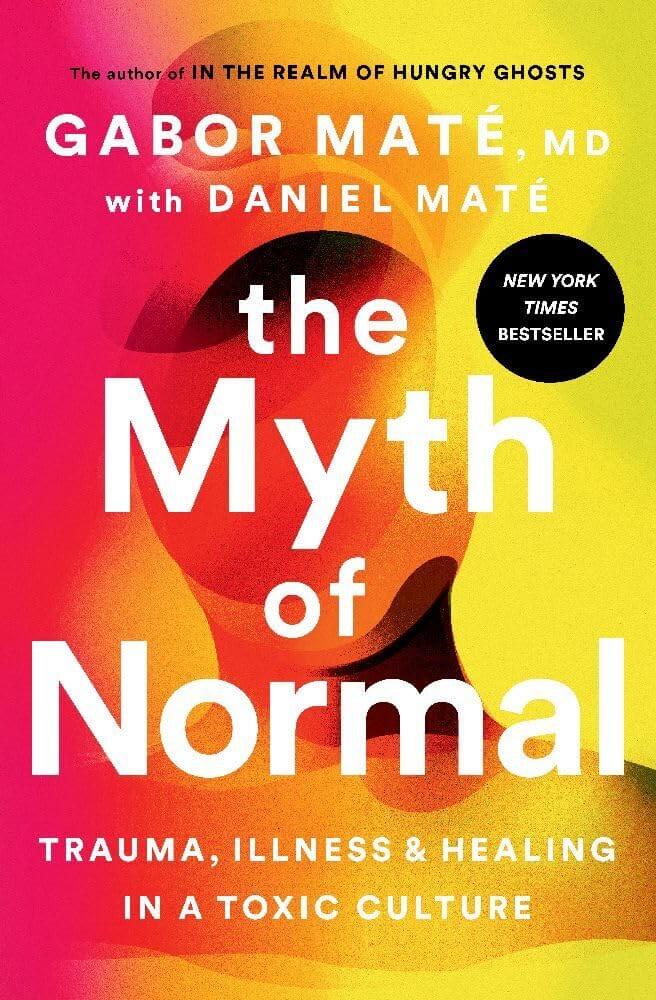
The Myth of Normal Book Summary
This The Myth of Normal Book Summary covers the key ideas, lessons, and takeaways in about 20 minutes.
The book’s message is both confronting and hopeful. It is confronting because it suggests that society routinely normalizes conditions that harm people—prioritizing productivity over belonging, competition over care, and conformity over emotional truth. It is hopeful because it offers a different path: trauma-informed understanding, restoration of agency, and holistic healing that integrates mind and body. In Maté’s framework, real health is not achieved by silencing symptoms but by listening to them—tracing them back to their roots, rebuilding connection, and creating lives and communities that support the needs human beings have always carried.
Helps with these goals
Want the complete 20-minute summary?
- Full structured summary
- Video Summary
- Podcast Summary
- Audio summary
- Key takeaways
- Exercises
- Quiz
- Highlights and notes
- Ask the book with AI
What is in the The Myth of Normal book summary?
Below is a preview of Sumizeit’s expert-written summary of The Myth of Normal by Gabor Maté. The full summary covers the book’s key ideas in text, audio, and video.
In The Myth of Normal, physician and trauma specialist Gabor Maté argues that many of the behaviors and symptoms modern culture calls “disordered” are often understandable responses to painful experiences and unhealthy environments. In his view, what gets labeled as pathology—compulsions, anxiety, emotional shutdown, addiction, attention issues, depression—frequently reflects a person’s attempt to survive, adapt, and stay connected in circumstances that overwhelm their nervous system or distort their development.
Maté’s core claim is not that suffering is imaginary or that biology doesn’t matter. Rather, he challenges the assumption that mental and physical illness can be explained mainly by internal defects, faulty chemistry, or isolated organ problems. He contends that a society can become so chronically stressful, disconnected, and coercive that widespread distress becomes common—and then gets redefined as “normal.” In that context, the real abnormality may not be a person’s coping patterns, but the conditions that shaped those patterns in the first place.
This creates the book’s central reversal. Instead of starting with “What’s wrong with you?”, Maté asks, “What happened to you?” and “What did you have to become to get through it?” Healing, from his perspective, begins when we stop treating symptoms as enemies to be eliminated and start treating them as messages—signals pointing toward unmet needs, unresolved emotional pain, and social realities that the body has been forced to carry.
How Society Decides What Counts as “Normal”
Maté emphasizes that ideas of normalcy aren’t neutral. What a culture praises, punishes, or medicalizes depends heavily on its economic priorities, its social hierarchies, and its expectations about productivity, behavior, and conformity. When a society prizes output over well-being, wealth over belonging, and performance over authenticity, people who cannot “keep up” are often treated as broken.
In that environment, distress becomes a personal failure rather than an expected response. If a person is overwhelmed by chronic pressure, precarious finances, or social isolation, the problem is often framed as a private dysfunction. Maté disputes that framing. He suggests that many so-called mental illnesses are not mysterious glitches appearing in otherwise healthy lives; they often rise from predictable conditions—lack of control, humiliation, social disconnection, fear of scarcity, and the emotional injuries created by unstable attachment in childhood.
To illustrate, Maté points to the way childhood behavior is interpreted. A child diagnosed with ADHD is frequently viewed through a medical lens: the child has a defective brain requiring correction through medication and behavioral management. Maté proposes a different interpretation: some “symptoms” may be a child’s natural resistance to an environment that suppresses movement, curiosity, and play while demanding prolonged stillness and compliance. Under that view, the issue is not simply a child’s wiring—it’s also the mismatch between developmental needs and institutional demands.
The book reinforces this theme with supporting perspectives, such as Johann Hari’s argument that depression can function as a stress response to low social status and powerlessness, reflecting patterns observed in social hierarchies in animals.
Want the complete 20-minute summary?
- Full structured summary
- Video Summary
- Podcast Summary
- Audio summary
- Key takeaways
- Exercises
- Quiz
- Highlights and notes
- Ask the book with AI
Who should read The Myth of Normal?
The Myth of Normal is for anyone struggling with anxiety, depression, addiction, ADHD, chronic pain, or other conditions they've been told are purely internal defects. It's also essential reading for healthcare providers, therapists, educators, and anyone curious about why modern life feels so dysregulating—and what that means about our systems, not our brains.
Why does The Myth of Normal matter?
In a culture that medicalizes distress as individual pathology, Gabor Maté's work offers a radical reframe: many of our symptoms are intelligent adaptations to trauma, disconnection, and chronically stressful environments. This perspective shifts healing from symptom elimination to understanding root causes—and it challenges the biomedical model that dominates modern medicine. At a time when mental health crises are widespread and conventional treatments often fall short, The Myth of Normal provides both validation and a pathway toward genuine wellness.
What are the key themes in The Myth of Normal?
- Symptoms as adaptive responses, not defects
- The role of childhood attachment and unmet needs in lifelong health
- How social systems (racism, misogyny, capitalism) embed trauma in the body
- The mind-body connection as biological reality, not metaphor
- The limits of biomedical thinking in treating complex human suffering
- The importance of context, relationships, and agency in healing
What are the key lessons from the The Myth of Normal book summary?
Ask 'What happened to you?' instead of 'What's wrong with you?'
Shifting from a deficit-focused diagnosis to a trauma-informed inquiry reveals that many symptoms are understandable responses to difficult circumstances, not mysterious internal disorders.
Secure attachment in childhood is foundational to lifelong nervous system health
Early experiences of safety, being seen, and unconditional acceptance shape how people regulate emotion and relate to others decades later. Disrupted attachment creates adaptations that persist into adulthood.
Trauma includes chronic stress, humiliation, and emotional neglect, not only catastrophic events
The nervous system responds to repeated experiences of powerlessness, disconnection, or invalidation—especially in childhood—with the same protective patterns as dramatic trauma, often invisibly.
Modern culture normalizes conditions that are inherently dysregulating
When society prioritizes productivity over belonging and competition over care, widespread distress becomes treated as individual failure rather than a predictable response to inhuman conditions.
The biomedical model often treats symptoms while ignoring their causes
Focusing solely on brain chemistry or organ function without examining life history, relationships, and social stressors produces incomplete treatments that manage outcomes without addressing roots.
Emotional and physical health are inseparable; the mind-body distinction is artificial
Chronic emotional stress produces real physiological changes: inflammation, immune suppression, hormonal dysregulation, and increased disease risk. What feels emotional is always also biological.
Connection is a biological need, not a luxury or sign of dependence
Humans evolved to rely on supportive relationships for resilience. Isolation and poor social bonds directly increase vulnerability to mental and physical illness.
Recognizing your own agency and being heard are essential parts of healing
When healthcare relationships emphasize expert authority over patient voice, people remain disempowered—reproducing the conditions that trauma creates. Collaboration and respect are therapeutic.
Suppression of trauma preserves the wound; healing requires acknowledgment
While suppression may enable short-term functioning, it keeps the body in defensive patterns. Genuine recovery involves understanding how the past shaped present coping strategies and beliefs.
Social systems (racism, misogyny, capitalism) create structural trauma with bodily consequences
Discrimination, identity-based devaluation, and chronic economic insecurity activate the nervous system repeatedly, leading to inflammation and chronic disease over time.
Symptoms are the body's language; listen rather than silence them
Pain, anxiety, numbness, and other symptoms often express what the person couldn't safely voice, what they were forced to suppress, or what their relationships didn't allow them to feel.
Childhood coping strategies persist as adult patterns, often without conscious awareness
Adaptations like people-pleasing, emotional numbing, or hypervigilance made sense in their original context. Recognizing them as survival skills, not character flaws, opens the door to change.
A biopsychosocial model integrates biology, psychology, relationships, and environment
Moving beyond pure biomedical thinking means asking not only 'What organ is failing?' but 'What pressures, losses, and relationships are shaping this person's state?'
Healing practices that restore connection and nervous system regulation are as important as medicine
Yoga, meditation, psychotherapy, and other somatic practices can help people inhabit their bodies differently and access emotions that were made unsafe or suppressed.
True wellness is wholeness and authenticity, not symptom-free productivity
Health means feeling, connecting, expressing, and living in alignment with inner reality rather than constantly performing for external approval and expectation.
What appears 'normal' in modern society may actually be widespread trauma adaptation
Self-abandonment, emotional suppression, and chronic stress have become so normalized that people don't recognize them as maladaptive—they're treated as just how life is.
Unmet needs are the soil where trauma and illness grow
Accumulation of unmet needs for safety, connection, and authenticity over time creates vulnerability to mental and physical health problems.
Healing is possible when context and support are present, not guaranteed by adversity alone
While people can integrate difficult experiences into growth, this depends on having the relational and environmental resources to metabolize hardship into wisdom rather than chronic dysregulation.
Parenting ideologies and cultural messaging shape whether children feel unconditionally safe
Teaching children that love must be earned through performance, or emphasizing compliance over emotional connection, seeds long-term anxiety, shame, and self-alienation.
Reclaiming wellness involves reclaiming the self and creating safety for authenticity
Real recovery means recognizing the cost of old coping patterns, honoring unmet needs beneath them, and building internal and external environments where being genuine feels safer than performing.
Want the complete 20-minute summary?
- Full structured summary
- Video Summary
- Podcast Summary
- Audio summary
- Key takeaways
- Exercises
- Quiz
- Highlights and notes
- Ask the book with AI
How can you apply ideas from The Myth of Normal?
- When struggling with anxiety or depression, explore recent stressors, relational losses, or past trauma before assuming you need medication alone
- In parenting or teaching, prioritize secure attachment and unconditional acceptance over rewards and punishments to prevent trauma-based adaptations
- Practice nervous system regulation through embodied practices like yoga, meditation, or somatic therapy to help the body feel safe enough to release old protective patterns
- Build and maintain genuine community connections as a foundational health practice, not an optional wellness add-on
- Work with a trauma-informed therapist who asks about your life history and social context, not just symptoms
- Notice which of your coping strategies (people-pleasing, numbing, hypervigilance) once protected you, then decide consciously whether they still serve you
- Advocate for healthcare providers who listen to your experience as essential evidence, not a distraction from 'real' diagnosis
What common mistakes do readers make with The Myth of Normal?
- Assuming your mental health symptoms are purely biochemical and that medication alone will address the underlying causes without exploring trauma or social context
- Treating healing as an individual project without recognizing how isolation and poor relationships perpetuate dysregulation—connection itself is medicine
- Dismissing anger, sadness, or restlessness as disorders to suppress rather than messages from your nervous system about unmet needs or boundary violations
- Expecting yourself to function normally under chronically stressful conditions, then blaming yourself for 'not coping well' instead of questioning whether the conditions are inherently dysregulating
Sumizeit Exercises Apply what you've learned
Turn ideas from The Myth of Normal into action with a short guided reflection: identify the biggest takeaway, connect it to your life, and commit to one step you can take in the next 24 hours.
What is the expert analysis of The Myth of Normal?
Overview
The Myth of Normal is authored by Gabor Maté, a physician renowned for his expertise in trauma, addiction, and the interplay between early life experiences and long-term health. This work stands out for its integrative approach, challenging conventional biomedical paradigms by situating mental and physical illness within broader social, relational, and developmental contexts. Maté’s synthesis of clinical insight, social critique, and compassionate philosophy makes this book a significant contribution to contemporary discussions on health, trauma, and societal norms.
Core Thesis
Maté’s central argument dismantles the prevailing notion that mental and physical disorders primarily stem from intrinsic biological defects or isolated organ dysfunctions. Instead, he posits that many so-called “disorders” are adaptive responses to chronic stress, trauma, and adverse social environments—conditions so pervasive that they have been normalized culturally. The book reframes pathology as survival strategies shaped by unmet emotional needs, social disconnection, and systemic pressures, urging a shift from symptom suppression to trauma-informed healing that integrates mind, body, and context.
Strengths
- Holistic Integration: Maté compellingly bridges biology, psychology, and sociology, offering a biopsychosocial model that enriches understanding beyond reductionist biomedical frameworks.
- Trauma-Informed Perspective: The nuanced expansion of trauma beyond catastrophic events to include chronic relational and structural harms provides a deeper lens for interpreting mental health challenges.
- Critique of Medical Culture: The book incisively critiques the paternalism and symptom-focused tendencies in healthcare, advocating for patient agency and collaborative healing.
- Social Systems Analysis: By linking racism, misogyny, and capitalism to embodied stress and illness, Maté situates individual suffering within systemic injustice, broadening the scope of health discourse.
- Practical Healing Approaches: The endorsement of integrative practices—such as mindfulness, somatic therapies, and cautious psychedelic use—grounds the theory in actionable pathways for recovery.
Critiques & Counterarguments
- Evidence Base and Generalization: While Maté draws on longitudinal studies and clinical observations, some critics may find the evidence for broad claims about societal normalization of trauma and illness somewhat anecdotal or lacking rigorous empirical validation across diverse populations.
- Potential Oversimplification: The framing of many disorders as adaptive responses risks underemphasizing the complex neurobiological and genetic factors that contribute to mental illness, which contemporary psychiatry and neuroscience continue to elucidate.
- Biomedical Model Pushback: Opposing schools emphasize that biomedical interventions, including pharmacotherapy, have demonstrable efficacy and are not merely symptomatic treatments but can alter neurochemistry and improve quality of life—an aspect that Maté’s critique may underplay.
- Structural Determinism: The strong focus on social determinants and systemic trauma could be challenged by perspectives that stress individual resilience, agency, and variability in outcomes despite similar adverse conditions.
- Risks of Nontraditional Therapies: While advocating for integrative methods, the book’s endorsement of psychedelics and somatic practices may be viewed skeptically without more extensive discussion of contraindications, regulatory frameworks, and long-term outcomes.
Who Should Read This
The Myth of Normal is essential reading for mental health professionals, medical practitioners, social scientists, and policymakers interested in a more compassionate, context-sensitive approach to health and illness. It also appeals to thoughtful readers grappling with personal or societal understandings of trauma, addiction, and chronic illness who seek a framework that transcends stigma and reductionism. Those invested in social justice and systemic reform will find Maté’s integration of structural critique and embodied experience particularly illuminating.
Frequently asked questions about the The Myth of Normal book summary
What is The Myth of Normal about?
The Myth of Normal by Gabor Maté argues that many behaviors and symptoms modern culture labels as 'disordered'—anxiety, depression, addiction, ADHD, chronic pain—are often understandable adaptations to trauma, unmet needs, and stressful environments, not internal defects. Maté challenges the biomedical model that treats symptoms as isolated organ problems and instead proposes a trauma-informed, biopsychosocial approach that integrates life history, relationships, and social context into understanding health and healing.
Who should read The Myth of Normal?
Anyone struggling with anxiety, depression, addiction, ADHD, or chronic illness should read this book, especially if they've been told their condition is purely a brain chemistry problem. It's also essential for healthcare providers, therapists, educators, parents, and anyone curious about why modern life feels dysregulating. The book offers validation that symptoms often reflect circumstances, not character flaws, and provides a pathway to healing that goes beyond medication.
What are the main takeaways from The Myth of Normal?
The main takeaways are: (1) Ask 'What happened to you?' instead of 'What's wrong with you?'—symptoms are often intelligent adaptations; (2) Childhood attachment and unmet needs shape lifelong nervous system health and relationship patterns; (3) Social systems embed trauma in bodies through racism, misogyny, and capitalism-driven disconnection; (4) True healing requires understanding root causes, restoring agency, and rebuilding connection—not just suppressing symptoms; and (5) Modern culture often normalizes inherently dysregulating conditions, making widespread distress seem like individual failure.
How does Gabor Maté define trauma?
Maté defines trauma broadly to include not only catastrophic events but also chronic neglect, humiliation, emotional abandonment, unpredictability, and lack of secure attachment—especially in childhood. Trauma shapes identity and becomes a nervous system template that influences how people interpret danger, manage emotion, and relate to themselves and others for decades. It includes both personal wounds and structural trauma embedded by social systems.
Does The Myth of Normal say medication is bad?
No. Maté acknowledges that medication can be useful, but he critiques a healthcare culture that treats medication as the central answer while treating the patient's life story as secondary. His argument is that the biomedical model often collapses complex human suffering into surface symptoms and focuses on suppression without sufficiently addressing emotional and social causes. Healing often requires both medication and trauma-informed understanding of context.
What does Maté mean by 'what happened to you?' versus 'what's wrong with you?'
This is Maté's core reframe. 'What's wrong with you?' assumes the problem is internal—a defect in the person's brain or body. 'What happened to you?' recognizes that symptoms often emerge from life circumstances, trauma, and unmet needs. The second question invites curiosity about how the person's nervous system adapted to survive difficult conditions, which shifts healing from blaming the patient to understanding causes and restoring safety.
How does The Myth of Normal address childhood attachment?
Maté emphasizes that secure attachment—feeling safe, seen, and emotionally held by caregivers—is biologically foundational. When attachment is disrupted through neglect, emotional inconsistency, or conditional love, children must adapt. Those adaptations often persist into adulthood, affecting emotional regulation, relationships, and vulnerability to stress-related illness. Maté critiques parenting ideologies that discourage unconditional warmth and teach children that love must be earned through performance.
What does biopsychosocial healing look like in practice?
Biopsychosocial healing means addressing biology, psychology, relationships, and environment together. For example, treating chronic headaches might include medication alongside exploring workplace stress, isolation, and emotional strain. It means working with a trauma-informed therapist who asks about life history, building genuine community connections, practicing nervous system regulation, and creating environments where authenticity feels safer than performance. It's holistic and collaborative, not symptom-focused and expert-driven.
About Sumizeit
Sumizeit is a profitable Scomy LLC company based in Miami, Florida. It has been helping readers learn from nonfiction books for 7 years with expert-written summaries in text, audio, podcast, and video.
Want the complete 20-minute summary?
- Full structured summary
- Video Summary
- Podcast Summary
- Audio summary
- Key takeaways
- Exercises
- Quiz
- Highlights and notes
- Ask the book with AI
Here's why readers love Sumizeit
Join thousands of learners getting smarter every day
"Great experience. Detailed summaries. Loved the gamification feature. Makes learning fun. Good customer service. I recommend Sumizeit to anyone. You'll learn a lot."
"I always felt busy but still wanting to keep up with the book discussion in my friend group. This was a great supplement to help me keep reading the books I find fun while keeping up with important books."
"I love this website. Instead of scrolling social media, I find myself learning a lot. I use it everyday. I recommend this app for anyone who is too busy and wants to get up to speed with their favorite books."
The Myth of Normal Book Summary PDF
Looking for a The Myth of Normal Book Summary PDF you can save and revisit offline? Our The Myth of Normal Book Summary PDF captures the book’s core ideas in a clean, printable format — the key frameworks, takeaways, and structure without the fluff. Download the The Myth of Normal Book Summary PDF when you want a reference you can annotate, share with your team, or review on the go. Get your The Myth of Normal Book Summary PDF from the download page below.
Download The Myth of Normal Book Summary PDFPeople also liked these summaries
Readers who explored The Myth of Normal often enjoyed these titles next.


Want the complete 20-minute summary?
- Full structured summary
- Video Summary
- Podcast Summary
- Audio summary
- Key takeaways
- Exercises
- Quiz
- Highlights and notes
- Ask the book with AI
Featured Book Titles
Popular Book Summaries at sumizeit, leading book summary app
