


As an Amazon Associate, Sumizeit earns from qualifying purchases.
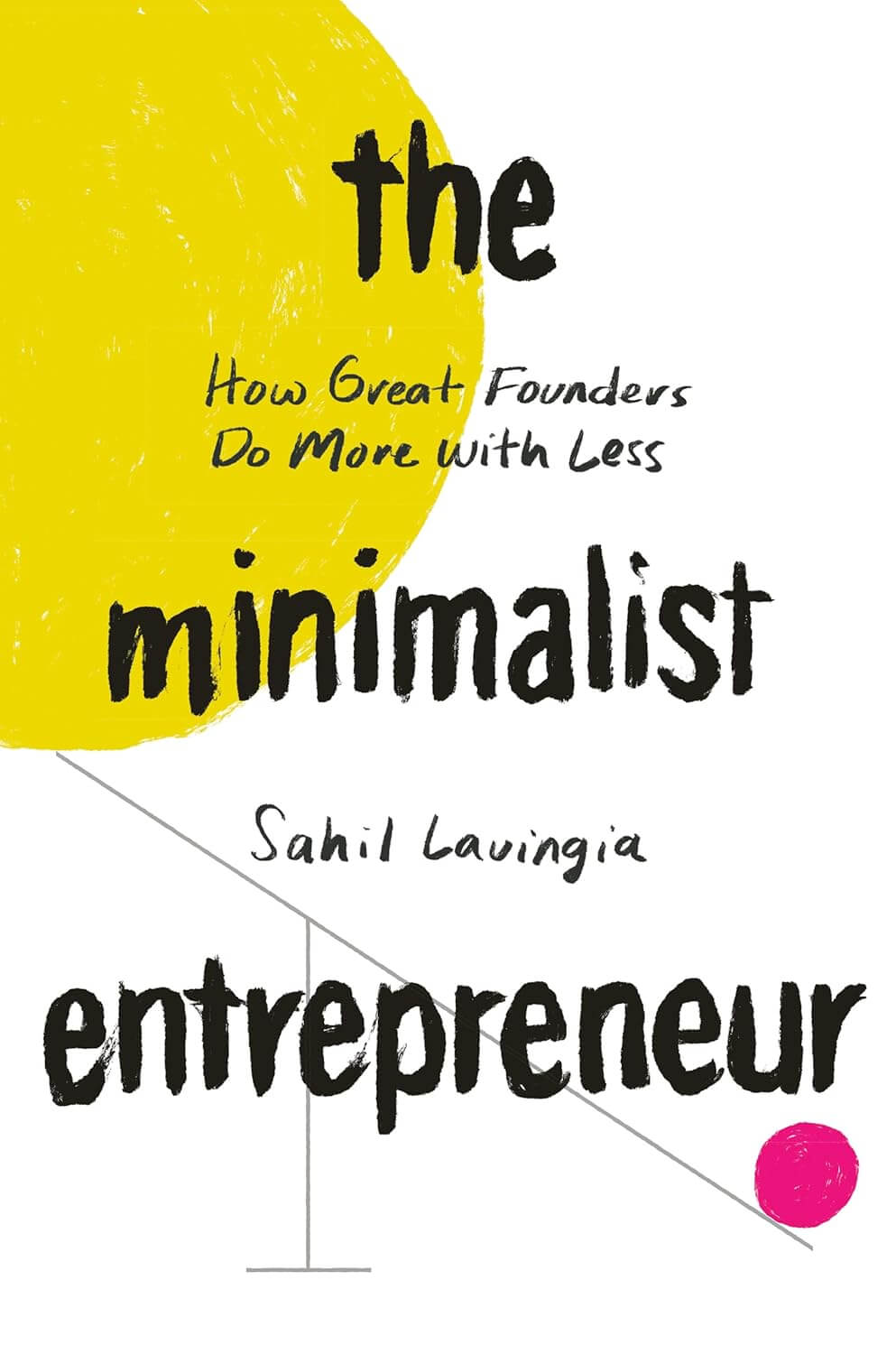
The Minimalist Entrepreneur Book Summary
This The Minimalist Entrepreneur Book Summary covers the key ideas, lessons, and takeaways in about 20 minutes.
Once the business works, the model shifts from “grow fast” to “stay alive.” Keep costs low, avoid premature hiring, treat customer feedback as essential data, and structure the company so it can endure. Culture is built intentionally through clear values, transparency, and employee empowerment. Marketing is framed as education rather than manipulation, with social media creating reach, email creating depth, and loyal customers becoming the engine of organic growth.
The book’s deepest promise is not riches, but freedom. By refusing unnecessary complexity and aligning the business with real life, the minimalist entrepreneur uses profit to create time abundance—space to rest, create, contribute, and live with more choice. The business becomes not a trap, but a vehicle for a more satisfying life and a more meaningful impact on the world.
Helps with these goals
Want the complete 20-minute summary?
- Full structured summary
- Video Summary
- Podcast Summary
- Audio summary
- Key takeaways
- Exercises
- Quiz
- Highlights and notes
- Ask the book with AI
What is in the The Minimalist Entrepreneur book summary?
Below is a preview of Sumizeit’s expert-written summary of The Minimalist Entrepreneur by Sahil Lavingia. The full summary covers the book’s key ideas in text, audio, and video.
The Minimalist Entrepreneur presents a philosophy of building a business that prioritizes durability, independence, and personal fulfillment over explosive growth, external validation, or billion-dollar valuations. Instead of framing entrepreneurship as a high-risk race fueled by venture capital and hyper-scaling, the book reframes it as a patient, human-centered process rooted in community, creativity, and financial restraint.
The central idea is simple: you don’t need massive funding, viral growth, or permission from investors to build a meaningful business. You need time, curiosity, and a commitment to serving a real group of people in a sustainable way. The entrepreneur’s goal is not domination of a market, but freedom—freedom of time, freedom of choice, and freedom from unnecessary pressure.
This book is not a motivational manifesto or a startup playbook built around hype. It’s a practical, step-by-step guide to designing a small but resilient business that can support a fulfilling life. Every recommendation ties back to a single principle: profit should serve your life, not consume it.
A Different Definition of Success
At the heart of the minimalist approach is a new definition of what it means to “win” in business. Traditional startup culture equates success with scale, speed, and external funding. In contrast, this book argues those metrics often come at the expense of stability, autonomy, and happiness.
Rather than aiming for an exit or acquisition, the minimalist entrepreneur builds a company meant to last. The business exists to generate steady income, meaningful work, and long-term satisfaction—not to impress investors or chase exponential growth curves.
This shift changes the default questions. Instead of asking “How fast can this grow?” you begin asking “Can this business support me without constant stress?” and “Does this work match the kind of life I want?” When those become the guiding filters, you avoid complexity that looks impressive but creates fragility.
Why Venture Capital Usually Warps the Mission
One of the book’s strongest positions is that venture capital is unnecessary for most founders and often harmful to the kind of business this model is trying to build.
When investors enter, the business inherits their incentives. The clock starts ticking. Growth becomes a requirement, not an option. Founders can lose autonomy over decisions, pace, and even culture. That pressure frequently leads to overspending, premature hiring, and building for scale before product-market fit is truly stable.
The minimalist model encourages a different fuel source: your time. Instead of borrowing money and paying it back with control, you invest effort until the business can repay you with income and freedom.
Build the Business Around Your Life
A key theme throughout the book is that entrepreneurship should not require burning your life down to prove you’re serious. If the purpose of money is to expand your choices, then building a business that destroys your health, relationships, or peace defeats the point.
That’s why the book recommends starting slowly, keeping overhead minimal, and letting the company develop through real-world learning. The goal isn’t to sprint toward a dramatic milestone.
Want the complete 20-minute summary?
- Full structured summary
- Video Summary
- Podcast Summary
- Audio summary
- Key takeaways
- Exercises
- Quiz
- Highlights and notes
- Ask the book with AI
Who should read The Minimalist Entrepreneur?
The Minimalist Entrepreneur is for anyone who wants to build a profitable business without sacrificing their health, freedom, or peace of mind. Whether you're a creative professional, freelancer, or aspiring founder tired of the venture capital rat race, this book offers a practical alternative to explosive growth and external validation. It's ideal for people who value independence, sustainability, and building something that serves their life rather than consuming it.
Why does The Minimalist Entrepreneur matter?
In an era dominated by startup hype and billion-dollar valuations, Sahil Lavingia's philosophy provides a much-needed counternarrative: you don't need massive funding or viral growth to build a meaningful business. As more people seek autonomy and work-life integration, this book shows how to create sustainable income and time freedom without the typical burnout trap. It matters today because it redefines success on human terms, not investor terms.
What are the key themes in The Minimalist Entrepreneur?
- Sustainable profitability over explosive growth
- Community-first business development
- Independence and autonomy as primary goals
- Profit as a tool for time abundance, not status
- Content and education as trust-building mechanisms
- Lean operations and avoiding unnecessary complexity
- Customer feedback as strategic data
- Purpose-driven entrepreneurship
What are the key lessons from the The Minimalist Entrepreneur book summary?
Redefine Success on Your Own Terms
Traditional startup culture measures success by scale and exit value, but minimalist entrepreneurship defines it by sustainability, autonomy, and alignment with your life. When you ask 'Can this support me without constant stress?' instead of 'How fast can this grow?', you build a more resilient business.
Venture Capital Often Warps Your Mission
Taking investor money means inheriting their incentives: growth at all costs, tight timelines, and loss of control. The minimalist model uses your own time and effort as fuel instead, keeping you free to make decisions that align with your values.
Start Inside a Community, Not in a Vacuum
Rather than brainstorming products in isolation, begin by identifying a group of people with shared interests, values, or goals. You gain immediate access to context, language, trust, and feedback that would take months or years to build otherwise.
Mine Your Own Frustrations for Opportunities
The strongest business ideas often come from your own annoyances and observations. Your frustration gives you a sharp lens for noticing friction that others in your community also experience and want solved.
Become a Trusted Participant Before You Sell
Immerse yourself in your community by observing, contributing value, and creating educational content before launching a paid offer. This progression builds genuine trust, so when you eventually sell, it feels like a natural next step rather than a cold pitch.
Use Content to Demonstrate Clarity and Value
High-quality content teaches your community something useful, sharpens your own thinking, and builds your credibility as a reliable voice. Over time, this content library becomes the foundation of sustainable demand and organic discovery.
Test With Small Experiments, Not Perfect Products
Instead of disappearing to build a complete product, launch small experiments—workshops, services, digital products, or tools—to learn what people actually pay for. Each iteration gives you real-world data that beats any survey.
Validate the Problem and the Solution Through Behavior
Stop relying only on what people say they want. Look at what they do: Will they sign up? Will they pay? Will they return and recommend? Actual behavior reveals true value far better than promises or feedback.
Price Strategically, Not Out of Fear
Avoid underpricing your work. If your pricing doesn't cover costs and deliver profit, the business cannot sustain you and will eventually collapse or drain your life. Treat pricing as a strategic lever you can adjust and test over time.
Build Only the Infrastructure You Actually Need
Keep your startup infrastructure simple: a memorable business name, a clear website, email capability, payment processing, and a feedback channel. Complexity looks impressive but creates fragility; simplicity scales.
Reframe Marketing as Teaching, Not Manipulation
Marketing discomfort often stems from feeling 'salesy.' Reframe it as helping people understand a genuine solution to their problem. This shift makes outreach feel authentic and allows you to focus on the people most likely to benefit.
Build Your Funnel on Email, Not Just Social
Social media brings noise and reach but depends on algorithms. Email is direct, durable, and owned by you. Collect emails by offering something small and useful, then maintain consistent, valuable communication to build trust over time.
Celebrate Your Launch With Actual Customers
Skip the 'big launch party' at the beginning. Instead, wait until you have real customers and proof the business works, then celebrate with them. This turns early supporters into advocates and turns the launch into a momentum amplifier.
Keep Costs Low and Avoid Over-Hiring
Profitability thrives on lean operations. Track expenses closely, keep your own salary modest at first, use software and contractors instead of permanent staff early on, and delay office space if remote work is possible. This keeps you flexible and solvent.
Treat Partnerships Like Marriages From Day One
Co-founder conflict is one of the most expensive risks in business. Align on values, goals, and financial terms before committing, and create a clear plan for how to part ways if needed. Clarity upfront prevents costly breakdowns later.
Build Culture Through Intentional Values
As you hire, create a clear values statement that shapes behavior and decision-making. Transparency—including sharing financial and compensation information—creates openness and reduces internal politics while building trust.
Make Customer Feedback a Financial Tool
Listening to complaints and suggestions keeps churn low, protects your reputation, and prevents costly pivots. Customer feedback is free, actionable intelligence that directly impacts your bottom line and long-term stability.
Use Profit to Buy Back Your Time
The real endgame is time affluence, not wealth as a scoreboard. As the business stabilizes, reinvest profits into automating and outsourcing low-value tasks so you reclaim hours for creative work, relationships, rest, and meaning.
Give Back to Reinforce Purpose and Connection
When the business provides stability, reinvest that success into mentoring other entrepreneurs, funding causes you care about, or supporting other founders. Giving back reminds you why you started solving problems and makes success more satisfying.
Align Your Business Structure With Long-Term Sustainability
A minimalist business is built to last, not to exit. Every decision—from hiring to pricing to product development—should be made with the question 'Can we sustain this?' rather than 'How do we scale this fastest?'
Want the complete 20-minute summary?
- Full structured summary
- Video Summary
- Podcast Summary
- Audio summary
- Key takeaways
- Exercises
- Quiz
- Highlights and notes
- Ask the book with AI
How can you apply ideas from The Minimalist Entrepreneur?
- Identify a community you belong to or care deeply about, then spend 30 days observing their conversations, frustrations, and needs before deciding what to build
- Start as a paid side project while keeping your current income, so you can test the market without risking your financial security
- Create a simple email newsletter that shares knowledge and insights from your community, and use it to build a list of potential customers before launching your paid offer
- Run small experiments (workshops, services, minimal digital products) to learn what people actually value and pay for, rather than building in stealth mode
- Document your business expenses and set a clear profit target that covers your cost of living plus reinvestment, so you know exactly what revenue you need to hit each month
- Reach out directly to potential customers, community influencers, and collaborators with genuine offers of help or feedback requests rather than cold sales pitches
- Write clear, helpful content that teaches your community something valuable, building your credibility before you ever mention a paid product
What common mistakes do readers make with The Minimalist Entrepreneur?
- Assuming you need venture capital to launch—most bootstrapped businesses thrive without external pressure to grow faster than sustainable
- Building a 'complete' product in isolation before testing whether anyone actually wants it—small experiments teach you faster than perfectionism
- Underpricing your work out of fear or lack of confidence—this ensures the business cannot sustain you and will eventually collapse
- Trying to reach everyone instead of focusing on a specific community—generic marketing is expensive and ineffective for small businesses
- Hiring full-time employees before the business clearly demands it—this creates overhead that kills profitability and flexibility
Sumizeit Exercises Apply what you've learned
Turn ideas from The Minimalist Entrepreneur into action with a short guided reflection: identify the biggest takeaway, connect it to your life, and commit to one step you can take in the next 24 hours.
What is the expert analysis of The Minimalist Entrepreneur?
Overview
The Minimalist Entrepreneur by Sahil Lavingia offers a compelling redefinition of entrepreneurship that challenges the prevailing Silicon Valley ethos of hyper-growth and venture capital dependency. Lavingia, a seasoned entrepreneur and founder of Gumroad, draws from his own experiences to advocate for a business model grounded in sustainability, autonomy, and personal fulfillment. This book is significant because it addresses a growing disillusionment with traditional startup culture, providing an alternative framework that prioritizes durable, meaningful enterprises over rapid scaling and external validation.
Core Thesis
The central argument of The Minimalist Entrepreneur is that successful entrepreneurship does not require massive funding, explosive growth, or chasing valuations. Instead, it hinges on building small, resilient businesses that serve real communities, foster trust, and align with the founder’s life goals. Lavingia posits that entrepreneurship should be a patient, iterative process focused on solving genuine problems within a community, maintaining financial discipline, and ultimately reclaiming time and freedom for the entrepreneur. Profit is framed not as an end in itself but as a means to enhance life quality and personal autonomy.
Strengths
- Human-Centered Approach: The book’s emphasis on community immersion and authentic participation before selling offers a nuanced strategy that fosters trust and relevance, contrasting sharply with cold, transactional startup tactics.
- Practicality and Simplicity: Lavingia’s step-by-step guidance on minimal infrastructure, iterative experimentation, and pricing strategy is grounded in real-world applicability, making it accessible to a broad range of entrepreneurs.
- Reframing Success: By redefining success as time affluence and sustainable profitability rather than scale and valuation, the book resonates with readers seeking balance and longevity over hype.
- Critique of Venture Capital: The analysis of venture capital’s distorting incentives is incisive and timely, offering a critical perspective often overlooked in mainstream entrepreneurial discourse.
- Integration of Content Marketing: Positioning content as a tool for credibility and education rather than vanity metrics aligns well with contemporary digital marketing best practices.
Critiques & Counterarguments
- Limited Scope of Applicability: While the minimalist model suits solopreneurs and small businesses, it may underprepare readers aiming for industries or innovations that inherently require significant capital and rapid scaling, such as biotech or hardware startups.
- Potential Oversimplification: The book’s dichotomy between venture-backed hyper-growth and minimalist entrepreneurship risks oversimplifying the complexity of startup ecosystems, where hybrid models and phased scaling are common.
- Evidence Base: The argument relies heavily on Lavingia’s personal narrative and Gumroad’s experience, which, while valuable, may not generalize across diverse entrepreneurial contexts or economic environments.
- Competing Schools of Thought: Traditional startup methodologies, such as Lean Startup or Design Thinking, emphasize rapid iteration and market testing but often incorporate scaling strategies that this book downplays or critiques. Some scholars argue that growth and sustainability are not mutually exclusive but can be balanced strategically.
- Real-World Contradictions: Many successful entrepreneurs who started with venture capital have maintained autonomy and built lasting companies, suggesting that the relationship between funding and founder control is more nuanced than portrayed.
Who Should Read This
The Minimalist Entrepreneur is ideal for aspiring founders, freelancers, and creators who seek to build businesses that support a balanced lifestyle rather than pursue rapid scale or exit-driven goals. It appeals to those disenchanted with conventional startup dogma and interested in sustainable, community-focused ventures. Additionally, it offers valuable insights for established entrepreneurs reconsidering growth strategies, as well as for readers in business, psychology, and philosophy interested in the intersection of work, meaning, and autonomy.
Frequently asked questions about the The Minimalist Entrepreneur book summary
What is The Minimalist Entrepreneur about?
The Minimalist Entrepreneur by Sahil Lavingia is a guide to building a sustainable, profitable business without venture capital, explosive growth, or the typical startup hustle culture. The book argues that entrepreneurship should be centered on independence, community, and time freedom rather than external validation or billion-dollar valuations. It provides practical steps for identifying customer needs, validating ideas through experiments, and building infrastructure only as needed.
Who should read The Minimalist Entrepreneur?
This book is ideal for aspiring entrepreneurs tired of venture capital pressure, creative professionals wanting to monetize their work, freelancers looking to scale sustainably, and anyone who values autonomy and work-life integration over status or rapid scaling. It's also valuable for founders who realize the traditional startup path isn't aligned with the life they actually want to build. Essentially, it's for people who want to build meaningful businesses on their own terms.
What are the main takeaways from The Minimalist Entrepreneur?
The main takeaways include: (1) Redefine success as sustainability and time freedom, not scale; (2) Start inside a community and earn trust before selling; (3) Use content and education to build credibility; (4) Test with small experiments rather than perfect products; (5) Keep costs lean and avoid premature hiring; (6) Treat pricing as a strategic lever, not a fixed decision; (7) Build your business as a tool for your life, not a trap that consumes it. The ultimate goal is time abundance and the freedom to live on your own terms.
How do you find your first customers as a minimalist entrepreneur?
The Minimalist Entrepreneur recommends starting inside a community you already belong to or care about. You begin by observing and contributing value without expecting payment, then create educational content that demonstrates your expertise. Once you've built trust and credibility, you reach out directly to people most likely to need your solution. Marketing is framed as teaching and genuine helpfulness, not manipulation or aggressive sales tactics.
What does 'time affluence' mean in The Minimalist Entrepreneur?
Time affluence means using profit to buy back your hours by automating and outsourcing low-value tasks, so you have more space for creative work, relationships, rest, and meaningful projects. The goal of the business is not wealth as a scoreboard but freedom—freedom of time, choice, and from unnecessary pressure. It's about structuring your business so it expands your life rather than consuming it.
How does The Minimalist Entrepreneur approach pricing?
The book treats pricing as something you learn through practice and testing, not something you must get 'right' immediately. It warns against underpricing, which makes the business unsustainable, and encourages flexibility—you can adjust pricing later, test tiers, or start lower and raise as quality improves. Pricing is framed as a strategic lever that directly impacts whether your business can sustain you.
About Sumizeit
Sumizeit is a profitable Scomy LLC company based in Miami, Florida. It has been helping readers learn from nonfiction books for 7 years with expert-written summaries in text, audio, podcast, and video.
Want the complete 20-minute summary?
- Full structured summary
- Video Summary
- Podcast Summary
- Audio summary
- Key takeaways
- Exercises
- Quiz
- Highlights and notes
- Ask the book with AI
Here's why readers love Sumizeit
Join thousands of learners getting smarter every day
"Great experience. Detailed summaries. Loved the gamification feature. Makes learning fun. Good customer service. I recommend Sumizeit to anyone. You'll learn a lot."
"I always felt busy but still wanting to keep up with the book discussion in my friend group. This was a great supplement to help me keep reading the books I find fun while keeping up with important books."
"I love this website. Instead of scrolling social media, I find myself learning a lot. I use it everyday. I recommend this app for anyone who is too busy and wants to get up to speed with their favorite books."
The Minimalist Entrepreneur Book Summary PDF
Looking for a The Minimalist Entrepreneur Book Summary PDF you can save and revisit offline? Our The Minimalist Entrepreneur Book Summary PDF captures the book’s core ideas in a clean, printable format — the key frameworks, takeaways, and structure without the fluff. Download the The Minimalist Entrepreneur Book Summary PDF when you want a reference you can annotate, share with your team, or review on the go. Get your The Minimalist Entrepreneur Book Summary PDF from the download page below.
Download The Minimalist Entrepreneur Book Summary PDFPeople also liked these summaries
Readers who explored The Minimalist Entrepreneur often enjoyed these titles next.




Want the complete 20-minute summary?
- Full structured summary
- Video Summary
- Podcast Summary
- Audio summary
- Key takeaways
- Exercises
- Quiz
- Highlights and notes
- Ask the book with AI
Featured Book Titles
Popular Book Summaries at sumizeit, leading book summary app