


As an Amazon Associate, Sumizeit earns from qualifying purchases.
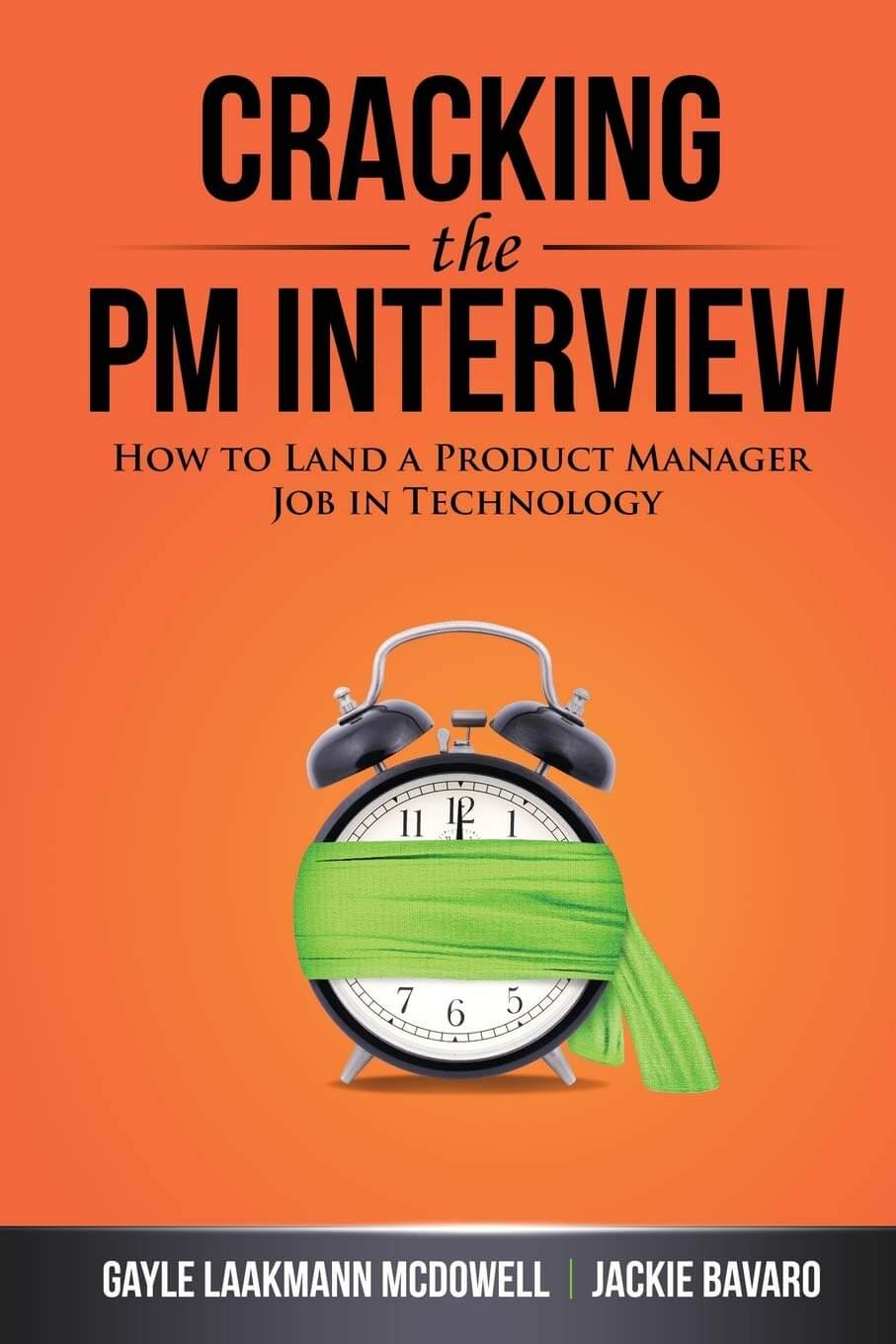
Cracking the PM Interview Book Summary
This Cracking the PM Interview Book Summary covers the key ideas, lessons, and takeaways in about 20 minutes.
The heart of the book is this: interviews reward candidates who demonstrate the real PM skill blend—user empathy, analytical thinking, business judgment, and influence without authority—while communicating clearly under pressure. Your resume must showcase measurable impact at a glance. Your behavioral stories must be concise and structured. Your product and strategy answers must balance users, feasibility, and business outcomes. Your estimation and case work must show disciplined reasoning, not lucky guessing.
When you prepare this way, you aren’t hoping to “get lucky” in interviews. You’re proving you can do the job—using the same structured thinking you’ll need once you’re the PM responsible for shipping great products.
Helps with these goals
Want the complete 20-minute summary?
- Full structured summary
- Video Summary
- Podcast Summary
- Audio summary
- Key takeaways
- Exercises
- Quiz
- Highlights and notes
- Ask the book with AI
What is in the Cracking the PM Interview book summary?
Below is a preview of Sumizeit’s expert-written summary of Cracking the PM Interview by Gayle Laakmann McDowell . The full summary covers the book’s key ideas in text, audio, and video.
Product management is one of the most desired roles in tech, yet it’s also one of the least standardized. Two companies can use the same title—PM—and mean wildly different things: visionary strategist, business operator, mini-CEO, customer advocate, delivery wrangler, or technical translator. This confusion makes the interview process feel random and unfair, especially to candidates who don’t already have insiders explaining the rules.
Cracking the PM Interview is written to remove that mystery. It treats the PM interview not as an abstract test of charisma, but as a set of repeatable patterns you can learn. The book explains what interviewers are really evaluating, how PM expectations differ by company, and how to practice the core question types until you can perform under pressure.
The authors’ thesis is that product management shouldn’t be a “secret club.” If you understand the role’s real responsibilities and you train for the specific questions companies ask, you can make interviews more predictable—and dramatically increase your odds of landing offers.
What Companies Are Actually Hiring a PM to Do
Before diving into interview tactics, the book anchors everything in a definition of product management that is practical rather than glamorous: a PM is responsible for ensuring a team ships a strong product. That sentence sounds simple, but it implies a complex job: aligning teams, choosing what matters, clarifying priorities, defending the user’s needs, and guiding trade-offs across engineering, design, data, and business.
The book emphasizes that PMs operate through influence, not authority. You rarely “own” the team in an org chart sense, yet you are expected to lead decisions, keep momentum, and drive outcomes. That’s why interviews are so focused on communication, structured thinking, and judgment.
A “successful PM,” as the source describes, consistently shows three traits:
Customer advocate: You understand users deeply and can translate their goals into product choices.
Cross-functional leader: You can rally engineers, designers, and stakeholders without pulling rank.
Data-informed decision-maker: You use metrics and reasoning to pick direction and measure progress.
The interview, then, isn’t just “Do you have ideas?” It’s “Can you think like someone who makes hard product choices and brings people along?”
The PM Interview Landscape: Same Title, Different Tests
A core message in the book is that PM interviews vary dramatically by company, and you can’t prepare effectively with generic advice alone. Different organizations prioritize different competencies and will ask different types of questions in different proportions.
The source gives examples: some firms emphasize product intuition and analytical skill, while others heavily weight culture and leadership principles. That means your preparation must be tailored. If you walk into every interview with the same stories, the same frameworks, and the same style, you risk missing what that company is trying to measure.
The book suggests treating each target company like its own “exam.” Your first job is to learn the exam format:
What question categories show up most?
How technical are they expecting you to be?
What cultural values do they use to judge your…
Want the complete 20-minute summary?
- Full structured summary
- Video Summary
- Podcast Summary
- Audio summary
- Key takeaways
- Exercises
- Quiz
- Highlights and notes
- Ask the book with AI
Who should read Cracking the PM Interview?
Cracking the PM Interview is for anyone seeking a product management role in tech, whether you're transitioning from engineering, business, or design, or you're a career-changer without direct PM experience. It's essential for candidates who feel confused by PM interviews or intimidated by the apparent randomness of hiring processes across different companies.
Why does Cracking the PM Interview matter?
Product management is one of tech's most coveted but least standardized roles, making interviews feel unpredictable and unfair to outsiders. This book demystifies the process by revealing that PM interviews follow learnable patterns, allowing you to prepare strategically rather than hoping for luck. In a competitive field, understanding what interviewers actually evaluate gives you a measurable advantage.
What are the key themes in Cracking the PM Interview?
- Product management as influence without authority
- PM interviews test repeatable skills, not charisma or luck
- Different companies prioritize different PM competencies
- Structured thinking and clear communication matter as much as ideas
- User empathy, business judgment, and analytical reasoning form the PM skill stack
- Preparation is company-specific, not generic
What are the key lessons from the Cracking the PM Interview book summary?
PM role definition: ensuring strong product shipping
A PM's job is fundamentally about aligning teams, choosing priorities, defending user needs, and guiding trade-offs. Success requires influence without authority, making communication and leadership critical.
The three traits of successful PMs
Customer advocates understand users deeply and translate their needs into product decisions. Cross-functional leaders rally teams without rank. Data-informed decision-makers use metrics and reasoning to guide choices.
Interview variation across companies is intentional
Different organizations prioritize different PM competencies, so the same question type won't appear in every interview. Treating each target company as its own exam requires research into their specific evaluation criteria.
The PM skill stack blends logic, empathy, and business sense
Interviewers continuously assess communication, analytical problem-solving, technical competence, user empathy, and business strategy. Excellence requires balancing all five, not mastering just one or two.
Structure beats raw intelligence in interviews
Candidates who organize ambiguity into clear steps, make assumptions explicit, and build recommendations with logic outperform those who are merely smart. Interviewers reward disciplined thinking under pressure.
Your personal pitch shapes what interviewers listen for
A 1–2 minute pitch should connect your background to the PM role with specific accomplishments, passion signals, and reasons for the company. This curated narrative must be tailored by company so the angle matches their priorities.
Company research goes deeper than mission statements
Demonstrating product sense means discussing multiple products with detail and perspective, including strengths, weaknesses, opportunities, and business model. This shows you evaluate like a PM, not just memorize facts.
Resumes win on impact, not completeness
Bullets should emphasize outcomes—revenue, engagement, growth, launches—over duties. The resume is a business case proving you create results, not a complete career record. Skimmability and keywords matter because many resumes are rejected in seconds.
Behavioral questions evaluate content and communication equally
Interviewers assess both what you did (PM alignment) and how you tell it (clarity and structure). The STAR framework—Situation, Task, Action, Result—prevents rambling and ensures your point lands.
Behavioral stories should cover recurring PM themes
Prepare diverse stories covering leading without authority, influencing stakeholders, handling conflict, executing under constraints, recovering from mistakes, learning fast, and cross-functional collaboration. These themes repeat across companies.
Active listening shapes better behavioral answers
Strong candidates adapt their example to the interviewer's focus rather than dumping a memorized script. Answering the question asked, not the story you wish for, signals maturity and responsiveness.
Product design questions test user understanding, not feature brainstorming
A structured approach clarifies problems, identifies target users, surfaces pain points, brainstorms solutions, and prioritizes based on impact. Strong answers show reasoning for every step and balance user needs, business goals, and feasibility.
Estimation questions reward process over the final number
Interviewers want to see repeatable thinking: clarify assumptions, break problems into parts, estimate each piece, show math transparently, and sanity-check results. Clean reasoning outperforms confident guessing.
Technical questions assess communication with engineers
Whether coding is required or not, demonstrate structured technical thinking by explaining your approach, writing clean code or pseudocode, testing, and discussing trade-offs. The goal is showing you can talk with engineers and understand feasibility.
Strategy questions operate at micro and macro levels
Analyze value proposition and business model at the micro level, vision and positioning at the macro level. Use frameworks like SWOT and Porter's Five Forces as scaffolding, not scripts, and always end with a reasoned point of view.
Case interviews combine structuring, quantitative reasoning, and judgment
The approach is clarify objectives, gather key information, analyze data, generate options, evaluate trade-offs, make a recommendation, and describe execution. Strong answers show mature judgment—recognizing trade-offs and explaining how you'd validate your choice.
Real PM experience makes interview answers stronger
Building side projects, contributing to open-source, seeking internships, and finding mentors ground your stories in reality. When you've actually made trade-offs and shipped under constraints, your answers naturally become richer and more credible.
Interview performance reflects PM competence
The book treats PM interviewing as inseparable from PM skill development. The structured thinking and communication you practice for interviews are the same tools you'll use to ship great products.
Tailor your pitch angle to company values
Your story stays the same, but the emphasis shifts. For consumer-focused companies, foreground user empathy; for data-heavy firms, highlight analytical wins; for leadership-driven cultures, frame experience through ownership and influence.
Continuous learning is a PM career habit
PM work changes with technology and markets, so staying current is essential. The best candidates treat interview preparation as part of a lifelong learning mindset, not a one-time event.
Want the complete 20-minute summary?
- Full structured summary
- Video Summary
- Podcast Summary
- Audio summary
- Key takeaways
- Exercises
- Quiz
- Highlights and notes
- Ask the book with AI
How can you apply ideas from Cracking the PM Interview?
- Research each target company's product in detail before interviews, forming specific opinions on strengths, weaknesses, and improvement opportunities
- Craft a personalized 1–2 minute pitch that connects your background to the role and tailors the angle to each company's values
- Build a portfolio of 5–7 behavioral stories covering leading without authority, stakeholder influence, conflict resolution, execution under constraints, mistakes, and cross-functional work
- Use the STAR framework when answering behavioral questions to stay structured and ensure impact lands clearly
- Treat product design questions systematically: clarify the problem, identify users, surface pain points, brainstorm solutions, prioritize, and outline measurement
- Practice estimation and case questions by breaking problems into parts, making assumptions explicit, and showing reasoning step-by-step
- Redesign your resume to emphasize measurable outcomes (revenue, engagement, growth, launches) rather than job duties, using strong action verbs and keywords
What common mistakes do readers make with Cracking the PM Interview?
- Preparing with generic PM interview advice instead of researching what each specific company values and prioritizes
- Answering with the story you wish the interviewer asked for rather than listening carefully and adapting to their specific question
- Letting behavioral stories ramble without a clear structure, losing the interviewer midway through and burying the impact
- Treating estimation and case questions as trivia tests instead of demonstrations of disciplined reasoning and transparent thinking
Sumizeit Exercises Apply what you've learned
Turn ideas from Cracking the PM Interview into action with a short guided reflection: identify the biggest takeaway, connect it to your life, and commit to one step you can take in the next 24 hours.
What is the expert analysis of Cracking the PM Interview?
Overview
Cracking the PM Interview, authored by Gayle Laakmann McDowell, stands as a seminal guide in the often opaque and inconsistent world of product management recruitment. McDowell, a respected figure in tech career coaching and interview preparation, leverages her dual expertise in software engineering and business to demystify the PM interview process. The book’s significance lies in its methodical breakdown of what companies truly seek in product managers, transforming a seemingly capricious hiring ritual into a learnable, repeatable discipline. It is both a practical manual and a strategic framework that addresses the multifaceted nature of product management roles across diverse organizations.
Core Thesis
The central argument of the book is that product management interviews, despite appearing random and unfair, actually follow discernible patterns that candidates can master through targeted preparation. McDowell posits that PM roles are frequently misunderstood and vary widely by company, but underlying these differences is a consistent skill set encompassing user empathy, analytical thinking, business acumen, and leadership without formal authority. By understanding company-specific expectations, crafting tailored narratives, conducting deep product research, and practicing structured problem-solving frameworks, candidates can significantly improve their interview outcomes. Essentially, the book reframes PM interviews not as tests of innate charisma or luck, but as assessments of tangible, trainable competencies.
Strengths
- Comprehensive and Structured Approach: The book excels in systematically categorizing the diverse question types and competencies tested in PM interviews, offering clear frameworks for tackling product design, estimation, behavioral, technical, and strategy questions.
- Emphasis on Tailored Preparation: By highlighting the variability of PM roles across companies, it encourages nuanced research and customization rather than one-size-fits-all solutions, which is critical in a fragmented hiring landscape.
- Integration of Real-World PM Competencies: The focus on leadership without authority, cross-functional influence, and balancing user needs with business objectives reflects the authentic challenges PMs face, grounding interview prep in practical reality.
- Actionable Resume and Pitch Guidance: The advice on crafting impactful resumes and compelling personal narratives is both pragmatic and insightful, recognizing the importance of first impressions in high-stakes interviews.
- Encouragement of Experiential Learning: The recommendation to build PM skills through side projects, networking, and mentorship underscores the book’s holistic perspective on career development beyond mere interview tactics.
Critiques & Counterarguments
- Potential Oversimplification of PM Roles: While the book acknowledges variability, its core frameworks risk flattening the nuanced differences between product management in startups, large tech firms, and non-tech industries, where expectations and skill emphases can diverge substantially.
- Heavy Focus on Tech-Centric Companies: The examples and preparation strategies are predominantly tailored to Silicon Valley-style tech firms, which may limit applicability for PM candidates targeting sectors with different cultures or product cycles, such as healthcare or finance.
- Interview as Proxy for Job Performance: The assumption that interview performance directly correlates with on-the-job success is contested by organizational psychology research, which highlights the limitations of structured interviews in predicting complex leadership effectiveness.
- Competing Schools of Thought on PM Skillsets: Some contemporary perspectives argue for a more specialized PM role—such as focusing solely on data science or UX design—challenging the book’s advocacy for a broad skill stack as universally ideal.
- Risk of Formulaic Responses: The emphasis on structured frameworks and rehearsed stories can lead to candidates delivering mechanical answers, potentially stifling authentic dialogue and creativity that some interviewers value.
Who Should Read This
This book is indispensable for aspiring product managers seeking to navigate the notoriously opaque and competitive interview landscape of tech companies. It is particularly suited for candidates who value a disciplined, strategic approach to preparation and are targeting roles in organizations where PM responsibilities are multifaceted and dynamic. Early-career professionals transitioning from engineering, design, or business backgrounds will find the book’s integration of technical and strategic competencies especially beneficial. Additionally, career coaches and hiring managers may gain valuable insights into the candidate experience and interview design. However, seasoned PMs or those targeting niche industries might need to supplement this guide with more specialized resources.
Frequently asked questions about the Cracking the PM Interview book summary
What is Cracking the PM Interview about?
Cracking the PM Interview by Gayle Laakmann McDowell is a guide to mastering product management interviews by understanding what companies actually evaluate and how to prepare systematically. The book demystifies PM hiring by revealing that despite surface randomness, interviews follow repeatable patterns around communication, analytical thinking, user empathy, and business judgment. It covers everything from personal pitch and resume strategy to behavioral, product design, estimation, technical, strategy, and case questions, with emphasis on structured thinking and clear communication under pressure.
Who should read Cracking the PM Interview?
Anyone pursuing a product management role in tech should read this book, especially candidates transitioning from engineering, business, or design who feel confused by PM interviews. It's invaluable for career-changers without direct PM experience, people intimidated by the apparent randomness of hiring across companies, and anyone wanting a strategic edge in a competitive field. The book is equally useful for someone preparing for their first PM interview and experienced professionals seeking to land roles at top-tier companies.
What are the main takeaways from Cracking the PM Interview?
The main takeaways are that PM interviews feel random because product management is misunderstood, but the process itself follows learnable patterns. If you understand what each company values, craft a clear personal pitch, research products deeply, and practice major question types with structured frameworks, you can replace anxiety with reliable performance. Strong candidates demonstrate the PM skill blend—user empathy, analytical thinking, business judgment, and influence without authority—while communicating clearly. Your resume must showcase impact at a glance, your stories must be concise and structured, and your answers must balance users, feasibility, and business outcomes.
How should you approach product design interview questions?
Approach product design questions systematically by first clarifying the problem and defining success, then identifying target users and key use cases. Surface pain points in the current experience, brainstorm solutions, and prioritize based on impact and feasibility. Finally, outline how you'd build, launch, and measure the product. Strong answers show reasoning at every step and balance user needs with business goals and technical constraints, rather than just listing features.
What makes a strong behavioral interview answer?
Use the STAR structure—Situation, Task, Action, Result—to stay organized and prevent rambling. Your story should demonstrate PM-relevant themes like leading without authority, influencing stakeholders, handling conflict, or executing under constraints. Keep it concise and focused on the specific question asked, adapting your example to the interviewer's angle rather than dumping a memorized script. Quantify results when possible and show how your actions created measurable impact.
How should you prepare for estimation and case questions?
Interviewers evaluate your process, not just your final answer. Clarify assumptions upfront, break the problem into manageable parts, estimate each piece with clear logic, show your math transparently, and sanity-check the result. Frameworks like SWOT and business model thinking help scaffold your analysis. The candidate who reasons cleanly but arrives at a different number often outperforms the one who guesses confidently, because these questions test analytical discipline.
Why is company-specific research critical for PM interviews?
Different companies prioritize different PM competencies, so the same question type won't appear everywhere. Treating each target company as its own exam means researching which question categories show up most, how technical they expect you to be, and what cultural values they emphasize. Deep product research—discussing multiple products with strengths, weaknesses, and opinions—demonstrates product sense and shows you think like a PM, not just a candidate reading the homepage.
What should your personal pitch include?
Your 1–2 minute pitch should connect your relevant background to product work, highlight specific accomplishments with measurable impact, signal genuine passion for building products and technology, and explain why you want this specific company and role. Tailor the angle to each company: foreground user empathy for consumer-focused firms, analytical wins for data-heavy companies, and ownership for leadership-driven cultures. Practice until it sounds natural while remaining strategic.
About Sumizeit
Sumizeit is a profitable Scomy LLC company based in Miami, Florida. It has been helping readers learn from nonfiction books for 7 years with expert-written summaries in text, audio, podcast, and video.
Want the complete 20-minute summary?
- Full structured summary
- Video Summary
- Podcast Summary
- Audio summary
- Key takeaways
- Exercises
- Quiz
- Highlights and notes
- Ask the book with AI
Here's why readers love Sumizeit
Join thousands of learners getting smarter every day
"Great experience. Detailed summaries. Loved the gamification feature. Makes learning fun. Good customer service. I recommend Sumizeit to anyone. You'll learn a lot."
"I always felt busy but still wanting to keep up with the book discussion in my friend group. This was a great supplement to help me keep reading the books I find fun while keeping up with important books."
"I love this website. Instead of scrolling social media, I find myself learning a lot. I use it everyday. I recommend this app for anyone who is too busy and wants to get up to speed with their favorite books."
Cracking the PM Interview Book Summary PDF
Looking for a Cracking the PM Interview Book Summary PDF you can save and revisit offline? Our Cracking the PM Interview Book Summary PDF captures the book’s core ideas in a clean, printable format — the key frameworks, takeaways, and structure without the fluff. Download the Cracking the PM Interview Book Summary PDF when you want a reference you can annotate, share with your team, or review on the go. Get your Cracking the PM Interview Book Summary PDF from the download page below.
Download Cracking the PM Interview Book Summary PDFPeople also liked these summaries
Readers who explored Cracking the PM Interview often enjoyed these titles next.



Want the complete 20-minute summary?
- Full structured summary
- Video Summary
- Podcast Summary
- Audio summary
- Key takeaways
- Exercises
- Quiz
- Highlights and notes
- Ask the book with AI
Featured Book Titles
Popular Book Summaries at sumizeit, leading book summary app